
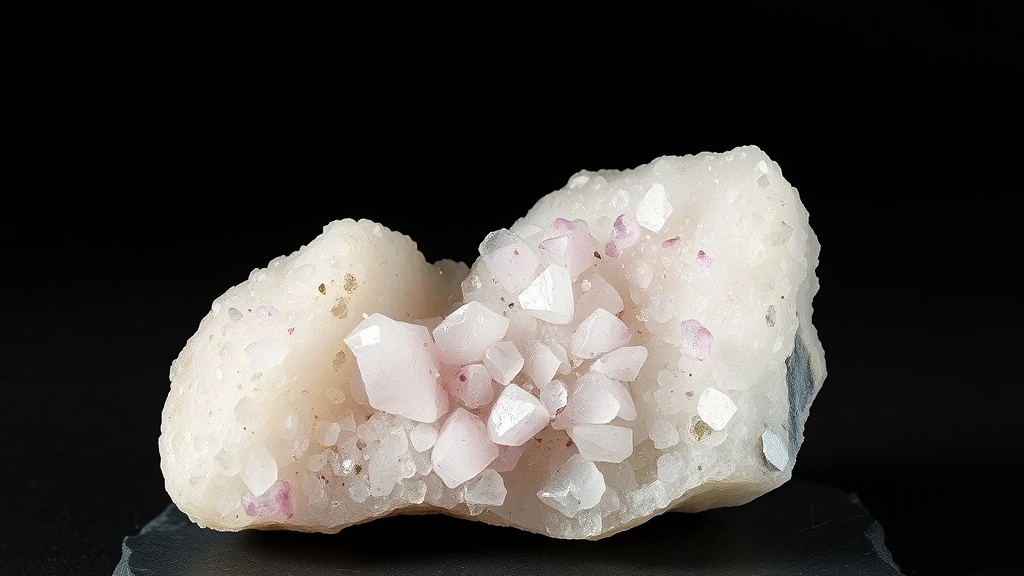
Orchid Calcite is classified within the broader calcite mineral group, a carbonate of calcium that crystallizes in the trigonal system. Though often marketed as a distinct gemstone, it is an aggregate of fine‑grained calcite crystals that have undergone subtle impurity incorporation, giving rise to its characteristic pastel coloration. The stone forms in low‑temperature hydrothermal veins and cave environments, where calcium‑rich solutions precipitate calcite layers that later acquire the soft, orchid‑tinged translucency prized by collectors.
What is Orchid Calcite? Geological Overview & Definition
Orchid Calcite refers to a calcite aggregate displaying a gentle pink‑lavender to milky hue, reminiscent of orchid petals. It is not a separate mineral species but a varietal expression of calcium carbonate (CaCO₃) whose color results from trace chromophore ions such as manganese or iron substituting within the crystal lattice. Much like Orchid Calcite’s delicate pink‑lavender tones arise from trace iron, the earthy shimmer of Iridescent Limonite showcases similar iron‑induced coloration, offering a complementary grounding stone for the same chakra work.
In geological terms, the material is found in sedimentary limestone and travertine deposits where slow precipitation allows large, interlocking crystals to develop. The trigonal symmetry of each calcite crystal imparts a subtle cleavage pattern that can be observed under magnification, distinguishing Orchid Calcite from other carbonate varieties.
Orchid Calcite Chemical Composition & Crystallographic Properties
The fundamental composition of Orchid Calcite is calcium carbonate, CaCO₃, without a distinct stoichiometric variation beyond trace impurity levels. These impurities replace a small fraction of calcium ions, creating cation substitution that generates the soft pastel colors characteristic of the stone. In comparative mineralogical collections, practitioners and geologists frequently study Golden Calcite alongside this crystal to appreciate their subtle energetic and structural differences.
Crystallographically, Orchid Calcite conforms to the trigonal crystal system, belonging to the space group R‑3c. Its lattice consists of rhombohedral units stacked along the c‑axis, producing the classic rhombohedral cleavage that splits the stone into smooth, reflective faces.
Calcite is notably acid‑sensitive; exposure to dilute hydrochloric acid produces effervescence as carbon dioxide is released, a diagnostic test that confirms its carbonate nature. The presence of chromophore centers, however, does not alter this reaction, though it may affect the intensity of the fizz.
Thermally, Orchid Calcite remains stable up to about 825 °C, the temperature at which calcite decomposes to calcium oxide and CO₂. Below this threshold, heating can cause subtle color shifts as impurity ions migrate within the lattice, sometimes enhancing the orchid hue when gently annealed.
| Property | Specification |
|---|---|
| Mineral Group | Natural Mineral / Crystal |
| Mohs Hardness | 6.5 – 7.0 |
| Crystal System | Trigonal |
| Color & Optical Properties | Natural Orchid Calcite color spectrum and optical dispersion |
| Primary Mining Localities | Global primary localities |
| Water & Chemical Resistance | EXTREMELY SENSITIVE: Water Soluble / Moisture Sensitive! (Avoid liquids) |
| Chakra Alignment (Traditional) | Throat Chakra (Vishuddha) |
| Zodiac Affinity (Traditional) | Taurus, Libra |
| Symbolic Meaning (Traditional) | Mental clarity, focus and heightened intuition |
Orchid Calcite Varieties & Color Spectrum
Orchid Calcite displays distinct mineralogical characteristics across its geological varieties and structural habits. Gemologists evaluate these natural varieties based on crystal habit, trace chromophore concentrations, and visual luster.
Primary Natural Orchid Calcite
The benchmark natural variety exhibiting diagnostic color saturation and classic crystallographic symmetry.
Distinct Geological Morphs of Orchid Calcite
Secondary regional and structural varieties formed under localized geological temperature and pressure conditions.
Orchid Calcite (Standard)
The classic orchid calcite displays a delicate violet‑pink hue, often with a translucent to semi‑opaque body. It forms in quartz‑rich pegmatites where trace amounts of manganese and iron impart the characteristic color. The crystal habit is typically prismatic with well‑defined facets, and it may contain fine, fibrous inclusions that enhance its luster. Although widely collected, pure orchid calcite remains moderately rare due to its specific geochemical conditions.
Rose‑Pink Calcite
Rose‑pink calcite shows a lighter, more rose‑tinted coloration than its standard counterpart. Its formation occurs in lower‑grade metamorphic settings where calcium carbonate recrystallizes under mild pressure. The mineral often exhibits subtle, threadlike inclusions of quartz, giving it a silky sheen. Because of its delicate hue, rose‑pink specimens are prized by collectors and are less common in large, clear crystals.
Lavender Calcite
Lavender calcite presents a muted lavender shade, sometimes with a faint greenish undertone. It typically forms in high‑temperature pegmatites where trace amounts of barium and strontium influence the coloration. Inclusions of mica or feldspar give the crystal a subtle speckled appearance. Lavender calcite is relatively scarce, especially in large, well‑formed specimens, making it a sought‑after variety for gem cutters.
Lilac Calcite
Lilac calcite is distinguished by a deeper lilac tone and a slightly opaque body. It forms in granitic pegmatites enriched with potassium and sodium that alter the crystal lattice. The mineral often contains fibrous quartz inclusions that create a subtle, opalescent effect. Due to its specific geochemical environment, lilac calcite is considered a rare variety, prized for its intense color.
Orchid‑Colored Calcite from the Himalayas
This regional variety is noted for its intense orchid color with a slight bluish undertone. It forms in the high‑altitude pegmatites of the Himalayan belt, where the presence of titanium and copper imparts a unique hue. The crystals are typically well‑formed, with occasional mica inclusions that add a subtle sparkle. The scarcity of large, clear specimens makes this variety highly valuable among gem enthusiasts.
Orchid Calcite from the United States (Colorado)
The Colorado orchid calcite is known for its bright orchid shade and a subtle white background. It originates from the Boulder Creek pegmatite field, where the mineral crystallizes in a columnar habit. Inclusions of quartz and feldspar are common, giving the stone a slightly textured appearance. While more abundant than some international varieties, high‑quality specimens are still considered valuable due to their vivid color and clarity.
Where is Orchid Calcite Found? Geological Mining & Extraction
Orchid calcite is predominantly mined from quartz‑rich pegmatite veins, where slow cooling allows large, well‑formed crystals to develop. The mineral typically occurs in granite and metamorphic host rocks, often associated with feldspar and mica. Extraction methods involve careful hand‑picking and mechanical separation to preserve the delicate crystal structure.
Key global sources include the Colorado region of the United States, the Himalayan belt in Nepal and India, and the Boulder Creek field in Colorado. In each location, the mineral is recovered through a combination of open‑pit and underground mining, followed by sorting and grading by color, clarity, and crystal size. The rarity of high‑quality specimens drives demand in both the jewelry and scientific communities.
Historical Significance & Cultural Lore of Orchid Calcite
Across ancient Greco‑Roman lapidary traditions, calcite was valued for its translucency and ease of carving, though the orchid variety was rarely documented due to its limited geographic distribution. In Egyptian antiquity, calcite was occasionally used in amulets, with the subtle hues believed to symbolize the heavens. Chinese texts from the Han dynasty reference calcite as a stone of mental clarity, aligning with its modern esoteric associations. Vedic literature also notes the use of calcite in ritualistic contexts, where its gentle color was thought to enhance spiritual focus. These cross‑cultural references underscore the enduring appeal of orchid calcite as a gemstone that bridges scientific intrigue and metaphysical symbolism.
Modern Uses & Jewelry Applications of Orchid Calcite
Orchid calcite is prized for its striking pink to lavender hues, making it a favorite in contemporary lapidary work. Skilled cutters transform the stone into elegant cabochons or finely faceted pieces that accentuate its subtle translucency. Jewelers also employ the mineral in ornamental carvings, such as pendants, rings, and cufflinks, where its softness allows for intricate detailing.
- Cabochon: smooth, polished discs that highlight color
- Faceted: sharp cuts that enhance brilliance
- Carving: detailed motifs for brooches and earrings
Metaphysical Properties & Traditional Meaning of Orchid Calcite
According to historical traditions and metaphysical lore, orchid calcite is believed to promote mental clarity and sharpen focus, aiding those who seek disciplined thought. Across ancient Mediterranean and Vedic lapidary practices, the stone is associated with heightened intuition and the ability to communicate truthfully. Its gentle vibration is thought to soothe emotional turbulence, encouraging calm and balanced expression.
Which Chakra and Zodiac Signs Align with Orchid Calcite?
The stone aligns with the Throat Chakra (Vishuddha), the center of communication and self‑expression. Its vibration supports clear articulation, encouraging honest dialogue and creative output.
The canonical zodiac signs associated with orchid calcite are Taurus and Libra. Those born under these signs are said to resonate with the stone’s grounding yet harmonious energy, fostering stability and balanced relationships.
How to Identify Real vs. Fake Orchid Calcite
Artificial imitations of orchid calcite often appear as dyed glass or synthetic crystals that lack the mineral’s natural translucency and subtle internal textures. Genuine specimens exhibit a characteristic softness and a slightly higher refractive index than common glass.
Practical At-Home Authenticity Tests
- Temperature Test (Thermal Feel): Hold the stone in your hand; real calcite feels cool to the touch for a few seconds, whereas glass warms quickly.
- Specific Gravity & Weight Test: Compare the stone’s heft to a known quartz sample of similar size; calcite should feel noticeably lighter.
- Scratch & Hardness Test (Mohs Comparison): Use a steel file or a glass plate; calcite should scratch glass but not be scratched by a steel file, confirming a hardness of 6.5–7.0.
- Microscopic & Loupe Inspection (Internal Inclusions): Under magnification, real calcite often shows fine fibrous or needle‑like inclusions, whereas synthetic replicas display uniform, glass‑like clarity.
Orchid Calcite Valuation Factors, Grading & Pricing
Market value hinges primarily on Color Saturation, where deep, uniform violet hues command premium prices over pale or washed-out specimens. Visual vibrancy is further enhanced by a natural, waxy luster that reflects light without artificial coating. Collectors prioritize stones exhibiting consistent tonal depth across the entire surface, as this indicates high-quality mineral deposition.
Crystal Size & Weight (Grams) directly influences pricing, with larger raw formations or polished tumbles valued by dimensional mass rather than specimen weight (grams). High-quality tumbled stones must display flawless, mirror-like polish without visible abrasion marks or surface etching. Natural matrix inclusions, such as quartz veins or host rock, can either enhance aesthetic uniqueness or detract from clarity depending on collector preference.
Ethical Sourcing & Locality Premium significantly impacts demand in both holistic and collector markets, favoring transparent supply chains. Specific localities known for exceptional orchid calcite formations often carry a price premium due to rarity and geological significance. Buyers increasingly verify provenance to ensure sustainable mining practices, which adds intangible value to the physical specimen.
How to Clean and Care for Orchid Calcite
Orchid calcite is extremely sensitive to moisture, meaning water and humidity can dissolve or permanently damage the crystal structure. Never wash the stone with water, liquid soap, or damp cloths, as these liquids penetrate the lattice and cause irreversible etching. Strictly avoid ultrasonic cleaners, as the high-frequency vibrations combined with liquid exposure will shatter or degrade the mineral surface.
For routine maintenance, gently dust the specimen using a completely dry, soft microfiber cloth or a camel-hair brush. This dry method safely removes surface dust without introducing harmful moisture to the sensitive crystal lattice. Store the stone in a low-humidity environment, away from direct liquids or high-moisture areas, to preserve its structural integrity and visual appeal.
Cleansing and Recharging Orchid Calcite (Energetic Care)
Safe energetic cleansing relies on dry methods that respect the mineral’s vulnerability to moisture and heat. Herbal smudging with sage or palo santo is an effective traditional practice that purifies the stone without physical contact with liquids. This aromatic cleansing ritual is widely respected in holistic traditions for its ability to clear stagnant energy safely.
Alternatively, place the orchid calcite on a selenite charging slab or expose it to gentle moonlight overnight. These methods allow the stone to absorb ambient energy without the risk of thermal shock or chemical degradation. Avoid direct intense sunlight or domestic heating, as excessive heat can fracture the crystal lattice and alter its natural properties.
Frequently Asked Questions About Orchid Calcite
Orchid Calcite displays distinct mineralogical characteristics across its geological varieties and structural habits. Gemologists evaluate these natural varieties based on crystal habit, trace chromophore concentrations, and visual luster.
Primary Natural Orchid Calcite
The benchmark natural variety exhibiting diagnostic color saturation and classic crystallographic symmetry.
Distinct Geological Morphs of Orchid Calcite
Secondary regional and structural varieties formed under localized geological temperature and pressure conditions.
Is orchid calcite safe to wear in the shower?
No – orchid calcite is extremely water‑sensitive and will dissolve or become damaged when exposed to moisture. Shower steam, splashing water, or humidity can cause the delicate crystal lattice to break down, leading to loss of translucency and structural integrity. Always remove the piece before bathing.
How should I clean orchid calcite jewelry?
Clean orchid calcite only with a dry, soft microfiber cloth or a gentle brush. Because any liquid—water, soap, or cleaning solutions—will dissolve the surface, a dry cloth removes dust without risking chemical attack. Store the stone in a low‑humidity pouch when not worn.
Can I use an ultrasonic cleaner on orchid calcite?
Ultrasonic cleaning is strictly forbidden for orchid calcite. The high‑frequency vibrations combined with moisture can fracture the crystal and accelerate dissolution. Manual dry cleaning remains the only safe method to preserve its trigonal crystal habit and vivid coloration.
What hardness does orchid calcite have, and will it scratch easily?
Orchid calcite rates 6.5–7 on the Mohs scale, offering moderate resistance to scratches. While harder than many soft minerals, it can still be scratched by quartz, topaz, or diamond. Handle the stone gently and avoid contact with harder gemstones during wear or storage.
Which zodiac signs are associated with orchid calcite?
Orchid calcite is linked to the zodiac signs Taurus and Libra. In astrological tradition, these signs appreciate the stone’s calming energy, which is believed to enhance mental clarity and balance emotional expression, aligning with the earthy‑air qualities of the signs.
Which chakra does orchid calcite activate?
The stone resonates with the Throat Chakra (Vishuddha). Activation of this chakra is said to support clear communication, articulate self‑expression, and heightened intuition, making orchid calcite a popular talisman for speakers, writers, and anyone seeking vocal confidence.
Is orchid calcite suitable for everyday wear?
Yes, provided it is kept away from moisture and harsh impacts. Its moderate hardness allows regular use, but exposure to water, sweat, or abrasive surfaces can compromise the stone. Store it separately from harder gems and clean it only with a dry cloth after each wear.
Does orchid calcite have any known metaphysical properties?
It is reputed to promote mental clarity, focus, and heightened intuition. Practitioners claim the stone’s vibrational frequency assists in clearing mental fog, aiding decision‑making, and enhancing psychic perception, especially when meditating on the Throat Chakra.