
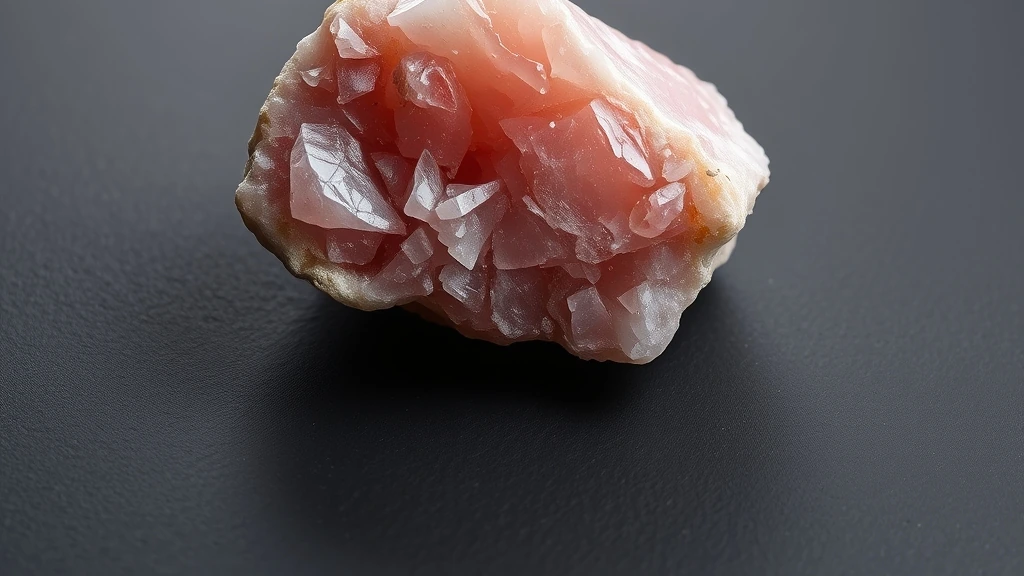
Pink calcite is a crystalline form of calcium carbonate (CaCO₃) that crystallizes in the trigonal system. It is classified within the broader calcite mineral family, which includes numerous polymorphs such as aragonite and vaterite. The stone is typically found in sedimentary settings, often as a secondary mineral in limestone or marble, and can also occur in hydrothermal veins where it forms through precipitation from carbonate-rich fluids. Its distinct pink coloration arises from trace elements and structural defects rather than from a separate chemical compound.
What is Pink Calcite? Geological Overview & Definition
Pink calcite is a variant of the carbonate mineral calcite, distinguished primarily by its subtle pink to rose coloration. The hue is produced by trace chromophore centers, such as iron or manganese ions, incorporated into the crystal lattice during formation. This mineral is typically found in sedimentary rock formations, where it may appear as a fine-grained aggregate or as larger, well-formed crystals. In many cases, pink calcite forms through diagenetic processes that introduce color-bearing impurities into pre-existing calcite structures. If you’re intrigued by the gentle rose tones of Pink Calcite, you’ll also appreciate the delicate orchid hue of Orchid Calcite, which shares the same carbonate family and offers complementary healing energies.
The stone is part of the natural mineral group and crystallizes in the trigonal system, a subset of the hexagonal crystal family. Its crystal habit often displays rhombohedral or prismatic shapes, though in many geological settings it may be poorly developed due to rapid precipitation or mechanical deformation. Pink calcite is chemically indistinguishable from pure calcite except for the presence of minor substituents that impart its characteristic color. In comparative mineralogical collections, practitioners and geologists frequently study Golden Healer Quartz alongside this crystal to appreciate their subtle energetic and structural differences.
Pink Calcite Chemical Composition & Crystallographic Properties
Pink calcite retains the fundamental chemical formula of calcium carbonate, CaCO₃, with no additional stoichiometric components. The trigonal crystal system is defined by a single three‑fold rotational axis, giving rise to characteristic rhombohedral symmetry. The lattice parameters typically approximate a = 4.99 Å and c = 17.06 Å, though slight variations occur due to impurity incorporation.
Trace cation substitution, most commonly Fe²⁺ or Mn²⁺ for Ca²⁺, creates localized color centers that manifest as pink or rose tones. These substitutions do not alter the overall crystal structure but introduce electronic states that absorb specific wavelengths of visible light. The presence of such chromophores also influences the mineral’s optical properties, including its refractive index, which ranges from 1.658 to 1.662 for pure calcite.
Pink calcite is highly reactive to dilute acids, dissolving readily in hydrochloric or acetic acid. This acid sensitivity is a hallmark of carbonate minerals and can be used diagnostically in field settings. Thermal behavior shows a gradual loss of water at temperatures above 200 °C, followed by decomposition into calcium oxide and carbon dioxide near 700 °C. These transformations are consistent with the behavior of other carbonate minerals and confirm the mineral’s identity.
| Property | Specification |
|---|---|
| Mineral Group | Natural Mineral / Crystal |
| Mohs Hardness | 6.5 – 7.0 |
| Crystal System | Trigonal |
| Color & Optical Properties | Natural Pink Calcite color spectrum and optical dispersion |
| Primary Mining Localities | Global primary localities |
| Water & Chemical Resistance | EXTREMELY SENSITIVE: Water Soluble / Moisture Sensitive! (Avoid liquids) |
| Chakra Alignment (Traditional) | Heart Chakra (Anahata) |
| Zodiac Affinity (Traditional) | Taurus, Libra |
| Symbolic Meaning (Traditional) | Clear communication, truth and serenity |
Pink Calcite Varieties & Color Spectrum
Pink Calcite displays distinct mineralogical characteristics across its geological varieties and structural habits. Gemologists evaluate these natural varieties based on crystal habit, trace chromophore concentrations, and visual luster.
Primary Natural Pink Calcite
The benchmark natural variety exhibiting diagnostic color saturation and classic crystallographic symmetry.
Distinct Geological Morphs of Pink Calcite
Secondary regional and structural varieties formed under localized geological temperature and pressure conditions.
Rose‑Colored Calcite
Rose‑colored calcite is the most common pink variant, formed by trace amounts of iron and manganese substituting into the carbonate lattice. The hue ranges from pale blush to deep rose, often displaying subtle banding that reflects its growth in sedimentary limestone. It is widely available from the United States, Brazil, and the Czech Republic, making it a staple in jewelry and ornamental carvings.
Pink‑Banded Calcite (Pseudomorph)
This variety exhibits distinct pink bands interlaced with clear or white layers, a result of pseudomorphism after gypsum or other evaporite minerals. The bands are typically parallel to the crystal faces, giving the stone a striking visual contrast. Due to the specific evaporitic conditions required, it is rarer and prized by collectors, especially specimens from the Arunachal Pradesh region of India.
Pink‑Fluorite‑Calcite Composite
In some deposits, calcite crystals grow around fluorite cores, producing a composite where the calcite mantle is pink while the fluorite center remains colorless or blue. The interface often shows inclusion lines that are diagnostic of the composite growth. This rare formation is most frequently reported from the Moscow region in Russia, where jointed limestone beds host both minerals.
Pink‑Manganese Calcite (Manganite)
Manganese‑rich calcite displays a deeper, almost magenta tone, with occasional manganese oxide inclusions that give a speckled appearance. The mineral forms in oxidizing environments where manganese is abundant, such as near volcanic ash layers. Its scarcity and intense color make it a sought-after specimen for high‑end lapidary work, especially from the Sierra Madre in Mexico.
Pink‑Iron Calcite (Ferric Calcite)
Ferric calcite contains higher iron concentrations, resulting in a muted pink to brownish hue. The iron can be present as tiny magnetite inclusions, giving the stone a subtle magnetic property. This variety is typically found in metamorphic limestone zones, notably in the Alps and Carpathians, where pressure and temperature conditions favor iron incorporation.
Pink‑Limonite Calcite (Limonite‑Infused)
When limonite, an iron‑hydroxide mineral, infiltrates calcite, it imparts a warm, earthy pink tint. The limonite veins often appear as fine, translucent streaks, creating a delicate veining effect. This formation is uncommon, with notable occurrences in the Bavarian region of Germany, where limonite-rich shales interlace with calcite beds.
Where is Pink Calcite Found? Geological Mining & Extraction
Pink calcite is typically extracted from sedimentary limestone and carbonate-rich pegmatite formations. The mineral often occurs as inclusions or secondary growths within larger calcite crystals, requiring careful cleavage and polishing to preserve its delicate color. Major mining regions include the United States (Kentucky, Tennessee), Brazil (Minas Gerais), and the Czech Republic, where extensive quarrying operations yield both raw and finished specimens.
Extraction methods focus on hand‑mining and small‑scale drilling to minimize damage to the fragile crystals. Once quarried, the stones undergo a meticulous cleaning process to remove surface impurities that could obscure the pink hue. The final polishing stage employs diamond abrasives and ultrasonic baths to achieve a high‑luster finish, ensuring that the pink coloration remains vivid for commercial use.
Historical Significance & Cultural Lore of Pink Calcite
Across ancient lapidary traditions, pink calcite was valued for its gentle beauty and symbolic associations with the Heart Chakra (Anahata), believed to promote emotional balance and compassion. In Greco‑Roman jewelry, small pink calcite beads were incorporated into necklaces and brooches, often paired with amethyst to enhance spiritual clarity.
Egyptian artisans occasionally used pink calcite in burial artifacts, interpreting its hue as a representation of the rose of life and a conduit for afterlife serenity. Chinese imperial collections also featured pink calcite in ceremonial vessels, where it was thought to embody the softness of the feminine principle. These cross‑cultural uses underscore the mineral’s enduring appeal as a symbol of clear communication, truth, and serenity.
Modern Uses & Jewelry Applications of Pink Calcite
Pink calcite is prized for its soft, translucent pink hue, making it a favorite for lapidary artisans. The stone is often cut into cabochons or faceted to enhance its subtle luster, though its relatively low hardness (6.5–7.0 on the Mohs scale) requires careful handling to avoid scratches. In addition to jewelry, pink calcite is carved into ornamental pieces such as cameos, pendants, and decorative inlay, where its gentle color complements both modern and traditional designs.
- Cabochon and faceted earrings, necklaces, and rings
- Cameo portraits and ornamental carvings
- Decorative inlay for furniture and architectural accents
Metaphysical Properties & Traditional Meaning of Pink Calcite
According to historical traditions and metaphysical lore, pink calcite is believed to enhance emotional balance and promote compassionate communication. Across ancient Mediterranean and Vedic lapidary lore, the stone is associated with the Heart Chakra (Anahata), encouraging love, empathy, and emotional healing. Practitioners of crystal healing often use pink calcite to support clear communication, fostering truth and serenity in interpersonal relationships.
Which Chakra and Zodiac Signs Align with Pink Calcite?
The Heart Chakra (Anahata) is the central energy center for love and emotional harmony, and pink calcite is traditionally linked to this chakra, reinforcing feelings of compassion and emotional equilibrium.
Taurus and Libra are the zodiac signs canonically aligned with pink calcite. Those born under these signs are thought to resonate with the stone’s gentle, grounding energy, enhancing stability and balanced relationships.
How to Identify Real vs. Fake Pink Calcite
Artificial imitations of pink calcite often include dyed glass, synthetic quartz, or painted stone. These replicas may lack the natural translucency and subtle veining characteristic of genuine pink calcite.
Practical At-Home Authenticity Tests
- Temperature Test (Thermal Feel): Hold the stone in your hand; real calcite feels cool to the touch due to its higher thermal conductivity, whereas glass feels warmer.
- Specific Gravity & Weight Test: Compare the stone’s weight to a known sample of calcite of the same size; real calcite should be noticeably heavier.
- Scratch & Hardness Test (Mohs Comparison): Use a reference mineral of known hardness (e.g., quartz at 7) to test for scratches; pink calcite should resist scratching by softer materials but be scratched by harder ones.
- Microscopic & Loupe Inspection (Internal Inclusions): Examine the stone under a loupe; authentic pink calcite often shows fine fibrous or needle‑like inclusions, while synthetic glass typically displays uniform, bubble‑free interiors.
Pink Calcite Valuation Factors, Grading & Pricing
Market value hinges primarily on Color Saturation, where deep, uniform pink hues command higher premiums than pale or washed-out tones. Collectors seek specimens exhibiting a consistent, vibrant chromatic intensity throughout the entire crystal structure. This visual vibrancy is further enhanced by a natural, smooth luster that reflects light evenly across the surface.
Crystal Size & Weight (Grams) significantly influences pricing, with larger, intact specimens valued more highly than smaller fragments. Raw crystals are assessed by their dimensional integrity, while tumbled stones are graded on the quality of their polish and smoothness. Natural matrix inclusions may add unique character, though excessive fractures or impurities typically reduce the overall market appeal.
Ethical Sourcing & Locality Premium plays a critical role in holistic and collector markets, where provenance verifies responsible extraction practices. Specific mining regions known for high-quality pink calcite often carry a price premium due to their reputation for purity. Buyers increasingly demand documentation that ensures the stone was harvested without environmental degradation or labor exploitation.
How to Clean and Care for Pink Calcite
Pink calcite is extremely sensitive to moisture, as water can dissolve or permanently damage the mineral’s crystalline structure. You must never wash the stone with water, liquid soap, or damp cloths, as these liquids compromise its physical integrity. Instead, gently dust the specimen using a completely dry, soft microfiber cloth or a camel-hair brush to remove surface debris.
Ultrasonic cleaning is strictly forbidden for this mineral, as the vibrations and liquid medium will cause immediate and irreversible structural harm. Store your pink calcite in a low-humidity environment, keeping it away from any potential sources of liquid exposure. This dry-care protocol ensures the stone retains its natural luster and structural stability over time.
Cleansing and Recharging Pink Calcite (Energetic Care)
For energetic maintenance, practitioners often employ herbal smudging with sage or palo santo to clear perceived negative energies without using water. This dry method respects the mineral’s chemical sensitivity while adhering to traditional holistic care practices. Ensure the area is well-ventilated to allow the smoke to dissipate safely around the specimen.
Alternatively, placing the stone on a selenite charging slab allows for gentle energy replenishment through proximity to a high-vibration mineral. You may also expose the calcite to indirect moonlight, avoiding direct sunlight which can cause thermal stress. These dry, low-impact techniques preserve the crystal lattice while supporting its intended metaphysical properties.
Frequently Asked Questions About Pink Calcite
Pink Calcite displays distinct mineralogical characteristics across its geological varieties and structural habits. Gemologists evaluate these natural varieties based on crystal habit, trace chromophore concentrations, and visual luster.
Primary Natural Pink Calcite
The benchmark natural variety exhibiting diagnostic color saturation and classic crystallographic symmetry.
Distinct Geological Morphs of Pink Calcite
Secondary regional and structural varieties formed under localized geological temperature and pressure conditions.
Is pink calcite safe to wear in the shower?
No, pink calcite is strictly water-sensitive and must never be exposed to moisture. As a carbonate mineral, it reacts chemically with water, leading to surface etching or dissolution. Remove jewelry before showering, swimming, or handwashing to preserve structural integrity.
How should I clean my pink calcite jewelry?
Use only a dry, soft microfiber cloth to gently wipe the surface. Liquid soaps, warm water, and chemical cleaners are prohibited as they accelerate mineral degradation. Dry dusting removes oils without compromising the stone’s delicate crystalline lattice or luster.
Can I use an ultrasonic cleaner on pink calcite?
Ultrasonic cleaning is strictly forbidden for this mineral. The high-frequency vibrations combined with liquid immersion cause immediate physical damage and chemical dissolution. Stick to dry brushing or cloth wiping to maintain the stone’s aesthetic and structural stability.
Which zodiac signs are compatible with pink calcite?
Taurus and Libra are the primary astrological alignments for this stone. These earth and air signs resonate with the mineral’s stabilizing energy. Wearing it may enhance personal harmony and emotional balance for individuals born under these specific constellations.
Which chakra does pink calcite activate?
It specifically aligns with the Heart Chakra (Anahata). This connection supports emotional healing, compassion, and interpersonal connection. Practitioners use it to clear blockages in the heart center, fostering serenity and genuine self-acceptance during meditation.
What is the Mohs hardness of pink calcite?
Pink calcite measures between 3 and 4 on the Mohs scale. This moderate softness makes it susceptible to scratching by harder minerals or daily abrasion. Store it separately from gemstones like quartz or topaz to prevent permanent surface damage.
Why does pink calcite turn cloudy or dull?
Exposure to moisture or acidic substances causes irreversible surface degradation. The carbonate structure dissolves upon contact with water or sweat, creating a hazy film. Avoid prolonged skin contact and store pieces in a dry, sealed environment to maintain clarity.
Is pink calcite suitable for daily wear?
It is best reserved for occasional or ceremonial use rather than daily wear. The stone’s sensitivity to environmental factors limits its durability for active lifestyles. Treat it as a delicate collectible, handling it with care to extend its visual lifespan significantly.