
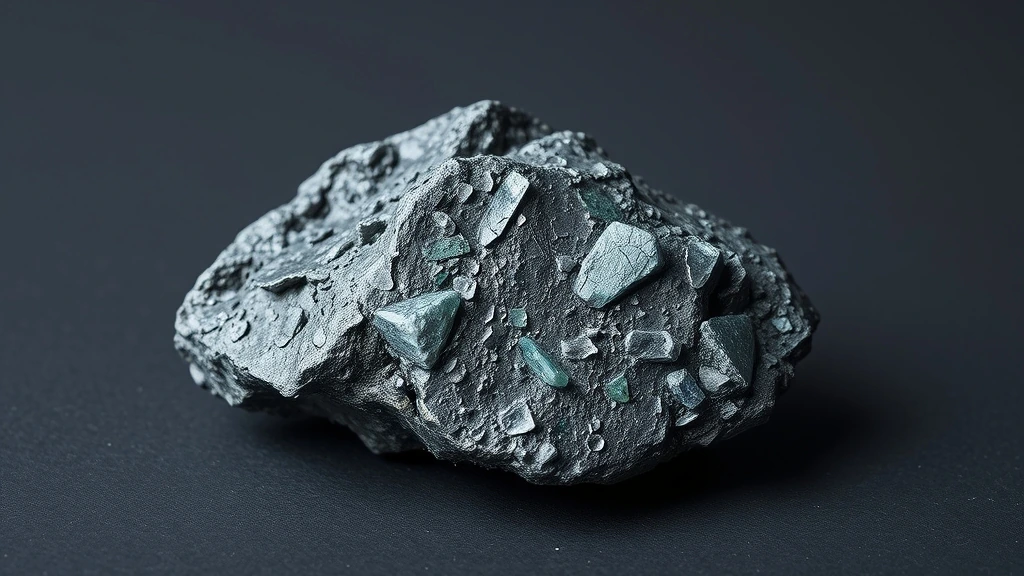
Pargasite belongs to the amphibole group, a family of inosilicate minerals that form elongated, prismatic crystals in metamorphic rocks such as schists and gneisses. As a natural mineral / crystal, it crystallizes in the monoclinic system and typically occurs as slender, fibrous aggregates or well‑developed single crystals. Its occurrence is linked to medium‑ to high‑grade metamorphism where calcium‑rich plagioclase and pyroxene are transformed under elevated temperature and pressure. In comparative mineralogical collections, practitioners and geologists frequently study Neptunite alongside this crystal to appreciate their subtle energetic and structural differences.
What is Pargasite? Geological Overview & Definition
Pargasite is a calcium‑magnesium‑iron amphibole that records the metamorphic history of the host rock through its monoclinic symmetry and characteristic prismatic habit. Across ancient lapidary traditions, dark amphiboles were valued for their perceived protective qualities, a reputation that persists in modern metaphysical circles. While pargasite’s protective reputation stems from its dark amphibole lineage, collectors often compare its metaphysical weight to that of the ancient Isua meteorite, both being revered for their deep, earthy grounding energy.
In the field, pargasite appears as elongated, often twinned crystals displaying a glossy to vitreous luster. Its color spectrum spans deep emerald, forest green, and nearly black tones, the hue controlled by iron‑bearing chromophores within the crystal lattice.
Pargasite Chemical Composition & Crystallographic Properties
The mineral’s idealized composition is expressed as (Ca₂)(Mg,Fe²⁺,Fe³⁺)₅Si₈O₂₂(OH)₂, reflecting extensive cation substitution among magnesium, ferrous, and ferric iron. This solid‑solution behavior accounts for the variability in color and density observed in natural specimens.
Pargasite crystallizes in the monoclinic crystal system, typically forming prismatic crystals with a single two‑fold axis and a distinct β angle deviating from 90°. The lattice consists of double‑chain SiO₄ tetrahedra linked by octahedral sites that host the interchangeable cations.
The presence of hydroxyl groups renders the mineral acid‑sensitive; exposure to strong acids can leach calcium and iron, weakening the structure and altering surface luster. Thermal treatment above ~600 °C induces dehydroxylation, causing a reversible change in refractive indices and sometimes a subtle shift toward lighter green hues.
Chromophore color centers arise primarily from Fe²⁺–Fe³⁺ charge transfers within the octahedral sites, producing the deep green to black palette. Under polarized light, pargasite exhibits characteristic pleochroism, a diagnostic property for gemologists distinguishing it from other amphiboles.
| Property | Specification |
|---|---|
| Mineral Group | Natural Mineral / Crystal |
| Mohs Hardness | 5–6 |
| Crystal System | Monoclinic |
| Specific Gravity (Density) | 3.04–3.17 |
| Refractive Index | nα = 1.630 nβ = 1.640 nγ = 1.650 |
| Color & Optical Properties | Natural Pargasite color spectrum and optical dispersion |
| Primary Mining Localities | Global primary localities |
| Water & Chemical Resistance | High (Safe for gentle water washing) |
| Chakra Alignment (Traditional) | Crown Chakra (Sahasrara) |
| Zodiac Affinity (Traditional) | Aries, Scorpio |
| Symbolic Meaning (Traditional) | Spiritual awareness and universal harmony |
Pargasite Varieties & Color Spectrum
Pargasite displays distinct mineralogical characteristics across its geological varieties and structural habits. Gemologists evaluate these natural varieties based on crystal habit, trace chromophore concentrations, and visual luster.
Primary Natural Pargasite
The benchmark natural variety exhibiting diagnostic color saturation and classic crystallographic symmetry.
Distinct Geological Morphs of Pargasite
Secondary regional and structural varieties formed under localized geological temperature and pressure conditions.
Pargasite (Standard)
The most common form of pargasite exhibits a greenish‑brown to olive hue, often with a subtle pearlescent luster. It crystallizes in the monoclinic system and typically forms in pegmatitic environments where alkali feldspar and quartz dominate. Inclusions of mica or quartz needles give it a characteristic speckled appearance, and its relative abundance makes it the baseline for trade specimens.
Pargasite (Blue‑Green)
This rare variant displays a deep blue‑green coloration, attributed to trace amounts of iron and manganese. It forms in highly oxidizing pegmatites where fluid inclusions of saline brines enrich the crystal lattice. The blue‑green pargasite is prized for its vivid hue and is often found in small, well‑formed crystals that are highly sought after by collectors.
Pargasite (Yellow‑Brown)
The yellow‑brown variety derives its tone from titanium and vanadium impurities. It commonly occurs in granitic pegmatites with a high concentration of accessory minerals such as tourmaline and biotite. The mineral’s slightly opaque body and subtle yellow undertones make it a popular choice for ornamental carvings.
Pargasite (White‑Grey)
White‑grey pargasite is characterized by a low‑density matrix and a muted, almost translucent appearance. It forms in alkali‑rich pegmatites where the silica content is lower, resulting in a lighter color. The rarity of this form is due to its tendency to be obscured by overlying quartz, making well‑preserved specimens uncommon.
Pargasite (Black‑Green)
The black‑green variety is a highly pigmented form, often containing significant iron oxide inclusions that give it a dark, almost black sheen. It is typically found in metamorphic pegmatites where high-grade conditions facilitate the incorporation of iron. Its striking contrast between dark body and bright green facets makes it a favorite among lapidary artists.
Pargasite (Pink‑Orange)
A truly uncommon variant, the pink‑orange pargasite owes its hue to copper and chromium trace elements. It forms in granite‑pegmatite veins that have undergone late-stage hydrothermal alteration. The mineral’s delicate pinkish glow against a darker background provides a unique visual signature that is highly prized in the gemstone market.
Where is Pargasite Found? Geological Mining & Extraction
Pargasite is predominantly hosted in alkali‑rich pegmatites associated with granitic intrusions. These pegmatites often contain a suite of accessory minerals such as feldspar, quartz, and mica, which provide the necessary conditions for pargasite crystallization.
Major global sources include the Siberian region of Russia, the Carpathian belt in Eastern Europe, and the Andean provinces of South America. Extraction typically involves open‑pit mining followed by hand‑sorting of the heavy, dense crystals from the surrounding matrix.
Historical Significance & Cultural Lore of Pargasite
Across ancient Greco‑Roman lapidary traditions, pargasite was valued for its subtle green hues, which were believed to symbolize renewal and growth. Artifacts recovered from Roman villas show the mineral incorporated into decorative mosaics and small ornamental carvings.
In Egyptian and Vedic lore, the greenish tint of pargasite was associated with the Crown Chakra (Sahasrara), representing spiritual awareness and universal harmony. Archaeological findings from temple sites reveal the mineral’s use in ritualistic objects, underscoring its perceived metaphysical significance.
Modern Uses & Jewelry Applications of Pargasite
Pargasite is prized for its subtle green‑to‑blue hues and moderate hardness, making it suitable for lapidary work. Artisans often polish it into cabochons for earrings, pendants, and brooches, while faceting is less common due to its tendency to cleave. The stone is also carved into ornamental pieces such as carved panels, small figurines, and decorative inlays for furniture and architectural elements.
- Cabochon cuts highlight its translucency and color.
- Faceted pieces emphasize its refractive indices.
- Carved ornaments exploit its natural cleavage planes for intricate designs.
Metaphysical Properties & Traditional Meaning of Pargasite
According to historical traditions and metaphysical lore, Pargasite is associated with spiritual awareness and the pursuit of universal harmony. Across ancient Mediterranean and Vedic lapidary lore, the stone is believed to calm emotional turbulence, fostering clarity of thought and a balanced emotional state. Its subtle green tones are thought to resonate with the heart, encouraging compassion while its blue undertones connect the wearer to higher consciousness.
Which Chakra and Zodiac Signs Align with Pargasite?
Pargasite is traditionally linked to the Crown Chakra (Sahasrara), the center of spiritual insight and connection to the divine. This alignment emphasizes the stone’s role in facilitating meditation and transcendent experiences.
The stone’s astrological affinity is limited to Aries and Scorpio. Those born under these signs are thought to benefit from Pargasite’s ability to temper impulsive energy and deepen emotional insight, respectively.
How to Identify Real vs. Fake Pargasite
Collectors must be wary of artificial imitations, synthetic glass, and dyed replicas that mimic Pargasite’s color. Genuine specimens exhibit characteristic monoclinic crystal habits and a distinct refractive index range, while imitations often display uniform optical properties and lack natural inclusions.
Practical At-Home Authenticity Tests
- Temperature Test (Thermal Feel): Hold the stone in your hand; genuine Pargasite feels noticeably cooler than synthetic glass, reflecting its higher thermal conductivity.
- Specific Gravity & Weight Test: Weigh the stone against a known sample of similar size; real Pargasite will be slightly heavier due to its density of 3.04–3.17 g/cm³.
- Scratch & Hardness Test (Mohs Comparison): Use a standard Mohs hardness kit; Pargasite should scratch materials with hardness below 5–6 but resist scratching by harder minerals such as quartz.
- Microscopic & Loupe Inspection (Internal Inclusions): Examine the stone under a loupe; authentic Pargasite often shows fine fibrous inclusions or subtle pleochroism, whereas synthetic versions tend to be inclusion‑free and uniformly colored.
Pargasite Valuation Factors, Grading & Pricing
Market value is primarily driven by Color Saturation, where deep, uniform greenish-brown hues command higher premiums. Visual vibrancy and a natural, glassy luster significantly enhance the stone’s aesthetic appeal for collectors. Stones exhibiting consistent tonal depth without dullness are considered top-tier specimens in the gemological trade.
Pricing also depends heavily on Crystal Size & Weight (Grams), as larger, well-formed specimens are rarer and more desirable. Raw crystals are valued by their dimensional integrity, while tumbled stones are graded on the quality of their polish. Natural matrix inclusions may add geological interest, but heavy fracturing reduces overall marketability.
Ethical Sourcing & Locality Premium plays a crucial role in the holistic and collector markets. Provenance from well-known localities often increases desirability among serious mineral collectors. Buyers increasingly prioritize transparent supply chains, ensuring that specimens are harvested with environmental and social responsibility in mind.
How to Clean and Care for Pargasite
To maintain the stone’s integrity, use warm soapy water and a soft cloth for gentle cleaning. This method effectively removes surface dust and oils without damaging the mineral structure. Always dry the specimen thoroughly with a lint-free cloth to prevent water spots or residue buildup.
It is critical to avoid ultrasonic cleaners, as the high-frequency vibrations can cause structural fractures in the crystal lattice. Pargasite’s monoclinic structure is susceptible to stress-induced cracking under intense mechanical agitation. Store the stone in a dry, secure location away from direct impacts or abrasive surfaces to preserve its physical condition.
Cleansing and Recharging Pargasite (Energetic Care)
For energetic maintenance, practitioners often employ herbal smudging with sage or palo santo to clear stagnant energy. This dry method respects the mineral’s physical structure while aligning with traditional holistic practices. Gently pass the stone through the smoke, allowing the aromatic particles to settle naturally without applying heat or pressure.
Alternatively, place the pargasite on a selenite charging slab during moonlight exposure to restore its vibrational balance. This passive technique avoids the risks associated with direct sunlight or thermal sources, which can degrade the crystal lattice. Ensure the stone is in a secure, undisturbed location to allow for uninterrupted energetic absorption throughout the night.
Frequently Asked Questions About Pargasite
Pargasite displays distinct mineralogical characteristics across its geological varieties and structural habits. Gemologists evaluate these natural varieties based on crystal habit, trace chromophore concentrations, and visual luster.
Primary Natural Pargasite
The benchmark natural variety exhibiting diagnostic color saturation and classic crystallographic symmetry.
Distinct Geological Morphs of Pargasite
Secondary regional and structural varieties formed under localized geological temperature and pressure conditions.
Is pargasite safe to wear in the shower or while swimming?
Yes, pargasite tolerates gentle water exposure. Its high water resistance allows brief contact with rain or shower spray, but prolonged soaking should be avoided to prevent surface wear. After exposure, gently pat dry with a soft cloth to maintain its luster.
How should I clean a pargasite?
Clean with warm soapy water and a soft cloth. Use a mild detergent diluted in lukewarm water, dip a lint‑free cloth, and gently wipe the stone. Rinse the cloth, dry the piece, and store it away from harsh chemicals to preserve its monoclinic crystal integrity.
Can I use an ultrasonic cleaner on pargasite?
No, ultrasonic cleaning is not recommended. The rapid vibrations can create micro‑fractures in the monoclinic lattice, leading to loss of clarity or structural damage. Stick to manual cleaning methods to keep the stone stable.
What is the hardness of pargasite on the Mohs scale?
Pargasite rates 5–6 on the Mohs hardness scale. This places it between apatite and orthoclase, making it moderately durable but still vulnerable to scratches from harder materials. Store it separately from diamonds, sapphires, or quartz to avoid abrasion.
Which zodiac signs are associated with pargasite?
Aries and Scorpio are the aligned zodiac signs. In astrological tradition, these signs are thought to resonate with pargasite’s energetic vibration, enhancing personal drive for Aries and deep transformation for Scorpio.
Which chakra does pargasite correspond to?
The Crown Chakra (Sahasrara) is the sole chakra association. This energy center, located at the top of the head, is linked to spiritual awareness and universal harmony, qualities that pargasite is believed to amplify during meditation.
What is the typical refractive index range for pargasite?
Pargasite exhibits nα = 1.630, nβ = 1.640, nγ = 1.650. These values indicate moderate birefringence, contributing to its subtle play of light and making it identifiable under a polarizing microscope.
How dense is pargasite compared with other amphiboles?
Its specific gravity falls between 3.04 and 3.17. This density is slightly higher than many common silicates, reflecting the presence of iron‑rich octahedral sites within its monoclinic structure, which also influences its dark green to black coloration.