
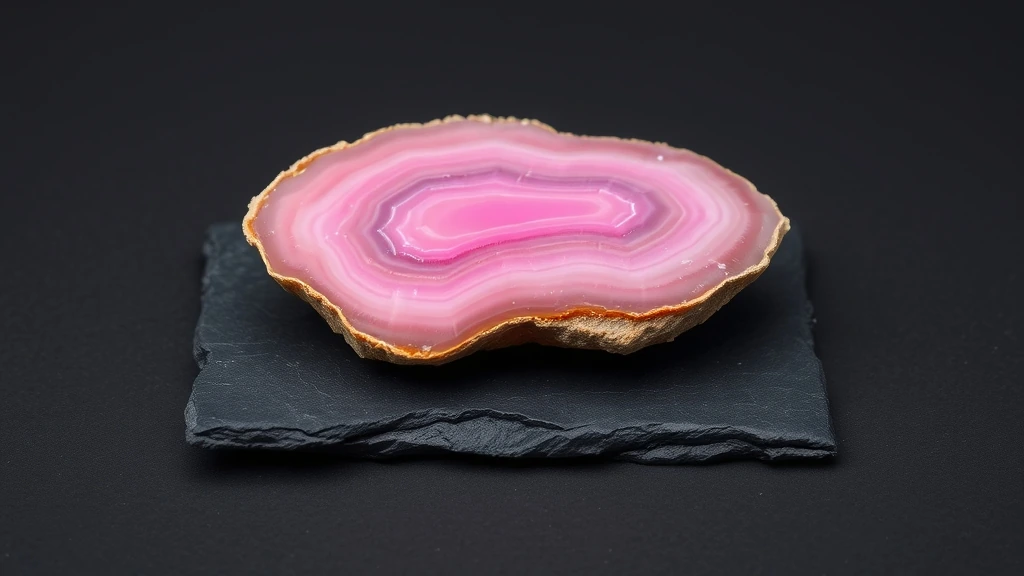
Botswana Agate belongs to the chalcedony group, a variety of cryptocrystalline quartz within the broader silicate mineral family. Unlike macrocrystalline quartz, it lacks visible crystal faces, forming instead from interlocking microscopic fibers. This fibrous texture creates the stone’s characteristic waxy luster and high translucency. Geologically, it forms in cavities of volcanic basalt, where silica-rich fluids precipitate over millions of years. The specific pink coloration distinguishes it from common banded agates, making it a prized lapidary material.
What is Pink Botswana Agate? Geological Overview & Definition
Pink Botswana Agate is defined by its cryptocrystalline structure, composed of extremely fine-grained silica fibers. These fibers interlock to form a dense, durable aggregate that resists fracture more effectively than coarse-grained quartz. The stone typically exhibits a soft, pastel pink hue, often with subtle banding or mottling. This coloration is not uniform, creating a unique visual signature for each specimen.
The geological origin lies in volcanic basalt formations, where silica-rich hydrothermal fluids filled vesicles and fissures. As these fluids cooled, they deposited layered chalcedony, trapping trace elements that influence color. The resulting stone is a silica gel that underwent diagenesis, transforming into a hard, glassy mineral. This process ensures the agate’s resilience and suitability for intricate carving and jewelry. In comparative mineralogical collections, practitioners and geologists frequently study Peanut Wood alongside this crystal to appreciate their subtle energetic and structural differences.
Pink Botswana Agate Chemical Composition & Crystallographic Properties
The fundamental chemical composition is silicon dioxide (SiO₂), arranged in a trigonal crystal system. However, the individual crystals are too small to be resolved by the naked eye, forming a microcrystalline aggregate. This fibrous arrangement, known as chalcedony, gives the stone its distinctive texture and optical properties. The lattice structure consists of tetrahedral silicon-oxygen units linked in a continuous framework. In comparative mineralogical collections, practitioners and geologists frequently study Mexican Agate alongside this crystal to appreciate their subtle energetic and structural differences.
Coloration in Pink Botswana Agate is attributed to chromophore impurities, likely involving trace amounts of iron or manganese. These elements substitute for silicon in the crystal lattice, altering light absorption. The stone exhibits acid sensitivity typical of silica, though it remains resistant to most common acids. Thermal behavior is stable, with no significant phase changes under standard jewelry conditions.
The refractive index ranges from 1.544 to 1.553, contributing to its gentle vitreous luster. Density measurements fall between 2.60 and 2.65 g/cm³, consistent with pure silica minerals. The Mohs hardness of 6.5 to 7.0 indicates good scratch resistance, suitable for daily wear. This durability is enhanced by the interlocking fibrous nature of the cryptocrystalline structure.
Cation substitution within the lattice is minimal, preserving the chemical purity of the silica framework. Any color variation results from structural defects or trace element inclusions rather than major compositional shifts. The stone’s thermal conductivity is moderate, allowing it to retain ambient temperature. These properties collectively define Pink Botswana Agate as a stable, aesthetically pleasing gem material.
| Property | Specification |
|---|---|
| Mineral Group | Silicates (Chalcedony / Cryptocrystalline Quartz) |
| Chemical Formula | SiO₂ (Silicon Dioxide) |
| Mohs Hardness | 6.5 – 7.0 |
| Crystal System | Trigonal (Microcrystalline / Cryptocrystalline fibrous aggregates) |
| Specific Gravity (Density) | 2.60 – 2.65 |
| Refractive Index | 1.544 – 1.553 |
| Color & Optical Properties | Natural Pink Botswana Agate color spectrum and optical dispersion |
| Primary Mining Localities | Brazil, Uruguay, Turkey, India, Madagascar |
| Water & Chemical Resistance | High (Safe for gentle warm water and mild soap; avoid harsh acids and chlorine) |
| Chakra Alignment (Traditional) | Root Chakra and Sacral Chakra |
| Zodiac Affinity (Traditional) | Gemini, Virgo, Taurus |
| Symbolic Meaning (Traditional) | Grounding, emotional balance, physical endurance, and protection |
Pink Botswana Agate Varieties & Color Spectrum
The visual diversity of this cryptocrystalline silica gemstone stems from trace impurities and formation conditions. Understanding these distinctions is critical for accurate gemological identification and valuation.
Classic Botswana Pink
This primary variety exhibits a soft, pastel rose hue derived from trace iron oxides. The stone typically features concentric banding that alternates between pale pink and translucent white layers. Its microcrystalline structure creates a smooth, waxy luster that is highly prized by lapidaries.
Deep Rose Agate
Characterized by a more saturated, salmon-pink coloration, this morph is rarer than its pastel counterparts. The intensity of the chromophoric agents results in a richer visual depth without compromising clarity. Collectors often seek out specimens with minimal zebra-like striping for cabochon cutting.
Banded Botswana Agate
This variety displays distinct, parallel bands of varying pink and cream shades. The banded texture forms as silica gel deposits in layers within volcanic cavities. Such patterns are essential for creating intaglio carvings and ornamental architectural elements.
Translucent Pink Agate
High-quality specimens exhibit significant light transmission through the cryptocrystalline matrix. This transparency allows the internal fibrous inclusions to appear as delicate, cloud-like formations. Gemologists assess this clarity using the refractive index range of 1.544 to 1.553.
Mottled Pink Agate
This irregular variety features patchy, non-linear color distribution rather than distinct bands. The mottled appearance arises from uneven diffusion of iron impurities during cooling. It is often used for polished tumbles and smaller decorative jewelry pieces.
White-Pink Gradient Agate
A transitional type where pure white zones blend seamlessly into soft pink areas. This gradient effect highlights the silica saturation levels within the host rock. Such stones are popular in meditative bead strings for their calming visual aesthetic.
Where is Pink Botswana Agate Found? Geological Mining & Extraction
Pink Botswana Agate primarily occurs in volcanic basalt formations rather than typical granitic pegmatites. The gemstone forms within amygdaloidal cavities where silica-rich hydrothermal fluids precipitated over millions of years. These deposits are concentrated in the Kalahari Basin region of southern Africa.
Commercial extraction focuses on open-pit mining operations in the Botswana and neighboring South Africa border regions. Miners carefully extract large geode nodules to preserve the integrity of the internal bands. Post-extraction processing involves splitting and polishing to reveal the concentric color zones within the stone.
Historical Significance & Cultural Lore of Pink Botswana Agate
Ancient civilizations revered agate as a protective talisman against misfortune and physical harm. In Greco-Roman mythology, the stone was associated with the goddess Hecate and believed to ward off evil spirits. Egyptian artisans frequently carved agate into scarabs and amulets for burial rituals, symbolizing eternal protection in the afterlife.
Vedic texts in India describe agate as a stone of grounding energy that stabilizes the practitioner’s spiritual focus. Throughout early archaeological records, banded agate artifacts have been discovered in Neolithic sites across Eurasia. These findings confirm its enduring role in ancient lapidary traditions for millennia.
Modern Uses & Jewelry Applications of Pink Botswana Agate
Pink Botswana agate is prized for its smooth, translucent bands that lend themselves to both classic and contemporary designs. Lapidary artisans typically cut the stone into cabochons to showcase its subtle pink hues, while skilled faceting can highlight internal chatoyancy for high‑impact pieces. Ornamental carving also thrives, producing beads, pendants, and decorative inlays that complement luxury watches and artisanal mosaics.
- Cabochon pendants and earrings emphasizing the stone’s gentle color gradient
- Faceted rings that accentuate light play within the microcrystalline structure
- Carved cameos, seals, and architectural accents for bespoke décor
Metaphysical Properties & Traditional Meaning of Pink Botswana Agate
According to historical traditions and metaphysical lore, pink Botswana agate is associated with grounding energy that stabilizes the wearer’s physical and emotional foundation. Across ancient Mediterranean and Vedic lapidary narratives, the stone is believed to nurture emotional balance, fostering compassion and gentle resilience in times of stress. Its soothing pink tones are said to amplify inner peace, encouraging a calm yet confident presence in daily life.
Which Chakra and Zodiac Signs Align with Pink Botswana Agate?
In the system of subtle body anatomy, pink Botswana agate resonates most strongly with the Root Chakra, anchoring vitality and security, while also stimulating the Sacral Chakra, which governs creative flow and emotional expression. This dual alignment supports both stability and the nurturing of personal passions.
Astrologically, the stone is linked to the zodiac signs Gemini, Virgo, and Taurus. Gemini benefits from the stone’s ability to calm mental chatter, Virgo finds reinforcement of practical endurance, and Taurus experiences enhanced sensual appreciation and steadfastness. These alignments are consistent across traditional astrological correspondences for agate varieties.
How to Identify Real vs. Fake Pink Botswana Agate
Artificial imitations of pink Botswana agate include dyed quartz, synthetic glass, and resin composites that mimic its banded appearance but lack the authentic silica composition. These substitutes often exhibit uniform coloration, excessive gloss, or a weight that feels lighter than natural stone. Recognizing these differences is essential for collectors and buyers seeking genuine material.
Practical At-Home Authenticity Tests
- Temperature Test (Thermal Feel): Natural agate absorbs heat slowly and feels cool to the touch, whereas glass or plastic warms quickly in the hand.
- Specific Gravity & Weight Test: With a density of 2.60‑2.65 g/cm³, genuine agate feels noticeably heavier than glass (≈2.5 g/cm³) when held.
- Scratch & Hardness Test (Mohs Comparison): Using a steel nail (hardness ~5.5) will not scratch authentic agate (hardness 6.5‑7), but softer imitations will show surface marks.
- Microscopic & Loupe Inspection (Internal Inclusions): Under 10× magnification, real agate reveals fine, irregular banding and micro‑crystalline texture, while synthetic glass displays uniform bubbles or a lack of natural inclusions.
Pink Botswana Agate Valuation Factors, Grading & Pricing
The market first gauges color saturation; a deep, uniform pink hue with minimal banding commands premium prices. Collectors prize stones that display a vivid, luminous glow under both natural and artificial light, as this visual vibrancy signals minimal dyeing and high natural quality. Subtle variations in tone that transition smoothly across the surface add to the perceived energetic luster, further boosting value.
Crystal size & weight (grams) is the next decisive metric, with larger, heavier specimens typically fetching higher bids. Raw blocks are assessed by dimension and mass, while tumbled pieces gain additional worth from a flawless polish that reveals the stone’s innate translucence. Natural matrix inclusions, such as fine quartz or chalcedony bands, are welcomed when they enhance pattern complexity without compromising structural integrity.
Ethical sourcing & locality premium now influences both holistic practitioners and serious collectors. Stones confirmed to originate from Botswana’s recognized agate belts carry a provenance premium, reflecting responsible mining practices and community benefit programs. Transparent supply chains that certify non‑conflict extraction further elevate market confidence and price stability.
How to Clean and Care for Pink Botswana Agate
Gentle cleaning with warm soapy water is ideal for solid Pink Botswana Agate; use a soft cloth or sponge to remove surface dust, then rinse with lukewarm water and pat dry with a lint‑free microfiber towel. Avoid harsh acids, chlorine, or abrasive pads, as they can dull the natural polish and erode the silica framework. Ultrasonic cleaners should be skipped unless the stone is confirmed untreated, unfractured, and free of any dye or surface coating.
Cleansing and Recharging Pink Botswana Agate (Energetic Care)
For energetic renewal, place the agate on a clean selenite slab in a quiet space, allowing the neutral selenite to absorb and disperse lingering negative frequencies. A brief session of herbal smudging with sage or cedar, performed at a safe distance, can clear residual energetic debris without exposing the stone to moisture.
Alternatively, expose the stone to gentle moonlight for several hours, preferably during a full moon, to replenish its subtle vibrational field while avoiding direct sunlight that could cause thermal stress. Resting the agate on a natural wood surface or within a crystal grid of complementary stones also supports ongoing balance and protection.
Frequently Asked Questions About Pink Botswana Agate
Pink Botswana Agate displays distinct mineralogical characteristics across its geological varieties and structural habits. Gemologists evaluate these natural varieties based on crystal habit, trace chromophore concentrations, and visual luster.
Primary Natural Pink Botswana Agate
The benchmark natural variety exhibiting diagnostic color saturation and classic crystallographic symmetry.
Distinct Geological Morphs of Pink Botswana Agate
Secondary regional and structural varieties formed under localized geological temperature and pressure conditions.
What is the chemical composition of Pink Botswana Agate?
It is composed of silicon dioxide (SiO₂). This cryptocrystalline quartz forms in micro‑fibrous aggregates that give the stone its characteristic banded pink hues. The uniform silica framework accounts for its relatively high hardness (6.5‑7 on the Mohs scale) and its durability in everyday wear.
How hard is Pink Botswana Agate and can it be used in jewelry?
Its Mohs hardness ranges from 6.5 to 7.0, making it suitable for most jewelry applications. The stone resists scratches from everyday objects, though it should be protected from impact with harder minerals like diamond or corundum. Its density of 2.60‑2.65 g/cm³ contributes to a pleasant weight on rings and pendants.
Is Pink Botswana Agate safe to wear in the shower or while swimming?
Yes, it is water‑resistant and safe for gentle warm water and mild soap. Avoid harsh acids, chlorine, or prolonged exposure to salt water, as these can gradually dull the surface polish. Routine cleaning with lukewarm soapy water helps maintain its luster without harming the silica matrix.
What is the recommended method for cleaning Pink Botswana Agate?
Warm soapy water and a soft brush are ideal for solid agates. Gently scrub with a mild detergent, rinse with clean water, and pat dry with a lint‑free cloth. Ultrasonic cleaners should be avoided if the stone is dyed, heavily fractured, or has undergone any surface treatment.
Which zodiac signs are associated with Pink Botswana Agate?
Gemini, Virgo, and Taurus are the aligned zodiac signs. In astrological tradition, the stone is believed to enhance the analytical mind of Gemini, the meticulous nature of Virgo, and the grounded stability of Taurus, reinforcing the stone’s reputation for emotional balance.
Which chakras does Pink Botswana Agate influence?
It is linked to the Root Chakra and the Sacral Chakra. These energy centers correspond to grounding, physical endurance, and creative vitality. Practitioners often place the stone on the lower abdomen or base of the spine to promote physical protection and emotional equilibrium.
Can Pink Botswana Agate be dyed or treated, and how does that affect care?
Some specimens are artificially dyed to enhance pink tones, which can affect durability. Dyed agates may be more sensitive to harsh cleaning agents and should not be subjected to ultrasonic vibrations. Always verify with the seller whether the stone is natural or treated before applying any cleaning regimen.
How does the refractive index of Pink Botswana Agate compare to other quartz varieties?
Its refractive index falls between 1.544 and 1.553, typical for quartz. This modest range yields a gentle brilliance without the fire of higher‑index gemstones like zircon. The consistent optical properties aid gem cutters in achieving smooth polish and predictable light performance.