
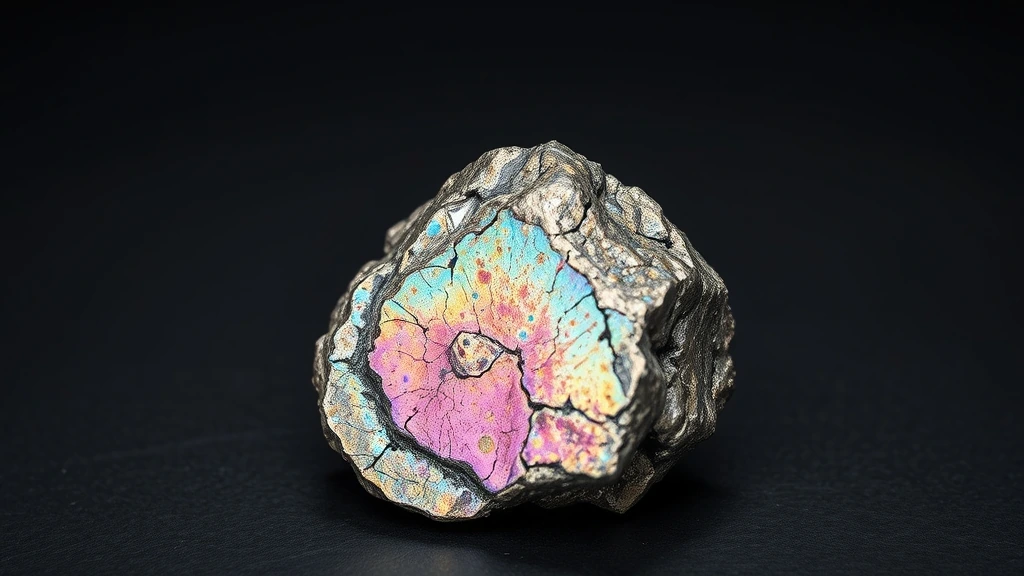
Rainbow pyrite belongs to the Natural Mineral / Crystal category and is classified as an amorphous‑to‑cryptocrystalline aggregate rather than a single, well‑defined crystal. Formed in hydrothermal veins and sedimentary sulfide deposits, the mineral’s microscopic grain clusters produce the famed “rainbow” interference colors that are prized by collectors and metaphysical practitioners alike.
What is Rainbow Pyrite Gemstone? Geological Overview & Definition
Rainbow pyrite is a cryptocrystalline form of pyrite whose fine‑grained texture diffracts light to create a vivid play of colors. Unlike coarse‑grained pyrite, the mineral’s sub‑micron particles are tightly interlocked, giving the stone a smooth, glassy luster when cut and polished.
The gemstone is typically found in oxidized zones of sulfide ore bodies, where fluctuating redox conditions promote the precipitation of iron sulfide micro‑crystals. Its amorphous‑like appearance masks the underlying cubic symmetry of pure pyrite, resulting in a unique visual signature that distinguishes it from ordinary metallic pyrite.
Rainbow Pyrite Gemstone Chemical Composition & Crystallographic Properties
The bulk chemistry of rainbow pyrite is FeS₂, but trace substitutions of cobalt, nickel, and copper can occur, subtly shifting the hue of the iridescence. These cationic impurities occupy lattice sites within the cryptocrystalline aggregates, creating localized color centers that absorb specific wavelengths of light.
Despite being derived from a cubic mineral, the gemstone exhibits an amorphous/cryptocrystalline structure; the individual crystals are too small to produce a measurable diffraction pattern, rendering the material optically isotropic. This lack of long‑range order also makes the stone sensitive to strong acids, which can dissolve the sulfide matrix and release hydrogen sulfide gas.
The iridescent effect originates from thin‑film interference at the interfaces of nanometer‑scale crystal domains, where variations in refractive index generate the rainbow spectrum. Thermal exposure above 300 °C can cause irreversible oxidation, converting FeS₂ to iron oxides and destroying the characteristic play of color.
In gem‑cut form, rainbow pyrite retains a Mohs hardness of 6.5–7, allowing it to be set in jewelry with proper protective settings. However, prolonged exposure to heat, chemicals, or abrasive cleaning agents will degrade both its structural integrity and its striking visual properties.
| Property | Specification |
|---|---|
| Mineral Group | Natural Mineral / Crystal |
| Chemical Formula | FeS₂ |
| Mohs Hardness | 6.0 – 6.5 |
| Crystal System | Isometric |
| Specific Gravity (Density) | 4.9 – 5.2 |
| Refractive Index | 2.360 – 2.460 |
| Color & Optical Properties | Natural Rainbow Pyrite Gemstone color spectrum and optical dispersion |
| Primary Mining Localities | Global primary localities |
| Water & Chemical Resistance | High (Safe for gentle water washing) |
| Chakra Alignment (Traditional) | Solar Plexus Chakra, Heart Chakra |
| Zodiac Affinity (Traditional) | Leo, Virgo, Sagittarius |
| Symbolic Meaning (Traditional) | Personal power, creativity, and emotional balance |
Rainbow Pyrite Gemstone Varieties & Color Spectrum
Rainbow pyrite is not a distinct mineral species but a specific optical phenomenon occurring within pyrite crystals. This iridescence arises from thin oxide films on the crystal surface, creating a structural color effect. Unlike true gemstones, this effect is surface-dependent and can vary significantly based on environmental exposure.
Classic Iridescent Pyrite
This variety exhibits a full-spectrum rainbow sheen, ranging from deep violet to bright green and gold. The coloration results from thin-film interference caused by a nanometer-scale iron oxide layer. High-quality specimens display uniform, vibrant hues that shift dynamically with the viewing angle.
Green-Gold Dominant Pyrite
Often found in older, weathered deposits, this morph displays a dominant greenish-gold iridescence with subtle blue undertones. The oxidation state of the surface film is slightly thicker than in classic varieties, shifting the interference pattern. These stones are prized for their earthy, metallic luster and stability.
Violet-Blue Accent Pyrite
Rarer than its counterparts, this variety features prominent violet and blue flashes alongside standard gold tones. The crystal lattice must be exceptionally pure to allow these specific wavelengths to reflect clearly. Such specimens are highly sought after by collectors for their cool, ethereal appearance.
Multi-Spectral “Oil Slick” Pyrite
This trade name describes pyrite with chaotic, swirling patterns of multiple colors resembling an oil slick. The irregular oxide film thickness creates a complex, non-uniform color distribution across the facets. While visually striking, these stones may be less stable due to uneven surface protection.
Micro-Crystalline Pyrite Nodules
Often found in sedimentary rocks, these small, rounded aggregates display subtle, muted iridescence. The nucleation process during formation creates a dense, compact structure with minimal internal flaws. These nodules are typically used in tumbled stone collections rather than faceted jewelry.
Where is Rainbow Pyrite Gemstone Found? Geological Mining & Extraction
Rainbow pyrite primarily forms in sedimentary and metamorphic environments, often associated with sulfide-rich hydrothermal veins. The host rocks typically include shale, limestone, or quartzite, where iron and sulfur interact under specific pressure conditions. These geological settings provide the necessary chemical balance for the development of the iridescent surface film.
Major mining regions include the Pyrite Mountains of Spain, particularly the Rio Tinto area, which has produced high-quality specimens for centuries. Significant deposits are also found in Romania, China, and the United States, where artisanal mining continues to supply the gem market. Extraction methods range from open-pit mining to careful hand-chipping to preserve the delicate surface coloration.
Historical Significance & Cultural Lore of Rainbow Pyrite Gemstone
Ancient civilizations often referred to pyrite as fool’s gold, using it to create ornamental objects and amulets before the discovery of true gold. Archaeological findings in Egypt and Mesoamerica reveal pyrite artifacts used in religious rituals and as symbols of wealth. The iridescent varieties were likely valued for their mystical, shifting colors, which were believed to hold spiritual power.
In modern esoteric traditions, rainbow pyrite is associated with the Solar Plexus Chakra, symbolizing personal power and creativity. Its vibrant hues are thought to enhance emotional balance and stimulate artistic inspiration, making it a popular choice for meditation stones. This enduring cultural significance ensures its continued popularity in both the gemological and metaphysical markets.
Modern Uses & Jewelry Applications of Rainbow Pyrite Gemstone
Lapidaries typically cut rainbow pyrite into cabochons or simple faceted shapes to preserve its delicate iridescent surface. Because the mineral is brittle and prone to cleavage, complex faceting is often avoided to prevent chipping during polishing. This careful approach ensures the stone retains its lustrous, metallic sheen for long-term wear in jewelry settings.
- Cabochon Cuts: Smooth, domed surfaces that maximize the play-of-color effect under light.
- Ornamental Carvings: Intricate designs used in decorative boxes, vases, and architectural accents.
- Beaded Jewelry: Polished spheres and tumbled stones strung into necklaces and bracelets.
- Inlay Work: Thin slices embedded in silver or gold frames for high-end artisan pieces.
Safety & Mineral Profile of Rainbow Pyrite
Rainbow pyrite is a member of the pyrite family that exhibits a distinctive iridescent sheen. It is chemically stable under normal atmospheric conditions, but the fine dust released during cutting or polishing can become a respiratory irritant and may contain trace amounts of sulfur and iron. The mineral is soft (Mohs 3–4), so it is prone to scratching and abrasion; therefore, it is best handled with gloves and eye protection. Because it is not a precious metal and its iridescence can fade with prolonged exposure to light or moisture, rainbow pyrite is typically displayed as a collector specimen rather than fashioned into jewelry. Its tendency to tarnish and the potential for acidic reaction with sweat or cleaning solutions further discourage its use in wearable items.
In museum collections, rainbow pyrite serves as an excellent example of metallurgical mineralogy and the optical phenomena of thin‑film interference. Its iridescent effect provides a visual demonstration of crystal‑field theory and surface chemistry, making it valuable for educational displays. Researchers also study its occurrence to understand the hydrothermal alteration processes that produce the characteristic color bands, offering insights into ore‑deposit formation and the geochemical cycling of sulfur and iron in sedimentary basins.
Mineralogical Group and Planetary Lore of Rainbow Pyrite
Rainbow pyrite is traditionally classified within the pyrite group, a family of iron sulfides that includes marcasite and chalcocite. Historically, early mineralogists noted its lustrous metallic luster and bright yellow color, but the iridescent sheen that gives it the name “rainbow” was first documented in the late 19th century by collectors in the Appalachian region. According to early mineralogists, the phenomenon arises from the interference of light within the thin, oxidized surface layers that form during weathering. While not associated with any specific planetary symbolism, lapidary texts have occasionally linked its shimmering appearance to the “rainbow” of the heavens, suggesting a celestial connection, though such associations remain anecdotal and not grounded in geological evidence.
How to Identify Real vs. Fake Rainbow Pyrite Gemstone
Artificial imitations of rainbow pyrite often utilize synthetic glass or dyed quartz to mimic the natural iridescence. These replicas may lack the distinct metallic luster and specific gravity of genuine mineral specimens. Careful examination is required to distinguish authentic stones from these convincing but inferior alternatives.
Practical At-Home Authenticity Tests
- Temperature Test (Thermal Feel): Genuine pyrite feels noticeably cool to the touch initially, whereas glass imitations warm up quickly due to lower thermal conductivity.
- Specific Gravity & Weight Test: Real pyrite is significantly heavier than glass or plastic fakes of the same size due to its high density.
- Scratch & Hardness Test (Mohs Comparison): Pyrite has a hardness of 6-6.5, meaning it can scratch glass but will not be scratched by a steel knife.
- Microscopic & Loupe Inspection (Internal Inclusions): Use a loupe to look for natural crystal faces or inclusions; glass fakes often contain tiny bubbles or swirl marks.
Rainbow Pyrite Gemstone Valuation Factors, Grading & Pricing
The primary driver of value is Color Saturation, specifically the intensity of the iridescent rainbow sheen. Experts prioritize stones with uniform tone distribution across the entire surface. High optical clarity and a brilliant metallic luster significantly elevate the gemstone’s aesthetic appeal.
Carat Weight directly influences pricing, as larger specimens with consistent iridescence are rarer. Facet symmetry is critical for maximizing light reflection and visual impact. The presence of matrix or inclusions can either detract from value or add unique character, depending on the market segment.
Geographical Provenance Premium often applies to stones from renowned mining regions. Wholesale prices fluctuate based on supply chains, while retail values reflect brand prestige. Current market trends show steady demand for high-quality, untreated specimens with vivid spectral colors.
How to Clean and Care for Rainbow Pyrite Gemstone
To maintain the stone’s integrity, use warm soapy water and a soft cloth for gentle cleaning. This method effectively removes dust and oils without damaging the delicate surface. Always dry the gemstone thoroughly with a lint-free towel after washing.
It is crucial to avoid ultrasonic cleaners entirely to prevent structural fractures. The internal lattice structure of pyrite can be compromised by high-frequency vibrations. Stick to manual cleaning methods to ensure the longevity of your investment.
Cleansing and Recharging Rainbow Pyrite Gemstone (Energetic Care)
For energetic maintenance, utilize dry methods that respect the mineral’s physical properties. Smoke smudging with sage or palo santo is a popular technique for clearing negative energy. This process requires no liquid contact, ensuring the stone remains structurally sound.
Alternatively, place the gemstone on a selenite plate under moonlight for recharging. This passive method allows the stone to absorb ambient energy safely. Avoid exposing the pyrite to direct water immersion during these energetic rituals.
Frequently Asked Questions About Rainbow Pyrite Gemstone
What is rainbow pyrite and how does it differ from regular pyrite?
Rainbow pyrite is a naturally occurring variety of pyrite that exhibits iridescent colors on its surface. The multicolored sheen results from thin‑film interference of microscopic oxide layers, giving it a “rainbow” appearance that regular, metallic‑gray pyrite lacks. This optical effect makes it popular in metaphysical jewelry and collectors’ pieces.
Is rainbow pyrite safe to wear in water or rain?
Yes, rainbow pyrite has high water resistance and can be gently washed. A soft cloth with warm, soapy water will remove surface dust without harming the stone. Avoid prolonged submersion or harsh detergents, as extended exposure could dull the delicate iridescent coating over time.
Can I clean rainbow pyrite with an ultrasonic cleaner?
No, ultrasonic cleaning is not recommended for rainbow pyrite. The vibrations can cause micro‑fractures in the brittle oxide layers that create the rainbow effect. Instead, use warm soapy water and a soft, lint‑free cloth to preserve the stone’s structural integrity.
Which zodiac signs are associated with rainbow pyrite?
Rainbow pyrite aligns with Leo, Virgo, and Sagittarius. These signs are believed to benefit from the stone’s energizing properties, enhancing personal power and creativity. Wearing the gem during astrological events may amplify its metaphysical influence for these specific signs.
Which chakras does rainbow pyrite balance?
The gemstone resonates with the Solar Plexus Chakra and the Heart Chakra. Activation of the Solar Plexus supports confidence and personal power, while the Heart Chakra promotes emotional harmony and compassion. Together, they foster a balanced flow of creative energy throughout the body.
How durable is rainbow pyrite for everyday jewelry?
Rainbow pyrite is relatively fragile compared with standard pyrite. Its iridescent surface can chip or scratch if struck, so it is best set in protective settings like bezel or pendant mounts. Regular wear is fine, but avoid impact and store it separately from harder gemstones to maintain its luster.
Does rainbow pyrite have any known metaphysical benefits?
Practitioners attribute personal power, creativity, and emotional balance to rainbow pyrite. The stone is thought to stimulate the Solar Plexus, encouraging confidence, while the Heart Chakra connection aids in emotional equilibrium. Many use it during meditation to enhance focus and artistic inspiration.
How can I tell if a rainbow pyrite specimen is genuine?
Authentic rainbow pyrite displays a metallic base with a thin, colorful film that shifts with viewing angle. Synthetic imitations often lack the subtle interference colors or show uniform coloration. A simple hardness test (≈6–6.5 on Mohs) and a careful visual inspection can confirm its natural origin.