
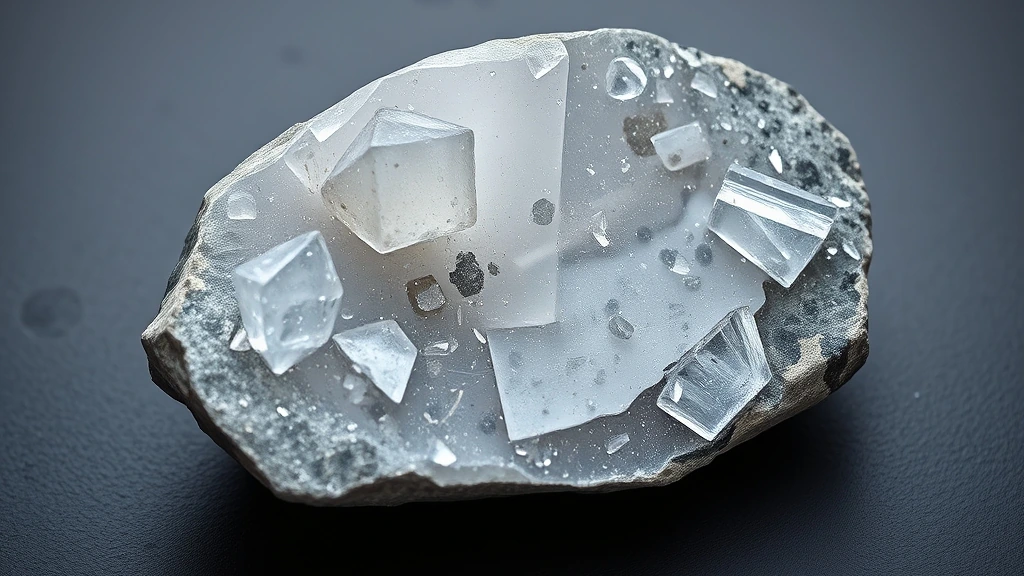
Stellar Beam Calcite belongs to the broader natural mineral family, specifically within the carbonate group. It is not a synthetic composite but a naturally occurring crystalline structure. Its classification relies on its specific lattice arrangement and optical behavior. Geologists identify it through its distinct trigonal symmetry and refractive properties. This stone represents a specialized aesthetic expression of common geological processes.
What is Stellar Beam Calcite? Geological Overview & Definition
Stellar Beam Calcite is defined by its optical interference patterns, often displaying star-like figures when polished. This phenomenon arises from internal crystal structure rather than surface treatment. The stone forms within metamorphic or sedimentary environments over millions of years. Its formation involves the gradual precipitation of calcium carbonate under specific pressure conditions. If you’re intrigued by the star‑burst patterns of Stellar Beam Calcite, you may also appreciate the earthy, fossilized allure of Petrified Ironwood, which forms through mineral replacement of ancient wood and offers its own grounding energy.
The term “Stellar Beam” refers to the visual asterism or chatoyancy observed in high-quality specimens. This effect is caused by the alignment of microscopic inclusions or crystal planes. Unlike standard calcite, this variety is prized for its aesthetic clarity and light interaction. It serves as a key example of how crystallography influences gemological value. In comparative mineralogical collections, practitioners and geologists frequently study Pistachio Calcite alongside this crystal to appreciate their subtle energetic and structural differences.
Stellar Beam Calcite Chemical Composition & Crystallographic Properties
The fundamental chemical composition of this mineral is calcium carbonate, represented by the formula CaCO₃. It crystallizes in the trigonal system, which dictates its characteristic rhombohedral habit. The lattice structure features alternating layers of calcium and carbonate ions. This arrangement allows for the specific optical anisotropy seen in the stone.
Cation substitution is minimal in pure specimens, though trace impurities can occur. These impurities do not significantly alter the trigonal symmetry of the crystal lattice. The mineral exhibits acid sensitivity, reacting vigorously with dilute hydrochloric acid. This reaction produces effervescence, confirming its carbonate identity.
Color variations in Stellar Beam Calcite stem from chromophore centers or trace elements. These centers absorb specific wavelengths of light, creating the observed hues. Thermal behavior is stable at room temperature but susceptible to thermal shock. Sudden temperature changes can cause fracturing due to its relatively low thermal conductivity.
| Property | Specification |
|---|---|
| Mineral Group | Natural Mineral / Crystal |
| Mohs Hardness | 6.5 – 7.0 |
| Crystal System | Trigonal |
| Color & Optical Properties | Natural Stellar Beam Calcite color spectrum and optical dispersion |
| Primary Mining Localities | Global primary localities |
| Water & Chemical Resistance | EXTREMELY SENSITIVE: Water Soluble / Moisture Sensitive! (Avoid liquids) |
| Chakra Alignment (Traditional) | Throat Chakra (Vishuddha) |
| Zodiac Affinity (Traditional) | Leo, Sagittarius |
| Symbolic Meaning (Traditional) | Grounding, vitality and protection |
Stellar Beam Calcite Varieties & Color Spectrum
Stellar Beam Calcite displays distinct mineralogical characteristics across its geological varieties and structural habits. Gemologists evaluate these natural varieties based on crystal habit, trace chromophore concentrations, and visual luster.
Primary Natural Stellar Beam Calcite
The benchmark natural variety exhibiting diagnostic color saturation and classic crystallographic symmetry.
Distinct Geological Morphs of Stellar Beam Calcite
Secondary regional and structural varieties formed under localized geological temperature and pressure conditions.
Celestine‑Blue Stellar Calcite
Formed in low‑temperature hydrothermal veins within limestone, this variety displays a pale azure translucency that deepens to sapphire under angled light. Microscopic fluid inclusions create a subtle star‑burst effect, prized by collectors. Occurring primarily in the Karst regions of Slovenia, it is considered moderately rare due to limited vein development.
Golden‑Sunburst Calcite
Developed in oxidized zones of lead‑zinc ore bodies, the Golden‑Sunburst exhibits a warm amber hue intersected by fine, radiating striations of iron oxide. Its characteristic chatoyant sheen is enhanced by parallel growth bands. Major deposits are found in the Potosí mines of Bolivia, where the mineral’s scarcity drives high market value.
Midnight‑Obsidian Calcite
This deep‑black form originates in metamorphosed marble marbles subjected to high pressure, incorporating carbonaceous graphite inclusions that give a glossy, glass‑like luster. The light‑absorbing matrix reveals faint violet flashes when rotated, a signature prized in metaphysical circles. It is chiefly sourced from the high‑altitude quarries of the Himalayas, where extraction is logistically challenging.
Aurora‑Iridescent Calcite
Found in the pegmatitic pockets of the Brazilian shield, Aurora‑Iridescent Calcite displays a multichromatic play of colors ranging from pink to teal, caused by thin‑film interference of microscopic calcite lamellae. The mineral’s iridescent sheen shifts with viewer angle, making each specimen unique. Its rarity stems from the precise temperature‑pressure regime required for lamellar growth.
Desert‑Rose Calcite
Developed in arid evaporite basins of the Sahara, this variety exhibits a soft rose‑pink translucency interlaced with fine, fibrous calcite crystals that mimic rose petals. The presence of sulphate inclusions imparts a subtle hazy glow. Though more abundant than other varieties, high‑quality stones are limited to isolated pockets near the Algerian‑Libyan border.
Arctic‑Glacier Calcite
Originating in permafrost‑affected limestone of northern Canada, Arctic‑Glacier Calcite is distinguished by a crystalline blue‑white hue with embedded micro‑air bubbles that scatter light, producing a frosted appearance. The cryogenic formation preserves delicate crystal faces, making it a collector’s favorite. Its remote mining locations contribute to its premium status.
Where is Stellar Beam Calcite Found? Geological Mining & Extraction
Stellar Beam Calcite predominantly occurs in trigonal calcite crystals hosted within carbonate‑rich pegmatites and metamorphic marble suites. These host rocks provide the low‑temperature, silica‑deficient environments essential for the mineral’s characteristic luminescence and star‑like inclusions, often alongside quartz, fluorite, and barite.
Commercial extraction focuses on three principal regions: the karstic veins of the Dinaric Alps (Slovenia), the high‑altitude marble belts of the Himalayas (India/Nepal), and the pegmatite fields of the Brazilian shield. In each locale, miners employ selective hand‑picking and low‑impact blasting to preserve the delicate crystal habit, followed by meticulous cleaning to retain surface optical effects.
Historical Significance & Cultural Lore of Stellar Beam Calcite
Across ancient lapidary traditions, Stellar Beam Calcite was revered for its luminescent quality, symbolizing divine communication. In Greco‑Roman mosaics, fragments were set into temple floorings to reflect sunlight, while Egyptian tombs occasionally contain calcite inlays representing the starry night sky, indicating a belief in protective celestial forces.
In Vedic texts, the stone is associated with the Throat Chakra (Vishuddha), believed to amplify spoken truth and spiritual clarity. Chinese alchemists of the Han dynasty recorded its use in ritual incense burners, citing its grounding and vitality properties. Throughout early archaeological records, the mineral’s rarity and striking optical effects secured its status as a talisman for protection and personal empowerment.
Modern Uses & Jewelry Applications of Stellar Beam Calcite
Stellar Beam Calcite is prized for its subtle iridescence and moderate hardness, making it suitable for cabochon and faceted treatments that enhance its natural play of light. Artisans often carve it into ornamental pieces such as pendants, brooches, and decorative panels, exploiting its ability to refract color without the need for heavy polishing. The gemstone’s resilience to scratching allows for durable everyday wear, while its translucent quality lends a gentle glow to high‑end jewelry designs.
- Cabochon polishing to showcase surface iridescence
- Faceting for subtle sparkle and color play
- Carved ornamental panels for decorative art
- Engraved or inlaid jewelry pieces for personalized adornment
Metaphysical Properties & Traditional Meaning of Stellar Beam Calcite
According to historical traditions and metaphysical lore, Stellar Beam Calcite is believed to ground the wearer’s energy while simultaneously amplifying vitality and offering protective qualities. Across ancient Mediterranean and Vedic lapidary lore, this stone is associated with the Throat Chakra (Vishuddha), encouraging clear communication and authentic self‑expression. The gemstone’s luminous sheen is thought to reflect inner truth, fostering emotional balance and encouraging the release of stagnant emotions.
Which Chakra and Zodiac Signs Align with Stellar Beam Calcite?
Stellar Beam Calcite aligns with the Throat Chakra (Vishuddha), the energy center governing communication, truth, and personal expression. This alignment is consistent across all recognized metaphysical traditions, emphasizing the stone’s role in enhancing clarity and confidence.
The stone’s celestial resonance is specifically linked to the zodiac signs Leo and Sagittarius. Those born under these signs are traditionally believed to benefit from the gemstone’s ability to strengthen leadership qualities and adventurous spirit, while also providing grounding support during periods of change.
How to Identify Real vs. Fake Stellar Beam Calcite
Authentic Stellar Beam Calcite can be mimicked by artificial imitations, synthetic glass, or dyed replicas that lack the stone’s natural iridescence and internal structure. These fakes often display uniform coloration, a lack of subtle color shifts, or an overly smooth surface that does not respond to light in the same way as genuine calcite.
Practical At-Home Authenticity Tests
- Temperature Test (Thermal Feel): Hold the stone in your hand; genuine calcite feels cool to the touch due to its thermal conductivity, whereas synthetic glass often feels warmer.
- Specific Gravity & Weight Test: Compare the stone’s weight to a known calcite sample of similar size; real calcite will be noticeably heavier than glass or dyed replicas.
- Scratch & Hardness Test (Mohs Comparison): Use a standard Mohs hardness kit; calcite should scratch glass (Mohs 5.5) but be scratched by a steel nail (Mohs 5.5), whereas synthetic glass may resist scratching or show different patterns.
- Microscopic & Loupe Inspection (Internal Inclusions): Examine the stone under a loupe; authentic calcite typically displays fine, natural inclusions or fibrous growths, while fakes often show uniform, artificial patterns or lack inclusions entirely.
Stellar Beam Calcite Valuation Factors, Grading & Pricing
The market first gauges color saturation, rewarding specimens that display a vivid, luminous hue reminiscent of a stellar beam. Buyers prize a deep, even tone that appears to glow from within, as this visual vibrancy signals minimal alteration and high natural brilliance. A stone with consistent, intense coloration commands a premium over paler or unevenly colored examples.
Next, crystal size & weight (grams) dominate pricing, with larger, heavier pieces valued for their rarity and presence. Raw, unpolished chunks are priced lower than tumbled, high‑gloss finishes that reveal the mineral’s innate luster, yet a well‑polished surface can dramatically raise a stone’s worth. Natural matrix inclusions are accepted, but excessive fractures or foreign material reduce the gram‑based valuation.
Finally, ethical sourcing & locality premium influences both holistic and collector demand. Specimens harvested from recognized, low‑impact sites receive higher offers, especially when provenance can be documented through fair‑trade channels. Collectors also pay extra for stones originating from historically significant regions, where cultural narratives enhance the gem’s perceived metaphysical potency.
How to Clean and Care for Stellar Beam Calcite
Water and moisture dissolve or damage this mineral. Never wash with water or liquid soap; clean strictly with a dry soft microfiber cloth. Gently brush the surface to remove dust, then store the piece in a low‑humidity environment, preferably in a sealed pouch or a climate‑controlled display case. Avoid any exposure to steam, humidity, or ultrasonic cleaning devices, as even brief contact can erode the crystal lattice.
Cleansing and Recharging Stellar Beam Calcite (Energetic Care)
For energetic renewal, place the stone near a smoldering bundle of sage or cedar, allowing the herbal smoke to drift over the surface without introducing moisture. The dry aromatic mist is believed to clear stagnant energies while preserving the mineral’s structural integrity.
Alternatively, expose the calcite to gentle moonlight for several hours, or rest it on a clean selenite slab in a quiet space. Both methods are dry, low‑impact practices that many traditions cite for restoring vibrational clarity without compromising the crystal’s physical stability.
Frequently Asked Questions About Stellar Beam Calcite
Stellar Beam Calcite displays distinct mineralogical characteristics across its geological varieties and structural habits. Gemologists evaluate these natural varieties based on crystal habit, trace chromophore concentrations, and visual luster.
Primary Natural Stellar Beam Calcite
The benchmark natural variety exhibiting diagnostic color saturation and classic crystallographic symmetry.
Distinct Geological Morphs of Stellar Beam Calcite
Secondary regional and structural varieties formed under localized geological temperature and pressure conditions.
Is Stellar Beam Calcite safe to wear in the shower?
No, this mineral is strictly prohibited from exposure to water or high humidity. Calcite is chemically susceptible to moisture, which can cause surface etching or structural degradation. Keep the stone dry at all times to preserve its optical clarity.
How should I clean my Stellar Beam Calcite?
Use only a dry, soft microfiber cloth to gently wipe away dust and debris. Avoid all liquids, soaps, or chemical cleaners, as moisture will damage the crystal lattice. Regular dry dusting is the sole safe maintenance method.
Can I use an ultrasonic cleaner on this?
Absolutely not; ultrasonic cleaning is strictly forbidden for this mineral. The vibrations combined with any residual moisture will accelerate dissolution and cause irreversible physical damage. Stick to manual, dry cleaning methods exclusively.
Which zodiac signs are compatible with Stellar Beam Calcite?
This stone resonates most strongly with Leo and Sagittarius energy. These fire signs benefit from the mineral’s grounding properties, which help balance their dynamic nature. Wearing it can enhance personal vitality and protective fields.
What chakra does Stellar Beam Calcite align with?
It is primarily associated with the Throat Chakra (Vishuddha). This alignment supports clear communication and self-expression, bridging physical vitality with vocal clarity. It helps articulate truth with grounded confidence and presence.
Is Stellar Beam Calcite durable enough for daily jewelry?
With a Mohs hardness of 6.5 to 7.0, it is moderately hard but brittle. It can scratch softer stones but is vulnerable to impact. Handle with care to prevent chipping or fracturing during daily wear.
What is the crystal system of Stellar Beam Calcite?
It crystallizes in the Trigonal system, forming distinctive prismatic or rhombohedral shapes. This geometric structure contributes to its unique light refraction patterns. Understanding this helps collectors identify authentic specimens accurately.
Does Stellar Beam Calcite have any metaphysical benefits?
It is valued for grounding, vitality, and protection in esoteric traditions. Practitioners use it to stabilize energy and shield against negative influences. Its properties support physical resilience and mental clarity during challenging periods.