
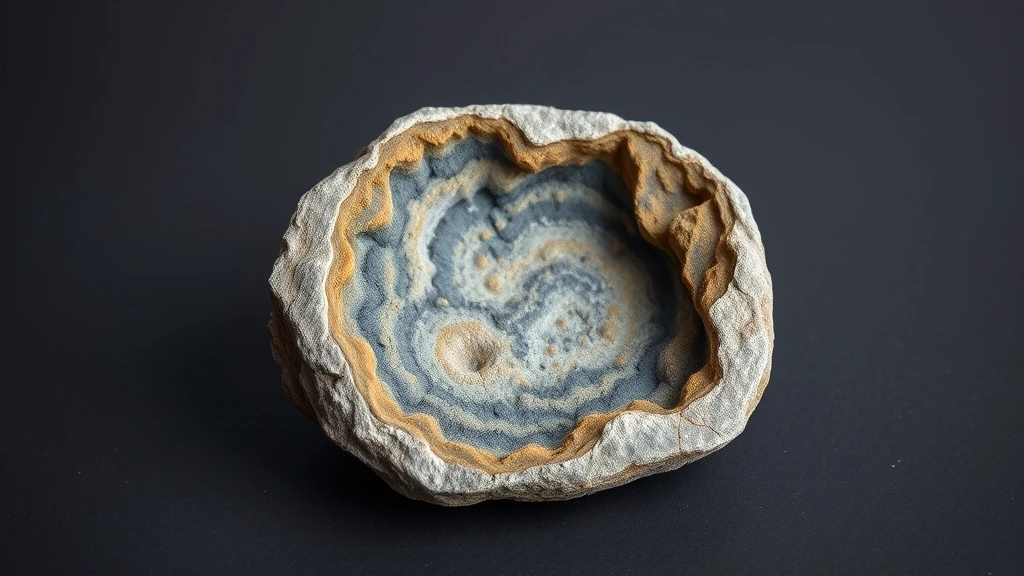
Stromatolites represent some of the oldest known geological structures, formed by the growth of cyanobacterial mats in shallow aquatic environments. As a natural mineral aggregate, it lacks a single stoichiometric formula, instead consisting of layered carbonate minerals precipitated by microbial activity over millions of years. This biogenic origin distinguishes it from purely inorganic crystal formations, making it a critical record of early Earth’s atmospheric evolution. While stromatolites are distinct biogenic structures, they share a deep geological lineage with other ancient sedimentary records, such as the Banded Iron Formation, which similarly captures the mineralogical history of Earth’s early oceans.
What is Stromatolite? Geological Overview & Definition
Stromatolites are layered, biogenic sedimentary structures created by the trapping, binding, and cementation of sedimentary grains by microbial mats. These formations typically develop in shallow, warm, saline waters where cyanobacteria thrive, creating distinct lamination patterns visible in polished cross-sections. The rhythmic layering reflects variations in microbial activity and sedimentation rates over geological time.
Geologically, stromatolites are classified as bioherms or biostromes, serving as vital archives of ancient life. While often found in Precambrian rocks, modern examples persist in locations like Shark Bay, Australia. Their preservation requires specific environmental conditions, including low turbulence and high carbonate saturation, which allow delicate microbial layers to lithify into durable stone.
Stromatolite Chemical Composition & Crystallographic Properties
Although stromatolites are aggregates, their primary constituent minerals, such as calcite and dolomite, crystallize in the trigonal crystal system. This lattice structure dictates the stone’s cleavage planes and optical properties, influencing how light interacts with the polished surface. The trigonal symmetry is fundamental to the mineralogical identity of the carbonate components within the rock matrix.
The composition involves complex cation substitution, where magnesium and iron ions replace calcium in the crystal lattice. This substitution affects the stone’s density and hardness, contributing to the observed range of 6.5 to 7.0. Minor impurities like hematite create the characteristic reddish-brown hues, acting as natural chromophores within the carbonate framework.
Stromatolites exhibit moderate acid sensitivity, reacting with dilute hydrochloric acid due to their carbonate content. This reaction releases carbon dioxide, a standard test for identifying calcite-rich rocks. Thermal behavior is generally stable under ambient conditions, though rapid temperature changes may induce micro-fractures in the layered structure.
| Property | Specification |
|---|---|
| Mineral Group | Natural Mineral / Crystal |
| Mohs Hardness | 6.5 – 7.0 |
| Crystal System | Trigonal |
| Color & Optical Properties | Natural Stromatolite color spectrum and optical dispersion |
| Primary Mining Localities | Global primary localities |
| Water & Chemical Resistance | High (Safe for gentle water washing) |
| Chakra Alignment (Traditional) | Heart Chakra (Anahata) |
| Zodiac Affinity (Traditional) | Taurus, Libra |
| Symbolic Meaning (Traditional) | Clear communication, truth and serenity |
Stromatolite Varieties & Color Spectrum
Stromatolite displays distinct mineralogical characteristics across its geological varieties and structural habits. Gemologists evaluate these natural varieties based on crystal habit, trace chromophore concentrations, and visual luster.
Primary Natural Stromatolite
The benchmark natural variety exhibiting diagnostic color saturation and classic crystallographic symmetry.
Distinct Geological Morphs of Stromatolite
Secondary regional and structural varieties formed under localized geological temperature and pressure conditions.
Blue‑Green Stromatolite
Formed in shallow, photic‑zone marine settings, blue‑green stromatolites acquire their hue from cyanobacterial mats that precipitate calcium carbonate. Microscopic laminae trap fine siliceous particles, giving a subtle iridescence that changes with light angle. This variety is most abundant in the Pilbara region of Western Australia and is considered moderately common among collectors.
Red‑Orange Stromatolite
Red‑orange specimens develop where iron‑rich waters percolate through microbial mats, oxidizing to hematite inclusions that stain the carbonate matrix. The striking hematite speckles create a warm, earthy glow that is prized in ornamental jewelry. Occurrences are limited to the Great Basin of the United States, making this morph relatively rare and highly sought after.
Black “Jet” Stromatolite
In anoxic lagoonal environments, organic matter is preserved alongside carbonate, producing a dense, jet‑black material that resembles true jet. The lack of mineral impurities yields a smooth, glassy luster, and the stone often exhibits fine concentric banding. This variety is chiefly mined in the Eocene deposits of the Dominican Republic, where it commands premium prices due to its scarcity.
Golden‑Yellow Stromatolite
Golden‑yellow stromatolites arise from high concentrations of magnesium and trace manganese, which impart a warm, honey‑colored tint to the laminar structure. The magnesium‑rich laminae enhance durability, allowing the stone to be cut into cabochons without fracturing. Notable localities include the Cambrian reefs of southern China, where the material is exported as a niche gemstone.
Pink‑Blush Stromatolite
Rare pink‑blush forms are the result of trace chromium and iron oxides diffusing into the carbonate framework during diagenesis. The delicate chromium tint produces a soft rose hue that deepens with polishing, making it a favorite for high‑end artisanal pieces. This variety is primarily sourced from the Silurian strata of the Canadian Shield, where limited outcrops add to its exclusivity.
White‑Pearl Stromatolite
White‑pearl stromatolites display a milky translucency due to the absence of colored mineral inclusions and a high proportion of pure calcite. Fine laminar banding creates a subtle play of light reminiscent of mother‑of‑pearl, though the material remains more robust. These are chiefly extracted from the Devonian reefs of the Baltic region, where they are marketed as a neutral alternative to traditional pearls.
Where is Stromatolite Found? Geological Mining & Extraction
Stromatolites occur within ancient carbonate platforms that have been uplifted and exposed by tectonic activity, often interbedded with dolostone and shale. The host rocks are typically trigonal calcite matrices that preserve the microbial laminae, and extraction relies on careful quarrying to avoid fracturing the delicate laminar structure.
Major mining districts include the Pilbara craton of Australia, the Great Basin of Nevada, the Dominican Republic’s amber‑bearing basins, and the Cambrian reefs of southern China. In each locale, artisanal miners employ hand‑tools and low‑impact blasting, followed by water‑based cleaning to separate stromatolite nodules from surrounding matrix, ensuring the integrity of the fossilized layers.
Historical Significance & Cultural Lore of Stromatolite
Across ancient lapidary traditions, stromatolite was prized for its layered appearance, symbolizing the passage of time and the continuity of life. The Egyptians incorporated polished stromatolite into funerary amulets, believing its laminar structure mirrored the cyclical nature of rebirth, while Greco‑Roman writers described it as “the stone of the sea’s memory.”
In early Chinese alchemy, stromatolite was ground into powders for medicinal elixirs, valued for its purported ability to promote clear communication and emotional serenity. Vedic texts from India reference the stone as a conduit for truth, aligning it with the heart chakra (Anahata) and assigning it to Taurus and Libra zodiac signs.
Modern Uses & Jewelry Applications of Stromatolite
Stromatolite is prized for its layered, fossilized texture, which lends a distinctive organic aesthetic to contemporary jewelry. Artisans often cut the material into cabochon shapes to showcase its natural banding, while skilled lapidaries sometimes facet select specimens for a subtle sparkle. Ornamental carving also highlights its sculptural potential in pendants, brooches, and decorative inlays.
- Cabochon pendants emphasizing layered patterns
- Faceted earrings that catch light on fossilized strata
- Carved beads and cameos for vintage‑style necklaces
- Inlaid accents in high‑end watch dials or luxury accessories
Metaphysical Properties & Traditional Meaning of Stromatolite
According to historical traditions and metaphysical lore, stromatolite embodies clarity of communication and a grounding truthfulness that resonates with the heart’s emotional center. Across ancient Mediterranean and Vedic lapidary records, the stone is revered for fostering serenity, encouraging honest expression, and supporting harmonious relationships. Its fossil origin links the wearer to deep time, inviting a sense of continuity and inner peace.
Which Chakra and Zodiac Signs Align with Stromatolite?
Stromatolite is expressly aligned with the Heart Chakra (Anahata), where it is believed to open pathways for compassionate dialogue and emotional balance. Practitioners report that the stone’s subtle energy amplifies love, forgiveness, and the capacity to receive and give truth without fear.
In astrological tradition, the stone corresponds to Taurus and Libra. Taurus benefits from stromatolite’s stabilizing influence, reinforcing steadfastness and sensual appreciation, while Libra finds support for diplomatic clarity and equitable communication, echoing the stone’s core themes of truth and serenity.
How to Identify Real vs. Fake Stromatolite
Artificial imitations of stromatolite include colored glass, resin composites, and dyed mineral substitutes that mimic its banded appearance. These replicas often lack the genuine fossilized texture and may feel unnaturally smooth or overly uniform. Recognizing authentic stromatolite requires attention to subtle visual cues and physical properties that distinguish natural fossil material from synthetic look‑alikes.
Practical At-Home Authenticity Tests
- Temperature Test (Thermal Feel): Natural stromatolite absorbs heat slowly and feels cool to the touch, whereas glass or plastic warms quickly in the hand.
- Specific Gravity & Weight Test: Genuine stromatolite is relatively heavy for its size; a simple weigh‑in against a known reference can reveal a lower specific gravity typical of synthetic glass.
- Scratch & Hardness Test (Mohs Comparison): With a hardness of 6.5–7.0, stromatolite can be scratched by quartz (10) but not by a steel nail (5.5). Observe any fine scratches to gauge authenticity.
- Microscopic & Loupe Inspection (Internal Inclusions): Under 10× magnification, real stromatolite shows irregular fossil layers, micro‑fossils, and subtle mineral veins, while fakes display uniform bubbles or smooth, glassy interiors.
Stromatolite Valuation Factors, Grading & Pricing
The market places great emphasis on Color Saturation, as the vividness of the stromatolite’s natural hues directly reflects its rarity and visual impact. Specimens that display deep, layered tones of amber, rust, or earthy green are prized for their ability to convey the ancient marine environment from which they formed. Collectors also note the subtle, internal luster that emerges when light penetrates the porous matrix, adding a serene glow that enhances perceived value.
Crystal Size & Weight (Grams) is the second key driver, with larger, heavier pieces commanding higher prices due to the effort required to extract and preserve them intact. Raw stromatolites retain their natural, rugged surfaces, while tumbled and polished examples fetch premium rates for their smooth finish and enhanced display appeal. Inclusions of original sedimentary matrix are welcomed when they illustrate authentic geological history, but excessive fracturing can diminish market desirability.
The third determinant is Ethical Sourcing & Locality Premium, reflecting growing collector demand for responsibly obtained specimens. Stromatolites harvested from protected sites or indigenous lands with documented fair‑trade practices attract a higher price, as buyers value both ecological stewardship and cultural respect. Provenance from renowned fossiliferous regions, such as the Shark Bay formation in Australia, further amplifies the specimen’s prestige and market price.
How to Clean and Care for Stromatolite
Gentle cleaning with warm soapy water and a soft cloth is recommended to maintain the stromatolite’s surface without compromising its porous structure. Use a mild, pH‑neutral soap, dampen a soft microfiber cloth with the solution, and wipe the stone lightly, avoiding any abrasive motions. After cleaning, pat the specimen dry with a clean, dry cloth and allow it to air‑dry completely before storage. Ultrasonic cleaners should be avoided, as the vibration can cause micro‑fractures within the delicate layered fabric.
Cleansing and Recharging Stromatolite (Energetic Care)
For holistic maintenance, place the stromatolite in a gentle stream of herbal smudge smoke, such as sage or cedar, allowing the aromatic vapors to circulate around the stone for a few minutes; this method clears stagnant energy without introducing moisture. Following the smudging, position the specimen on a selenite charging slab under soft moonlight for an hour, permitting lunar photons to revitalize its inherent vibrational frequency.
Alternatively, the stone may be rested on a natural wooden altar or a clean glass surface in a quiet space, where intentional visualization of clear communication and truth can be directed toward it. Regular exposure to these subtle, non‑thermal practices helps sustain the stromatolite’s energetic alignment while preserving its physical integrity.
Frequently Asked Questions About Stromatolite
Stromatolite displays distinct mineralogical characteristics across its geological varieties and structural habits. Gemologists evaluate these natural varieties based on crystal habit, trace chromophore concentrations, and visual luster.
Primary Natural Stromatolite
The benchmark natural variety exhibiting diagnostic color saturation and classic crystallographic symmetry.
Distinct Geological Morphs of Stromatolite
Secondary regional and structural varieties formed under localized geological temperature and pressure conditions.
Can stromatolite be worn in the shower?
Yes, stromatolite is safe for gentle water exposure. With high water resistance, it withstands brief contact with water without dissolving or degrading. However, prolonged submersion can weaken organic cementing agents over time. Remove jewelry before swimming pools or hot springs to preserve structural integrity and surface luster.
How should I clean my stromatolite jewelry?
Use warm soapy water and a soft cloth. Gently wipe the surface to remove oils and dust without scratching the stone. Avoid ultrasonic cleaners entirely, as high-frequency vibrations can cause structural fractures. This careful manual approach maintains the delicate lamination patterns characteristic of this biogenic rock.
Is stromatolite a true mineral or a rock?
It is a sedimentary rock, not a single mineral. Stromatolites form from the accumulation of microbial mats trapping sediment over millions of years. While composed of minerals like calcite or silica, the stone itself is a complex biological structure. Its value lies in its unique laminated textures rather than crystalline purity.
Which zodiac signs align with stromatolite?
Taurus and Libra are the primary aligned signs. These earth and air signs resonate with the stone’s grounding and balancing energies. Taurus appreciates its stability, while Libra values its harmonious vibrations. Wearing this stone supports personal equilibrium and fosters a sense of grounded serenity for these astrological profiles.
Which chakra does stromatolite activate?
It primarily activates the Heart Chakra (Anahata). This energy center governs love, compassion, and emotional balance. The stone’s earthy tones support emotional healing and promote inner peace. By aligning with the heart, it encourages open communication and deepens one’s connection to universal truth and serenity.
What is the Mohs hardness of stromatolite?
It ranges from 6.5 to 7.0. This moderate hardness makes it suitable for everyday jewelry like pendants and earrings. However, it is softer than sapphire or diamond, so avoid abrasive contact with harder surfaces. Proper storage prevents scratches that could obscure the intricate fossilized microbial patterns within the stone.
Why do stromatolites have layered patterns?
These layers result from ancient microbial activity. Cyanobacteria trapped sediment and precipitated minerals, creating distinct laminations over geological time. Each layer represents a period of growth and environmental change. These patterns serve as a record of Earth’s early biological evolution and atmospheric history.
Is stromatolite safe for skin contact?
Yes, it is generally hypoallergenic and safe. The stone is chemically stable and does not leach harmful substances. Its smooth, polished surface feels comfortable against the skin. Individuals with sensitive skin should ensure the stone is properly sealed to prevent any minor irritation from residual polishing compounds.