
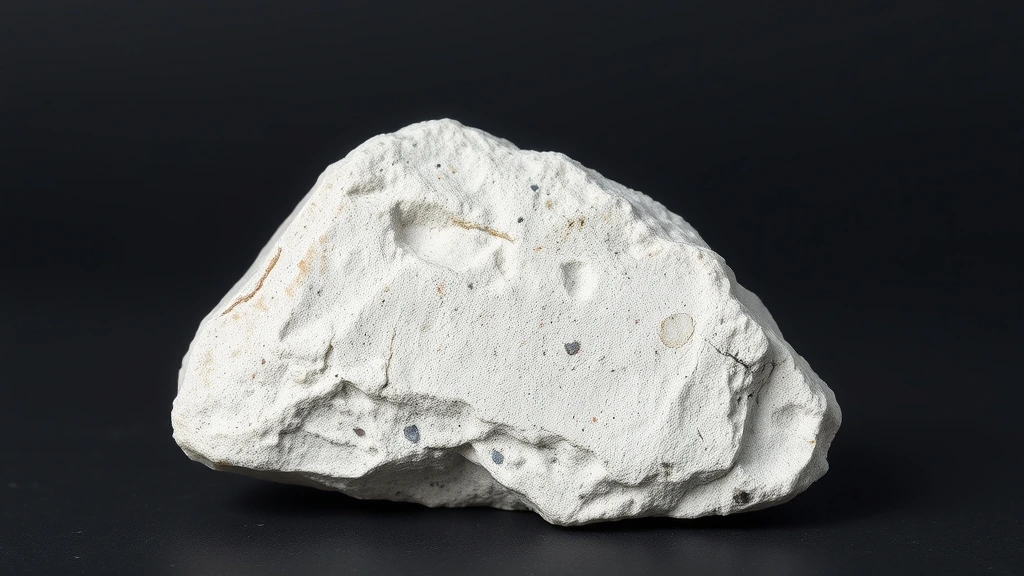
Talc schist belongs to the natural mineral / crystal group, yet it is a metamorphic rock formed by the recrystallization of talc‑rich sediments under low‑grade conditions. The rock’s fabric is dominated by platy talc crystals aligned in a foliated texture, giving it the characteristic soapy feel. Its formation typically occurs in serpentinite bodies where magnesium‑rich fluids alter ultramafic protoliths, producing a compact, heat‑resistant material prized for both industrial and decorative applications.
What is Talc Schist (soapstone)? Geological Overview & Definition
Talc schist is a metamorphic rock defined by a high proportion of the mineral talc, intergrown with minor amounts of chlorite, magnesite, and amphibole. The rock’s foliation results from the parallel alignment of micaceous talc plates, producing a smooth, easily carved surface that feels like soap.
In the field, talc schist is identified by its low density (2.70–2.80 g/cm³) and greasy luster, often occurring in shades of gray, green, or bluish‑gray. Its softness and resistance to heat make it a favored material for countertops, stoves, and sculptural media, while its geological setting points to low‑temperature, high‑pressure metamorphism of magnesium‑rich sediments. In comparative mineralogical collections, practitioners and geologists frequently study Atlantisite Stichtite In Serpentine alongside this crystal to appreciate their subtle energetic and structural differences.
Talc Schist (soapstone) Chemical Composition & Crystallographic Properties
The primary mineral component, talc, crystallizes in the monoclinic system, forming layered sheets of silicate tetrahedra linked by magnesium‑hydroxide octahedra. These sheets stack with a slight offset, giving rise to the characteristic basal cleavage that allows the rock to split into thin, flexible sheets.
Talc’s lattice can accommodate limited cation substitution, most commonly Fe²⁺ for Mg²⁺, which subtly darkens the stone’s hue without altering its fundamental structure. This substitution also influences the refractive index (1.520–1.540) and contributes to minor variations in hardness across different specimens.
The rock is acid sensitive; exposure to strong acids can dissolve the hydroxyl groups, releasing silica and magnesium ions and leading to surface etching. However, its high thermal stability—maintaining integrity up to ~800 °C—makes it suitable for applications requiring heat resistance, such as fireplace surrounds.
Color variations arise from trace chromophore centers such as iron oxides or manganese, which replace magnesium in the crystal lattice, producing green, brown, or black streaks. These impurities do not affect the overall monoclinic symmetry but add to the aesthetic diversity prized by gemologists and artisans alike.
| Property | Specification |
|---|---|
| Mineral Group | Natural Mineral / Crystal |
| Chemical Formula | Mg₃Si₄O₁₀(OH)₂ (Talc) |
| Mohs Hardness | 1.0 – 1.5 |
| Crystal System | Monoclinic |
| Specific Gravity (Density) | 2.70 – 2.80 |
| Refractive Index | 1.520 – 1.540 |
| Color & Optical Properties | Natural Talc Schist (soapstone) color spectrum and optical dispersion |
| Primary Mining Localities | Global primary localities |
| Water & Chemical Resistance | Sensitive (Avoid prolonged water soaking) |
| Chakra Alignment (Traditional) | Root Chakra, Sacral Chakra |
| Zodiac Affinity (Traditional) | Taurus, Libra |
| Symbolic Meaning (Traditional) | Grounding, emotional stability, and gentle nurturing |
Talc Schist (soapstone) Varieties & Color Spectrum
Classic Green Soapstone
This ubiquitous variety exhibits a uniform chlorite matrix that imparts its characteristic sage to deep forest green hue. The foliation is typically fine and tight, resulting in a smooth, waxy luster that feels distinctively cool to the touch. It represents the most commercially available form found in global gemstone markets.
Black Soapstone
Characterized by high concentrations of carbonaceous inclusions and dark mica, this morph appears nearly jet-black under ambient lighting. The opacity is significantly higher than standard green varieties, making it prized for sculptural applications. Its dense structure often commands a premium in artisanal carving markets.
Banded Soapstone
This variety displays distinct alternating layers of light and dark minerals, creating a striking striped or banded visual pattern. The banding results from metamorphic segregation during regional tectonic compression, where mineral-rich fluids infiltrated the host rock. Collectors value these specimens for their unique, painterly aesthetic appeal.
White Soapstone
Rarely found in pure form, this pale variety contains minimal iron impurities within the talc crystal lattice. The albedo is exceptionally high, giving the stone a bright, chalky appearance that contrasts sharply with darker matrix materials. It is often associated with high-purity industrial talc deposits.
Mottled Soapstone
Featuring irregular speckling of darker minerals against a lighter background, this morph resembles a marbled stone. The inclusion distribution is random, creating a complex, non-directional visual texture that varies across the surface. This variety is frequently cut into cabochons to highlight its organic patterns.
Reddish-Brown Soapstone
Tinted by hematite or limonite inclusions, this warm-toned variety offers a unique earthy aesthetic. The oxidation of iron-bearing minerals within the schist creates subtle rust-colored veins or patches. It is less common in the gem trade but valued for its distinctive warmth.
Where is Talc Schist (soapstone) Found? Geological Mining & Extraction
Talc schist forms through metamorphic alteration of ultramafic rocks like peridotite or pyroxenite under high-pressure conditions. These deposits are typically hosted within ophiolite complexes or contact metamorphic zones near igneous intrusions. The serpentinization process plays a critical role in developing the characteristic foliated texture.
Primary extraction occurs in regions with significant ultramafic geology, including Vermont in the United States and India. Open-pit mining is the standard method, allowing for the removal of large, high-quality blocks suitable for carving. Secondary deposits in Brazil and South Africa also contribute significantly to the global supply chain.
Historical Significance & Cultural Lore of Talc Schist
Ancient civilizations utilized soapstone for vessel fabrication and ritual objects due to its exceptional workability and heat resistance. Archaeological findings in Mesopotamia and Mesoamerica reveal intricately carved containers that have survived millennia without degradation. The stone’s non-porous nature made it ideal for storing liquids and preserving organic materials.
In traditional lore, the mineral is associated with grounding and emotional stability, reflecting its earthy origins and tactile properties. Indigenous cultures often incorporated it into healing practices, valuing its perceived ability to absorb negative energy. This enduring cultural significance continues to influence its popularity in contemporary metaphysical markets.
Modern Uses & Jewelry Applications of Talc Schist (soapstone)
Lapidaries primarily cut talc schist into smooth, polished cabochons rather than faceted gems due to its extreme softness. The material’s low Mohs hardness prevents the retention of sharp facets, making rounded shapes the industry standard for durability.
- Cabochon Cutting: Smooth, domed surfaces highlight the stone’s waxy luster and subtle color variations without risking chipping.
- Ornamental Carving: Artists exploit the mineral’s ease of cutting to create intricate sculptures, decorative tiles, and architectural accents.
- Jewelry Settings: Stones are often set in protective bezels to shield the soft surface from daily abrasion and impact.
Metaphysical Uses & Origins of Talc Schist (soapstone)
Practitioners utilize this geological material in meditation to foster a sense of emotional stability and calm. The stone’s gentle energy is believed to support grounding practices, helping individuals feel centered and secure during stressful periods.
In architectural and lapidary arts, the material is valued for its tactile warmth and aesthetic subtlety. Its natural nurturing properties make it a popular choice for spa environments and personal talismans designed to promote inner peace.
Which Chakra and Zodiac Signs Align with Talc Schist (soapstone)?
This mineral resonates strongly with the Root Chakra, which governs feelings of safety, survival, and physical stability. By anchoring the user’s energy, talc schist helps establish a solid foundation for spiritual and emotional well-being.
It also aligns with the Sacral Chakra, influencing creativity, pleasure, and emotional flow. This dual connection supports a balanced approach to both physical grounding and expressive emotional release.
Astrologically, the stone is most compatible with Taurus and Libra. Taurus appreciates the earthy, stabilizing qualities that reinforce their natural desire for comfort and security.
Libra benefits from the stone’s harmonizing energy, which aids in maintaining emotional equilibrium and gentle nurturing within interpersonal relationships.
How to Identify Real vs. Fake Talc Schist (soapstone)
Artificial imitations often use synthetic glass or dyed plastics to mimic the stone’s appearance. These replicas may lack the characteristic waxy luster and consistent density of natural talc schist.
Practical At-Home Authenticity Tests
- Temperature Test (Thermal Feel): Real talc feels cool to the touch initially due to its thermal conductivity, whereas plastic imitations warm up quickly.
- Specific Gravity & Weight Test: Genuine specimens have a density of 2.70–2.80, feeling heavier than similarly sized plastic or glass fakes.
- Scratch & Hardness Test (Mohs Comparison): The stone’s Mohs hardness of 1.0–1.5 means it scratches easily with a fingernail or paper, unlike harder glass.
- Microscopic & Loupe Inspection (Internal Inclusions): A 10x loupe reveals natural crystal inclusions and grainy textures, while synthetic glass often contains air bubbles.
Talc Schist (soapstone) Valuation Factors, Grading & Pricing
Color variations dominate market perception, with creamy whites, soft greys, and occasional greenish hues prized for their subtlety. Natural texture and the presence of fine banding or veining enhance visual depth, especially when the stone exhibits a uniform, polished sheen. Collectors favor specimens that display consistent coloration without intrusive mineral inclusions, as these command higher premiums.
Specimen mass and size are primary price drivers, measured in grams or kilograms rather than carats. Larger blocks that retain structural integrity allow artisans to carve intricate bowls, tiles, or sculptures without risk of fracture. Light diffusion through the dense, matte surface adds a tactile allure, further elevating the value of well‑preserved slabs.
Geographical origin and authenticity are critical for certification and resale. Talc schist sourced from historic quarries in Vermont, Brazil, or the Himalayas carries a provenance premium that appeals to both decorative and wellness markets. Wholesale trends show rising demand for ethically mined, untreated soapstone in interior design and holistic practices, reinforcing the importance of traceable supply chains.
How to Clean and Care for Talc Schist (soapstone)
Gently wipe the surface with a damp cloth, then dry immediately using a soft, dry microfiber towel. Avoid prolonged exposure to water, as the mineral is moisture‑sensitive and prolonged soaking can weaken its structure. Do not employ ultrasonic cleaners; the vibrations can cause micro‑fractures in the delicate monoclinic lattice.
Cleansing and Recharging Talc Schist (soapstone) (Energetic Care)
For energetic renewal, place the stone in a quiet space and allow herbal smudging with sage or cedar to pass gently over its surface, ensuring the smoke does not become damp. Follow with a brief exposure to moonlight, ideally during a waning phase, to absorb subtle lunar energy without heat stress.
Alternatively, rest the soapstone on a clean selenite charging slab for several hours, allowing the higher‑vibrational crystal to impart a balanced field. This method respects the stone’s physical fragility while promoting grounding and emotional stability in line with its esoteric attributes.
Frequently Asked Questions About Talc Schist (soapstone)
Is talc schist safe to wear in the shower?
No, prolonged exposure to water should be avoided. Talc’s layered structure absorbs moisture, which can weaken the monoclinic sheets and cause surface dulling. A brief rinse with a damp cloth followed by immediate drying is acceptable, but extended soaking may lead to micro‑fractures and loss of luster.
How should I clean a talc schist jewelry piece?
Wipe it briefly with a damp cloth and dry immediately. Because talc is water‑sensitive, ultrasonic baths or soaking can cause delamination. Use a soft, lint‑free microfiber cloth; a gentle brush can remove dust, but avoid any abrasive or liquid‑based cleaners that might compromise the mineral’s integrity.
Can talc schist be polished to a high shine?
Yes, it can achieve a smooth, satin‑like finish. Polishing relies on the mineral’s low Mohs hardness (1‑1.5), allowing a fine abrasive to glide over the surface without scratching. However, excessive pressure can split the hydroxyl‑rich layers, so a light hand and gradual progression of grit are essential.
What is the typical density of talc schist, and why does it matter?
Its density ranges from 2.70 to 2.80 g/cm³. This relatively low density reflects the high hydroxyl content and loosely packed crystal sheets, making talc feel unusually light for its size. Gemologists use density measurements to distinguish talc from denser look‑alikes like serpentine or nephrite.
Which zodiac signs are associated with talc schist?
Taurus and Libra are the aligned zodiac signs. In astrological gem lore, these signs are thought to benefit from talc’s grounding energy, enhancing emotional stability and fostering a balanced, nurturing outlook that resonates with the earthy nature of the mineral.
Which chakras does talc schist influence?
Root Chakra and Sacral Chakra are the primary centers. The stone’s earthy vibration is believed to anchor personal energy at the base of the spine while also stimulating creative flow in the lower abdomen, supporting both stability and gentle nurturing.
Is talc schist suitable for everyday wear?
It is suitable for occasional wear but requires care. The mineral’s softness (Mohs 1‑1.5) makes it prone to scratches and dents from routine contact. Protective settings and avoiding harsh impacts help preserve its smooth feel and subtle pearlescent luster.
What refractive index does talc schist exhibit, and how does it affect appearance?
Its refractive index lies between 1.520 and 1.540. This modest index yields a soft, milky translucency rather than high brilliance, giving talc its characteristic “soapstone” glow. The low dispersion contributes to a gentle, non‑sparkling aesthetic prized in sculptural and decorative applications.