
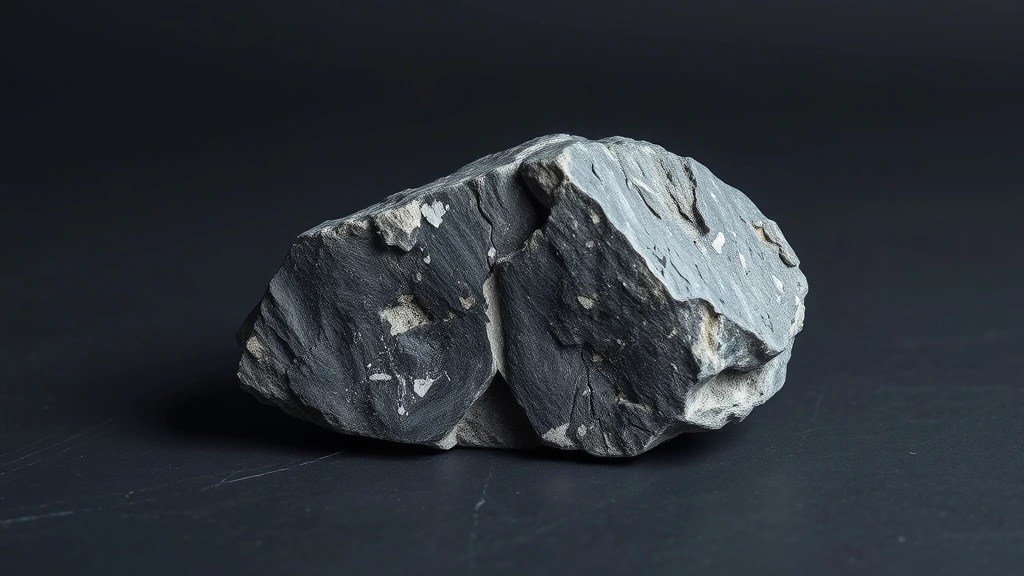
Tephroite belongs to the natural mineral family of silicate crystals, specifically the orthorhombic olivine subgroup. As a distinct, single‑crystal species rather than an aggregate, it is classified under the parent mineral group “Natural Mineral / Crystal,” reflecting its well‑defined stoichiometry and crystal lattice.
What is Tephroite? Geological Overview & Definition
Tephroite is the manganese‑dominant member of the olivine solid‑solution series, occurring primarily in metamorphic marbles and manganese‑rich skarns. Its name derives from the Greek *tephros* (“ash‑colored”), referencing the typical gray‑green to brown tones observed in hand specimens.
In the field, tephroite is identified by its orthorhombic symmetry, lack of cleavage, and conchoidal fracture, traits that differentiate it from its iron‑rich counterpart, forsterite. The mineral often forms prismatic or granular aggregates, and its presence signals high‑temperature, low‑pressure metamorphic conditions.
Tephroite Chemical Composition & Crystallographic Properties
The ideal chemical formula Mn₂SiO₄ reflects a pure manganese end‑member, though natural samples frequently exhibit minor Fe²⁺ or Mg²⁺ substitution on the M‑site, a process known as cationic solid‑solution. This substitution subtly alters density and refractive indices without disrupting the orthorhombic framework.
Tephroite crystallizes in the orthorhombic system, space group Pbnm, with three mutually perpendicular axes of unequal length. The silicate tetrahedra (SiO₄) link to MnO₆ octahedra, creating a tightly packed lattice that resists deformation.
The mineral’s chromophore arises from Mn²⁺ electronic transitions within the octahedral sites, imparting its characteristic green to brown palette. Exposure to strong acids can leach manganese, leading to surface etching and a slight loss of color intensity.
Thermally, tephroite remains stable up to about 1,200 °C, beyond which it decomposes to perovskite‑type phases and releases silica. Upon rapid cooling, the crystal may develop micro‑twins, a diagnostic feature observable under polarized light.
| Property | Specification |
|---|---|
| Mineral Group | Natural Mineral / Crystal |
| Chemical Formula | Mn₂ SiO₄ |
| Mohs Hardness | 6 |
| Crystal System | Orthorhombic |
| Specific Gravity (Density) | 3.87 – 4.12 |
| Refractive Index | n α = 1.759 n β = 1.797 n γ = 1.860 |
| Color & Optical Properties | Natural Tephroite color spectrum and optical dispersion |
| Primary Mining Localities | Global primary localities |
| Water & Chemical Resistance | High (Safe for gentle water washing) |
| Chakra Alignment (Traditional) | Root Chakra, Sacral Chakra |
| Zodiac Affinity (Traditional) | Taurus, Virgo |
| Symbolic Meaning (Traditional) | Grounding, stability, and connection to earthy energies |
Tephroite Varieties & Color Spectrum
Tephroite exhibits a range of earthy tones derived from its manganese silicate composition, primarily appearing in shades of brown, olive green, and gray. These hues are directly influenced by trace impurities and the specific crystal lattice structure within the orthorhombic system. The stone’s visual character is further defined by its vitreous to resinous luster, which enhances the depth of its natural pigmentation.
Brown Tephroite
This dominant variety displays a rich, chocolate-brown coloration resulting from high concentrations of manganese ions within the crystal structure. It typically forms in pegmatite dikes where slow cooling allows for the development of large, well-formed crystals. The stone often contains minor inclusions of quartz or feldspar that do not significantly detract from its overall aesthetic appeal.
Green Tephroite
Rare green specimens arise from subtle variations in oxidation states or the presence of trace iron elements during crystallization. This morph is highly sought after for its distinctive olive-green hue, which contrasts sharply with more common brown varieties. Such stones are frequently found in association with other manganese-rich minerals within complex geological formations.
Gray Tephroite
Gray tephroite appears when the mineral is heavily intergrown with silicate impurities or exhibits a higher degree of internal fracturing. This variety often possesses a duller luster compared to cleaner specimens, giving it a more matte appearance. It is commonly encountered in lower-grade deposits where crystal clarity is compromised by rapid cooling events.
Translucent Tephroite
High-quality translucent specimens reveal intricate internal crystal structures and subtle color zoning that are invisible in opaque stones. These rare finds demonstrate exceptional purity and minimal inclusion density, allowing light to penetrate the orthorhombic lattice effectively. Such material is prized by collectors for its ability to display the stone’s natural refractive index characteristics.
Where is Tephroite Found? Geological Mining & Extraction
Tephroite primarily occurs in alkaline pegmatites and syenitic rocks, where it forms alongside other manganese-bearing silicates. These geological environments provide the necessary chemical conditions for the stable growth of Mn₂SiO₄ crystals. The mineral is often found in association with pyroxene, olivine, and quartz within these specialized igneous formations.
Major deposits are located in regions with significant alkaline igneous activity, including parts of Canada, Russia, and the United States. Extraction typically involves careful hand-picking from exposed outcrops or small-scale mining operations to preserve crystal integrity. The density and hardness of the stone require specialized tools to separate it from the surrounding host rock without causing fracture.
Historical Significance & Cultural Lore of Tephroite
Historical records indicate limited usage of tephroite in ancient civilizations, as its relative rarity restricted its availability for widespread ornamental purposes. Unlike more common gemstones, it was not a primary material for archaeological artifacts in major cultural centers like Rome or Egypt. Its presence in historical contexts is largely confined to regional collections where local geological formations provided accessible specimens.
In modern esoteric traditions, tephroite is associated with grounding energies and stability, linking it to the root and sacral chakras. This contemporary lore emphasizes its connection to earthy energies, distinguishing it from more historically documented gemstones. The stone’s cultural significance remains primarily rooted in recent metaphysical practices rather than ancient historical usage.
Modern Uses & Jewelry Applications of Tephroite
Tephroite’s moderate Mohs hardness of 6 makes it amenable to precision lapidary work, allowing both cabochon polishing and modest faceting without excessive risk of fracture. Its deep olive‑green to brown hues are prized in bespoke pieces, especially when set against silver or white gold to enhance contrast. Artisans also carve ornamental cameos and intaglios, exploiting the mineral’s orthorhombic cleavage for intricate detailing.
- Cabochon pendants and earrings showcasing polished, translucent surfaces.
- Faceted rings or brooches where subtle color gradients are highlighted.
- Ornamental carvings such as miniature figurines or decorative inlays.
Safety & Mineral Profile of Tephroite
Handling tephroite poses no unusual chemical hazards; the Mn₂SiO₄ composition is chemically stable and non‑reactive under normal atmospheric conditions. Collectors should store specimens in padded trays to avoid impact, as the orthorhombic crystal can cleave along defined planes. While historic lore occasionally links tephroite to grounding energies, scientific consensus treats it strictly as a mineral specimen for study and display, not as a therapeutic crystal.
Mineralogical Group and Planetary Lore of Tephroite
Tephroite belongs to the olivine group, sharing a solid‑solution series with forsterite (Mg₂SiO₄) and fayalite (Fe₂SiO₄). Its orthorhombic symmetry and characteristic refractive indices (nα = 1.759, nβ = 1.797, nγ = 1.860) aid in distinguishing it from related silicates in petrographic analysis. Historically, alchemists associated olivine minerals with the planet Earth, attributing qualities of stability and grounding—reflected today in its alignment with the Root and Sacral chakras and the zodiac signs Taurus and Virgo.
How to Identify Real vs. Fake Tephroite
Artificial imitations of tephroite often involve glass, resin, or dyed quartz that mimic its green‑brown palette but lack the mineral’s distinctive optical and physical properties. Synthetic glass may display uniform clarity and a higher specific gravity, while dyed replicas can be identified by uneven coloration under light. Careful examination using the tests below helps differentiate authentic specimens from these substitutes.
Practical At-Home Authenticity Tests
- Temperature Test (Thermal Feel): Real tephroite feels cool to the touch and retains that coolness longer than glass or plastic, which quickly equilibrate to ambient temperature.
- Specific Gravity & Weight Test: With a density of 3.87–4.12 g/cm³, genuine tephroite feels noticeably heavier than glass (≈2.5 g/cm³) of comparable size; a simple water displacement test can confirm the higher specific gravity.
- Scratch & Hardness Test (Mohs Comparison): Using a steel nail (≈5.5 on Mohs) or a quartz point (≈7), tephroite will resist scratching from the nail but may be lightly marked by quartz, confirming its hardness around 6.
- Microscopic & Loupe Inspection (Internal Inclusions): Under 10×–30× magnification, authentic tephroite reveals characteristic mineral inclusions, growth striations, or subtle cleavage steps, whereas glass imitations appear uniformly flawless or show air bubbles.
Tephroite Valuation Factors, Grading & Pricing
Market value hinges primarily on Specimen Aesthetic Quality, where vibrant olive-green to brownish hues command premium prices. Collectors seek crystals with exceptional luster and minimal surface imperfections. The presence of a clean, undamaged matrix further enhances the visual appeal of the specimen.
Rarity & Specimen Dimensions significantly influence pricing, as large, intact crystal clusters are exceptionally scarce in the global market. Measurements are strictly recorded in centimeters and grams to reflect physical scale accurately. The absence of handling damage or fractures ensures the structural integrity required for high-end scientific collections.
Mineralogical Provenance dictates prestige in museum and institutional markets, with specific localities offering unique geological context. Specimens from historically significant mining regions often carry higher intrinsic value due to their research potential. Documentation of origin adds critical scientific weight to the collector’s acquisition.
How to Clean and Care for Tephroite
Maintaining the surface integrity of tephroite requires gentle handling with warm soapy water and a soft cloth. This method effectively removes dust and oils without compromising the mineral’s structural stability. Always rinse thoroughly with clean water and dry immediately with a lint-free fabric.
Ultrasonic cleaners must be strictly avoided, as high-frequency vibrations can induce structural fractures in the orthorhombic lattice. The mineral’s moderate hardness makes it susceptible to stress-induced cracking under intense mechanical agitation. Proper storage in a dry, padded environment prevents accidental chipping or surface abrasion.
Cleansing and Recharging Tephroite (Energetic Care)
Holistic practitioners often employ herbal smudging to clear perceived energetic stagnation from tephroite specimens. The gentle smoke from sage or palo santo is believed to purify the stone’s vibrational field. This dry method ensures no moisture contact occurs, preserving the mineral’s physical condition.
For recharging, placing the specimen under gentle moonlight overnight is a popular and safe practice. Alternatively, resting the stone on a selenite charging slab facilitates passive energy renewal without heat exposure. These methods align with the mineral’s association with grounding and stability in esoteric traditions.
Frequently Asked Questions About Tephroite
What is the chemical composition of tephroite?
Tephroite is a manganese silicate with the chemical formula Mn₂SiO₄. This composition places it within the olivine group, sharing structural similarities with forsterite and fayalite. The high manganese content is responsible for its distinctive greenish hue. Understanding this crystal structure helps identify its geological origins.
How hard is tephroite on the Mohs scale?
Tephroite registers a hardness of 6 on the Mohs scale. This makes it moderately durable, comparable to orthoclase feldspar. It can resist scratches from common household items but remains vulnerable to harder minerals like quartz. Wearers should avoid impact damage to preserve the stone’s integrity.
Is tephroite safe to wear in the shower?
Yes, tephroite is safe for gentle water washing and shower exposure. Its high water resistance allows it to withstand brief contact with water without dissolving or degrading. However, prolonged soaking is unnecessary and should be avoided. Regular rinsing helps remove body oils that may dull its luster.
Can I use an ultrasonic cleaner on tephroite?
No, you must avoid ultrasonic cleaners to prevent structural fractures. The vibrations can exploit natural cleavage planes or internal inclusions, causing permanent damage. Instead, use warm soapy water and a soft cloth for cleaning. This gentle approach preserves the optical clarity and surface finish of the gem.
Which zodiac signs are aligned with tephroite?
Tephroite is astrologically aligned with Taurus and Virgo. These earth signs resonate with the stone’s grounding and stabilizing properties. Taurus appreciates its connection to physical stability, while Virgo values its orderly energy. This alignment supports personal balance for individuals born under these signs.
What chakras does tephroite activate?
Tephroite primarily activates the Root Chakra and Sacral Chakra. These energy centers govern survival instincts and creative vitality, respectively. The stone’s earthy vibrations help anchor spiritual energy to the physical body. This connection enhances feelings of security and emotional stability during meditation.
What color variations exist in tephroite?
Tephroite typically appears in shades of green, ranging from pale to deep olive. The specific hue depends on the concentration of manganese impurities within the crystal lattice. Rare specimens may exhibit brownish or yellowish tints due to oxidation. This color variation aids in distinguishing it from similar olivine varieties.
Where is tephroite commonly found geologically?
Tephroite is primarily found in metamorphic and igneous rock formations. It often occurs in association with other manganese-rich minerals and silicates. Notable deposits exist in regions with significant geological activity and mineral diversity. Its presence indicates specific thermal conditions during rock formation.