
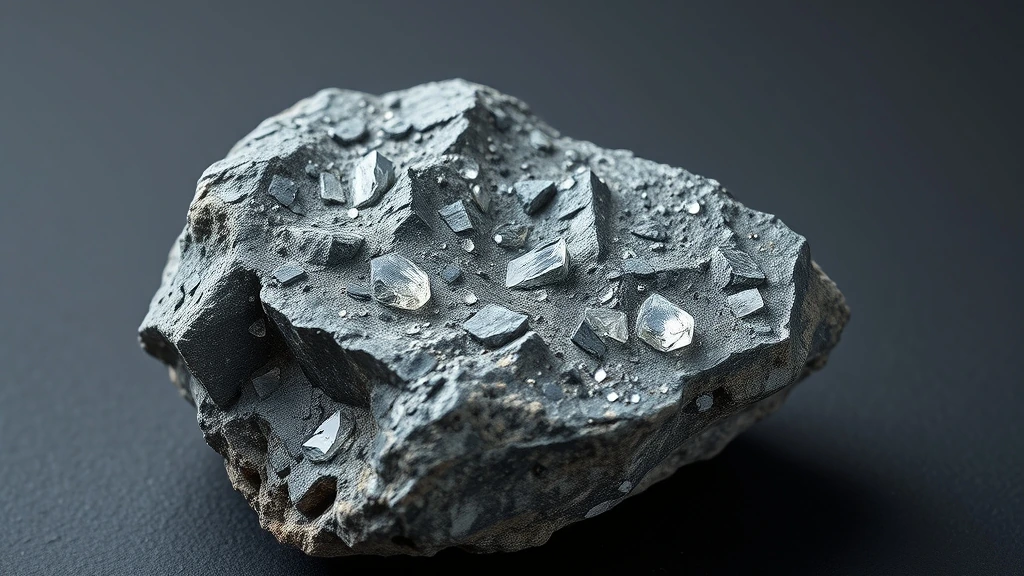
Forsterite stands as the magnesium end-member of the olivine solid solution series. It is classified strictly as a Natural Mineral / Crystal within the broader geological framework. This pure phase rarely occurs in isolation, usually forming part of a continuous substitution series with iron. Its geological significance lies in its role as a primary constituent of the Earth’s upper mantle.
What is Forsterite Gemstone? Geological Overview & Definition
Forsterite is defined by its high magnesium content, distinguishing it from the iron-rich fayalite. It typically forms in mafic and ultramafic igneous rocks, such as peridotites and basalt. These formations often occur in deep mantle environments before being brought to the surface by volcanic activity.
As a gemstone, forsterite is prized for its clarity and subtle pale green coloration. It is frequently found in alluvial deposits, where erosion has liberated individual crystals from their host rock. Collectors value specimens that display high transparency and minimal internal inclusions.
Forsterite Gemstone Chemical Composition & Crystallographic Properties
The mineral crystallizes in the Orthorhombic crystal system, characterized by three mutually perpendicular axes of unequal length. This structure results in a lattice where silicon and oxygen tetrahedra are linked by magnesium cations. The specific arrangement dictates its physical properties, including cleavage and fracture patterns.
Cation substitution within the olivine series allows for a gradual transition from magnesium to iron. In pure forsterite, the Mg2+ ions occupy specific sites within the orthorhombic lattice. This purity influences its refractive index, which ranges from 1.636 to 1.772.
The stone exhibits moderate acid sensitivity, though it is generally resistant to weak acids under normal conditions. Its color stems from trace impurities or structural defects rather than a primary chromophore. Thermal behavior remains stable at room temperature, but extreme heat can alter its optical properties.
| Property | Specification |
|---|---|
| Mineral Group | Natural Mineral / Crystal |
| Chemical Formula | Magnesium silicate |
| Mohs Hardness | 7 |
| Crystal System | Orthorhombic |
| Specific Gravity (Density) | 3.21–3.33 |
| Refractive Index | ”n” α = 1.636–1.730 ”n” β = 1.650–1.739 ”n” γ = 1.669–1.772 |
| Color & Optical Properties | Natural Forsterite Gemstone color spectrum and optical dispersion |
| Primary Mining Localities | Global primary localities |
| Water & Chemical Resistance | High (Safe for gentle water washing) |
| Chakra Alignment (Traditional) | Heart Chakra |
| Zodiac Affinity (Traditional) | Taurus, Virgo |
| Symbolic Meaning (Traditional) | Growth, renewal, and emotional balance |
Forsterite Gemstone Varieties & Color Spectrum
Green Forsterite (Peridot‑Like)
Formed in high‑temperature mantle‑derived peridotites that have been uplifted into the crust, this variety displays a vivid apple‑green hue due to trace chromium. Inclusions are typically minute olivine‑spinel crystals that create a subtle glitter. While abundant in kimberlite pipes, gem‑grade stones are rare and prized for their clarity.
Yellow‑Brown Forsterite (Golden Olivine)
Developed in ultramafic breccias where iron substitutes for magnesium, giving a warm honey‑yellow to brown coloration. The stone often contains thin lamellar growth bands that produce a chatoyant effect under light. Large, transparent crystals are uncommon, making high‑quality material a collector’s treasure.
Pink Forsterite (Rosy Olivine)
Originates in metamorphosed dolomitic marbles where manganese replaces a fraction of magnesium, imparting a delicate pink to rose shade. Microscopic fluid‑inclusion halos are diagnostic, and the stone may exhibit a faint pleochroic shift from pink to pale orange. Pink forsterite is exceptionally scarce, with most specimens sourced from a handful of Turkish localities.
Color‑Change Forsterite (Chameleon Olivine)
Occurs in tectonically sheared zones where rapid cooling traps variable oxidation states of iron, causing the gem to shift from green in daylight to amber under incandescent light. The phenomenon is linked to charge‑transfer absorptions within the crystal lattice. Because the effect is subtle and requires precise cutting, market supply is extremely limited.
Black Forsterite (Obsidian‑Like)
Found in oxidized ultramafic veins where high concentrations of titanium and iron produce a deep black body color. The stone frequently displays metallic inclusions of magnetite that give a shimmering appearance. Though visually striking, the opacity reduces its use in fine jewelry, rendering it a niche collector’s item.
Regional Trade Variety: “Siberian Emerald”
A trade name for bright green forsterite mined from the Kola Peninsula. The crystals grow in mantle xenoliths carried to the surface by volcanic eruptions, resulting in unusually large, well‑formed gems. Their vivid hue and relative accessibility have made them a popular export, yet gem‑grade stones remain moderately rare.
Where is Forsterite Gemstone Found? Geological Mining & Extraction
Forsterite is chiefly hosted in ultramafic rocks such as peridotite, dunite, and pyroxenite, often within pegmatitic veins that crystallize from magnesium‑rich magmas. These deposits are typically associated with kimberlite pipes and mantle‑derived xenoliths, where slow cooling allows the formation of sizable, transparent crystals suitable for faceting.
Major extraction regions include Norway’s Øystre Slidre, Turkey’s Anatolian ophiolites, Russia’s Kola Peninsula, and Australia’s Western Australian Pilbara. In each locale, mining employs a combination of open‑pit and underground techniques, followed by careful hand‑sorting to isolate the gem‑quality forsterite from the surrounding matrix.
Historical Significance & Cultural Lore of Forsterite Gemstone
Ancient Assyrian and Babylonian texts reference “green stones of the earth,” likely describing forsterite used as talismans for protection and fertility. Archaeological digs have uncovered polished forsterite beads in burial sites of the Hittite empire, indicating its value in elite adornment and ritual exchange.
In traditional Turkish folklore, the “Heart Chakra” (Heart Chakra) stone is believed to promote emotional balance and renewal, a belief that persists in modern crystal healing practices. Medieval European alchemists associated the mineral’s green hue with the element Earth, attributing it powers of growth and stability.
Modern Uses & Jewelry Applications of Forsterite Gemstone
Lapidaries value forsterite for its vibrant green hues and orthorhombic crystal system, which allows for precise facet alignment. High-quality specimens are cut into brilliant or emerald cuts to maximize their refractive index and visual brilliance.
- Faceted Jewelry: Primary use in rings, pendants, and earrings where light return is critical.
- Cabochon Cutting: Smooth, domed stones highlight the gem’s soft luster and unique color zoning.
- Ornamental Carving: Larger, lower-grade material is sculpted into beads, carvings, and decorative inlays.
Safety & Mineral Profile of Forsterite
Forsterite is a magnesium‑rich endmember of the olivine solid solution series (Mg₂SiO₄). It is a hard mineral, with a Mohs hardness of 6.5–7, and it is chemically stable under normal atmospheric conditions. However, it is non‑toxic and does not contain heavy metals, so it poses no health risk when handled. The primary safety consideration is the potential for dust inhalation during cutting or polishing; fine olivine particles can irritate the respiratory tract, so a dust mask and adequate ventilation are recommended. Because of its relatively high hardness and brittleness, Forsterite is prone to fracture under impact, and its surfaces can develop scratches that obscure diagnostic features. These practical handling challenges, combined with its lack of optical luster and the presence of common impurities (e.g., iron, calcium), make it more suitable as a collector display mineral than as a gemstone for jewelry.
In museum collections and mineralogical research, Forsterite serves as a key reference material for studying the olivine group and the Mg–Fe solid solution series. Its well‑defined crystal structure (orthorhombic, space group *Pbnm*) provides a benchmark for crystallographic studies, while its occurrence in ultramafic rocks, mantle xenoliths, and meteorites offers insights into planetary differentiation and mantle processes. Analytical techniques such as electron microprobe and Raman spectroscopy frequently use Forsterite standards to calibrate compositional analyses of silicate minerals.
Mineralogical Group and Planetary Lore of Forsterite
Historically, Forsterite was first described in the early 19th century and named after the mineralogist William Henry Forster. It is the magnesium‑rich endmember of the olivine group, which also includes Fayalite (Fe₂SiO₄) and the intermediate compositions of Enstatite and Diopside. According to early mineralogists, Forsterite was distinguished by its silicate framework and its tendency to form in high‑temperature igneous environments. In lapidary texts, it has been noted for its opaque, dull appearance and lack of gem‑cutting value, leading to its classification as a collector’s specimen rather than a decorative stone. In planetary geology, Forsterite is recognized as a major component of the mantle of terrestrial planets and is often detected in the spectra of asteroids and cometary dust, underscoring its importance in understanding the composition of planetary interiors.
How to Identify Real vs. Fake Forsterite Gemstone
Distinguishing natural forsterite from imitations requires attention to physical properties, as synthetic glass and dyed replicas are common in the market. While glass may mimic color, it lacks the specific specific gravity and thermal conductivity of genuine mineral specimens.
Practical At-Home Authenticity Tests
- Temperature Test (Thermal Feel): Genuine forsterite feels cool to the touch initially due to its thermal conductivity, whereas plastic or glass imitations warm up quickly.
- Specific Gravity & Weight Test: Forsterite has a density of 3.21–3.33 g/cm³; it will feel significantly heavier than glass or plastic of the same size.
- Scratch & Hardness Test (Mohs Comparison): With a Mohs hardness of 7, forsterite can scratch glass (hardness 5.5) but will not be scratched by a steel knife.
- Microscopic & Loupe Inspection (Internal Inclusions): Use a 10x loupe to look for natural mineral inclusions or crystal growth patterns, which are absent in synthetic glass or plastic.
Forsterite Gemstone Valuation Factors, Grading & Pricing
Market value is primarily driven by Color Saturation and overall tone uniformity. High-grade specimens exhibit a vivid, consistent green hue without brownish or yellowish tints. Optical clarity and luster further enhance desirability, as eye-clean stones command significant premiums.
The Carat Weight of the stone directly influences its per-carat price, with larger sizes being rarer. Facet symmetry is critical for maximizing brilliance and light return in cut gems. Additionally, the presence of matrix or internal inclusions can reduce value, though some collectors appreciate natural character.
Geographical Provenance Premium often elevates prices for stones from renowned localities like Australia or the United States. Wholesale prices vary based on cut quality and market demand for green gemstones. Retail values typically reflect these factors alongside the jeweler’s overhead and craftsmanship.
How to Clean and Care for Forsterite Gemstone
For routine maintenance, use warm soapy water and a soft cloth to gently remove surface oils and dust. This method is highly effective for maintaining the stone’s natural luster without causing damage. Avoid harsh chemicals that might degrade the setting or surrounding materials.
You may safely use an ultrasonic cleaner for deeper cleaning, as forsterite’s hardness of 7 makes it resilient. Ensure the water is not too hot to prevent thermal shock to the stone. Always inspect the setting before ultrasonic cleaning to ensure it is secure.
Cleansing and Recharging Forsterite Gemstone (Energetic Care)
To energetically cleanse forsterite, use smoke smudging with sage or palo santo to clear stagnant energy. This dry method avoids any risk of water exposure or chemical interaction with the mineral. Hold the stone in the smoke for a few minutes while setting your intention.
For recharging, place the gemstone on a selenite plate or under moonlight overnight. These methods align with the stone’s association with the Heart Chakra and emotional balance. Ensure the stone is dry and free from dust before beginning the process.
Frequently Asked Questions About Forsterite Gemstone
What is the hardness of Forsterite and how does it affect everyday wear?
Forsterite rates 7 on the Mohs scale. This makes it suitable for most jewelry pieces, including rings and bracelets, because it resists scratches from everyday objects. Its orthorhombic crystal structure contributes to durability, though care should still be taken to avoid contact with harder stones such as diamonds.
Can I clean Forsterite with an ultrasonic cleaner?
Yes, Forsterite is safe for ultrasonic cleaning. Use warm, mildly soapy water and a soft cloth to rinse before placing it in the cleaner. The gentle ultrasonic vibrations remove grime without damaging the magnesium silicate lattice or its polished facets.
Is Forsterite water‑resistant enough for washing hands or light rain?
Forsterite has high water resistance and can endure gentle water washing. A quick rinse under lukewarm water or exposure to light rain will not affect its surface. However, prolonged soaking or harsh detergents should be avoided to preserve the stone’s refractive index stability.
How does Forsterite’s refractive index influence its sparkle?
The refractive indices range from nα = 1.636–1.730 to nγ = 1.669–1.772. This variation creates noticeable birefringence, giving the gem a lively play of light when cut as a faceted stone. Proper cutting aligns the optic axes to maximize brilliance and color dispersion.
Which zodiac signs are traditionally associated with Forsterite?
Forsterite is linked to Taurus and Virgo. These earth signs are said to appreciate the stone’s grounding energy, reflecting its growth‑and‑renewal symbolism. Wearing the gem is believed to enhance the practical, steady qualities prized by these zodiac personalities.
Which chakra does Forsterite support, and what benefits does it offer?
Forsterite resonates with the Heart Chakra. It is thought to promote emotional balance, encouraging growth and renewal of feelings. Practitioners often use it in meditation to open the heart center, fostering compassion and a sense of inner harmony.
Does Forsterite contain any hazardous elements that require special handling?
Forsterite is composed of magnesium silicate and contains no toxic elements. Its chemical stability makes it safe for regular handling and jewelry setting. Nonetheless, always use soft, non‑abrasive tools when polishing to avoid surface micro‑scratches.
How can I tell if a stone marketed as “Forsterite” is genuine?
Authentic Forsterite exhibits a density of 3.21–3.33 g/cm³ and orthorhombic crystals. A professional gemologist will verify these parameters with a refractometer and specific gravity test. Look for consistent color ranging from pale green to deep olive, and ensure the seller provides a certification.