
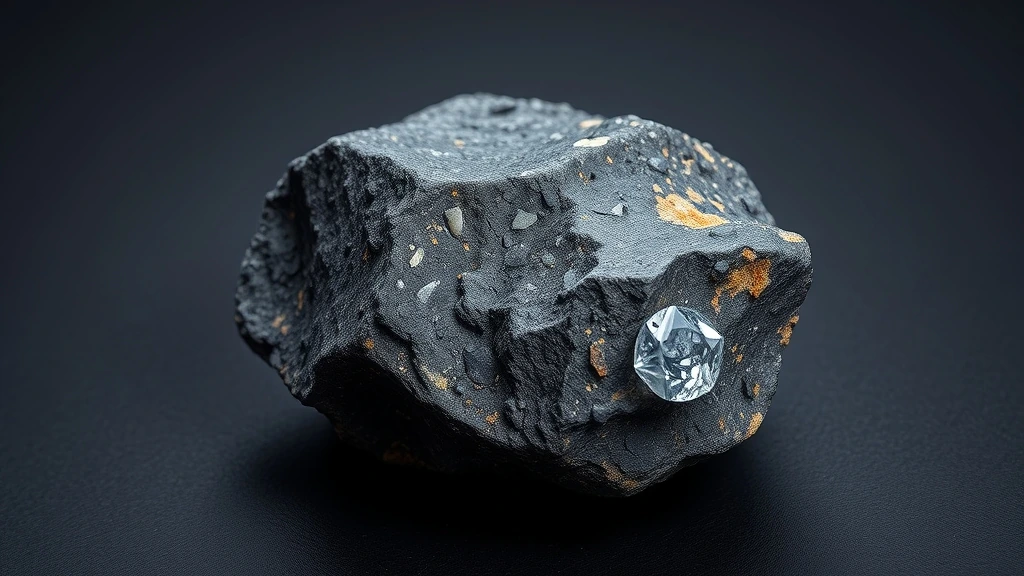
Enstatite belongs to the orthorhombic pyroxene group, a major component of mafic and ultramafic igneous rocks such as peridotite and basalt. As a natural mineral/crystal, it forms in high‑temperature environments, often as elongated prismatic crystals that can be faceted into gemstones when clarity and color are favorable.
What is Enstatite Gemstone? Geological Overview & Definition
Enstatite is the magnesium end‑member of the orthorhombic pyroxene series, distinguished from its iron‑rich counterpart, ferrosilite. In gemological contexts, only the most transparent, well‑colored crystals are cut, yielding stones prized for their subtle green to brown tones.
The gemstone’s formation is linked to high‑temperature magmatic processes, where it crystallizes from silicate melts under low‑pressure conditions. Its occurrence in metamorphic rocks, especially those subjected to granulite‑facies conditions, adds to its rarity and appeal among collectors.
Enstatite Gemstone Chemical Composition & Crystallographic Properties
Enstatite’s crystal lattice is orthorhombic, characterized by three mutually perpendicular axes of unequal length (a ≠ b ≠ c). The structure consists of SiO₄ tetrahedra linked into chains, with magnesium cations occupying octahedral sites between them, creating a robust framework.
Cation substitution is common: small amounts of Fe²⁺, Ca²⁺, and Mn²⁺ can replace Mg²⁺, subtly shifting the mineral’s density (3.2–3.3 g/cm³) and refractive indices (nα = 1.650–1.668, nβ = 1.652–1.673, nγ = 1.659–1.679). These substitutions also influence the stone’s color, producing the characteristic green‑brown spectrum.
Enstatite is acid‑sensitive; exposure to strong acids can leach magnesium and degrade the surface, a concern for cleaning and setting. Its chromophore centers arise from trace transition metals and structural defects that absorb specific wavelengths, imparting the gemstone’s muted coloration.
Thermally, enstatite exhibits high stability up to ~1,300 °C, after which it may transform to cristobalite or melt. Rapid heating can cause thermal shock, so gem cutters must manage temperature gradients carefully to avoid fracturing the orthorhombic crystal lattice.
| Property | Specification |
|---|---|
| Mineral Group | Natural Mineral / Crystal |
| Chemical Formula | MgSiO₃ |
| Mohs Hardness | 5 to 6 |
| Crystal System | Orthorhombic |
| Specific Gravity (Density) | 3.2–3.3 |
| Refractive Index | n α = 1.650–1.668; n β = 1.652–1.673; n γ = 1.659–1.679 |
| Color & Optical Properties | Natural Enstatite Gemstone color spectrum and optical dispersion |
| Primary Mining Localities | Global primary localities |
| Water & Chemical Resistance | High (Safe for gentle water washing) |
| Chakra Alignment (Traditional) | Root Chakra, Sacral Chakra |
| Zodiac Affinity (Traditional) | Virgo, Capricorn |
| Symbolic Meaning (Traditional) | Grounding, stability, and protection from negative energies |
Enstatite Gemstone Varieties & Color Spectrum
Clear (Labradorite‑Like) Enstatite
Formed in high‑temperature mafic magmas, this transparent enstatite crystallizes as elongated prismatic grains within basaltic lava flows. Minute inclusions of chromite create a subtle sheen that can be mistaken for labradorescence. Because it lacks strong color, it is rarer in the gem market and prized by collectors for its clarity.
Green‑Brown (Hypersthene) Enstatite
Hypersthene develops in metamorphosed ultramafic rocks where magnesium‑rich silicates undergo solid‑state diffusion. Microscopic pleochroic lamellae give a characteristic green‑brown hue that shifts with viewing angle. The mineral’s birefringence produces a faint metallic luster, making high‑quality stones highly sought after for bespoke jewelry.
Yellow‑Orange (Sunstone) Enstatite
In volcanic tuffs of the western United States, exsolution of Fe‑Ti oxide platelets yields a glittering aventurescence effect. The resulting stones display a warm yellow‑orange body color punctuated by bright metallic flashes. These “sunstones” are among the most commercially viable enstatite varieties, though gem‑grade crystals remain limited to a few localized deposits.
Blue‑Gray (Tremolite‑Like) Enstatite
Occurring in serpentinized peridotite, this variety incorporates trace Fe³⁺ and Ti⁴⁺, shifting the body color toward a muted blue‑gray. Thin fibrous inclusions give a silky sheen that can be confused with tremolite amphiboles. Its scarcity and delicate fracture make it a collector’s specialty rather than a mainstream gemstone.
Pink (Rhodonite‑Tinted) Enstatite
Rare pink tones arise when Mn²⁺ substitutes for magnesium in the crystal lattice, typically in low‑grade metamorphic zones of the Alps. The pink hue is often mottled with microscopic hematite specks, creating a delicate blush. Because manganese enrichment is geochemically uncommon, pink enstatite commands premium prices on the gem market.
Regional Trade Variety: “Kashmir Enstatite”
Named after historic trade routes through the Himalayas, this variety exhibits a silvery‑green color with pronounced chatoyancy due to aligned rutile needles. It is sourced from alluvial deposits downstream of ultramafic ophiolites in northern Pakistan. The combination of unique optical effects and limited supply has cemented its reputation among high‑end gem dealers.
Where is Enstatite Gemstone Found? Geological Mining & Extraction
Enstatite is most commonly extracted from orthorhombic crystal aggregates hosted in ultramafic peridotite and serpentinite bodies. In these settings, the mineral occurs as vein‑filling laths or as massive nodules within pegmatitic pockets, often accompanied by chromite, magnetite, and olivine. Modern mining employs selective hand‑picking and low‑impact hydraulic methods to preserve the delicate crystal habit.
Key producing regions include the Kola Peninsula (Russia), the Lake Superior basaltic flows of the United States, and the Ural Mountains where metamorphic skarns concentrate enstatite. Additional notable localities are the Himalayan ophiolite belts of Pakistan and the Sakha Republic in Siberia, each yielding distinct color morphs tied to their unique geochemical histories.
Historical Significance & Cultural Lore of Enstatite Gemstone
Ancient Sumerians and Egyptians prized clear enstatite for its likeness to quartz, incorporating it into amulets intended to ward off disease. Archaeological excavations at the Royal Tombs of Ur have uncovered enstatite beads set in gold filigree, indicating its early status as a luxury material.
In medieval Europe, the green‑brown hypersthene was believed to enhance mental acuity, leading alchemists to grind it into powders for medicinal concoctions. Folklore from the Andes describes blue‑gray enstatite as “the stone of the wind,” thought to guide travelers through stormy passes. These enduring myths underscore the gemstone’s cross‑cultural allure.
Modern Uses & Jewelry Applications of Enscriptite Gemstone
Enstatite is prized by lapidaries for its orthorhombic cleavage and moderate hardness (5‑6 on Mohs), which allow both precise faceting and smooth cabochon shaping. Artisans often cut the stone into brilliant or step‑cut facets to maximize its subtle pleochroic shimmer, while larger masses are carved into ornamental beads, pendants, and decorative inlays. The gemstone’s relatively low density (3.2–3.3 g/cm³) makes it comfortable for long‑wear pieces.
- Faceted rings and earrings that showcase bright, glass‑like lusters
- Cabochon pendants highlighting the stone’s silky translucency
- Ornamental carvings for watch plates, belt buckles, and ceremonial objects
Safety & Mineral Profile of Enstatite
Safe handling and physical stability
Enstatite is a silicate mineral belonging to the orthopyroxene group. It is moderately hard (Mohs 5–6) and typically exhibits a shiny, glassy luster. The crystal habit is often fibrous or prismatic, and the material is relatively fragile when fractured, making it prone to chipping under impact. While enstatite itself does not contain heavy metals or toxic elements, fine dust generated during cutting or polishing can become airborne and pose an inhalation hazard; therefore, handling should be performed with a respirator and in a well‑ventilated area. The mineral is chemically stable under normal atmospheric conditions but can react with strong acids, producing soluble silicates. Because of its moderate hardness, tendency to fracture, and the potential for dust inhalation, enstatite is generally treated as a collector display mineral rather than a suitable material for jewelry or functional adornments.
Scientific, educational, and mineralogical significance
Enstatite serves as a key reference material in petrology and mineralogy. Its crystal structure (orthorhombic, space group *Pbnm*) provides insight into the behavior of silicate melts and the formation of mafic igneous rocks. In museum collections, enstatite specimens illustrate the diversity of pyroxene minerals and are often paired with diopside and hypersthene to demonstrate compositional variations. Researchers use enstatite to study phase transitions, high‑pressure polymorphism, and the effects of trace element substitution on crystal chemistry. The mineral’s occurrence in both terrestrial and extraterrestrial contexts (e.g., meteorites, lunar regolith) makes it a valuable educational tool for illustrating planetary geology and the processes that shape planetary crusts.
Mineralogical Group and Planetary Lore of Enstatite
Enstatite derives its name from the Greek *en* (“within”) and *statos* (“standing”), reflecting its status as a member of the orthopyroxene group. Historically, it was first described in the early 19th century from the Bavarian region of Germany, where it was identified in mafic volcanic rocks. According to early mineralogists, enstatite was classified alongside diopside and hypersthene as a “pyroxene” due to its shared silicate framework. In planetary science, enstatite is notable for its abundance in primitive meteorites and the lunar surface, where it is thought to record the cooling history of planetary bodies. While lapidary texts rarely assign symbolic meanings to enstatite, its presence in meteorites has occasionally been referenced in folklore as a “stone of the heavens,” underscoring its extraterrestrial connection.
How to Identify Real vs. Fake Enscriptite Gemstone
Artificial imitations of enscriptite include glass substitutes, resin‑filled composites, and dyed quartz that mimic its translucent greenish hue. Synthetic enscriptite crystals can be produced in labs, but they often lack the natural inclusions and subtle pleochroism of genuine stones. Careful visual and physical testing can separate authentic material from these replicas.
Practical At-Home Authenticity Tests
- Temperature Test (Thermal Feel): Real enscriptite feels cool to the touch and retains that coolness longer than glass or plastic, which quickly warm to skin temperature.
- Specific Gravity & Weight Test: Using a simple hydrostatic balance, genuine enscriptite (SG ≈ 3.2–3.3) will feel noticeably heavier than glass (SG ≈ 2.5) of the same size.
- Scratch & Hardness Test (Mohs Comparison): Gently scratch the stone with a steel file (hardness ≈ 5.5). Enscriptite may show minor scratches, whereas glass will scar more readily; a quartz point (hardness ≈ 7) should not damage authentic enscriptite.
- Microscopic & Loupe Inspection (Internal Inclusions): Under 10×–30× magnification, natural enscriptite displays fine, needle‑like inclusions and subtle striations, while synthetic or dyed stones often appear uniformly clear or exhibit bubble‑like artifacts.
Enstatite Gemstone Valuation Factors, Grading & Pricing
Color Saturation is the primary driver of value, favoring deep, uniform olive-green or brownish-green tones. Stones with consistent hue and high optical clarity command significantly higher prices. A glassy luster further enhances visual appeal, distinguishing premium specimens from duller commercial grades.
Carat Weight influences pricing, though large, eye-clean enstatite crystals are rare in the market. Precision in facet symmetry ensures optimal light return, maximizing the stone’s inherent brilliance. The presence of matrix material or internal inclusions typically reduces value, as collectors prefer clean, transparent specimens.
Geographical Provenance Premium applies to stones from renowned localities, such as New Zealand or the United States. Wholesale prices remain modest, but retail values rise for certified, high-quality gems. Market trends show steady demand for unique, earthy-toned gemstones among alternative jewelry enthusiasts.
How to Clean and Care for Enstatite Gemstone
Enstatite has a Mohs hardness of 5 to 6, making it susceptible to scratches from harder materials. To maintain its luster, gently wash the stone using warm soapy water and a soft cloth. This method effectively removes oils and dirt without damaging the delicate crystal structure.
It is critical to avoid ultrasonic cleaners entirely, as vibrations can cause structural fractures. Given its moderate hardness, store enstatite separately from harder gems like quartz or topaz. Regular, gentle care ensures the stone retains its natural beauty and structural integrity over time.
Cleansing and Recharging Enstatite Gemstone (Energetic Care)
For energetic cleansing, use smoke smudging with sage or palo santo to clear negative energies. This dry method avoids water exposure, preserving the stone’s physical condition. Hold the gemstone in the smoke for a few minutes to complete the process safely.
To recharge, place the enstatite on a selenite plate or under moonlight overnight. These methods align with the stone’s earthy energy without risking chemical or physical damage. Ensure the environment is dry to prevent any potential moisture-related issues.
Frequently Asked Questions About Enstatite Gemstone
Is enstatite safe to wear in the shower?
Yes, enstatite is safe for gentle water exposure during daily activities. The mineral possesses high water resistance, meaning it will not dissolve or degrade when exposed to moisture. However, avoid harsh soaps that may leave a film on the surface.
Can I clean enstatite in an ultrasonic cleaner?
No, you should strictly avoid using ultrasonic cleaners for this stone. The vibrations can cause structural fractures due to the mineral’s inherent cleavage planes. Instead, use warm soapy water and a soft cloth for safe and effective cleaning.
What is the chemical formula of enstatite?
The chemical formula for enstatite is MgSiO₃. This composition identifies it as a magnesium silicate mineral within the pyroxene group. Its orthorhombic crystal system contributes to its distinct physical properties and luster.
What is the Mohs hardness of enstatite?
Enstatite has a Mohs hardness ranging from 5 to 6. This places it in the mid-range of the hardness scale, making it durable enough for jewelry but susceptible to scratching by harder minerals like quartz. Always handle with care to preserve its polished surface.
Which zodiac signs are aligned with enstatite?
Enstatite is traditionally associated with Taurus, Gemini, and Leo. These signs are believed to resonate with the stone’s grounding and balancing energies. Wearing it may enhance personal traits aligned with zodiacal compatibility and emotional stability.
Which chakras does enstatite activate?
Enstatite primarily activates the Root Chakra, Sacral Chakra. This dual alignment supports both physical grounding and emotional healing. It helps balance the lower and upper energy centers, promoting holistic well-being and spiritual connection.
What is the refractive index of enstatite?
Enstatite exhibits a refractive index between 1.650 and 1.679. This range indicates moderate brilliance and light dispersion, contributing to its attractive vitreous luster. Gemologists use this metric to distinguish it from similar-looking silicate minerals.
How dense is enstatite compared to other gems?
Enstatite has a specific gravity of 3.2 to 3.3. This density is typical for magnesium-rich pyroxenes and helps identify the stone during gemological testing. It feels slightly heavier than quartz, aiding in non-destructive identification methods.