
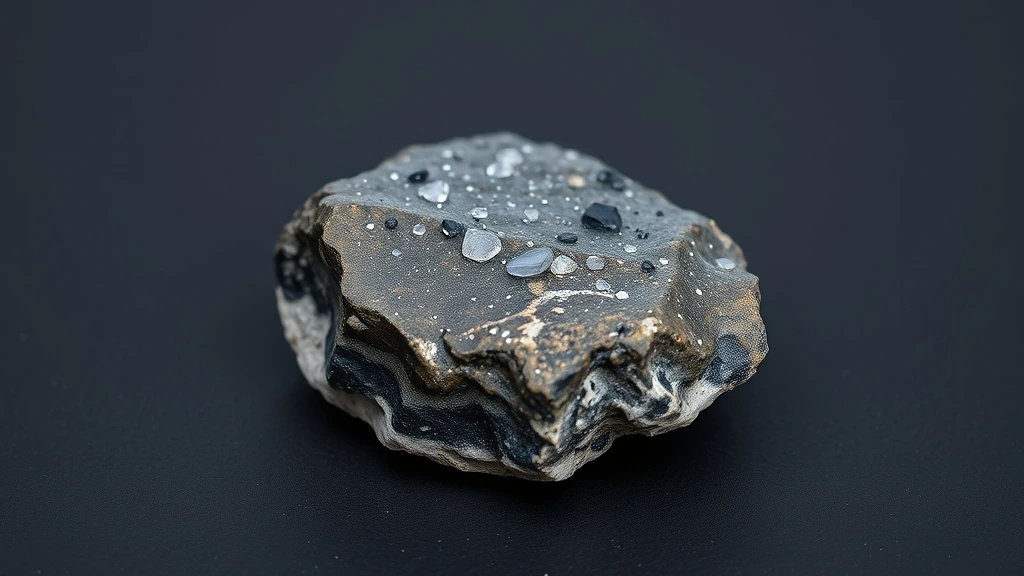
Hypersthene belongs to the pyroxene mineral group, a significant family of silicate minerals found in igneous and metamorphic rocks. As a natural mineral crystal, it forms through the cooling of magma or high-pressure metamorphism. Its geological significance lies in its role as a major constituent of mafic rocks like basalt and gabbro. Understanding its formation helps geologists interpret the thermal history of Earth’s crust.
What is Hypersthene Gemstone? Geological Overview & Definition
Hypersthene is primarily found in mafic igneous rocks such as basalt, gabbro, and peridotite. It often occurs in association with other minerals like olivine and pyroxene. Its presence indicates high-temperature magmatic conditions during rock formation. This mineral is crucial for understanding the composition of Earth’s upper mantle.
In gemological contexts, hypersthene is valued for its distinctive pleochroism and optical properties. It typically displays colors ranging from dark green to brownish-yellow. The stone’s luster is generally vitreous, enhancing its visual appeal in cut forms. Proper identification requires distinguishing it from similar pyroxenes like augite.
Hypersthene Gemstone Chemical Composition & Crystallographic Properties
Hypersthene crystallizes in the orthorhombic system, characterized by three mutually perpendicular axes of unequal length. Its lattice structure allows for specific atomic arrangements that define its physical properties. The chemical formula is generally represented as (Mg, Fe)SiO₃, though data may vary. This structure contributes to its moderate hardness and cleavage characteristics.
Cation substitution between magnesium and iron significantly influences the mineral’s color and density. Higher iron content often results in darker, more saturated hues. This substitution affects the refractive index, causing slight variations in optical behavior. These changes are critical for accurate gemological identification and grading.
The mineral exhibits acid sensitivity, reacting slowly to strong acids over extended periods. This property is important for long-term preservation and cleaning protocols. Chromophore color centers arise from trace impurities or structural defects within the lattice. These centers absorb specific wavelengths of light, producing the observed color spectrum.
Thermal behavior shows that hypersthene remains stable under moderate heating conditions. However, extreme temperatures can alter its crystallographic properties and internal structure. Understanding these thermal limits is essential for heat treatment processes. Proper handling ensures the gemstone retains its structural integrity and aesthetic value.
| Property | Specification |
|---|---|
| Mineral Group | Natural Mineral / Crystal |
| Chemical Formula | MgFeSi₂O₆ |
| Mohs Hardness | 5.5 – 6.5 |
| Crystal System | Orthorhombic |
| Specific Gravity (Density) | 3.55 – 3.65 |
| Refractive Index | 1.670 – 1.720 |
| Color & Optical Properties | Natural Hypersthene Gemstone color spectrum and optical dispersion |
| Primary Mining Localities | Global primary localities |
| Water & Chemical Resistance | High (Safe for gentle water washing) |
| Chakra Alignment (Traditional) | Root Chakra, Sacral Chakra |
| Zodiac Affinity (Traditional) | Taurus, Virgo |
| Symbolic Meaning (Traditional) | Grounding, stability, and protection against negative energy |
Hypersthene Gemstone Varieties & Color Spectrum
Hypersthene exhibits a diverse range of natural varieties, primarily distinguished by trace element substitution and crystal habit. These variations significantly impact the stone’s optical properties and market classification. Understanding these distinctions is crucial for accurate gemological identification and valuation.
Classic Hypersthene
This primary variety typically displays a pale green to yellowish-green hue, resulting from its pure orthopyroxene composition. The orthorhombic crystal system often produces well-formed, elongated prisms with distinct cleavage planes. Such specimens are common in basaltic rocks and serve as the baseline for mineral identification.
Enstatite
Enstatite is a magnesium-rich end-member of the pyroxene group, frequently appearing in white, cream, or light yellow tones. It is prized for its high magnesium silicate content, which contributes to its relative purity and luster. This variety is often found in ultramafic rocks and can exhibit a glassy to pearly sheen.
Bronzite
Bronzite is a distinct variety characterized by a metallic, bronze-brown coloration due to iron inclusion. It frequently displays a striking schiller effect, creating a shimmering, iridescent surface under direct light. This unique optical phenomenon makes it highly sought after for ornamental and lapidary purposes.
Hypersthene with Inclusions
Some specimens contain microscopic inclusions of other minerals, such as magnetite or ilmenite, which can alter their color. These inclusions may create a speckled appearance or enhance the stone’s overall density and weight. The presence of such features requires careful examination to distinguish them from synthetic imitations.
Regional Trade Varieties
Trade names often vary by region, with “green hypersthene” being a common descriptor for high-quality specimens. These stones are typically sourced from specific geological formations known for their consistent color and clarity. Market demand often drives the naming conventions used by gem dealers and collectors.
Where is Hypersthene Gemstone Found? Geological Mining & Extraction
Hypersthene is primarily extracted from ultramafic rocks, such as peridotites and komatiites, where it forms under high-pressure conditions. These host rocks are typically found in ancient cratonic regions, providing a stable geological environment for crystal growth. The extraction process requires careful handling to preserve the integrity of the delicate crystals.
Major mining regions include parts of Madagascar, Brazil, and the United States, where significant deposits have been identified. In these areas, open-pit mining is often employed to access the large volumes of rock necessary for extraction. The stones are then sorted and graded based on their color, clarity, and size for the gem market.
Historical Significance & Cultural Lore of Hypersthene Gemstone
Ancient civilizations valued hypersthene for its perceived protective qualities and association with the earth element. Archaeological findings suggest its use in ceremonial objects and jewelry, particularly in cultures that revered stone-based amulets. The stone’s durability and distinct color made it a suitable material for long-lasting artifacts.
In modern times, hypersthene has gained popularity in alternative healing practices, where it is linked to grounding and stability. Believers often associate it with the root and sacral chakras, using it to promote emotional balance and protection. This cultural lore continues to influence its demand in the metaphysical gemstone market.
Modern Uses & Jewelry Applications of Hypersthene Gemstone
Hypersthene is prized by lapidaries for its orthorhombic cleavage and moderate hardness, allowing both polished cabochons and intricate facets. Artisans often cut the stone into oval or cushion shapes to showcase its subtle pleochroism, while skilled faceting brings out a faint metallic sheen. In addition to rings and pendants, larger blocks are carved into ornamental objects such as figurines and decorative inlays.
- Cabochon pendants highlighting the stone’s silky luster
- Faceted earrings that emphasize its delicate fire
- Bezel‑set rings offering durability for everyday wear
- Ornamental carvings for interior décor and collector pieces
Safety & Mineral Profile of Hypersthene
Hypersthene is a silicate mineral belonging to the orthopyroxene group. It is typically moderately hard (Mohs 5.5–6) and densely crystalline, which makes it mechanically stable under normal handling conditions. However, the mineral can release fine dust particles that may irritate the respiratory tract if inhaled, and its surface can react with strong acids or oxidizing agents, potentially releasing iron and silicon ions. Because it is not a precious metal and has no significant optical properties for jewelry, collectors display it in cases or mounted on a backing rather than wear it. The mineral’s fracture is uneven, and it is not suitable for cutting or polishing to a high luster, further limiting its use in adornment.
In museum and research contexts, hypersthene serves as a key indicator of high‑temperature, high‑pressure metamorphic and igneous processes. Its presence in mafic and ultramafic rocks helps geologists reconstruct the thermal history of the Earth’s crust and mantle. The mineral’s crystal chemistry, particularly the substitution of Mg and Fe in the lattice, provides insight into the redox state of the host environment. Consequently, hypersthene is frequently included in comparative studies of orthopyroxenes and in collections that illustrate the diversity of silicate minerals.
Mineralogical Group and Planetary Lore of Hypersthene
Historically, hypersthene was first described in the early 19th century from the Sierra Nevada in California, where it was noted for its distinctive dark green to black coloration. Early mineralogists classified it within the orthopyroxene group, distinguishing it from the related mineral enstatite by its higher iron content and broader compositional range. According to early mineralogists, the name “hypersthene” derives from the Greek *hyper* (“above”) and *sthenos* (“strength”), reflecting its relative hardness compared to other silicates.
In lapidary literature, hypersthene has occasionally been associated with the planet Mars due to its reddish‑brown hues, though this association is largely symbolic and not based on planetary geology. Modern planetary science recognizes that orthopyroxenes, including hypersthene, are common in Martian basaltic rocks, providing a scientific link between terrestrial specimens and extraterrestrial geology. However, the mineral’s primary significance remains within Earth sciences, where it continues to inform studies of magmatic differentiation and metamorphic transformations.
How to Identify Real vs. Fake Hypersthene Gemstone
Artificial imitations of Hypersthene include colored glass, resin, and dyed quartz that mimic its hue but lack the stone’s characteristic density and refractive properties. Synthetic versions may be heat‑treated to produce a similar sheen, yet they often reveal uniform internal structures under magnification. Recognizing these differences requires a combination of tactile, visual, and simple physical tests.
Practical At-Home Authenticity Tests
- Temperature Test (Thermal Feel): Real Hypersthene feels cool to the touch and retains that coolness longer than glass or plastic, which quickly warm to skin temperature.
- Specific Gravity & Weight Test: Using a simple hydrostatic balance, genuine Hypersthene (density 3.4–3.9 g/cm³) will feel noticeably heavier than glass imitations of the same size.
- Scratch & Hardness Test (Mohs Comparison): With a steel file (Mohs 5.5), Hypersthene will resist scratching, whereas softer glass or quartz will show visible marks.
- Microscopic & Loupe Inspection (Internal Inclusions): A 10×–30× loupe reveals characteristic mineral inclusions and subtle striations in authentic Hypersthene, while fakes often appear completely clear or display uniform bubbles.
Hypersthene Gemstone Valuation Factors, Grading & Pricing
Market value hinges primarily on Color Saturation and overall tone uniformity. Collectors prefer specimens displaying deep, consistent brownish-green hues without mottling. High optical clarity and a distinct glassy luster significantly enhance the stone’s visual appeal.
Carat Weight directly influences price, as larger, transparent crystals are rare. Facet symmetry is critical for maximizing light return in cut gems. The presence of matrix or internal inclusions can either add character or reduce value, depending on the specific piece.
Geographical Provenance Premium often elevates the price of rare localities. Wholesale costs remain modest, but retail margins increase for certified, high-quality specimens. Current market trends show steady demand among niche collectors and metaphysical practitioners.
How to Clean and Care for Hypersthene Gemstone
To maintain the stone’s integrity, use warm soapy water and a soft cloth for gentle cleaning. This method effectively removes surface oils and dust without causing damage. Always dry the gemstone thoroughly with a lint-free towel after washing.
You must avoid ultrasonic cleaners to prevent structural fractures within the crystal lattice. The mineral’s moderate hardness makes it susceptible to stress from high-frequency vibrations. Regular, gentle care ensures the gemstone retains its luster and structural stability over time.
Cleansing and Recharging Hypersthene Gemstone (Energetic Care)
For energetic maintenance, use safe dry methods like smoke smudging or placing the stone in moonlight. These techniques align with the mineral’s grounding properties without exposing it to moisture or heat. Selenite plates also serve as excellent, non-invasive recharging surfaces for this stone.
These dry approaches respect the stone’s physical limitations while supporting its metaphysical associations. Avoid submerging the gem in water for extended periods during energetic rituals. This ensures both physical preservation and spiritual alignment for the hypersthene specimen.
Frequently Asked Questions About Hypersthene Gemstone
Is hypersthene safe to wear in the shower or while swimming?
Yes, hypersthene tolerates gentle water exposure. Its high water resistance means routine washing or brief shower contact won’t damage the stone, though prolonged soaking should be avoided to prevent surface dulling from soap residues.
How should I clean my hypersthene jewelry?
Clean with warm, soapy water and a soft cloth, never an ultrasonic bath. The warm solution loosens grime while the cloth protects the orthorhombic crystal lattice from the micro‑vibrations that can cause micro‑fractures in this relatively soft (5.5–6 on Mohs) mineral.
What zodiac signs are associated with hypersthene?
Taurus and Virgo are the aligned zodiac signs. Both earth signs appreciate hypersthene’s grounding energy, which resonates with their practical, steady nature and enhances their natural affinity for stability and focus.
Which chakras does hypersthene balance?
Root Chakra and Sacral Chakra. These energy centers govern grounding and creativity, and hypersthene’s earthy vibration is believed to reinforce personal security while stimulating the flow of vital life force through the sacral region.
Can hypersthene be used in everyday rings despite its hardness?
Yes, but with care. With a Mohs hardness of 5.5–6, hypersthene is suitable for daily wear if set protectively; avoid heavy impact and store separately from harder gemstones to prevent scratches on its refractive index‑rich surfaces.
Does hypersthene exhibit any notable optical properties?
It shows moderate birefringence with refractive indices nα = 1.669–1.755, nβ = 1.674–1.763, nγ = 1.680–1.773. This creates a subtle pleochroic effect, giving the stone a warm, golden‑brown sheen that changes slightly with viewing angle.
Is hypersthene a good choice for metaphysical healing?
Many practitioners value it for grounding and protection. Its esoteric keywords—grounding, stability, and shielding against negative energy—make it popular in meditation and crystal grids aimed at enhancing inner balance.
What is the typical density range I should expect?
Hypersthene’s specific gravity falls between 3.4 and 3.9. This relatively high density helps distinguish it from lighter silicates and contributes to its pleasant heft when held, a tactile cue often appreciated by collectors.