
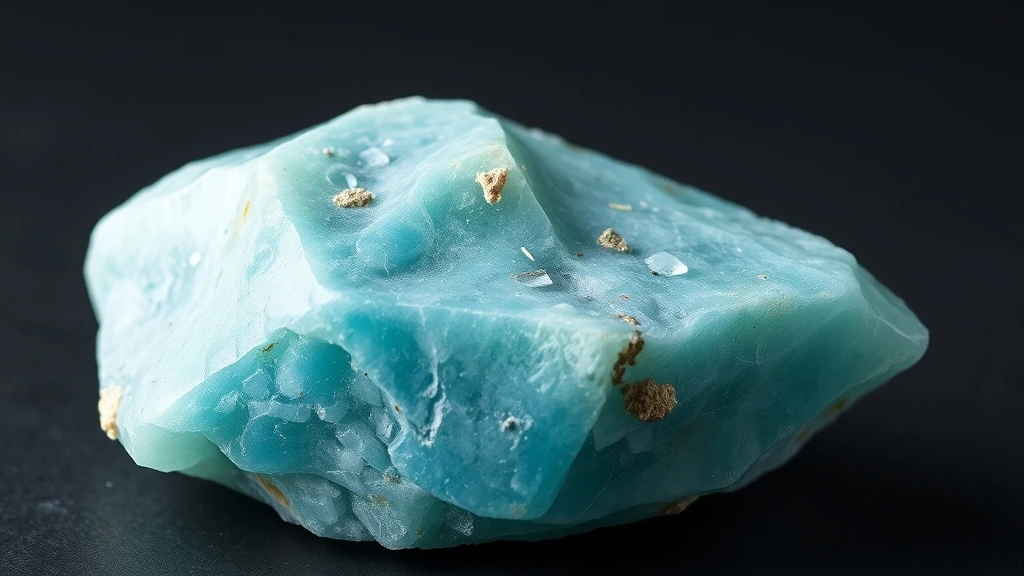
Amazonite belongs to the tectosilicate subclass of silicate minerals, specifically the alkali feldspar (microcline) group. Its formation occurs in granitic pegmatites and alkali‑rich volcanic rocks where slow cooling allows large, prismatic crystals to develop. The mineral’s characteristic color stems from trace lead‑ and water‑related chromophores, while its triclinic symmetry imparts subtle lamellar textures in massive aggregates. These geological traits combine to give Amazonite both scientific intrigue and ornamental appeal.
What is Amazonite Gemstone? Geological Overview & Definition
Amazonite is the green‑blue variety of microcline, a feldspar mineral that crystallizes in the triclinic system. It typically occurs as well‑formed prismatic crystals or as massive lamellar aggregates within granitic pegmatites, often intergrown with quartz and mica. The gemstone’s name derives from the Amazon River, reflecting early explorers’ belief that the stone washed up on its banks.
In gemological contexts, Amazonite is valued for its uniform coloration ranging from pale aqua to deep teal, and its relatively high hardness of 6–6.5. While it lacks the pleochroism of some feldspars, its subtle internal striations and occasional chatoyancy enhance its visual depth, making it a popular choice for cabochons, beads, and carved ornaments.
Amazonite Gemstone Chemical Composition & Crystallographic Properties
The ideal formula KAlSi₃O₈ represents a potassium‑rich aluminosilicate framework, yet natural Amazonite incorporates minor Na⁺, Ca²⁺, and Pb²⁺ substituting for potassium. These cationic variations, together with trace water molecules, create the crystal‑field distortions that generate its signature blue‑green hue. The mineral’s triclinic (prismatic crystals or massive lamellar aggregates) symmetry results in three unequal axes intersecting at oblique angles.
Amazonite’s lattice is built from a three‑dimensional network of SiO₄ tetrahedra linked by shared oxygen atoms, forming a robust tectosilicate framework. The presence of lead‑related color centers, often coupled with hydroxyl groups, absorbs specific wavelengths of light, producing the vivid coloration. This structure also renders the stone sensitive to strong acids, which can leach alkali ions and cause surface etching.
Thermally, Amazonite remains stable up to about 600 °C, beyond which dehydroxylation and breakdown of lead‑bearing complexes may occur, potentially altering its color. Rapid heating can induce thermal shock, leading to microfractures along the lamellar planes. Consequently, gem cutters must manage temperature gradients carefully during faceting to preserve both clarity and hue.
| Property | Specification |
|---|---|
| Mineral Group | Silicates (Tectosilicates / Alkali Feldspar – Microcline Group) |
| Chemical Formula | KAlSi₃ O₈ |
| Mohs Hardness | 6.0–6.5 |
| Crystal System | Triclinic (Prismatic crystals or massive lamellar aggregates) |
| Specific Gravity (Density) | 2.56–2.58 |
| Refractive Index | 1.522–1.530 |
| Color & Optical Properties | Natural Amazonite Gemstone color spectrum and optical dispersion |
| Primary Mining Localities | Brazil (Minas Gerais), USA (Colorado), Russia, Madagascar, Ethiopia |
| Water & Chemical Resistance | Moderate (Safe for brief lukewarm water; avoid harsh acids and ultrasonic cleaners) |
| Chakra Alignment (Traditional) | Heart Chakra (Anahata) and Throat Chakra (Vishuddha) |
| Zodiac Affinity (Traditional) | Virgo, Libra, Aquarius |
| Symbolic Meaning (Traditional) | Truthful communication, emotional soothing, calm courage, and harmony |
Amazonite Gemstone Varieties & Color Spectrum
Amazonite is a potassium feldspar distinguished by its unique blue to green hues, derived from trace impurities. The triclinic crystal system governs its structure, influencing how light interacts with the internal lattice. Most specimens exhibit a soft, milky opacity rather than the transparency seen in other feldspars. This characteristic appearance makes it instantly recognizable in the gem market.
Classic Brazilian Amazonite
Originating primarily from Minas Gerais, this variety displays a vibrant, saturated blue-green color. It often contains fine, needle-like inclusions of copper or lead that contribute to its distinct hue. The stone typically features a subtle, waxy luster that enhances its visual appeal. This regional type remains the most commercially available and sought-after form globally.
Pale Sky-Blue Amazonite
This lighter morph presents a delicate, pastel blue tone that resembles a clear summer sky. It often lacks the heavy opacity of darker stones, offering a slightly more translucent quality. Geologically, it forms in specific zones of the pegmatite where impurity concentrations are lower. Collectors prize this variety for its ethereal, airy aesthetic and refined elegance.
Deep Teal Amazonite
Characterized by a rich, dark teal coloration, this variety commands higher premiums in the trade. The intense hue results from higher concentrations of structural defects and trace elements within the KAlSi3O8 lattice. These stones often exhibit strong pleochroism, shifting colors slightly when viewed from different angles. Its rarity makes it a focal point for high-end jewelry collections.
Mottled or Zoned Amazonite
This variety displays irregular patches of blue, green, and white, creating a marbled effect. The zonation reflects varying chemical conditions during the slow cooling of the host pegmatite rock. Such stones are often cut into cabochons to maximize the visual impact of the patterns. While less uniform, they offer a unique, organic aesthetic that appeals to artisan jewelers.
Inclusion-Rich Amazonite
Some specimens contain visible inclusions of mica, quartz, or other feldspar varieties. These internal features can create a “snowy” or cloudy appearance within the stone. Despite these inclusions, the gem retains its desirable refractive index of 1.522–1.530. This variety is often used in carvings and decorative objects where clarity is less critical.
Where is Amazonite Gemstone Found? Geological Mining & Extraction
Amazonite is primarily found in pegmatite deposits, which are coarse-grained igneous rocks formed during the final stages of magma crystallization. These deposits often occur in regions with significant tectonic activity, such as Brazil, Russia, and the United States. The stone typically forms in large, blocky crystals that require careful extraction to maintain integrity.
Major mining operations focus on open-pit methods to access the rich feldspar concentrations within these pegmatites. In Brazil, the state of Minas Gerais remains the global epicenter for high-quality production. Extraction involves separating the desired feldspar from surrounding quartz and mica minerals. Proper handling is essential to prevent fracturing due to the stone’s moderate Mohs hardness of 6.0–6.5.
Historical Significance & Cultural Lore of Amazonite Gemstone
Ancient civilizations, including the Egyptians and Romans, valued Amazonite for its protective and healing properties. Archaeological evidence suggests its use in amulets and jewelry intended to ward off evil spirits. The stone was often associated with the goddess Isis, symbolizing her protective and nurturing aspects. Its distinctive color was believed to connect the wearer to the divine realm.
In modern times, Amazonite has regained popularity as a stone of communication and emotional balance. It is frequently used in crystal healing practices to promote calmness and clarity of thought. The gem’s historical journey from ancient ritual objects to contemporary fashion jewelry underscores its enduring appeal. This timeless allure ensures its continued relevance in both spiritual and aesthetic contexts.
Modern Uses & Jewelry Applications of Amazonite Gemstone
Lapidaries typically cut amazonite into smooth cabochons to best display its distinctive color zoning and chatoyancy. Due to its moderate Mohs hardness of 6.0–6.5, it is less suited for high-faceting rings but excels in pendants and earrings. Artisans also carve it into ornamental beads, tiles, and architectural accents for its unique aesthetic appeal.
- Cabochon Cutting: Polished domes highlight the stone’s internal “silk” effect and blue-green hues.
- Faceted Jewelry: Rarely faceted due to cleavage, but used in low-wear settings like brooches.
- Ornamental Carving: Commonly used in decorative objects, inlays, and traditional folk jewelry.
Metaphysical Properties & Traditional Meaning of Amazonite Gemstone
According to historical traditions and metaphysical lore, amazonite is revered as a stone of emotional balance and creative expression. Practitioners believe it helps dissolve resentment and promotes a sense of inner peace during turbulent times. Its soft blue-green energy is often associated with calming the mind and enhancing spiritual awareness.
- Emotional Resonance: Believed to soothe anxiety and encourage honest self-expression.
- Creative Flow: Traditionally linked to unlocking artistic inspiration and mental clarity.
- Spiritual Connection: Used in meditation to align the heart with higher consciousness.
Which Chakra and Zodiac Signs Align with Amazonite Gemstone?
In chakra healing systems, amazonite is primarily aligned with the Heart Chakra (Anahata) and the Throat Chakra (Vishuddha). This dual alignment supports the integration of emotional truth with clear verbal communication. It is believed to help individuals express their feelings authentically without fear of judgment.
- Heart Chakra (Anahata): Promotes compassion, love, and emotional healing.
- Throat Chakra (Vishuddha): Enhances truthful expression and creative voice.
Astrologically, amazonite resonates strongly with Virgo, Libra, and Aquarius. These earth, air, and water signs benefit from the stone’s balancing properties. Virgo finds grounding, Libra gains harmony, and Aquarius experiences enhanced intuition. This specific zodiac alignment ensures the stone’s energy complements their elemental natures.
- Virgo: Supports analytical clarity and emotional stability.
- Libra: Encourages fair communication and relational balance.
- Aquarius: Boosts humanitarian ideals and innovative thinking.
How to Identify Real vs. Fake Amazonite Gemstone
The market is flooded with artificial imitations, including synthetic glass and dyed quartz that mimic amazonite’s color. Genuine amazonite often displays natural color banding and a slightly waxy luster that is difficult to replicate perfectly. Understanding these visual cues is essential for distinguishing authentic specimens from lab-created alternatives.
- Synthetic Glass: Often contains tiny bubbles and lacks natural color zoning.
- Dyed Quartz: Color may appear too uniform or concentrated in fractures.
- Plastic Resins: Feel lighter and may show mold lines or seams.
Practical At-Home Authenticity Tests
- Temperature Test (Thermal Feel): Genuine amazonite feels cool to the touch initially and warms slowly. Glass and plastic imitations often reach room temperature faster or feel warmer immediately.
- Specific Gravity & Weight Test: Real amazonite has a density of 2.56–2.58 g/cm³. It should feel noticeably heavier than plastic or lightweight glass of the same size.
- Scratch & Hardness Test (Mohs Comparison): With a Mohs hardness of 6.0–6.5, amazonite will scratch glass but can be scratched by a steel knife. Plastic imitations will scratch easily with a fingernail.
- Microscopic & Loupe Inspection (Internal Inclusions): Use a 10x loupe to look for natural inclusions like mica flakes or color zoning. Synthetic glass often contains circular bubbles, while dyed stones show color concentrated in cracks.
Amazonite Gemstone Valuation Factors, Grading & Pricing
The primary driver of value is Color Saturation, specifically the intensity of the characteristic blue-green hue. High-grade specimens exhibit uniform tone without significant zoning or pale patches. Additionally, Optical Clarity and a strong vitreous luster significantly enhance the stone’s overall visual appeal.
Market pricing heavily depends on Carat Weight, as larger, clean crystals are increasingly rare in the global supply chain. Facet symmetry ensures optimal light return, while the presence of Matrix Inclusions can either detract from value or add unique character. Buyers should prioritize stones with minimal visible internal fractures or surface imperfections.
Geographical Provenance Premium often applies to stones from renowned deposits like Brazil or Madagascar. Wholesale prices fluctuate based on supply, but retail values remain steady for high-quality pieces. Understanding these market trends helps collectors make informed investment decisions in the gemstone sector.
How to Clean and Care for Amazonite Gemstone
To maintain the stone’s integrity, clean it gently with lukewarm soapy water and a soft cloth. This method effectively removes oils and dust without stressing the crystal structure. Always dry the gemstone thoroughly with a lint-free towel to prevent water spots.
It is critical to avoid ultrasonic and steam cleaners, as these methods can exacerbate existing fractures. The Mohs Hardness of 6.0–6.5 makes it susceptible to damage from aggressive mechanical agitation. Store the stone separately to prevent scratches from harder minerals like quartz or topaz.
Cleansing and Recharging Amazonite Gemstone (Energetic Care)
For energetic maintenance, use smoke smudging with sage or palo santo to clear negative vibrations. This dry method respects the mineral’s moderate water resistance and avoids any risk of chemical alteration. Ensure the area is well-ventilated to prevent residue buildup on the stone’s surface.
Alternatively, place the gemstone on a selenite plate under moonlight for recharging. This passive technique leverages natural light without exposing the crystal to heat or moisture. Such practices align with safe handling guidelines for this delicate feldspar variety.
Frequently Asked Questions About Amazonite Gemstone
Is Amazonite safe to wear in the shower?
Amazonite has moderate water resistance, making it safe for brief exposure to lukewarm water. However, prolonged soaking or contact with harsh soaps can degrade its surface luster over time. Always remove jewelry before swimming in chlorinated pools or hot tubs to preserve the stone’s integrity.
Can I clean Amazonite in an ultrasonic cleaner?
No, you must avoid ultrasonic and steam cleaners as they can damage the stone. Instead, clean your Amazonite gently using lukewarm soapy water and a soft cloth. This gentle method effectively removes dirt without risking fractures or dulling the refractive index of the mineral.
Which zodiac signs are compatible with Amazonite?
Amazonite is traditionally associated with Virgo, Libra, and Aquarius. These signs often resonate with the stone’s calming energy and communicative properties. Wearing this gemstone may enhance personal traits aligned with these astrological alignments, promoting balance and clarity in daily life.
What chakras does Amazonite activate?
Amazonite primarily activates the Heart Chakra (Anahata) and Throat Chakra (Vishuddha). These energy centers are linked to emotional healing and clear communication. By balancing these specific chakras, the stone helps foster self-expression and emotional stability for the wearer.
How hard is Amazonite on the Mohs scale?
Amazonite measures between 6.0 and 6.5 on the Mohs hardness scale. This moderate hardness means it is durable enough for everyday jewelry but susceptible to scratching from harder minerals. Careful handling is required to prevent surface abrasions that could diminish its aesthetic appeal.
What is the chemical composition of Amazonite?
Amazonite is a variety of microcline feldspar with the formula KAlSi3O8. Its distinctive blue-green color results from trace impurities within the crystal structure. Understanding this chemical formula helps distinguish it from other similar-looking feldspar varieties in gemological identification.
What is the crystal system of Amazonite?
Amazonite crystallizes in the triclinic crystal system. This specific structural arrangement influences its optical properties and cleavage patterns. Recognizing the triclinic system is crucial for accurate mineral identification and understanding how the stone fractures under stress.
What is the specific gravity of Amazonite?
Amazonite has a specific gravity ranging from 2.56 to 2.58. This density helps gemologists distinguish it from other blue-green stones like chalcedony or turquoise. Measuring this density is a standard procedure in laboratory testing to verify the authenticity of the gemstone.