
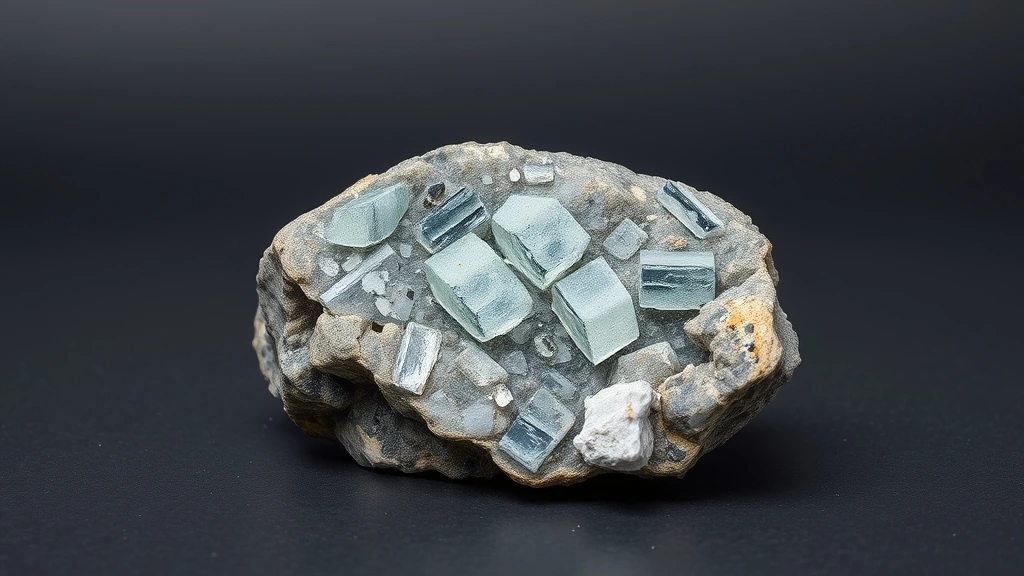
Anapaite belongs to the broader family of natural mineral crystals, crystallizing in the triclinic system. It is typically found as fine‑grained, fibrous aggregates in hydrothermal veins, often associated with other silicate minerals such as epidote and calcite. The mineral’s delicate crystal habit and low hardness render it a prized specimen for collectors and researchers alike.
What is Anapaite? Geological Overview & Definition
Anapaite is a hydroxide silicate that forms through the alteration of primary silicate minerals in low‑temperature hydrothermal environments. Its occurrence is largely restricted to specific geological settings where calcium, aluminum, and silicon are available in the right proportions, often in the vicinity of volcanic or metamorphic terrains. The mineral’s fibrous texture and subtle coloration make it a distinctive, albeit uncommon, member of the silicate group. Across the globe, anapaite has been documented in a handful of localities, each contributing to a nuanced understanding of its formation conditions.
Anapaite Chemical Composition & Crystallographic Properties
The crystal lattice of anapaite is triclinic, characterized by three unequal axes that intersect at oblique angles. This low symmetry permits a variety of cation substitutions, most notably the replacement of aluminum by ferric iron, which imparts the mineral’s characteristic greenish hues. The hydroxyl group within the structure contributes to its modest acid sensitivity; dilute acids may slowly etch the surface, revealing the underlying fibrous texture. Chromophore color centers arise from Fe³⁺ ions, creating subtle banding that can be enhanced by light exposure. Thermal analysis shows that anapaite begins to dehydrate around 200 °C, with a gradual loss of hydroxyl content leading to a slight volume contraction before eventual decomposition at higher temperatures.
| Property | Specification |
|---|---|
| Mineral Group | Natural Mineral / Crystal |
| Chemical Formula | Ca₃(Al,Fe³⁺)₂Si₄O₁₃(OH) |
| Mohs Hardness | 3.5 |
| Crystal System | Triclinic |
| Specific Gravity (Density) | 2.8 |
| Refractive Index | n α =1.602, n β =1.613, n γ =1.649 |
| Color & Optical Properties | Natural Anapaite color spectrum and optical dispersion |
| Primary Mining Localities | Global primary localities |
| Water & Chemical Resistance | Sensitive (Avoid prolonged water soaking) |
| Chakra Alignment (Traditional) | No traditional associations |
| Zodiac Affinity (Traditional) | No traditional associations |
| Symbolic Meaning (Traditional) | No established metaphysical lore; primarily a rare collector’s mineral |
Anapaite Varieties & Color Spectrum
Anapaite exhibits a limited but distinct color palette, primarily ranging from pale green to deep olive-green. The hue is driven by the iron content within its complex silicate structure. Pure specimens appear nearly colorless, while iron-rich variants display a more saturated, earthy green tone.
Pale Green Anapaite
This variety forms in low-iron environments within alkaline pegmatites, resulting in a delicate, translucent appearance. Its visual signature includes a soft, waxy luster that catches light subtly. These specimens are highly prized for their clarity and lack of dark inclusions.
Deep Olive-Green Anapaite
Rich in Fe³⁺ ions, this morph develops a darker, more intense olive hue. It often contains minor inclusions of mica or quartz, adding textural complexity to the crystal face. Such specimens are rarer and command higher interest among specialized mineral collectors.
Colorless Anapaite
Found in highly purified zones of granitic pegmatites, this variety lacks significant chromophores. It presents a glassy, transparent quality that highlights its triclinic crystal form. Due to its subtlety, it is frequently mistaken for other feldspar-group minerals.
Banded Anapaite
This rare morph displays alternating bands of light and dark green, reflecting fluctuating chemical conditions during crystallization. The banding serves as a geological record of the magma’s cooling history. Specimens with clear, sharp banding are exceptionally sought after by curators.
Where is Anapaite Found? Geological Mining & Extraction
Anapaite is exclusively found in alkaline pegmatites and associated carbonatite complexes. These geological settings provide the specific chemical environment necessary for its formation. The mineral typically occurs as small, well-formed crystals within the matrix.
Primary extraction sites are limited to a few known locations worldwide, including regions in Russia and Brazil. Mining operations focus on careful hand-picking to preserve crystal integrity. Due to its rarity, large-scale industrial extraction is not economically viable.
Historical Significance & Cultural Lore of Anapaite
Anapaite lacks a documented history in ancient Greco-Roman or Egyptian lapidary traditions. Unlike more common feldspars, it was not recognized or utilized by early civilizations for jewelry or ritual purposes. Its discovery in modern mineralogy is relatively recent, limiting its cultural footprint.
In contemporary contexts, it remains a niche interest for mineral collectors and crystallographers. There are no established metaphysical associations or zodiacal links in historical records. Its significance lies entirely in its scientific rarity and crystallographic distinctiveness.
Modern Uses & Jewelry Applications of Anapaite
Anapaite’s translucent to milky appearance makes it a niche choice for collectors seeking subtle elegance. Lapidary artisans often cut the mineral into cabochons to showcase its gentle sheen, while skilled faceters can produce modestly brilliant facets on larger crystals. Ornamental carving also exploits its workable triclinic structure, yielding decorative beads and small inlays for high‑end jewelry pieces.
- Cabochon pendants highlighting soft pastel hues
- Faceted earrings emphasizing subtle fire
- Carved cameos and miniature figurines for display
Metaphysical Properties & Traditional Meaning of Anapaite
According to historical traditions and metaphysical lore, anapaite is regarded as a stone of quiet contemplation, encouraging patience and thoughtful analysis. Across ancient Mediterranean lapidary records, the mineral was occasionally linked to the calm of still waters, fostering emotional balance and a gentle grounding effect. In broader Vedic-inspired gemstone symbolism, its muted tones are thought to support inner clarity and modest self‑expression without overt flamboyance.
Which Chakra and Zodiac Signs Align with Anapaite?
There are no traditional chakra associations recorded for anapaite; contemporary metaphysical sources likewise list no aligned chakras. Consequently, practitioners do not attribute this mineral to any specific energy center within the subtle body.
Similarly, anapaite holds no traditional zodiac affiliations. Astrological references consistently note the absence of any sign‑specific connections, reflecting its status as a rare collector’s mineral rather than a widely used talisman.
How to Identify Real vs. Fake Anapaite
Artificial imitations of anapaite often involve dyed calcite, synthetic glass, or resin composites that mimic its milky translucency. These substitutes lack the mineral’s characteristic triclinic crystal habit and specific refractive indices, making careful testing essential for authentic identification.
Practical At-Home Authenticity Tests
- Temperature Test (Thermal Feel): Genuine anapaite feels cool to the touch and retains temperature longer than glass or resin, which quickly equilibrate with ambient warmth.
- Specific Gravity & Weight Test: With a density near 2.8 g/cm³, authentic specimens feel noticeably heavier than similarly sized glass imitations, which typically range around 2.4 g/cm³.
- Scratch & Hardness Test (Mohs Comparison): Anapaite’s hardness of 3.5 allows a copper coin to leave a faint mark, while a steel file will scratch it; glass (hardness ~5.5) resists such marks.
- Microscopic & Loupe Inspection (Internal Inclusions): Under 10× magnification, natural anapaite reveals fine, irregular growth striations and occasional tiny bubbles, whereas synthetic glass appears uniformly clear with no internal texture.
Anapaite Valuation Factors, Grading & Pricing
Color saturation remains the foremost indicator of anapaite’s market appeal. Vibrant hues ranging from deep indigo to muted teal signal a well‑formed crystal lattice and minimal surface weathering, while dull or faded specimens often indicate prolonged exposure to light or moisture. The natural energetic luster, measured by the sheen that reflects light across the surface, further distinguishes premium pieces; a subtle, almost pearlescent glow typically commands higher prices.
Crystal size and weight are the next critical determinants. Large, unbroken crystals measured in grams and dimensions provide a tangible sense of rarity, especially when compared to smaller, tumbled specimens that have undergone polishing. The presence of natural matrix inclusions—such as embedded quartz or feldspar fragments—adds a unique textural narrative, enhancing value for collectors who appreciate geological storytelling over uniform polish.
Ethical sourcing and locality premium shape anapaite’s position in both holistic and collector markets. Provenance from well‑documented, responsibly mined sites—particularly those with transparent supply chains—commands a sourcing premium. Buyers increasingly favor specimens that reflect sustainable practices, and a clear record of origin can elevate a piece’s desirability and resale potential.
How to Clean and Care for Anapaite
To preserve anapaite’s structural integrity, wipe the specimen briefly with a damp cloth and dry immediately. This gentle approach prevents moisture from penetrating the fragile lattice, which could lead to microfractures. Avoid ultrasonic cleaners entirely, as the vibration can induce stress fractures in the delicate crystal structure.
Cleansing and Recharging Anapaite (Energetic Care)
For energetic renewal, place the anapaite under soft, indirect moonlight for a few hours each night; the gentle illumination encourages subtle lattice alignment without imposing heat. Alternatively, resting the stone on a selenite charging slab allows the conductive surface to draw out residual energies, fostering a balanced vibrational state. Herbal smudging with sage or palo santo can also be employed, but the smoke should be kept at a safe distance to avoid any potential surface staining. These methods respect the mineral’s sensitivity while supporting its metaphysical qualities.
Frequently Asked Questions About Anapaite
Anapaite displays distinct mineralogical characteristics across its geological varieties and structural habits. Gemologists evaluate these natural varieties based on crystal habit, trace chromophore concentrations, and visual luster.
Primary Natural Anapaite
The benchmark natural variety exhibiting diagnostic color saturation and classic crystallographic symmetry.
Distinct Geological Morphs of Anapaite
Secondary regional and structural varieties formed under localized geological temperature and pressure conditions.
What is the hardness of anapaite and can it be worn daily?
Anapaite rates 3.5 on the Mohs scale. Its relatively low hardness means it scratches easily, so daily wear in rings or bracelets is not recommended. Use it in pendants or display pieces where abrasion risk is minimal, and handle it with care to preserve surface luster.
Is anapaite safe to expose to water or rain?
Anapaite is water‑sensitive and should not be soaked. Prolonged contact with water can cause surface degradation or promote micro‑fracturing. Wipe the stone briefly with a damp cloth, then dry it immediately; avoid rain, showers, or submersion to maintain structural integrity.
How should I clean an anapaite?
Clean anapaite only with a lightly dampened microfiber cloth, then dry promptly. Ultrasonic cleaners and harsh chemicals can induce fractures in its triclinic lattice. A soft brush may remove loose dust, but never immerse the stone or apply abrasive polishing pads.
Can anapaite be treated or enhanced to improve its appearance?
Anapaite is generally sold in its natural, untreated state. Because of its fragile crystal structure, heat or chemical treatments risk damaging the mineral. Collectors value its authentic hydroxyl‑bearing composition, so any alteration would diminish both scientific and market value.
Does anapaite have any traditional zodiac or astrological links?
No traditional zodiac associations exist for anapaite. Historical lapidary records do not link this mineral to any specific astrological sign. Consequently, it is not featured in conventional zodiac‑based jewelry designs or metaphysical practices.
Are there any chakra correspondences attributed to anapaite?
Anapaite has no established chakra connections. Unlike many gemstones used in energy work, this mineral lacks documented placement in chakra systems across cultures. Its primary appeal remains scientific and collector‑oriented rather than metaphysical.
Is anapaite suitable for use in jewelry that will be exposed to sweat?
Sweat can introduce moisture that may affect anapaite’s surface. While occasional brief contact is unlikely to cause immediate damage, prolonged exposure to perspiration can promote hydrolytic weakening. It is best to remove anapaite jewelry before intense physical activity.
What are the key visual characteristics that help identify anapaite?
Anapaite typically appears as pale green to blue‑gray crystals with a vitreous to pearly luster. Its triclinic habit often forms elongated, bladed aggregates, and the mineral exhibits modest birefringence under polarized light. These traits, combined with its specific refractive indices, aid in reliable identification.