
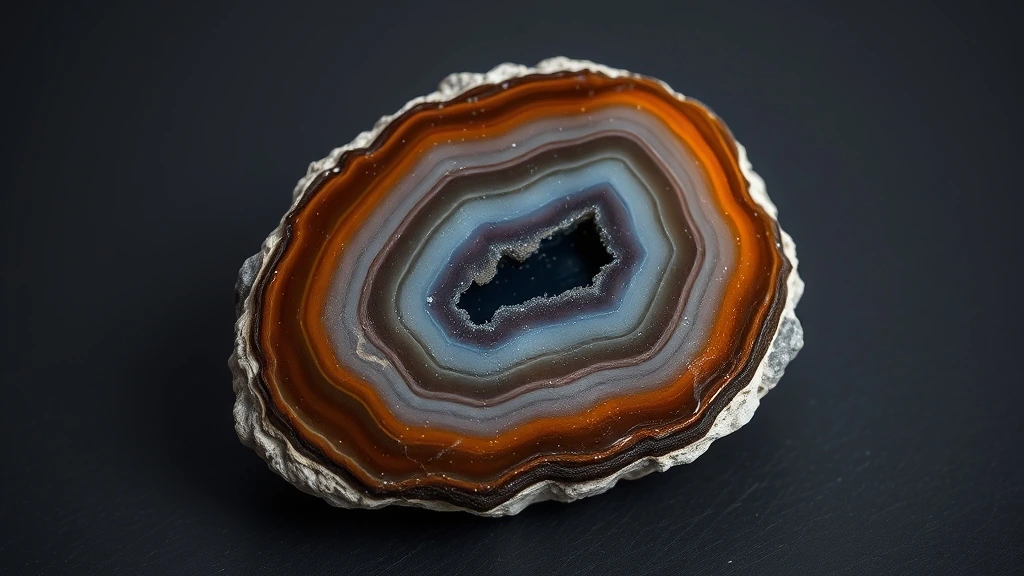
Volcano agate belongs to the silicate mineral group, specifically classified as a chalcedony. It forms through the precipitation of silica-rich fluids within volcanic gas vesicles. This process creates a dense, microcrystalline quartz aggregate that lacks visible individual crystals. The stone’s formation is intrinsically linked to volcanic activity, where rapid cooling traps silica in intricate, layered patterns.
What is Volcano Agate? Geological Overview & Definition
Volcano agate is defined by its cryptocrystalline texture, meaning its quartz crystals are too small to be seen without magnification. It typically exhibits a mottled or banded appearance with colors ranging from brown to black. This distinct visual character results from trace mineral inclusions during the slow cooling of volcanic rock.
Geologically, it is a secondary mineral formed in the cavities of basaltic lava flows. The volcanic origin distinguishes it from sedimentary agates, which form in sandstone. This specific environment allows for the development of dense, interlocking fibrous quartz structures. Consequently, the stone often displays a waxy luster and high density compared to other chalcedony varieties.
Volcano Agate Chemical Composition & Crystallographic Properties
The fundamental chemical composition is pure silicon dioxide (SiO₂), arranged in a trigonal crystal system. However, the visible stone consists of microcrystalline fibrous aggregates rather than single macroscopic crystals. This fibrous nature creates a strong, interlocking lattice that enhances mechanical strength. The lack of large crystal faces prevents easy cleavage along specific planes. This same fibrous microcrystalline structure is also responsible for the distinct banding patterns seen in Striped Agate, where alternating layers of impurities create its signature visual appeal.
Trace elements such as iron oxides act as chromophores, imparting the characteristic brown and black hues. These impurities substitute for silicon within the lattice or exist as microscopic inclusions. The stone exhibits low acid sensitivity, maintaining its structural integrity against mild chemical exposure. Thermal behavior is stable, though rapid temperature changes can cause fracturing due to internal stress. While Volcano Agate’s coloration is driven by iron oxide impurities, the distinct blue and white patterns of a Petoskey Stone arise from a different geological process involving fossilized sponges and silica deposition.
| Property | Specification |
|---|---|
| Mineral Group | Silicates (Chalcedony / Cryptocrystalline Quartz) |
| Chemical Formula | SiO₂ (Silicon Dioxide) |
| Mohs Hardness | 6.5 – 7.0 |
| Crystal System | Trigonal (Microcrystalline / Cryptocrystalline fibrous aggregates) |
| Specific Gravity (Density) | 2.60 – 2.65 |
| Refractive Index | 1.544 – 1.553 |
| Color & Optical Properties | Natural Volcano Agate color spectrum and optical dispersion |
| Primary Mining Localities | Brazil, Uruguay, Turkey, India, Madagascar |
| Water & Chemical Resistance | High (Safe for gentle warm water and mild soap; avoid harsh acids and chlorine) |
| Chakra Alignment (Traditional) | Root Chakra and Sacral Chakra |
| Zodiac Affinity (Traditional) | Gemini, Virgo, Taurus |
| Symbolic Meaning (Traditional) | Grounding, emotional balance, physical endurance, and protection |
Volcano Agate Varieties & Color Spectrum
Volcano agate presents a diverse array of color morphs driven by trace element impurities during crystallization. The most common manifestation features deep, earthy tones ranging from dark brown to black, often accented by lighter bands. These variations result from the presence of iron oxides and manganese within the silica matrix.
Dark Earth Volcano Agate
This variety exhibits a dominant charcoal or deep umber background with subtle, swirling lighter inclusions. The cryptocrystalline structure creates a velvety appearance that absorbs light rather than reflecting it intensely. It is the most abundant form found in volcanic basalt flows.
Banded Volcano Agate
Distinct concentric bands of cream, gray, and brown define this visually striking subtype. These patterns form as successive layers of silica gel precipitate around a central void. The banded agate structure offers high aesthetic value for lapidary work.
Reddish-Brown Volcano Agate
Rich terracotta and rust hues characterize this rarer geological expression. The coloration stems primarily from high concentrations of hematite inclusions dispersed throughout the stone. This variety is highly sought after for its warm, grounding visual energy.
Gray-White Volcano Agate
Pale gray and off-white tones dominate this lighter-spectrum variant, often showing delicate, lace-like patterns. The lower iron content results in a cleaner, more translucent appearance compared to darker morphs. It is frequently polished into cabochons to highlight its subtle internal textures.
Where is Volcano Agate Found? Geological Mining & Extraction
Volcano agate forms within vesicles and cavities of basaltic lava flows, where silica-rich fluids slowly precipitate over millions of years. These deposits are typically located near ancient volcanic sites where rapid cooling trapped gas bubbles that later filled with mineral solutions. The host rock is usually dense, fine-grained basalt or andesite.
Primary extraction occurs in regions with significant volcanic history, including parts of the United States, Mexico, and Central America. Mining involves careful excavation of the host rock to extract intact geodes or agate nodules. The geode formation process ensures the preservation of intricate internal banding patterns.
Historical Significance & Cultural Lore of Volcano Agate
Ancient civilizations valued agate for its protective properties and believed it could ward off evil spirits. In Greco-Roman culture, agate was often carved into intaglios depicting deities or protective symbols. Egyptian artisans incorporated agate into amulets and jewelry, associating it with stability and endurance.
Vedic texts reference agate-like stones as symbols of earthy strength and physical vitality. Archaeological finds from these regions reveal polished agate beads and pendants used in ceremonial contexts. This enduring legacy highlights the stone’s universal appeal across distinct cultural traditions.
Modern Uses & Jewelry Applications of Volcano Agate
Volcano agate is primarily valued for its distinct, chaotic internal patterns that resemble volcanic landscapes or swirling smoke. Lapidaries typically cut these stones into cabochons to maximize the visibility of their intricate, three-dimensional inclusions. The stone’s durability makes it suitable for daily wear in rings, pendants, and bracelets without significant risk of chipping.
- Cabochon Cutting: Polished domes highlight the stone’s unique silica banding and fossil-like textures.
- Ornamental Carvings: Skilled artisans use the material for intaglio carvings, leveraging its resistance to abrasion.
- Beaded Jewelry: Uniformly sized beads are popular in artisanal necklaces and bracelets for their earthy aesthetic.
- Architectural Accents: Large slabs are occasionally used in decorative flooring or wall panels for their rugged appearance.
Metaphysical Properties & Traditional Meaning of Volcano Agate
According to historical traditions and metaphysical lore, volcano agate is revered as a stone of profound grounding and physical endurance. Ancient Mediterranean and Vedic practitioners often associated volcanic minerals with the raw, transformative power of the earth’s core. This stone is believed to help individuals remain stable during periods of intense emotional turbulence or external pressure.
In historical lapidary lore, the stone’s fiery internal patterns symbolize the balance between destructive and creative forces. It is traditionally viewed as a protective talisman that fosters emotional balance and resilience. Practitioners suggest that wearing this stone helps anchor the spirit, preventing feelings of being overwhelmed by life’s chaotic energies.
Which Chakra and Zodiac Signs Align with Volcano Agate?
Volcano agate is canonically aligned with the Root Chakra and the Sacral Chakra. The Root Chakra connection stems from the stone’s deep association with the earth’s geological stability and physical survival. This alignment helps practitioners feel secure, safe, and firmly connected to their physical reality and bodily needs.
The Sacral Chakra resonance reflects the stone’s ability to manage creative flow and emotional depth. Astrologically, it is specifically attuned to Gemini, Virgo, and Taurus. These earth and air signs benefit from the stone’s capacity to provide structure to their mental energies while enhancing their natural connection to the physical world.
How to Identify Real vs. Fake Volcano Agate
Artificial imitations of volcano agate often involve synthetic glass, dyed quartz, or plastic composites designed to mimic the stone’s distinctive patterns. These fakes may lack the natural irregularity and depth found in genuine specimens. Understanding the physical properties of natural silicon dioxide is essential for distinguishing authentic stones from manufactured replicas.
Practical At-Home Authenticity Tests
- Temperature Test (Thermal Feel): Genuine agate feels distinctly cool to the touch and warms slowly in the hand. Synthetic glass or plastic imitations tend to warm up much faster due to their lower thermal mass.
- Specific Gravity & Weight Test: Real volcano agate has a density of 2.60 – 2.65. It should feel heavier than its size suggests compared to plastic or lightweight glass substitutes of the same dimensions.
- Scratch & Hardness Test (Mohs Comparison): With a Mohs hardness of 6.5 to 7.0, agate will scratch glass but will not be scratched by a steel knife blade. Softer fakes like plastic or certain resins will show visible scratches from a steel tip.
- Microscopic & Loupe Inspection (Internal Inclusions): Use a 10x loupe to examine the interior. Natural stones display complex, irregular microcrystalline structures and mineral inclusions. Fakes often contain tiny air bubbles, swirl marks, or perfectly uniform, artificial color distribution.
Volcano Agate Valuation Factors, Grading & Pricing
The market first gauges Color Saturation, noting the depth of fiery reds, oranges, and earthy browns that mimic volcanic flow. Stones displaying vivid, uniform hues command higher prices, while muted or uneven tones reduce value. Collectors also prize a natural energetic luster that catches light without artificial enhancement.
Next, Crystal Size & Weight (Grams) drives pricing, with larger, heavier pieces offering more surface area for display and carving. Raw boulders fetch lower rates than tumbled, polished cabochons, which showcase a smooth finish and reveal internal banding. Natural matrix inclusions, such as basalt fragments, can add intrigue but may lower price if they disrupt visual clarity.
Finally, Ethical Sourcing & Locality Premium influences both holistic and collector markets. Specimens mined responsibly in volcanic regions of the United States, Mexico, or Japan attract a premium for their provenance and reduced environmental impact. Transparent supply chains and fair‑trade certifications further elevate desirability among discerning buyers.
How to Clean and Care for Volcano Agate
Warm soapy water is ideal for solid agates; gently immerse the stone in lukewarm water with a mild, pH‑neutral soap, then rinse with clean water and pat dry with a soft microfiber cloth. Avoid ultrasonic cleaners if the specimen is dyed, heavily fractured, or treated, as vibration can damage surface treatments or exacerbate cracks. Store the cleaned agate in a padded pouch or a low‑humidity drawer, away from harsh chemicals, acids, and chlorine to preserve its natural luster.
Cleansing and Recharging Volcano Agate (Energetic Care)
For holistic maintenance, place the agate on a clean selenite slab in a quiet space, allowing the neutral selenite to absorb and release any stagnant energy while the agate re‑equilibrates. Alternatively, pass the stone through gentle herbal smudging with sage or cedar, ensuring the smoke lightly brushes the surface without saturating the stone.
A brief exposure to soft moonlight, preferably during a waning phase, can also refresh the stone’s vibrational field; lay the agate on a natural fabric under the night sky for 30‑45 minutes, then return it to its display. These non‑thermal methods respect the crystal lattice while supporting the stone’s grounding and emotional‑balancing properties.
Frequently Asked Questions About Volcano Agate
Volcano Agate displays distinct mineralogical characteristics across its geological varieties and structural habits. Gemologists evaluate these natural varieties based on crystal habit, trace chromophore concentrations, and visual luster.
Primary Natural Volcano Agate
The benchmark natural variety exhibiting diagnostic color saturation and classic crystallographic symmetry.
Distinct Geological Morphs of Volcano Agate
Secondary regional and structural varieties formed under localized geological temperature and pressure conditions.
What is the chemical composition of Volcano Agate?
Volcano Agate is composed of silicon dioxide (SiO₂). This quartz variant forms in volcanic environments, where rapid cooling of silica-rich magma creates the fibrous, cryptocrystalline structure that gives the stone its distinctive banding. The purity of the silica contributes to its durability and optical clarity.
How durable is Volcano Agate for everyday wear?
Volcano Agate has a Mohs hardness of 6.5–7.0, making it suitable for daily jewelry. Its density of 2.60–2.65 and robust crystal structure allow it to resist scratches and minor impacts, though it should still be protected from harsh chemicals and extreme temperatures that could damage its surface.
Is Volcano Agate safe to wear in the shower or during swimming?
Yes, Volcano Agate is highly water‑resistant and can be worn in gentle warm water with mild soap. Avoid exposure to harsh acids, chlorine, or prolonged soaking, as these substances can alter the stone’s surface or internal fractures, potentially compromising its structural integrity.
What is the best way to clean a Volcano Agate piece?
Use warm soapy water and a soft brush for cleaning, then dry with a microfiber cloth. Avoid ultrasonic cleaners if the specimen is dyed, heavily fractured, or treated, as the vibrations could exacerbate existing weaknesses or alter the stone’s appearance.
Which zodiac signs are associated with Volcano Agate?
Volcano Agate is linked to Gemini, Virgo, and Taurus. In astrological traditions, these signs are believed to resonate with the stone’s grounding and protective energies, enhancing balance and focus for their respective personalities.
Which chakras does Volcano Agate influence?
Volcano Agate aligns with the Root Chakra and the Sacral Chakra. These energy centers are thought to benefit from the stone’s grounding properties and its ability to foster emotional balance and physical endurance, supporting overall well‑being.
Does Volcano Agate have any special metaphysical properties?
Volcano Agate is reputed to promote grounding, emotional balance, physical endurance, and protection. Across ancient lapidary traditions, it has been used to stabilize energy flow and provide a protective shield against negative influences, making it a popular choice for both jewelry and meditation tools.
Can Volcano Agate be dyed or treated, and how does that affect its care?
If Volcano Agate has been dyed or treated, avoid ultrasonic cleaning and use gentle, dry cleaning methods. Treatments can weaken internal structures or alter the stone’s natural banding, so it is best to keep the piece free from harsh chemicals and to handle it with care to preserve its aesthetic and energetic qualities.