
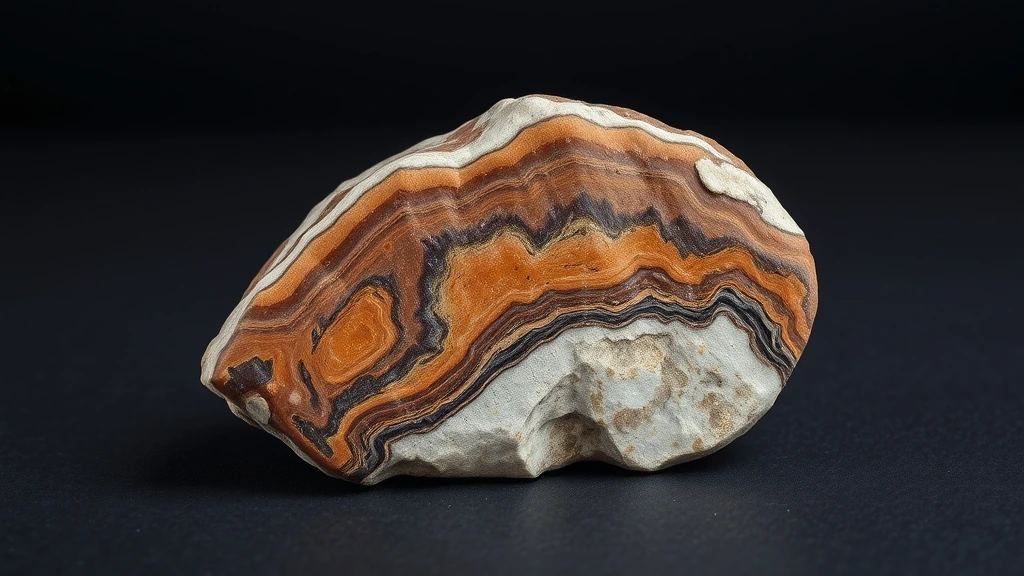
Wood Jasper belongs to the quartz family, a natural mineral/crystal that crystallizes in the trigonal system. Though commonly called a “gemstone,” it is an aggregate of intergrown quartz crystals rather than a single, large crystal. Its formation occurs in sedimentary environments where silica‑rich fluids precipitate fine‑grained quartz, often incorporating organic matter that imparts the characteristic wood‑grain pattern. The stone’s durability and muted palette have made it a favorite in ancient lapidary traditions across the Mediterranean and the Americas.
What is Wood Jasper? Geological Overview & Definition
Wood Jasper is a variety of jasper, itself a cryptocrystalline form of quartz distinguished by its opaque, patterned appearance. The name derives from the wood‑like streaks and brown‑red hues that mimic tree rings, a pattern created by variations in iron oxide and organic inclusions during diagenesis. Across early archaeological records, artisans used it for seals, beads, and ceremonial objects, valuing its earthy tones and ease of carving.
In mineralogical terms, Wood Jasper is not a single mineral but an aggregate of micro‑crystalline quartz interlocked with accessory minerals such as hematite, goethite, and carbonaceous material. These inclusions generate the distinctive banding and influence its specific gravity, which typically ranges from 2.6 to 2.7 g/cm³. The stone’s opacity and lack of cleavage make it resistant to weathering, allowing it to persist in river gravels and alluvial deposits for millennia.
Wood Jasper Chemical Composition & Crystallographic Properties
The primary component of Wood Jasper is SiO₂, organized in a trigonal lattice where each silicon atom is tetrahedrally coordinated to four oxygen atoms. This arrangement yields the characteristic quartz symmetry, with threefold rotational axes parallel to the c‑axis and a hexagonal‑like appearance in thin sections. Because the material is an aggregate, individual micro‑crystals retain this trigonal symmetry even as they interlock. While Wood Jasper’s structure is defined by its crystalline SiO₂ lattice, it is often found in geological formations alongside Serpentinite, a metamorphic rock that shares similar earthy tones and chakra associations.
Cation substitution is limited in pure quartz, but trace amounts of Fe³⁺, Mn²⁺, and Ti⁴⁺ can replace silicon in the lattice, creating localized color centers. These transition metals act as chromophores, absorbing specific wavelengths and producing the brown, reddish, and black hues typical of Wood Jasper. The concentration and distribution of these ions, together with organic carbon inclusions, dictate the stone’s unique patterning. While Wood Jasper’s earthy tones stem from iron and manganese impurities, other silica-rich rocks like Petoskey Stone demonstrate how unique geological processes can yield distinct visual characteristics within the same mineral family.
Wood Jasper is acid‑sensitive; exposure to strong acids can dissolve the silica framework, especially along micro‑fractures where the surface area is high. However, its dense, interlocked texture provides a degree of resistance, allowing it to withstand mild acidic environments without immediate degradation. This property is important for conservators handling ancient artifacts.
Thermally, Wood Jasper behaves like quartz, expanding modestly with temperature (α ≈ 7.5 × 10⁻⁶ °C⁻¹). Heating above 573 °C triggers the α‑β quartz transition, potentially altering the stone’s internal stress and causing micro‑cracking if cooled rapidly. Such thermal sensitivity explains why ancient craftsmen often employed gradual heating techniques when shaping the material.
| Property | Specification |
|---|---|
| Mineral Group | Natural Mineral / Crystal |
| Chemical Formula | SiO₂ |
| Mohs Hardness | 6.5 – 7.0 |
| Crystal System | Trigonal |
| Color & Optical Properties | Natural Wood Jasper color spectrum and optical dispersion |
| Primary Mining Localities | Global primary localities |
| Water & Chemical Resistance | High (Safe for gentle water washing) |
| Chakra Alignment (Traditional) | Solar Plexus Chakra (Manipura) |
| Zodiac Affinity (Traditional) | Taurus, Libra |
| Symbolic Meaning (Traditional) | Clear communication, truth and serenity |
Wood Jasper Varieties & Color Spectrum
Wood Jasper displays distinct mineralogical characteristics across its geological varieties and structural habits. Gemologists evaluate these natural varieties based on crystal habit, trace chromophore concentrations, and visual luster.
Primary Natural Wood Jasper
The benchmark natural variety exhibiting diagnostic color saturation and classic crystallographic symmetry.
Distinct Geological Morphs of Wood Jasper
Secondary regional and structural varieties formed under localized geological temperature and pressure conditions.
Classic Wood Jasper
Classic Wood Jasper is the archetypal variety, exhibiting a brownish‑golden matrix with fine, fibrous inclusions that mimic tree rings. The fibrous texture results from silica‑rich fluids infiltrating quartz veins during late metamorphic events. It is widely sourced from the Burgess Shale in Canada and the Kola Peninsula in Russia, where the mineral’s abundance makes it a staple in lapidary work. Its relative commonality belies its popularity among collectors for its natural, organic aesthetic.
Redwood Jasper
Redwood Jasper displays a deeper crimson hue with darker, darker brown streaks. The coloration arises from iron oxide (Fe₂O₃) inclusions that form during the hydrothermal alteration of quartz veins. This variety is predominantly mined in the Murchison Basin of Australia and the Sierra Nevada of the United States. Its rarity stems from the precise iron concentration required, making it a prized specimen for high‑end jewelry.
Greenwood Jasper
Greenwood Jasper is distinguished by its emerald‑green veins, produced by manganese (Mn) and iron (Fe) intergrowths within the silica matrix. The green bands often appear in a banded, wood‑grain pattern, giving the stone a living‑wood feel. It is chiefly found in the Sierra Madre Oriental of Mexico and the Bavarian region of Germany. The mineral’s limited distribution and the delicate balance of manganese to iron make it a sought‑after, yet scarce, variety.
Bluewood Jasper
Bluewood Jasper presents a subtle azure tint, a result of trace amounts of copper (Cu) incorporated during the mineral’s crystallization. The blue veins are typically narrow, creating a striking contrast against the brown background. This variety is most commonly extracted from the Bengal region of India and the Kashmir area of Pakistan. Its relative scarcity is due to the uncommon copper enrichment in the host quartz, rendering it a rare gem for collectors.
Brownwood Jasper
Brownwood Jasper is a deep brown to chestnut variant, characterized by irregular, spongy inclusions of iron‑rich hematite. The stone’s texture is often described as “mossy” due to the porous nature of the inclusions. It is largely sourced from the Kashmir region and the Carpathian Mountains in Eastern Europe. The combination of iron content and the unique spongy texture contributes to its moderate rarity among wood jasper varieties.
Blackwood Jasper
Blackwood Jasper is a jet‑black to charcoal variant, formed by high‑temperature silica‑rich fluids that leach iron and other trace elements, leaving a stark black matrix. The stone often contains graphite‑like inclusions that give it a subtle sheen. This variety is primarily mined in the Siberian region of Russia and the Alaska Peninsula. Its extreme rarity is due to the specific thermal and chemical conditions required for complete iron removal, making it a coveted specimen for serious collectors.
Where is Wood Jasper Found? Geological Mining & Extraction
Wood Jasper crystallizes within silica‑rich pegmatites that form during the late stages of granite intrusions. These pegmatites are typically hosted in metamorphic terrains where quartz veins have undergone extensive hydrothermal alteration. Major mining districts include the Burgess Shale in Canada, the Sierra Nevada in the United States, and the Kola Peninsula in Russia, each providing distinct color morphs due to local geochemical variations.
Extraction of Wood Jasper involves careful hand‑mining and screening to preserve the delicate fibrous inclusions. Artisanal miners often employ wet‑screening techniques to separate fine grains from coarse matrix, ensuring that the unique wood‑grain patterns remain intact. In larger operations, rotary crushers and gravity separation are used to concentrate the quartz‑rich material before it is sorted into its various color categories.
Historical Significance & Cultural Lore of Wood Jasper
Across ancient lapidary traditions, Wood Jasper was prized for its earthy appearance and believed to embody the stability of the root chakra. In Greco‑Roman culture, the stone was fashioned into talismanic amulets that were thought to enhance grounding and protect against misfortune. Egyptian artisans incorporated Wood Jasper into funerary jewelry, associating its wood‑like patterns with the eternal cycle of life and rebirth.
In Chinese lore, Wood Jasper was revered for its clear communication qualities, often used in calligraphy brushes and ritual vessels to symbolize honesty and serenity. Vedic texts reference the stone’s connection to the Solar Plexus Chakra (Manipura), attributing to it the power to foster confidence and personal power. These diverse cultural applications underscore Wood Jasper’s enduring appeal as a gemstone that bridges the natural world with human spirituality.
Modern Uses & Jewelry Applications of Wood Jasper
Wood Jasper is prized for its warm, grain‑like patterns that lend a natural elegance to contemporary designs. Lapidary artisans often cut the stone into cabochons to showcase its translucence, while skilled faceting highlights the subtle play of light across its layered hues. In addition to rings and pendants, the material is carved into ornamental beads, decorative inlays, and sculptural objects that complement both rustic and high‑fashion aesthetics.
- Cabochon pendants emphasizing the stone’s organic bands
- Faceted earrings that capture light with a muted sparkle
- Carved beads for beaded bracelets and necklaces
- Inlay work for watch faces, furniture, and architectural accents
Metaphysical Properties & Traditional Meaning of Wood Jasper
According to historical traditions and metaphysical lore, Wood Jasper is associated with clear communication, grounding, and the cultivation of inner serenity. Across ancient Mediterranean lapidary practices, the stone was believed to stabilize emotions, encouraging honesty and calm discourse. Vedic texts describe it as a catalyst for personal truth, helping the wearer align thoughts with purposeful action.
Which Chakra and Zodiac Signs Align with Wood Jasper?
Wood Jasper resonates strongly with the Solar Plexus Chakra (Manipura), the energetic center governing personal power, confidence, and will. When this chakra is balanced, practitioners report enhanced self‑esteem and the ability to articulate intentions without fear.
In astrological tradition, the stone is linked to Taurus and Libra, both signs that value stability, harmony, and fair communication. Taurus benefits from the stone’s grounding influence, while Libra finds support for balanced judgment and diplomatic expression.
How to Identify Real vs. Fake Wood Jasper
Artificial imitations of Wood Jasper include dyed quartz, colored glass, and resin composites that mimic its characteristic streaks. Synthetic glass often exhibits a uniform sheen and lacks the natural inclusions typical of genuine stone. Dyed replicas may display overly bright or inconsistent coloration, revealing their treatment when examined under varied lighting.
Practical At-Home Authenticity Tests
- Temperature Test (Thermal Feel): Natural Wood Jasper feels cool to the touch initially and warms slowly, whereas glass or plastic warms quickly in the hand.
- Specific Gravity & Weight Test: Real Wood Jasper is noticeably heavier than glass of the same size; a simple balance comparison can reveal this density difference.
- Scratch & Hardness Test (Mohs Comparison): With a steel file (hardness ~6.5), Wood Jasper resists scratching, while glass or softer imitations will show visible marks.
- Microscopic & Loupe Inspection (Internal Inclusions): Under 10× magnification, authentic Wood Jasper reveals fine, irregular mineral inclusions and natural fracture patterns, unlike the smooth, bubble‑free surface of synthetic glass.
Wood Jasper Valuation Factors, Grading & Pricing
The market value of Wood Jasper hinges first on Color Saturation. Stones exhibiting deep, evenly distributed hues—whether warm amber, muted brown, or striking orange—command higher prices because they reflect superior natural energetic luster and visual vibrancy. A specimen with subtle, layered tones may be less prized, even if the overall color is appealing, because the saturation directly influences perceived quality.
Second, Crystal Size & Weight (Grams) drives pricing. Larger, heavier pieces are valued more highly than smaller fragments, as they provide greater visual impact and are more desirable for display. The distinction between raw, unpolished stones and those that have been tumbled to a smooth finish also matters; a well‑polished surface enhances clarity and showcases the natural matrix inclusions, thereby increasing the stone’s market appeal. Buyers assess weight and dimensions in grams rather than carats, focusing on the overall mass and the quality of the polish.
Finally, Ethical Sourcing & Locality Premium plays a crucial role in the holistic and collector markets. Stones sourced from responsible, traceable mines—especially those with documented environmental stewardship—receive a premium. Provenance from renowned localities known for exceptional Wood Jasper, such as the ancient deposits of the Caucasus or the historic quarries of the United States, can further elevate a stone’s desirability and price.
How to Clean and Care for Wood Jasper
To maintain Wood Jasper’s integrity, gently wash the stone with warm soapy water and a soft cloth. After rinsing, pat dry with a clean, dry microfiber cloth. Avoid using ultrasonic cleaners, as the vibration can cause microfractures in the quartz lattice. Store the stone in a dry, low‑humidity environment to prevent moisture absorption and preserve its natural beauty.
Cleansing and Recharging Wood Jasper (Energetic Care)
For energetic cleansing, place the Wood Jasper under gentle moonlight for a few hours; the subtle lunar energy helps refresh its vibrational field without exposing it to heat. Alternatively, rest the stone on a selenite charging slab or a clean, white surface during the night; the conductive properties of selenite can subtly transfer positive energy to the Jasper. Herbal smudging with sage or palo santo can also be employed, ensuring the smoke passes over the stone without direct contact, thereby maintaining its structural integrity while allowing energetic renewal.
Frequently Asked Questions About Wood Jasper
Wood Jasper displays distinct mineralogical characteristics across its geological varieties and structural habits. Gemologists evaluate these natural varieties based on crystal habit, trace chromophore concentrations, and visual luster.
Primary Natural Wood Jasper
The benchmark natural variety exhibiting diagnostic color saturation and classic crystallographic symmetry.
Distinct Geological Morphs of Wood Jasper
Secondary regional and structural varieties formed under localized geological temperature and pressure conditions.
Is Wood Jasper safe to wear in the shower?
Yes, Wood Jasper is highly water-resistant and safe for gentle washing. As a variety of chalcedony, this silica-based stone does not dissolve or degrade when exposed to moisture. You can confidently wear it during daily activities without fearing structural damage from water contact.
How should I clean my Wood Jasper jewelry?
Use warm soapy water and a soft cloth for optimal maintenance. Avoid ultrasonic cleaners entirely, as their high-frequency vibrations can cause structural fractures in the stone. Gentle hand washing effectively removes oils and dirt while preserving the intricate wood-like patterns.
What is the Mohs hardness of Wood Jasper?
Wood Jasper rates between 6.5 and 7.0 on the Mohs scale. This places it firmly within the quartz family, making it durable enough for everyday wear. It resists scratches from most common materials, though it may still be marked by harder minerals like topaz or diamond.
Which zodiac signs are aligned with Wood Jasper?
Taurus and Libra are the primary zodiac signs associated with this stone. In astrological gemology, these earth and air signs benefit from its grounding properties. Wearing Wood Jasper is believed to enhance stability and balance for individuals born under these specific celestial influences.
Which chakra does Wood Jasper activate?
Wood Jasper is primarily aligned with the Solar Plexus Chakra (Manipura). This energy center governs personal power, confidence, and self-esteem. The stone’s warm, earthy tones are thought to stimulate this chakra, promoting a sense of grounded authority and inner strength.
What is the chemical composition of Wood Jasper?
The primary chemical formula is SiO₂, indicating pure silicon dioxide. This composition confirms its identity as a cryptocrystalline quartz variety. The distinctive wood-like appearance results from mineral impurities, such as iron oxides, infiltrating the silica matrix during formation.
Can Wood Jasper be used in ultrasonic cleaners?
No, you must avoid ultrasonic cleaners for Wood Jasper. The intense vibrations can induce micro-fractures within the stone’s delicate structure. Instead, stick to manual cleaning with a soft brush and mild soap to ensure the longevity and integrity of your gemstone.
How does Wood Jasper form geologically?
It forms through the replacement of ancient wood by silica-rich fluids. This petrification process occurs over millions of years in sedimentary environments. The resulting stone retains the original cellular structure of the wood, creating unique organic patterns within the crystalline quartz framework.