
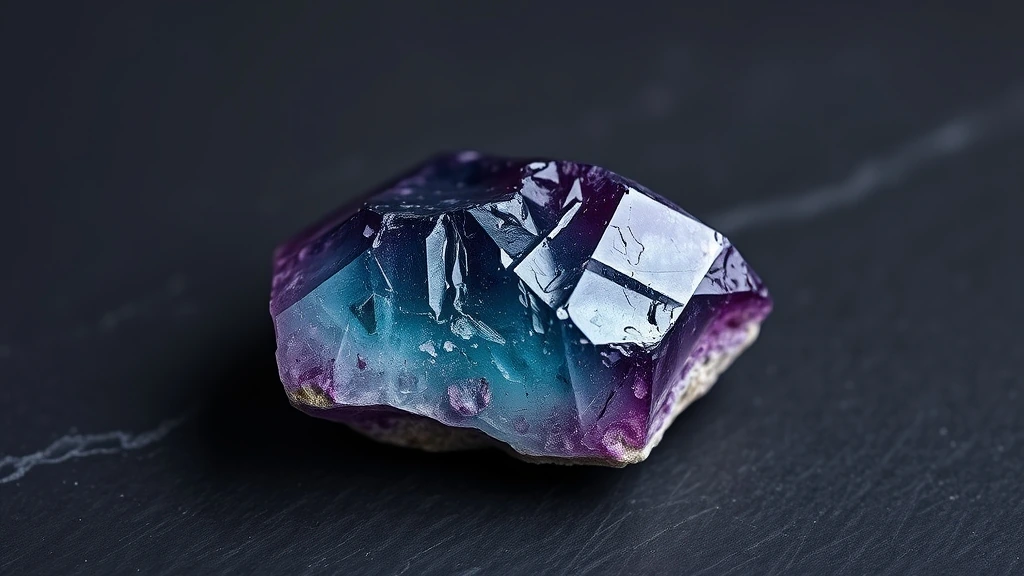
Alexandrite belongs to the chrysoberyl mineral group, a natural crystalline substance formed in specific metamorphic environments. It is classified strictly as a Natural Mineral / Crystal, distinct from synthetic laboratory-grown counterparts. Its geological origin involves high-pressure and high-temperature conditions that facilitate the incorporation of trace impurities. These conditions are essential for developing the unique optical properties that define this precious stone.
What is Alexandrite Gemstone? Geological Overview & Definition
Alexandrite is defined as the gem-quality variety of chrysoberyl that exhibits a distinct color-change effect. This phenomenon occurs due to the presence of trace amounts of chromium within the crystal lattice. The stone typically appears greenish-blue in daylight and shifts to a deep purplish-red under incandescent light.
Geologically, these crystals form in pegmatite dikes or metamorphic rocks associated with granite intrusions. The most famous deposits are located in the Ural Mountains of Russia, though significant sources now exist in Brazil and East Africa. Understanding its geological provenance is critical for authenticating natural stones against synthetic imitations.
Alexandrite Gemstone Chemical Composition & Crystallographic Properties
Alexandrite crystallizes in the Orthorhombic system, characterized by three mutually perpendicular axes of unequal length. This specific lattice structure allows for the precise alignment of aluminum and beryllium ions. The arrangement creates a rigid framework that supports the stone’s high Mohs hardness of 8.5.
The fundamental building block is the BeAl₂O₄ formula, where beryllium and aluminum cations occupy distinct sites within the oxygen octahedra. Trace chromium ions substitute for aluminum, acting as the primary chromophore responsible for the color change. This substitution alters the absorption spectrum, enabling the stone to filter different wavelengths of light.
The stone exhibits low acid sensitivity due to its highly stable covalent bonding network. It remains chemically inert under standard cleaning conditions, preserving its surface integrity over time. Thermal behavior is stable, with no significant phase transitions occurring at typical jewelry temperatures.
Optical properties are defined by a refractive index ranging from 1.745 to 1.754. This high dispersion contributes to the gem’s brilliant luster and fire. The orthorhombic symmetry ensures consistent optical performance across all crystal orientations.
| Property | Specification |
|---|---|
| Mineral Group | Natural Mineral / Crystal |
| Chemical Formula | BeAl₂ O₄ |
| Mohs Hardness | 8.5 |
| Crystal System | Orthorhombic |
| Specific Gravity (Density) | 3.5–3.84 |
| Refractive Index | n α =1.745 n β =1.748 n γ =1.754 |
| Color & Optical Properties | Natural Alexandrite Gemstone color spectrum and optical dispersion |
| Primary Mining Localities | Global primary localities |
| Water & Chemical Resistance | High (Safe for gentle water washing) |
| Chakra Alignment (Traditional) | Third Eye Chakra, Crown Chakra |
| Zodiac Affinity (Traditional) | Leo, Virgo |
| Symbolic Meaning (Traditional) | Clarity of vision, intuition, and the balance of opposing forces |
Alexandrite Gemstone Varieties & Color Spectrum
Alexandrite exhibits a remarkable range of color morphs, primarily driven by trace chromium impurities within the beryl lattice. The most prized specimens display a distinct color change effect, shifting from greenish-blue in daylight to purplish-red under incandescent light. This optical phenomenon is a direct result of the stone’s unique absorption spectrum and crystal structure.
Siberian Alexandrite
Originating from the Ural Mountains, this variety represents the historical benchmark for quality and saturation. These stones typically feature a deep, velvety green in daylight that transitions to a rich, intense purple in artificial light. High-grade Siberian material often contains minor inclusions of rutile needles and other silicate minerals. Due to the exhaustion of primary deposits, authentic Siberian alexandrite is now exceedingly rare and commands premium auction prices.
Brazilian Alexandrite
Mined primarily in the Minas Gerais region, Brazilian alexandrite offers a slightly different chromatic profile compared to its Siberian counterpart. The stones often exhibit a more yellowish-green hue in daylight, shifting to a reddish-purple under incandescent illumination. While generally less saturated than Ural material, high-quality Brazilian specimens remain highly sought after by collectors. The refractive index of these stones aligns closely with standard beryl parameters, ensuring excellent brilliance.
Sri Lankan Alexandrite
Sri Lanka produces alexandrite with a distinctive, lighter color palette that appeals to modern jewelry design preferences. These stones frequently display a pale, icy green in daylight that transforms into a soft, lilac-pink under warm lighting. The clarity of Sri Lankan material is often superior, with fewer visible inclusions than other regional varieties. This transparency allows for greater light transmission, enhancing the stone’s overall fire and sparkle.
Ethiopian Alexandrite
Recent discoveries in Ethiopia have introduced a new source of alexandrite to the global gem market. These stones often possess a deeper, more intense green body color that shifts to a vibrant magenta-red. The geological environment in the Ethiopian highlands contributes to the formation of exceptionally pure crystals. As a newer addition to the trade, Ethiopian alexandrite is rapidly gaining recognition for its vivid color change range.
Synthetic Alexandrite
Laboratory-grown alexandrite offers a chemically identical alternative to natural stones, produced via the flux method or flame fusion. These synthetic gems can achieve a level of purity impossible in nature, often lacking any visible inclusions. While they replicate the chromium-induced color change perfectly, they lack the geological history of mined specimens. Distinguishing synthetic from natural alexandrite requires advanced spectroscopic analysis and careful examination of growth patterns.
Where is Alexandrite Gemstone Found? Geological Mining & Extraction
Alexandrite forms exclusively within pegmatite dikes, which are coarse-grained igneous rocks rich in rare elements. These geological formations provide the necessary chemical environment for chromium to substitute for aluminum in the beryl structure. The orthorhombic crystal system of the host rock influences the final shape and clarity of the gem crystals.
Primary extraction occurs in the Ural Mountains of Russia, the Minas Gerais region of Brazil, and the highlands of Sri Lanka. Mining operations in these areas focus on careful hand-picking to preserve the integrity of the delicate crystals. Modern extraction techniques emphasize sustainability, ensuring that the geological context of these rare deposits is respected and preserved for future generations.
Historical Significance & Cultural Lore of Alexandrite Gemstone
Named after Tsar Alexander II of Russia, the gemstone was first discovered in the Ural Mountains in 1830. It quickly became a symbol of imperial power and prestige within the Russian aristocracy. The stone’s dramatic color change was interpreted as a mystical omen, captivating the attention of jewelers and collectors alike.
Throughout the 19th and 20th centuries, alexandrite featured prominently in high jewelry pieces commissioned by royal houses. Its rarity and beauty made it a favored stone for engagement rings and state insignia. Today, it remains a cornerstone of the Big Five colored gemstones, symbolizing balance and harmony in modern gemological culture.
Modern Uses & Jewelry Applications of Alexandrite Gemstone
Lapidaries favor this gem for its exceptional brilliance and unique color-change property, requiring precise cutting to maximize optical effects. High-quality stones are typically cut into faceted gems to enhance dispersion, while lower clarity material is often polished into smooth cabochons. This versatility allows designers to create everything from classic solitaire rings to intricate ornamental carvings that highlight the stone’s natural beauty.
- Faceted Cuts: Standard brilliant or mixed cuts are used to exploit the stone’s high refractive index and fire.
- Cabochon Polishing: Used for stones with significant inclusions, this style emphasizes the smooth surface and color transition.
- Ornamental Carving: Rare, large crystals are carved into figurines or intaglios for high-end collectors and museums.
- Jewelry Settings: Often set in platinum or white gold to complement the stone’s green and red hues without color interference.
Carat, Quality Grades & Value Factors of Alexandrite
According to historical traditions and metaphysical lore, alexandrite is revered as a stone of balance and profound transformation. Practitioners believe its dual nature mirrors the human experience, fostering harmony between opposing forces within the psyche. This gemstone is often associated with emotional resilience, helping wearers navigate life’s changes with grace and stability.
The stone is said to amplify intuition and encourage self-discovery, making it a powerful tool for personal growth. Its energy is described as grounding yet uplifting, bridging the physical and spiritual realms effectively. Many believe that wearing alexandrite promotes inner peace and clarity of thought during turbulent times.
Which Chakra and Zodiac Signs Align with Alexandrite Gemstone?
In metaphysical practice, alexandrite is primarily aligned with the Root Chakra and the Heart Chakra. This dual alignment reflects its ability to ground the wearer while simultaneously opening the heart to love and compassion. The Root connection provides stability and security, while the Heart connection fosters emotional healing and empathy.
Astrologically, this gemstone resonates strongly with Taurus, Gemini, and Leo. Taurus appreciates the stone’s earthy stability, Gemini connects with its dual nature, and Leo is drawn to its fiery brilliance. These signs are believed to benefit most from the stone’s balancing energy and transformative potential.
How to Identify Real vs. Fake Alexandrite Gemstone
Distinguishing genuine alexandrite from imitations requires careful observation, as many alternatives mimic its color-change effect. Common fakes include synthetic glass, dyed quartz, and lab-created chrysoberyl that lacks the natural inclusions of mined stones. While synthetic alexandrite is chemically identical, it often lacks the characteristic color zoning found in natural gems.
Practical At-Home Authenticity Tests
- Temperature Test (Thermal Feel): Genuine alexandrite feels cool to the touch initially due to its low thermal conductivity. Imitations like plastic or glass may warm up quickly, failing to maintain that initial coolness.
- Specific Gravity & Weight Test: With a density of 3.5–3.84, real alexandrite feels significantly heavier than its size suggests. Glass imitations often feel lighter, while some heavy fakes may feel disproportionately dense.
- Scratch & Hardness Test (Mohs Comparison): Alexandrite has a Mohs hardness of 8.5, meaning it can scratch glass and most other gemstones. A genuine stone will not be scratched by a steel knife or even a diamond tip easily.
- Microscopic & Loupe Inspection (Internal Inclusions): Use a 10x loupe to look for natural inclusions like silk or crystals. Synthetic stones often appear too clean or contain gas bubbles, which are absent in natural alexandrite.
Alexandrite Gemstone Valuation Factors, Grading & Pricing
The primary driver of value is Color Saturation, which dictates the stone’s visual impact. Experts assess the intensity of the green-to-red transition and the uniformity of the tone across the entire gem. High optical clarity and a brilliant luster further enhance desirability, as any haziness significantly diminishes the stone’s fire.
Carat Weight influences pricing exponentially, with larger stones commanding substantial premiums due to rarity. Facet symmetry is critical for maximizing the pleochroic effect, ensuring light reflects efficiently through the Orthorhombic crystal structure. The presence of matrix inclusions or internal fractures can reduce value, though minor inclusions are often accepted in larger specimens.
Geographical Provenance Premium heavily impacts market perception, with Russian and Sri Lankan origins often fetching higher prices. Wholesale values fluctuate based on supply chain stability and global demand trends for rare colored gemstones. Retail prices typically include a significant markup over wholesale, reflecting the costs of certification and specialized retail presentation.
How to Clean and Care for Alexandrite Gemstone
For routine maintenance, use warm soapy water and a soft cloth to gently remove surface oils and dust. This method is safe for the gemstone’s Mohs hardness of 8.5 and preserves its delicate color transitions without causing damage. Avoid abrasive materials that could scratch the polished surface or compromise the setting’s integrity.
You may safely employ an ultrasonic cleaner for deeper cleaning, as the stone’s structural integrity withstands the vibrations. Ensure the jewelry is securely set before submersion to prevent any potential loosening of prongs. Always dry the piece thoroughly with a lint-free cloth after cleaning to maintain its brilliance.
Cleansing and Recharging Alexandrite Gemstone (Energetic Care)
For energetic cleansing, utilize smoke smudging with sage or palo santo to clear stagnant energy fields. This dry method respects the mineral’s physical properties while addressing metaphysical beliefs associated with the stone. Allow the smoke to pass gently over the gemstone without direct contact with the setting.
Place the piece on a selenite plate under moonlight for overnight recharging to restore its vibrational balance. This passive technique avoids any risk of water exposure or physical stress to the gem. Ensure the storage area is secure to prevent accidental drops or damage during the process.
Frequently Asked Questions About Alexandrite Gemstone
Is alexandrite safe to wear in the shower?
Yes, alexandrite is safe for gentle water washing. Its high water resistance allows it to withstand brief exposure to shower water without damage. However, avoid harsh soaps or steam, which can degrade settings over time. Always dry the stone thoroughly after exposure to maintain its optical clarity.
Can I clean alexandrite with an ultrasonic cleaner?
Yes, alexandrite is safe for ultrasonic cleaning. While warm soapy water and a soft cloth are recommended for routine care, ultrasonic devices are permissible. Ensure the stone is not included or treated with unstable resins before using high-frequency vibrations. This method effectively removes oils from the orthorhombic crystal structure.
Which zodiac signs are compatible with alexandrite?
Alexandrite aligns best with Taurus, Gemini, and Leo. These signs resonate with the stone’s dynamic energy and color-changing properties. Wearing alexandrite is believed to enhance personal confidence and emotional balance for these individuals. The gem’s vibrant shifts mirror the versatile nature of these astrological profiles.
Which chakras does alexandrite activate?
Alexandrite primarily activates the Root and Heart Chakras. This unique combination grounds the wearer while simultaneously opening emotional centers. It bridges physical stability with spiritual compassion, making it a powerful meditation aid. The stone’s dual nature supports holistic energetic alignment during practice.
How hard is alexandrite on the Mohs scale?
Alexandrite rates 8.5 on the Mohs hardness scale. This makes it significantly harder than topaz and sapphire, offering excellent durability for daily wear. It resists scratching from most common materials encountered in daily life. This robustness ensures the gem maintains its polished surface over many years.
What is the chemical formula of alexandrite?
The chemical formula is BeAl₂O₄, identifying it as a beryl variety. This composition is identical to emerald and aquamarine, but trace chromium causes the color change. The specific arrangement of atoms within the orthorhombic crystal system dictates its unique optical behavior. Understanding this formula helps distinguish natural stones from synthetic imitations.
Why does alexandrite change color in different lights?
Chromium impurities cause the stone to shift from green to red. Under daylight, it appears greenish-blue, while incandescent light reveals a reddish-purple hue. This phenomenon, known as alexandritism, results from the absorption of specific light wavelengths. The refractive index variations enhance this dramatic visual transition.
How can I identify natural alexandrite?
Look for the distinct color change and specific refractive indices. Natural stones exhibit a clear shift from green to red under varying light sources. Synthetic versions may lack this intensity or show different inclusions. Professional gemologists verify authenticity by measuring the density and checking for characteristic internal features.