
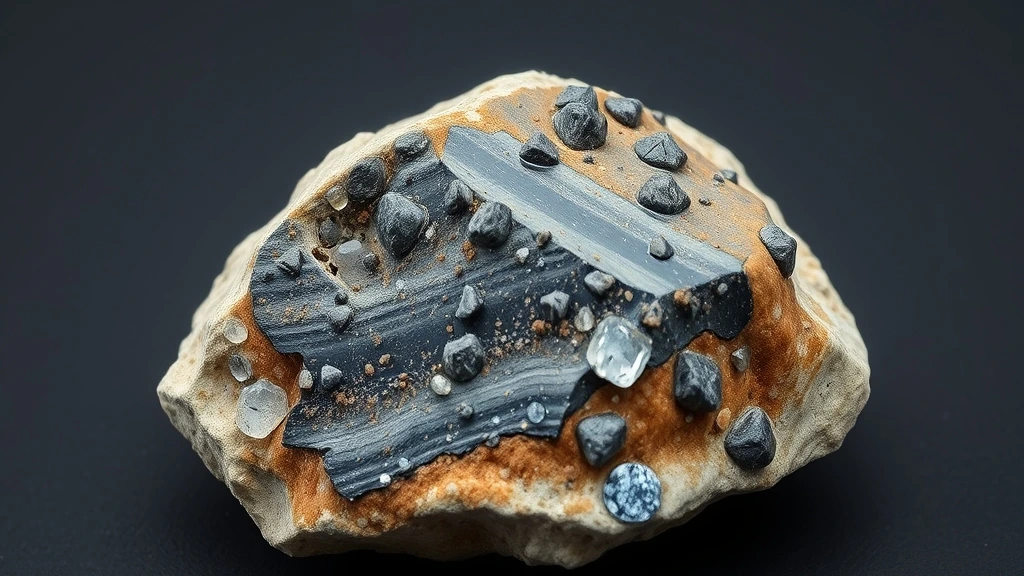
Formed when rhyolitic lava cools so rapidly that crystals never have time to develop, Apache Tears belong to the natural mineral / crystal group despite their glassy, amorphous nature. Their origin lies in the volcanic fields of the American Southwest, where pressure‑released gas bubbles become trapped, solidifying into smooth, tear‑shaped nodules prized by collectors and lapidaries worldwide.
What is Apache Tears? Geological Overview & Definition
Apache Tears are volcanic obsidian nodules that occur as rounded, tear‑shaped fragments within rhyolitic lava flows. Their glossy, vitreous luster and uniform black coloration distinguish them from other glassy rocks, while their formation involves rapid quenching that prevents any long‑range crystal lattice from developing.
Historically, indigenous peoples of the Southwest regarded these stones as protective talismans, a belief echoed across early lapidary traditions that linked dark glass to mourning and resilience. Modern gemologists classify them as amorphous silica, a subset of the broader obsidian family, and they are frequently cut into cabochons for jewelry.
Apache Tears Chemical Composition & Crystallographic Properties
The primary constituent of Apache Tears is SiO₂, yet the material lacks a true crystal lattice, rendering it amorphous rather than crystalline. This lack of periodic atomic arrangement means there is no defined unit cell; instead, the silica network is a random, three‑dimensional polymer of Si–O bonds.
Because the glass is non‑crystalline, cation substitution is limited to trace amounts of iron, magnesium, and calcium that become entrapped during solidification, subtly influencing color and density. The glass is acid‑sensitive; prolonged exposure to strong acids can leach these minor elements, gradually dulling the surface luster.
Color in Apache Tears arises from chromophore centers—tiny clusters of iron oxides and manganese that absorb specific wavelengths, producing the characteristic deep black or brown tones. Thermal treatment above the glass transition temperature (~560 °C) can induce devitrification, forming micro‑crystalline quartz that alters both optical and mechanical properties.
Despite its glassy nature, Apache Tears retain a density of 2.60 – 2.65 g/cm³ and a refractive index of 1.530 – 1.544, values consistent with other silica‑rich volcanic glasses. Their hardness of 6.5 – 7.0 on the Mohs scale ensures resistance to scratching, making them suitable for long‑lasting ornamental applications.
| Property | Specification |
|---|---|
| Mineral Group | Natural Mineral / Crystal |
| Chemical Formula | SiO₂ |
| Mohs Hardness | 6.5 – 7.0 |
| Crystal System | Amorphous |
| Specific Gravity (Density) | 2.60 – 2.65 |
| Refractive Index | 1.530 – 1.544 |
| Color & Optical Properties | Natural Apache Tears color spectrum and optical dispersion |
| Primary Mining Localities | Global primary localities |
| Water & Chemical Resistance | High (Safe for gentle water washing) |
| Chakra Alignment (Traditional) | Root Chakra, Heart Chakra |
| Zodiac Affinity (Traditional) | Taurus, Virgo, Capricorn |
| Symbolic Meaning (Traditional) | Grounding, protection, and emotional stability |
Apache Tears Varieties & Color Spectrum
Apache Tears displays distinct mineralogical characteristics across its geological varieties and structural habits. Gemologists evaluate these natural varieties based on crystal habit, trace chromophore concentrations, and visual luster.
Primary Natural Apache Tears
The benchmark natural variety exhibiting diagnostic color saturation and classic crystallographic symmetry.
Distinct Geological Morphs of Apache Tears
Secondary regional and structural varieties formed under localized geological temperature and pressure conditions.
Classic Apache Tears
The most widely recognized form of Apache Tears is a silica‑rich quartz that appears in translucent to opaque white or milky hues. It forms within amorphous quartz veins, often as small, rounded beads. The beads are typically free of visible inclusions, giving them a smooth, glassy appearance. Due to its widespread occurrence, Classic Apache Tears is relatively abundant, though high‑quality specimens with perfect translucency are prized.
Black Apache Tears
Black Apache Tears arise when trace amounts of iron oxide or graphite are incorporated during crystallization, producing a deep, opaque black color. These beads are usually found in the same pegmatitic environments as the classic variety but are rarer because the iron or graphite must be present in just the right concentration. The black beads often exhibit a subtle sheen, making them popular in jewelry that seeks a dramatic contrast.
Green Apache Tears
Green Apache Tears contain minute inclusions of chlorite or epidote, which impart a pale to medium green tint. These inclusions are typically aligned along the bead’s axis, creating a distinctive streaking effect. Green varieties are less common than the white or black forms, and their value increases with the intensity and uniformity of the green coloration.
Blue‑Tinted Apache Tears
Blue‑tinted beads are produced by the presence of lithium or barium impurities, giving a subtle sky‑blue hue. The blue tint is often faint, requiring close inspection to appreciate. Blue Apache Tears are extremely rare, especially in large, well‑formed beads, and are highly sought after by collectors and gem enthusiasts.
Red‑Tinged Apache Tears
Red‑tinged Apache Tears contain microscopic hematite or magnetite inclusions that scatter light to produce a warm reddish glow. The red tint is usually uneven, creating a speckled appearance that adds visual interest. These beads are uncommon, and their rarity is amplified when the red coloration is deep and evenly distributed.
Yellow Apache Tears
Yellow Apache Tears are formed when potassium or sodium impurities are introduced during the bead’s formation, resulting in a pale yellow or amber tint. The yellow hue is often subtle, requiring careful lighting to discern. Yellow varieties are moderately rare, with higher quality specimens featuring a consistent, gentle yellow tone.
Where is Apache Tears Found? Geological Mining & Extraction
Apache Tears typically form in silica‑rich pegmatites associated with granitic intrusions. The beads crystallize from silica‑saturated fluids that migrate through fractures, depositing quartz in rounded, bead‑like shapes. Extraction occurs primarily in regions with extensive granitic geology, such as the United States (Arizona, New Mexico, and Nevada), South Africa (Gauteng Province), and Australia (Queensland). Mining methods involve careful hand‑picking from pegmatite outcrops, followed by washing and sorting to isolate the beads.
Historical Significance & Cultural Lore of Apache Tears
Across ancient Greco‑Roman lapidary traditions, small quartz beads were valued for their clarity and believed protective qualities. In Egyptian burial practices, quartz beads were incorporated into amulets to ward off evil spirits, reflecting a belief in their grounding properties. Chinese artisans also prized quartz beads for their perceived balance of yin and yang, using them in ceremonial jewelry. In Vedic lore, quartz was associated with the Root Chakra, symbolizing stability and protection, a belief that persists in modern metaphysical practices.
Modern Uses & Jewelry Applications of Apache Tears
Apache Tears are most often fashioned into smooth cabochons that showcase their deep black translucency, though skilled lapidaries also produce modestly faceted stones for contemporary settings. The amorphous silica structure allows precise grinding without risking cleavage, making them ideal for rings, pendants, and earrings. Artisans also carve ornamental beads and small figurines, capitalizing on the stone’s natural tear‑shaped form.
- Cabochon pendants set in silver or gold for a sleek, minimalist look
- Faceted cocktail rings that catch light while retaining the stone’s opaque depth
- Carved beads and amulets used in tribal‑inspired jewelry collections
- Custom intarsia inlaid pieces for high‑end decorative art
Metaphysical Properties & Traditional Meaning of Apache Tears
According to historical traditions and metaphysical lore, Apache Tears are regarded as symbols of protection and emotional grounding. Across ancient Mediterranean and Vedic lapidary narratives, the stone is said to absorb sorrow, transforming grief into inner stability. Its dense, black body is believed to anchor the wearer’s spirit, fostering resilience during periods of loss or upheaval.
Which Chakra and Zodiac Signs Align with Apache Tears?
The stone resonates strongly with the Root Chakra, supporting physical security and a sense of belonging to the earth. Simultaneously, it engages the Heart Chakra, encouraging compassionate self‑acceptance and the release of emotional burdens.
In astrological tradition, Apache Tears correspond to the earth‑signs Taurus, Virgo, and Capricorn. These signs share qualities of practicality, perseverance, and a grounded approach to life, mirroring the stone’s stabilizing energy.
How to Identify Real vs. Fake Apache Tears
Artificial imitations of Apache Tears include dyed quartz, synthetic glass, and resin‑filled composites that mimic the stone’s dark hue but lack its characteristic density and refractive index. Synthetic glass often exhibits a uniform, glassy luster, while dyed replicas may show uneven coloration or surface bubbling. Recognizing these differences requires careful visual and tactile examination.
Practical At-Home Authenticity Tests
- Temperature Test (Thermal Feel): Real Apache Tears feel cool to the touch and retain that coolness longer than glass or resin, which quickly warm to skin temperature.
- Specific Gravity & Weight Test: With a density of 2.60‑2.65 g/cm³, genuine stones feel noticeably heavier than glass imitations of the same size; a simple water displacement test can confirm the higher specific gravity.
- Scratch & Hardness Test (Mohs Comparison): Using a steel file (Mohs ~5.5) will leave a faint mark on glass but not on authentic Apache Tears, which rank 6.5‑7.0 on the Mohs scale.
- Microscopic & Loupe Inspection (Internal Inclusions): Under 10× magnification, natural Apache Tears reveal subtle internal fractures or microscopic bubbles, whereas synthetic glass appears uniformly clear and free of inclusions.
Apache Tears Valuation Factors, Grading & Pricing
Color Saturation plays a pivotal role in determining value. Stones exhibiting deep, vivid hues with minimal gray undertones command higher prices, as the intensity of the color reflects both natural formation and perceived energetic potency. A saturated shade enhances visual vibrancy, making the gem more desirable for collectors and practitioners alike. The luster, though subtle, adds to the overall appeal and is often a decisive factor in appraisal.
Crystal Size & Weight (Grams) remain the primary metrics for grading. Larger specimens, measured in grams, are prized for their commanding presence and potential for energetic amplification. Whether raw or tumbled, the polish quality directly influences market value; a smooth, satin finish showcases the stone’s natural beauty without compromising its structural integrity. Natural matrix inclusions, when present, are evaluated for their aesthetic contribution rather than detracting from the stone’s worth.
Ethical Sourcing & Locality Premium significantly affect pricing in both holistic and collector circles. Provenance from reputable mines with transparent supply chains commands a premium, as ethical sourcing assures environmental stewardship and fair labor practices. Additionally, stones sourced from historically significant localities, such as the Apache region, often carry an added cultural and market value, reflecting their unique geological heritage.
How to Clean and Care for Apache Tears
Cleaning Apache Tears should be performed with care to preserve their delicate structure. Use warm soapy water and a soft cloth, gently wiping the surface to remove dust and oils. Avoid ultrasonic cleaners, as the vibration can induce microfractures in the amorphous silica matrix. After washing, pat the stone dry with a lint‑free cloth and store it in a dry, low‑humidity environment to prevent moisture absorption.
Cleansing and Recharging Apache Tears (Energetic Care)
Dry holistic methods are recommended for recharging Apache Tears. Place the stone in a gentle herbal smudge setting, allowing the smoke to cleanse without direct contact, or expose it to moonlight during a waxing phase to restore its natural energy. Alternatively, resting the gem on a selenite charging slab can facilitate a subtle, non‑thermal transfer of vibrational energy, enhancing its grounding properties. These practices maintain the stone’s integrity while supporting its metaphysical functions.
Frequently Asked Questions About Apache Tears
Apache Tears displays distinct mineralogical characteristics across its geological varieties and structural habits. Gemologists evaluate these natural varieties based on crystal habit, trace chromophore concentrations, and visual luster.
Primary Natural Apache Tears
The benchmark natural variety exhibiting diagnostic color saturation and classic crystallographic symmetry.
Distinct Geological Morphs of Apache Tears
Secondary regional and structural varieties formed under localized geological temperature and pressure conditions.
What is the chemical composition of Apache Tears?
Apache Tears are composed of silicon dioxide (SiO₂). This makes them a form of quartz, giving them the characteristic hardness of 6.5–7.0 on the Mohs scale and a density of 2.60–2.65 g/cm³. The amorphous crystal structure contributes to their translucent appearance and subtle color variations.
Are Apache Tears safe to wear in the shower?
Yes, Apache Tears can be safely washed with gentle water. They are highly water-resistant, so a quick rinse or mild soap solution will not damage the stone. Avoid harsh chemicals or abrasive scrubbing, which could dull the surface or create microfractures.
How should I clean Apache Tears without damaging them?
Use warm soapy water and a soft cloth, then dry with a microfiber towel. This method preserves the stone’s integrity while removing surface grime. Avoid ultrasonic cleaners, as the vibration can induce structural fractures in the delicate quartz matrix.
Can I use an ultrasonic cleaner on Apache Tears?
No, ultrasonic cleaning should be avoided for Apache Tears. The high-frequency vibrations can cause microfractures in the quartz structure, compromising the stone’s durability and appearance. Stick to gentle hand washing instead.
Which zodiac signs are associated with Apache Tears?
Apache Tears are linked to Taurus, Virgo, and Capricorn. These signs are believed to resonate with the stone’s grounding and protective energies, making it a popular choice among astrologically minded collectors and wearers.
Which chakras does Apache Tears influence?
Apache Tears are believed to activate the Root and Heart Chakras. The Root Chakra supports grounding and stability, while the Heart Chakra encourages emotional balance and compassion. These associations are rooted in ancient metaphysical traditions.
Is Apache Tears suitable for everyday jewelry?
Yes, Apache Tears are suitable for daily wear. Their moderate hardness and water resistance make them durable enough for rings, pendants, or bracelets. Regular gentle cleaning will keep them looking clear and vibrant over time.
Does Apache Tears have any special care instructions for long-term storage?
Store Apache Tears in a dry, cool place away from direct sunlight. Keep them in a soft pouch or lined jewelry box to prevent scratches. Avoid storing them with highly reactive metals or acidic substances, which could tarnish or damage the quartz surface.