
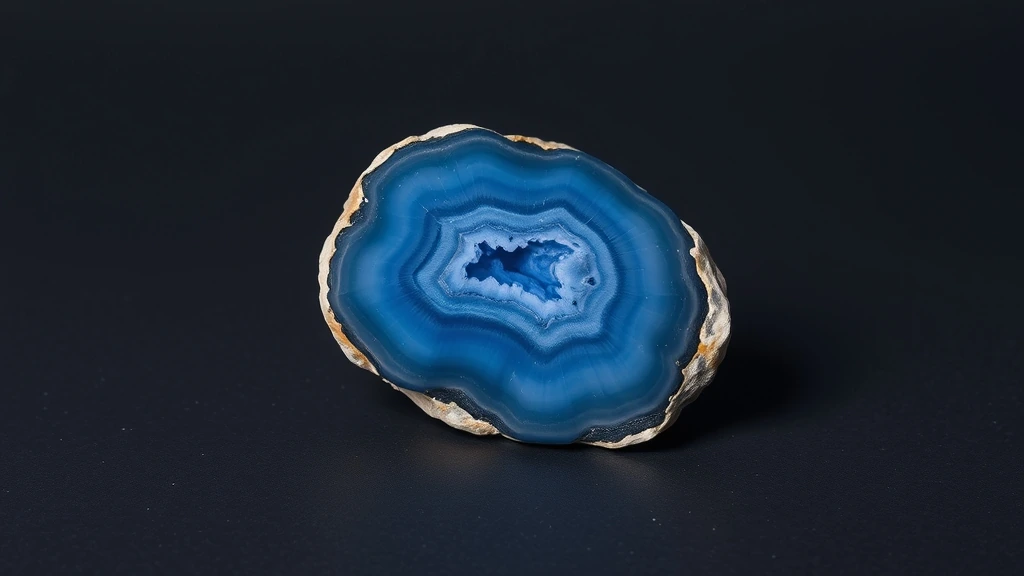
Blue Flower Agate belongs to the silicate family, specifically the chalcedony subgroup of cryptocrystalline quartz. It forms as micro‑fibrous aggregates in the trigonal crystal system, where countless tiny quartz crystals intergrow to create a dense, banded fabric. These aggregates develop in volcanic tuff or sedimentary host rocks, where silica‑rich fluids precipitate the fine‑grained material under low‑temperature hydrothermal conditions.
What is Blue Flower Agate? Geological Overview & Definition
Blue Flower Agate is a microcrystalline silica aggregate composed of interlocking quartz fibers that lack visible crystal faces. The stone’s characteristic “flower” patterns arise from concentric growth zones where silica deposition varied in impurity content, producing subtle color banding that resembles blooming petals.
In the broader classification, it is a member of the chalcedony family, sharing a common genesis with agate, carnelian, and onyx. Unlike macrocrystalline quartz, its cryptocrystalline texture renders it opaque to semi‑translucent, allowing light to scatter and enhance the delicate blue tones prized by collectors and lapidaries.
Blue Flower Agate Chemical Composition & Crystallographic Properties
The aggregate is fundamentally silicon dioxide (SiO₂), but its structure is not a single crystal; instead, it consists of countless nanometer‑scale quartz fibers arranged in a trigonal (microcrystalline/cryptocrystalline fibrous) lattice. This orientation imparts a slight anisotropy that can be detected with polarized light, confirming its trigonal symmetry despite the lack of macroscopic crystal faces. In comparative mineralogical collections, practitioners and geologists frequently study Pink Chalcedony alongside this crystal to appreciate their subtle energetic and structural differences.
Color in Blue Flower Agate originates from trace copper (Cu²⁺) and iron (Fe³⁺) ions substituting for silicon within the silica framework. These cation substitutions create color centers that absorb specific wavelengths, yielding the stone’s signature blue‑violet palette. The chromophore intensity can vary with the degree of substitution and the presence of fluid inclusions. In comparative mineralogical collections, practitioners and geologists frequently study Mexican Agate alongside this crystal to appreciate their subtle energetic and structural differences.
Because the material is an aggregate of quartz, it exhibits the same acid resistance as crystalline SiO₂, remaining stable in dilute acids but vulnerable to prolonged exposure to strong hydrofluoric acid, which attacks the silicate network. Thermal treatment can enhance or mute the blue hues; heating above 500 °C may cause oxidation of Fe³⁺ to Fe²⁺, subtly shifting the color toward greener tones.
Overall, Blue Flower Agate’s trigonal microcrystalline architecture, combined with trace metal chromophores, defines its unique aesthetic and physical properties, distinguishing it from other agate varieties while retaining the fundamental characteristics of the chalcedony group.
| Property | Specification |
|---|---|
| Mineral Group | Silicates (Chalcedony / Cryptocrystalline Quartz) |
| Chemical Formula | SiO₂ (Silicon Dioxide) |
| Mohs Hardness | 6.5 – 7.0 |
| Crystal System | Trigonal (Microcrystalline / Cryptocrystalline fibrous aggregates) |
| Specific Gravity (Density) | 2.60 – 2.65 |
| Refractive Index | 1.544 – 1.553 |
| Color & Optical Properties | Natural Blue Flower Agate color spectrum and optical dispersion |
| Primary Mining Localities | Brazil, Uruguay, Turkey, India, Madagascar |
| Water & Chemical Resistance | High (Safe for gentle warm water and mild soap; avoid harsh acids and chlorine) |
| Chakra Alignment (Traditional) | Root Chakra and Sacral Chakra |
| Zodiac Affinity (Traditional) | Gemini, Virgo, Taurus |
| Symbolic Meaning (Traditional) | Grounding, emotional balance, physical endurance, and protection |
Blue Flower Agate Varieties & Color Spectrum
Blue Flower Agate presents a diverse array of geological formations, each distinguished by unique mineral impurities and crystalline structures. These variations arise from specific hydrothermal conditions during the slow precipitation of silica within volcanic cavities. Understanding these distinctions is essential for accurate gemological identification and valuation.
Classic Blue Flower Agate
This primary variety features distinct, flower-like dendritic inclusions set against a pale blue to white chalcedony matrix. The dendritic patterns form as manganese or iron oxides precipitate along crystal growth planes, creating intricate botanical designs. Its clarity and symmetry make it highly sought after in the lapidary trade for cabochon cutting.
Deep Ocean Blue Agate
Characterized by a saturated, uniform blue hue, this morph often lacks the distinct floral inclusions of its counterpart. The intense coloration results from higher concentrations of cobalt or iron impurities trapped within the microcrystalline silica structure. It is prized for its deep, water-like appearance and consistent tone across the stone.
Banded Blue Flower Agate
This variety exhibits alternating layers of blue, white, and gray, with floral patterns emerging within specific bands. The banded structure indicates episodic changes in fluid chemistry during the stone’s formation in geode cavities. Such layering adds visual complexity and depth, enhancing its aesthetic appeal for jewelry artisans.
Green-Blue Bicolor Agate
A rarer morph where green and blue zones intermingle, often separated by sharp, distinct boundaries. The green tones typically stem from chlorite or glauconite inclusions, contrasting with the blue silica matrix. This dual-color presentation is relatively uncommon, making high-quality specimens more valuable to collectors.
White-Blue Crystal Agate
This variety displays a translucent white base with subtle blue tints and delicate, faint floral impressions. The translucency allows light to penetrate the stone, highlighting the internal fibrous texture of the cryptocrystalline quartz. It is often used in spiritual practices for its perceived clarity and gentle energy.
Mottled Blue Agate
Featuring a speckled or mottled pattern of blue and gray, this type lacks the organized floral structure of other varieties. The irregular distribution of silica nodules creates a textured, organic appearance reminiscent of lichen on rock. While less common in high-end jewelry, it is valued for its unique, natural aesthetic.
Where is Blue Flower Agate Found? Geological Mining & Extraction
Blue Flower Agate primarily forms within volcanic basalt flows and associated geode cavities, where silica-rich fluids slowly cool and crystallize. These deposits are typically found in regions with significant historical volcanic activity, such as the Deccan Traps in India and parts of Brazil. The slow cooling process allows for the development of the intricate fibrous structures characteristic of agate.
Major commercial extraction occurs in Madhya Pradesh, India, and Minas Gerais, Brazil, where open-pit mining reveals large geodes containing high-quality material. Artisanal mining operations in these regions carefully extract the stones, preserving the integrity of the delicate floral inclusions. Proper handling during extraction is crucial to prevent fracturing the fragile microcrystalline matrix.
Historical Significance & Cultural Lore of Blue Flower Agate
Ancient civilizations revered agate for its protective qualities, often incorporating it into amulets and ceremonial objects. In Greco-Roman culture, agate was believed to calm the mind and protect travelers from harm, frequently carved into intaglios depicting deities. Egyptian artisans also utilized agate in scarabs and seals, valuing its durability and symbolic association with stability.
Throughout Vedic traditions, agate was linked to grounding and physical endurance, used in meditation to enhance focus and balance. Archaeological findings reveal agate beads and carvings in various ancient sites, indicating its widespread trade and cultural significance. These historical uses underscore the stone’s enduring role in human spiritual and material heritage.
Modern Uses & Jewelry Applications of Blue Flower Agate
Lapidaries primarily cut Blue Flower Agate into cabochons to showcase its distinctive floral inclusions without disrupting the pattern. The stone’s moderate hardness allows for intricate carving, making it ideal for ornamental boxes, cameos, and decorative architectural elements. Its cool blue tones pair elegantly with silver settings, enhancing the natural aesthetic of the mineral.
- Cabochon Cutting: Polished domes that highlight the three-dimensional flower shapes within the matrix.
- Carved Ornaments: Used for creating detailed figurines, beads, and decorative panels in artisan jewelry.
- Architectural Accents: Incorporated into mosaic work and interior design for its calming visual appeal.
Metaphysical Properties & Traditional Meaning of Blue Flower Agate
According to historical traditions and metaphysical lore, this stone is revered for its capacity to foster emotional balance and inner peace. Ancient Mediterranean lapidaries believed that blue agates could soothe the mind and protect the wearer from negative energies. The floral patterns are often interpreted as symbols of growth, renewal, and the blooming of personal potential.
In Vedic and universal spiritual practices, the stone is associated with physical endurance and grounding energy. Practitioners suggest that holding the mineral can help stabilize fluctuating emotions and promote a sense of security. These attributes align with the stone’s cool coloration, which is traditionally linked to water elements and calmness.
Which Chakra and Zodiac Signs Align with Blue Flower Agate?
The Root Chakra and Sacral Chakra are the primary energy centers associated with this gemstone. The Root Chakra connection supports feelings of safety and stability, while the Sacral Chakra alignment encourages creativity and emotional flow. This dual resonance helps practitioners feel both grounded and expressive in their daily lives.
Astrologically, Blue Flower Agate is canonically aligned with Gemini, Virgo, and Taurus. Gemini benefits from the stone’s calming influence on a busy mind, while Virgo appreciates its connection to earthy stability. Taurus finds resonance in the stone’s grounding nature, which supports their inherent desire for physical comfort and security.
How to Identify Real vs. Fake Blue Flower Agate
Artificial imitations of Blue Flower Agate often involve synthetic glass, dyed chalcedony, or plastic composites designed to mimic the natural floral patterns. These fakes may lack the subtle variations in color and texture found in genuine specimens. Understanding the physical properties of natural quartz helps distinguish authentic stones from manufactured replicas.
Practical At-Home Authenticity Tests
- Temperature Test (Thermal Feel): Genuine agate feels distinctly cool to the touch initially and warms up slowly, whereas plastic or glass imitations often reach room temperature much faster.
- Specific Gravity & Weight Test: Real agate has a density of 2.60–2.65 g/cm³, making it feel heavier than similarly sized glass or plastic substitutes.
- Scratch & Hardness Test (Mohs Comparison): With a Mohs hardness of 6.5–7.0, authentic agate will not be scratched by a steel knife, while many glass imitations may show minor scratches.
- Microscopic & Loupe Inspection (Internal Inclusions): A 10x loupe reveals natural microcrystalline structures and unique floral inclusions, whereas fakes often display air bubbles or uniform, artificial patterns.
Blue Flower Agate Valuation Factors, Grading & Pricing
Market value hinges primarily on Color Saturation, where deep, even blue tones command higher premiums than pale or mottled hues. The visual vibrancy of the floral patterns must be distinct, with sharp contrast against the lighter matrix background. A natural, glassy luster further enhances desirability, indicating a well-preserved surface free from excessive matte oxidation or surface etching.
Crystal Size & Weight (Grams) directly correlates with price, as larger specimens are rarer and more challenging to extract intact. Tumbled stones are graded by their polish quality, where a smooth, high-gloss finish reflects superior lapidary craftsmanship. Natural matrix inclusions, such as quartz veining or mineral spots, can either detract from value or add unique character depending on the collector’s preference.
Ethical Sourcing & Locality Premium significantly influences pricing in holistic and collector markets. Provenance from reputable, sustainable mines ensures transparency, which modern buyers increasingly demand for their gemstone acquisitions. Specific localities known for exceptional floral agate formations often carry a premium due to their geological uniqueness and historical significance.
How to Clean and Care for Blue Flower Agate
Solid agates possess high water resistance, making warm soapy water the ideal cleaning method for routine maintenance. Gently scrub the surface with a soft brush to remove oils and dust, then rinse thoroughly under lukewarm running water. Always dry the specimen immediately with a lint-free cloth to prevent water spots from forming on the polished surface.
Avoid using ultrasonic cleaners if the specimen is dyed, heavily fractured, or has undergone other treatments. These mechanical vibrations can exacerbate existing cracks or cause artificial colorants to leach out of the porous stone structure. For untreated, solid pieces, gentle ultrasonic cleaning is generally safe, but manual washing remains the safest universal approach for all agate varieties.
Cleansing and Recharging Blue Flower Agate (Energetic Care)
Holistic practitioners often recommend herbal smudging with sage or palo santo to clear energetic stagnation from the stone. Hold the agate in your hands while passing it through the smoke, visualizing negative energies dissipating into the atmosphere. This dry method respects the mineral’s physical integrity while addressing metaphysical cleansing goals without introducing moisture.
For recharging, place the specimen on a selenite charging slab or expose it to gentle moonlight overnight. Selenite is believed to amplify and purify energy, making it a compatible partner for agate in crystal healing practices. Avoid direct intense sunlight or heat sources, as thermal shock can damage the crystal lattice and alter the stone’s natural appearance.
Frequently Asked Questions About Blue Flower Agate
Blue Flower Agate displays distinct mineralogical characteristics across its geological varieties and structural habits. Gemologists evaluate these natural varieties based on crystal habit, trace chromophore concentrations, and visual luster.
Primary Natural Blue Flower Agate
The benchmark natural variety exhibiting diagnostic color saturation and classic crystallographic symmetry.
Distinct Geological Morphs of Blue Flower Agate
Secondary regional and structural varieties formed under localized geological temperature and pressure conditions.
What is the chemical composition of Blue Flower Agate?
It is composed of silicon dioxide (SiO₂). This places the stone within the quartz family, giving it a microcrystalline trigonal structure and the characteristic banded appearance that distinguishes blue flower agate from other chalcedonies.
How hard is Blue Flower Agate on the Mohs scale?
It rates between 6.5 and 7.0. This hardness makes the gemstone suitable for most jewelry settings, yet it should still be protected from sharp impacts that could cause micro‑fractures in the delicate fibrous aggregates.
Is Blue Flower Agate safe to wear in the shower or while swimming?
Yes, it tolerates gentle warm water and mild soap. The stone’s high water resistance means routine exposure to water is fine, but harsh acids, chlorine, or abrasive cleaners can etch the surface and diminish its luster.
What is the recommended method for cleaning Blue Flower Agate?
Warm soapy water and a soft brush are ideal. Gently scrub with mild detergent, rinse with lukewarm water, and pat dry with a lint‑free cloth; avoid ultrasonic cleaners unless the piece is untreated, as vibrations can loosen dyed or fractured zones.
Which zodiac signs are traditionally linked to Blue Flower Agate?
Gemini, Virgo, and Taurus are the aligned signs. In astrological lore, these earth and air signs are thought to benefit from the stone’s stabilizing energy, enhancing mental clarity and grounded decision‑making.
Which chakras does Blue Flower Agate support?
It resonates with the Root and Sacral Chakras. By grounding energy at the base of the spine and stimulating the creative sacral center, the stone is believed to promote emotional balance and physical endurance.
Can Blue Flower Agate be used in meditation or crystal grids?
Absolutely, it is a popular meditation aid. Practitioners place it on the lower abdomen or base of the spine to anchor intention, while its blue floral patterns are thought to amplify calmness and protect against negative electromagnetic fields.
Does Blue Flower Agate have any notable physical properties for identification?
Its density ranges from 2.60 to 2.65 g/cm³ and refractive index from 1.544 to 1.553. These measurable traits, combined with the stone’s trigonal microcrystalline habit, help distinguish it from similar chalcedonies during gemological analysis.