
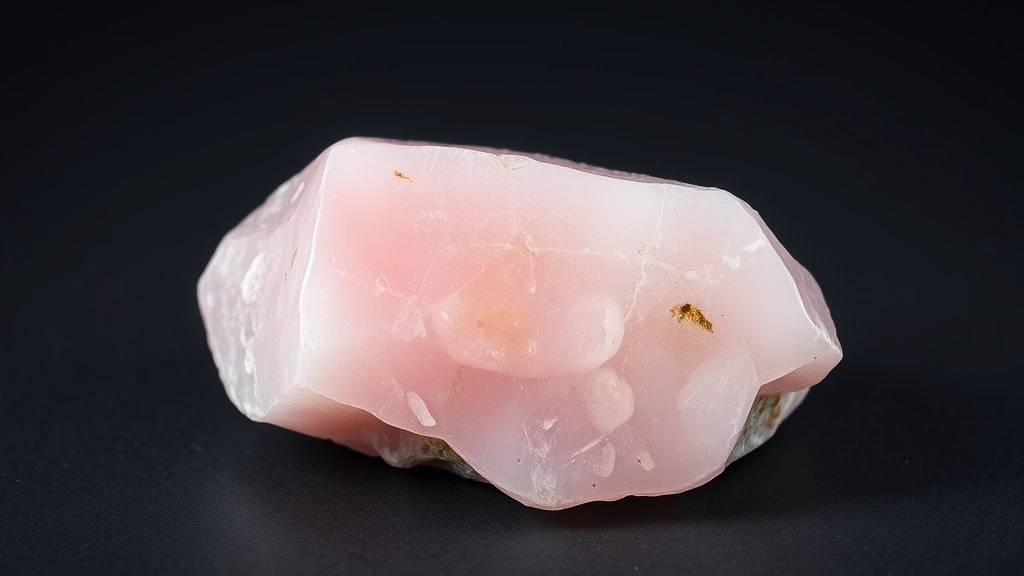
Pink chalcedony belongs to the chalcedony family, an aggregate of intergrown quartz and moganite crystals. Though often described as a single stone, it is a cryptocrystalline silica formed in low‑temperature hydrothermal veins, volcanic tuffs, and sedimentary basins. Its fine‑grained texture results from the simultaneous growth of trigonal quartz and monoclinic moganite, yielding a uniform, waxy luster prized across cultures from ancient Egypt to the Roman Empire.
What is Pink Chalcedony? Geological Overview & Definition
Pink chalcedony is a cryptocrystalline silica composed of microscopic quartz and moganite fibers that are too small to resolve with the naked eye. The aggregate forms a compact, conchoidal fracture and exhibits a characteristic waxy to vitreous luster, making it distinct from macrocrystalline quartz varieties. The gentle, rosy hues of Cotton Candy Agate echo the delicate blush of pink chalcedony, offering a complementary visual and energetic resonance that enhances both stones’ soothing qualities.
Historically, pink chalcedony has been mined in Brazil, India, and the United States, where fluid‑rich environments promote the precipitation of silica from silica‑saturated solutions. Across early lapidary traditions it was fashioned into beads, intaglios, and cameos, valued for its subtle pink hue that does not fade under normal wear. Artisans often pair this delicate pink variety with White Chalcedony to create striking color-contrast cameos that highlight the stone’s enduring translucency.
Pink Chalcedony Chemical Composition & Crystallographic Properties
The mineral is fundamentally SiO₂, but unlike single‑crystal quartz it consists of an intergrowth of trigonal quartz and monoclinic moganite. The dominant trigonal crystal system governs the overall symmetry, with lattice parameters that accommodate the fine‑scale twinning responsible for its milky translucency.
Cation substitution is minimal; trace amounts of iron (Fe³⁺) and manganese (Mn²⁺) replace silicon in the lattice, creating color centers that absorb specific wavelengths and produce the pink coloration. These chromophore ions are distributed irregularly, resulting in a uniform hue rather than distinct banding.
Acid sensitivity mirrors that of quartz: dilute hydrochloric acid produces no effervescence, confirming its silica nature, while prolonged exposure to strong acids can leach surface iron, subtly altering the stone’s tone. Thermal treatment above 500 °C can induce partial devitrification, darkening the pink shade and sometimes revealing a faint brownish overgrowth.
Overall, pink chalcedony’s trigonal framework, trace‑element chromophores, and resistance to chemical attack combine to give it the stable, gentle pink appearance cherished by gem collectors and ancient artisans alike.
| Property | Specification |
|---|---|
| Mineral Group | Natural Mineral / Crystal |
| Chemical Formula | SiO₂ |
| Mohs Hardness | 6.5 – 7.0 |
| Crystal System | Trigonal |
| Color & Optical Properties | Natural Pink Chalcedony color spectrum and optical dispersion |
| Primary Mining Localities | Global primary localities |
| Water & Chemical Resistance | High (Safe for gentle water washing) |
| Chakra Alignment (Traditional) | Throat Chakra (Vishuddha) |
| Zodiac Affinity (Traditional) | Aquarius, Gemini |
| Symbolic Meaning (Traditional) | Creativity, motivation and self-confidence |
Pink Chalcedony Varieties & Color Spectrum
Pink Chalcedony displays distinct mineralogical characteristics across its geological varieties and structural habits. Gemologists evaluate these natural varieties based on crystal habit, trace chromophore concentrations, and visual luster.
Primary Natural Pink Chalcedony
The benchmark natural variety exhibiting diagnostic color saturation and classic crystallographic symmetry.
Distinct Geological Morphs of Pink Chalcedony
Secondary regional and structural varieties formed under localized geological temperature and pressure conditions.
Rose Chalcedony
Formed in low‑temperature hydrothermal veins, rose chalcedony displays a delicate pastel pink caused by trace amounts of iron oxide. Fine, microscopic microlites give the stone a milky translucency that deepens under angled light. It is widely mined in Brazil’s Minas Gerais region and is considered the most commercially abundant pink chalcedony variety.
Pink Onyx
Pink onyx develops in banded silica deposits within sedimentary limestone, where alternating layers of cryptocrystalline quartz and iron‑rich minerals produce a striking, opaque pink banding. The stone’s characteristic chatoyancy is enhanced by polishing, revealing a smooth, waxy luster. High‑grade specimens are rare outside the Indian subcontinent, especially in Rajasthan’s Khetri mines.
Mtorolite (Mtorolite Chalcedony)
Mtorolite originates from volcanic tuff in the Democratic Republic of Congo, where silica‑rich fluids infiltrate basaltic breccias. Its vivid magenta hue stems from manganese and copper impurities, giving the stone a saturated, almost fluorescent glow. The mineral’s limited occurrence and the logistical challenges of extraction make it a prized collector’s item.
Sardonyx Pink
Sardonyx pink is a hybrid of chalcedony and carnelian, forming in alluvial placer deposits where river action rounds the nodules. The stone exhibits a bold, opaque pink core surrounded by a thin, translucent mantle, creating a striking contrast. Notable sources include Madagascar’s Antsirabe region, where the material is exported for high‑end jewelry.
Pink Agate (Cameo‑Style)
Pink agate forms in volcanic ash layers that later fill with silica‑rich solutions, producing concentric banded patterns of soft pink and cream. The bands often display a milky opalescence that intensifies after heat treatment, a practice common in Brazilian workshops. While abundant, premium cameo‑style pieces with fine, tight banding are limited to select quarries in Uruguay.
Pink Jasper (Microcrystalline Variant)
Although technically a form of chalcedony, pink jasper is distinguished by its opaque, earthy pink coloration and occasional mineral inclusions such as hematite. It precipitates in sedimentary basins where silica replaces carbonate sediments, creating a dense, compact mass. Notable deposits occur in the United States’ Oregon Coast Range, where the stone is prized for its durability in carving.
Where is Pink Chalcedony Found? Geological Mining & Extraction
Pink chalcedony primarily occurs within silica‑rich sedimentary sequences and low‑temperature hydrothermal veins, often hosted by limestone, tuff, or volcanic ash layers. In these environments, silica‑bearing fluids precipitate microcrystalline quartz, forming the characteristic cryptocrystalline texture that defines chalcedony.
Major extraction zones include Brazil’s Minas Gerais and Espírito Santo states, the Indian state of Rajasthan, and the Congo’s Katanga Province, where artisanal miners employ hand‑picking and small‑scale crushing to separate nodules from host rock. Secondary sources in Madagascar, Uruguay, and the Pacific Northwest of the United States supplement global supply, each contributing distinct color nuances linked to local impurity profiles.
Historical Significance & Cultural Lore of Pink Chalcedony
Across ancient lapidary traditions, pink chalcedony was prized for its soothing hue and was fashioned into intaglios and cameos for Greco‑Roman elites, symbolizing affection and diplomatic goodwill. Egyptian tombs from the New Kingdom contain pink chalcedony beads, indicating trade routes that linked the Nile Valley to Red Sea sources.
In Vedic literature, the stone is associated with the Throat Chakra (Vishuddha), believed to enhance communication and creative expression, while Chinese imperial courts prized it for ornamental inlays on jadeite objects. Throughout early archaeological records, pink chalcedony appears in amulets and seals, reflecting a universal reverence for its gentle energy and aesthetic appeal.
Modern Uses & Jewelry Applications of Pink Chalcedony
Lapidaries primarily cut pink chalcedony into smooth cabochons to showcase its soft, milky translucency and gentle color zoning. This opaque variety rarely exhibits the brilliance required for high-faceting, making polished domes the preferred setting for rings, pendants, and earrings. Artisans also utilize the stone’s durability for intricate ornamental carvings, including cameos, intaglios, and decorative inlays that highlight its uniform texture.
- Cabochon Cutting: The standard technique for maximizing the stone’s pastel hue and waxy luster without risking fractures.
- Ornamental Carving: Ideal for detailed relief work due to its consistent hardness and lack of prominent cleavage planes.
- Bead Production: Commonly drilled into uniform beads for bracelets and necklaces, appealing to collectors of pastel gemstones.
Metaphysical Properties & Traditional Meaning of Pink Chalcedony
According to historical traditions and metaphysical lore, pink chalcedony is revered as a stone of emotional healing and gentle communication. Ancient Mediterranean cultures often associated this variety of silica with compassion, believing it softened the wearer’s heart and fostered empathy in interpersonal relationships. These early lapidary records suggest the stone served as a talisman for those seeking to express feelings without aggression or fear.
In broader esoteric practices, the gem is linked to creative motivation and the restoration of self-confidence. Practitioners often recommend it for individuals navigating periods of emotional stagnation or creative block. By aligning with the throat region, it is thought to encourage clear, authentic self-expression while maintaining a calm and balanced mental state.
Which Chakra and Zodiac Signs Align with Pink Chalcedony?
Pink chalcedony is canonically aligned with the Throat Chakra (Vishuddha), which governs communication, truth, and creative expression. This connection stems from the stone’s purported ability to unblock verbal hesitation and encourage the wearer to speak their truth with grace. Meditators often place the stone on the throat to facilitate clearer articulation of thoughts and emotions.
Astrologically, the gem resonates strongly with the air signs Aquarius and Gemini. Both signs value intellectual exchange and social connectivity, traits that pink chalcedony is believed to enhance. For these individuals, the stone acts as a supportive tool for maintaining open dialogue and fostering creative inspiration within their social circles.
How to Identify Real vs. Fake Pink Chalcedony
Distinguishing genuine pink chalcedony from imitations requires attention to subtle visual and physical cues, as synthetic glass and dyed quartz are common substitutes. Synthetic glass often appears too perfect, lacking the natural variations in color and texture found in mined specimens. Additionally, some sellers use dyed replicas of low-quality chalcedony or even plastic to mimic the stone’s soft pink hue, which can fade over time.
Practical At-Home Authenticity Tests
- Temperature Test (Thermal Feel): Genuine chalcedony feels noticeably cool to the touch initially and warms up slowly, whereas plastic imitations reach room temperature almost instantly.
- Specific Gravity & Weight Test: Real chalcedony has a specific gravity of approximately 2.6, making it feel denser and heavier than similarly sized glass or plastic fakes.
- Scratch & Hardness Test (Mohs Comparison): With a Mohs hardness of 6.5 to 7.0, genuine pink chalcedony will scratch glass but may be scratched by a steel nail (hardness 5.5) if the stone is lower in the range, though it should not scratch easily.
- Microscopic & Loupe Inspection (Internal Inclusions): Using a 10x loupe, look for natural flow lines or minor inclusions; synthetic glass often contains tiny, spherical bubbles or swirls that are absent in natural mineral formations.
Pink Chalcedony Valuation Factors, Grading & Pricing
The market first gauges color saturation, rewarding stones that display a vivid, uniform pink hue without gray or brown undertones. A lively, saturated tone suggests a higher degree of natural iron oxide content and is prized for its visual vibrancy. Collectors also note the subtle, milky energetic luster that appears when light penetrates the micro‑fibrous chalcedony structure, adding to perceived value.
Next, crystal size & weight (grams) dominate pricing, with larger, heavier pieces commanding premium rates. Raw nodules fetched at a lower price than tumbled, polished cabochons, where a smooth, glassy finish enhances market appeal. Natural matrix inclusions such as fine quartz or mica can either elevate interest for collectors or reduce price if they disrupt visual continuity.
Finally, ethical sourcing & locality premium influences both holistic and collector markets. Stones mined under transparent, fair‑trade conditions in regions like Brazil or India attract buyers seeking responsible provenance. When a specimen originates from a historically noted deposit, its cultural narrative can add a modest surcharge, especially among enthusiasts who value the mineral’s archaeological lineage.
How to Clean and Care for Pink Chalcedony
Gentle cleaning of pink chalcedony is safely achieved with warm soapy water and a soft cloth, ensuring that surface grime is removed without abrasive action. After rinsing, pat the stone dry with a lint‑free microfiber towel to prevent water spots. Avoid ultrasonic cleaners, as the rapid vibrations can induce micro‑fractures in the fine‑grained silica structure.
Cleansing and Recharging Pink Chalcedony (Energetic Care)
Across ancient lapidary traditions, herbal smudging with sage or lavender is employed to clear lingering energetic residues, allowing the stone’s creativity and self‑confidence attributes to renew. Hold the chalcedony a few inches above the smoke, rotating gently, and then place it on a clean surface to absorb the purified atmosphere.
Moonlit exposure offers a gentle, non‑thermal method to recharge pink chalcedony, aligning its vibrational field with the lunar cycle. Position the stone on a windowsill or a natural stone slab under clear night skies for several hours, then retrieve it for use in meditation or jewelry, confident that its energetic integrity remains intact.
Frequently Asked Questions About Pink Chalcedony
Pink Chalcedony displays distinct mineralogical characteristics across its geological varieties and structural habits. Gemologists evaluate these natural varieties based on crystal habit, trace chromophore concentrations, and visual luster.
Primary Natural Pink Chalcedony
The benchmark natural variety exhibiting diagnostic color saturation and classic crystallographic symmetry.
Distinct Geological Morphs of Pink Chalcedony
Secondary regional and structural varieties formed under localized geological temperature and pressure conditions.
What is the chemical composition of pink chalcedony?
Pink chalcedony is a form of quartz with the chemical formula SiO₂. Its structure is a microcrystalline aggregation of silicon dioxide, giving it a translucent appearance. The pink hue arises from trace iron or manganese inclusions, which are common in many quartz varieties.
How hard is pink chalcedony on the Mohs scale?
Its hardness ranges from 6.5 to 7.0 on the Mohs scale. This makes it durable enough for everyday jewelry, yet still susceptible to scratches from harder materials. Proper handling and storage can preserve its luster over time.
Is pink chalcedony safe to wear in the shower?
Yes, it is water‑resistant and safe for gentle water washing. Unlike water‑soluble minerals such as halite or gypsum, quartz does not dissolve in water. A quick rinse in a mild soap solution will not damage the stone.
Can I use an ultrasonic cleaner on pink chalcedony?
Avoid ultrasonic cleaners; use warm soapy water and a soft cloth instead. Ultrasonic vibrations can induce micro‑fractures in the delicate microcrystalline structure. Gentle cleaning preserves the stone’s integrity and prevents accidental breakage.
Which zodiac signs are associated with pink chalcedony?
Aquarius and Gemini are the zodiac signs linked to pink chalcedony. In astrological traditions, these signs are believed to resonate with the stone’s energetic properties, enhancing communication and creativity.
Which chakra does pink chalcedony correspond to?
It aligns with the Throat Chakra (Vishuddha). This chakra governs communication, self‑expression, and truth. Wearing or meditating with pink chalcedony is thought to support clarity and confidence in speech.
How should I store pink chalcedony jewelry to avoid damage?
Keep it in a soft pouch or lined jewelry box away from sharp objects. The stone’s microcrystalline structure can be prone to chipping if struck against harder surfaces. Storing separately from abrasive materials protects its surface and prolongs its beauty.
What are the key care instructions for maintaining pink chalcedony’s appearance?
Clean with a damp, soft cloth and avoid harsh chemicals. Regular gentle wiping removes surface dust without compromising the stone’s natural sheen. Avoid prolonged exposure to extreme temperatures or direct sunlight, which can cause slight color fading over time.