
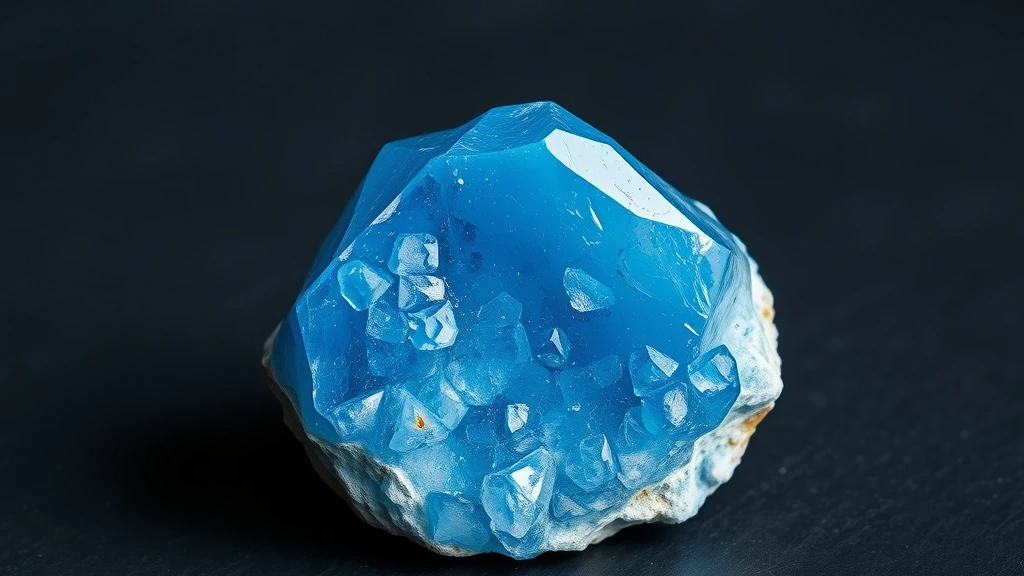
Quartz belongs to the silicate mineral group, specifically classified as a tectosilicate. This framework structure consists of tetrahedral silicon-oxygen units linked in a three-dimensional lattice. As a member of the Quartz Group, it shares fundamental crystallographic traits with other silica polymorphs. Its geological formation typically occurs in hydrothermal veins or igneous intrusions. The stone’s identity is defined by its pure silica composition and trigonal symmetry.
What is Blue Quartz ? Geological Overview & Definition
Blue Quartz is a naturally occurring variety of alpha-quartz found in specific geological formations. It is distinct from blue topaz or aquamarine due to its silicon dioxide composition. The coloration often results from trace impurities or radiation-induced defects within the crystal lattice. These stones are frequently discovered in metamorphic schists or granitic pegmatites.
The gemstone is prized for its clarity and subtle, cool-toned appearance. Unlike dyed quartz, natural blue quartz exhibits a uniform color distribution throughout the crystal. Its geological origin is often associated with high-pressure environments. Understanding its provenance helps distinguish natural specimens from synthetic alternatives. Just as blue quartz’s uniform hue reflects its high‑pressure formation, the color‑changing Alexandrite reveals its own geological story by shifting from green to red under different lighting conditions.
Blue Quartz Chemical Composition & Crystallographic Properties
The fundamental building block is the SiO₂ tetrahedron, where silicon atoms are bonded to four oxygen atoms. These units link together to form a rigid, three-dimensional tectosilicate framework. This structure dictates the mineral’s high hardness and chemical inertness. The lattice is highly stable under standard geological conditions.
Blue Quartz crystallizes in the Trigonal (Rhombohedral / Trapezohedral) system. This symmetry is characterized by a three-fold rotation axis and specific face angles. The refractive index ranges from 1.544 to 1.553, contributing to its vitreous luster. The crystal habit often displays prism faces terminated by rhombohedral pyramids.
Coloration arises from color centers or trace cation substitutions within the lattice. Iron impurities or electron traps can create the characteristic blue tint. The stone exhibits acid sensitivity only under extreme conditions, as silica is generally resistant. Thermal behavior remains stable, though rapid temperature changes may cause fracturing.
| Property | Specification |
|---|---|
| Mineral Group | Silicates (Tectosilicates / Quartz Group) |
| Chemical Formula | SiO₂ (Silicon Dioxide) |
| Mohs Hardness | 7.0 |
| Crystal System | Trigonal (Rhombohedral / Trapezohedral) |
| Specific Gravity (Density) | 2.65 |
| Refractive Index | 1.544 – 1.553 |
| Color & Optical Properties | Natural Blue Quartz Gemstone color spectrum and optical dispersion |
| Primary Mining Localities | Brazil, Madagascar, USA (Arkansas), Swiss Alps |
| Water & Chemical Resistance | High (Fully resistant to water and moisture) |
| Chakra Alignment (Traditional) | All Chakras (Universal Harmonizer) |
| Zodiac Affinity (Traditional) | All Zodiac Signs (Especially Leo and Aries) |
| Symbolic Meaning (Traditional) | Master energy amplifier, clarity, purification, and focus |
Blue Quartz Varieties & Color Spectrum
Sky‑Blue Quartz (Aqua Quartz)
Formed in low‑temperature hydrothermal veins, aqua quartz acquires its pale cerulean hue from microscopic fluid inclusions of water and trace amounts of titanium. The crystal habit is typically prismatic with a glassy luster, and the color may fade under prolonged sunlight. Because the required geochemical conditions are rare, high‑quality specimens are prized by collectors.
Smaltite‑Tinted Quartz (Blue Smalt Quartz)
In regions where copper‑bearing smaltite minerals intersect silica‑rich solutions, blue smalt quartz develops a deep indigo tone through lattice substitution of Cu²⁺ ions. The stone often displays fine, metallic‑shimmering inclusions that catch light like a subtle sheen. Deposits are limited to a few copper districts in the Czech Republic and Siberia, making the variety relatively scarce.
Lapis‑Like Quartz (Lazurite‑Stained Quartz)
When fine particles of lazurite or lapis lazuli become trapped during quartz crystallization, the resulting lazurite‑stained quartz exhibits a vivid ultramarine coloration with occasional specks of pyrite. The inclusions are typically visible as bright flecks that enhance the stone’s ornamental appeal. Such specimens are most commonly sourced from Afghan lapis mines where quartz veins intersect the host limestone.
Blue Chalcedony (Moss‑Blue Chalcedony)
A microcrystalline form of quartz, blue chalcedony gains its hue from dispersed iron‑oxide and manganese oxides within the silica matrix. The texture is smooth and waxy, often displaying a faint moss‑like pattern that gives the stone its name. High‑grade material is harvested primarily from Brazil’s Minas Gerais province, where volcanic tuffs provide ideal silica‑rich fluids.
Oceanic Blue Quartz (Marine‑Influenced Quartz)
Formed in coastal pegmatites exposed to seawater, marine‑influenced quartz incorporates trace amounts of magnesium and sodium, producing a turquoise‑blue shade reminiscent of shallow tropical waters. The crystals frequently contain tiny fluid bubbles that create a subtle opalescent glow. These deposits are localized to New Caledonia’s offshore islands, where extraction is limited by environmental protections.
Frosted Blue Quartz (Iridescent Blue Quartz)
Exposure to natural radiation fields in granitic terrains can induce color centers that impart a frosted blue appearance to quartz, often accompanied by a faint iridescence. The effect is most pronounced in specimens from the Ural Mountains, where high‑energy gamma radiation interacts with trace boron. Such stones are valued for their unique optical phenomenon rather than sheer color intensity.
Where is Blue Quartz Found? Geological Mining & Extraction
Blue quartz occurs chiefly in pegmatitic veins that cut through granitic host rocks, where slow cooling allows large, well‑formed crystals to develop. The silica‑rich fluids transport trace transition metals, and the chemistry of the surrounding rock dictates whether the quartz will appear sky‑blue, indigo, or turquoise. In many deposits, the quartz is intergrown with feldspar, mica, and tourmaline, requiring careful separation during processing.
Key mining districts include the Czech Republic’s Bohemian Massif, renowned for copper‑associated blue smalt quartz, and Brazil’s Minas Gerais, the world’s leading source of blue chalcedony. Additional notable localities are the Afghan lapis fields, New Caledonia’s offshore pegmatites, and the Ural Mountains where radiation‑induced frosted varieties form. Extraction typically involves selective hand‑picking of crystal clusters, followed by gentle crushing and flotation to isolate the delicate blue quartz without damaging its color‑bearing inclusions.
Historical Significance & Cultural Lore of Blue Quartz
Ancient Egyptians prized aqua quartz for its sky‑like hue, embedding it in funerary amulets to symbolize rebirth and the heavens; examples have been recovered from the tomb of Tutankhamun. In Mesoamerica, blue chalcedony was carved into ceremonial masks and used as a status symbol among the Maya elite, reflecting the stone’s perceived connection to water deities.
Greek and Roman texts describe “*lazurite‑stained quartz*” as a protective talisman against storms, a belief that persisted into medieval European folklore where the stone was thought to ward off melancholy. In contemporary New Age practices, marine‑influenced quartz is marketed for its purported ability to harmonize emotional currents, echoing its historic role as a conduit between earth and water spirits.
Where is Blue Quartz Found? Geological Mining & Extraction
Blue quartz occurs chiefly in silica‑rich pegmatite veins that intersect granitic host rocks, where trace amounts of copper, iron, or titanium create a faint blue tint through subtle lattice distortions. The most productive deposits are located in Brazil’s Minas Gerais province, the United States’ Arkansas Ozarks, and Madagascar’s Ilakaka region, where open‑pit and underground methods expose massive quartz sheets.
Extraction typically involves wire saw cutting of large quartz blocks followed by careful hand‑sorting to preserve the delicate blue coloration, which can be diminished by exposure to sunlight or heat. After removal, the stones are rinsed, graded for clarity, and often stabilized with resin to prevent micro‑fracturing before they enter the lapidary market.
Historical Significance & Cultural Lore of Blue Quartz
Ancient Egyptians prized blue quartz as “the stone of the heavens,” embedding it in funerary amulets and temple mosaics to symbolize divine protection and eternal life. Similar reverence appears in pre‑Columbian Andean cultures, where blue quartz beads adorned elite garments and were believed to channel the power of the sky god Inti.
In medieval Europe, blue quartz was ground into a fine powder for lapidary alchemy, thought to amplify the wearer’s intuition and ward off melancholy. Today, its legacy endures in modern metaphysical practice, where it is hailed as a universal harmonizer that balances all chakras and zodiac energies.
Modern Uses & Jewelry Applications of Blue Quartz
Blue quartz is most often cut as a cabochon to showcase its serene hue, though skilled lapidaries also produce brilliant faceted stones for rings and pendants. The material’s modest hardness (Mohs 7) allows precise carving without excessive risk of chipping, making it popular for ornamental objects such as vases and decorative boxes. Designers favor its ability to complement both contemporary minimalism and classic Art‑Deco motifs.
- Cabochon pendants for pendant necklaces and brooches
- Faceted earrings, rings, and cocktail rings
- Carved beads for mala strands and prayer beads
- Ornamental sculptures, paperweights, and inlay panels
Metaphysical Properties & Traditional Meaning of Blue Quartz
According to historical traditions and metaphysical lore, blue quartz is regarded as a master energy amplifier, enhancing clarity of thought and purifying emotional turbulence. It is believed to focus intention, promote inner peace, and support communication by aligning the mind with higher vibrational frequencies. Practitioners often use it during meditation to deepen spiritual insight and to clear mental fog.
Which Chakra and Zodiac Signs Align with Blue Quartz ?
Blue quartz resonates with all chakras, acting as a universal harmonizer that balances the entire energy field rather than targeting a single center. Its cool, calming color is said to soothe the throat and heart chakras while also supporting the crown’s connection to higher consciousness.
In astrology, the stone is aligned with all zodiac signs, with a special emphasis on Leo and Aries. For fire signs, it is thought to temper impulsive energy, providing steadier focus and confidence, while for the remaining signs it offers a universal channel for clarity and personal empowerment.
How to Identify Real vs. Fake Blue Quartz
Artificial imitations of blue quartz include dyed natural quartz, low‑cost synthetic glass, and resin‑based replicas that mimic the stone’s color but lack its physical properties. These substitutes often exhibit inconsistent hue, excessive translucency, or a glassy feel that differs from genuine quartz’s subtle luster. Careful testing can reveal these differences before purchase.
Practical At-Home Authenticity Tests
- Temperature Test (Thermal Feel): Real quartz feels cool to the touch and retains that coolness longer than glass or plastic, which quickly warm to skin temperature.
- Specific Gravity & Weight Test: Genuine quartz has a density of ~2.65 g/cm³; it will feel noticeably heavier than a similarly sized glass imitation.
- Scratch & Hardness Test (Mohs Comparison): Using a steel file (Mohs 5.5) will leave a faint mark on glass but not on quartz, which resists scratches up to a hardness of 7.0.
- Microscopic & Loupe Inspection (Internal Inclusions): Under 10× magnification, natural blue quartz shows subtle growth lines or minute inclusions, whereas synthetic glass appears uniformly clear with no internal features.
Blue Quartz Valuation Factors, Grading & Pricing
Market value hinges primarily on Color Saturation, which must exhibit a deep, even blue tone without brownish tints. High-grade specimens display exceptional optical clarity, allowing light to penetrate deeply and enhance the stone’s natural luster. Uniformity across the entire crystal face is critical for achieving premium retail pricing.
Specimen Size & Weight significantly influences price, as larger, flawless blue quartz crystals are increasingly rare in global deposits. tumbled polish and natural geometry must be precise to maximize brilliance, while visible matrix or internal inclusions can drastically reduce commercial appeal. Buyers should prioritize stones with minimal visible flaws to ensure long-term aesthetic value.
Geographical Provenance Premium often elevates prices for stones from renowned locales with consistent quality records. Wholesale markets typically offer lower margins, whereas retail prices reflect curation, certification, and brand prestige. Current trends show steady demand for ethically sourced, high-clarity specimens in the mid-range market.
How to Clean and Care for Blue Quartz
This mineral possesses a Mohs Hardness of 7.0, making it durable enough for daily wear and standard jewelry maintenance. You can easily clean the stone using warm water and a mild, non-abrasive soap solution. Gently scrub the surface with a soft brush to remove any accumulated oils or dust.
For deeper maintenance, the gemstone is suitable for ultrasonic cleaning provided it does not contain heavy fractures. Avoid this method if the crystal shows visible internal stress lines to prevent potential shattering. Always dry the stone thoroughly with a lint-free cloth after washing to maintain its optical clarity.
Cleansing and Recharging Blue Quartz (Energetic Care)
To energetically cleanse the stone without risking physical damage, use smoke smudging with sage or palo santo. Hold the crystal in the smoke for several minutes, visualizing the removal of stagnant energy. This dry method respects the mineral’s structure while fulfilling traditional purification practices.
Alternatively, place the gemstone on a selenite plate under direct moonlight overnight. This gentle recharging technique leverages lunar energy to restore the crystal’s vibrational frequency. Ensure the stone is dry and free from moisture before beginning this process.
Frequently Asked Questions About Blue Quartz
Is blue quartz safe to wear while swimming or showering?
Yes, blue quartz is fully resistant to water and moisture. Its silicon dioxide (SiO₂) structure is chemically inert, so exposure to fresh, salt, or chlorinated water will not degrade the stone. Regular wear in pools, oceans, or daily showers is therefore perfectly acceptable.
How should I clean my blue quartz jewelry?
Clean it with warm water and a mild soap, then rinse and dry. This gentle method removes oils without harming the crystal lattice. For heavily soiled pieces, ultrasonic cleaning is permissible, provided the stone is not cracked or heavily fractured, which could amplify stress.
Does blue quartz have any specific zodiac associations?
It aligns with all zodiac signs, especially Leo and Aries. In astrological tradition, the stone’s universal harmonizer energy supports the bold, fire‑driven qualities of these signs while still resonating with the broader planetary influences of every sign.
Which chakras does blue quartz balance?
Blue quartz works on all chakras as a universal harmonizer. Its master energy‑amplifying properties help clear blockages from the root to the crown, promoting overall clarity, purification, and focus throughout the subtle body.
What is the hardness of blue quartz, and will it scratch easily?
Blue quartz rates 7.0 on the Mohs scale. This makes it resistant to everyday scratches from most metals and common wear, though it can be marked by harder substances like diamond or corundum. Proper care will keep its surface luminous.
Is blue quartz suitable for everyday jewelry?
Yes, its durability and water resistance make it ideal for daily wear. The trigonal (rhombohedral) crystal system provides structural stability, while the stone’s refractive index (1.544‑1.553) yields a subtle sparkle that endures with routine use.
Can blue quartz be treated or enhanced?
Natural blue quartz is typically untreated, but some stones may be heat‑treated to intensify color. Authentic specimens retain the SiO₂ composition and exhibit uniform density (2.65 g/cm³). Always request a certification to verify any enhancement claims.
Does blue quartz have any metaphysical benefits for meditation?
It is prized as a clarity and focus aid in meditation practices. The stone’s energy‑amplifying nature helps quiet the mind, supporting purification of thoughts and enhancing visualization. Users often report deeper concentration and a sense of universal connection.