
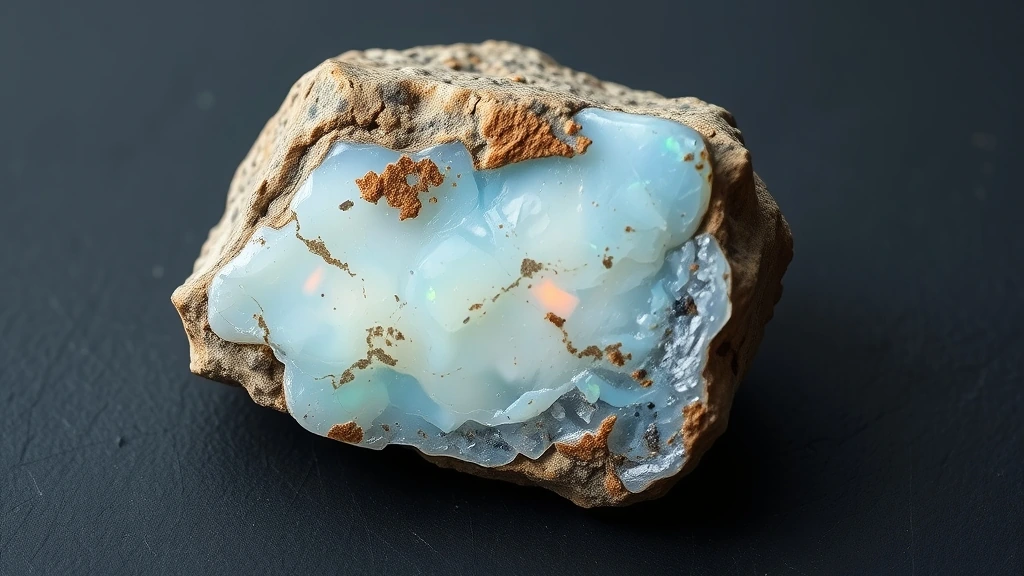
Boulder opal represents a unique geological formation where opal cement has permeated host rock, creating a composite gemstone. Unlike crystalline minerals, it belongs to the Mineraloid group, defined by its lack of long-range atomic order. This classification stems from its formation as a gel that solidifies without developing a repeating crystal lattice. Consequently, it shares chemical kinship with other hydrated silica deposits but differs structurally. Its identity is anchored in this disordered, glassy state rather than defined crystallographic symmetry.
What is Boulder Opal Gemstone? Geological Overview & Definition
Boulder opal forms when opal-rich fluids infiltrate porous host rocks, such as sandstone or basalt. The silica precipitates within the rock matrix, preserving the original stone’s shape while adding gem-quality opal. This process results in a composite gemstone where the opal is an integral part of the host rock. The resulting material retains the rugged, natural contours of the original geological formation.
The term “boulder” specifically denotes opal that remains attached to its host rock matrix. This distinguishes it from loose opal pieces that have been separated from the source stone. The host rock provides structural stability and often enhances the visual contrast of the opal’s color flashes. Geologists classify this as a secondary mineralization event within the existing rock structure.
Boulder Opal Gemstone Chemical Composition & Crystallographic Properties
Boulder opal is strictly amorphous, meaning it lacks a defined crystal system or repeating lattice structure. It consists of densely packed, spherical hydrated silica particles arranged in a disordered, glassy matrix. This absence of long-range order prevents the formation of cleavage planes or crystal faces. The material is technically a mineraloid because it does not meet the strict definition of a crystalline mineral.
The chemical formula is generally represented as SiO₂·nH₂O, where water content varies significantly. Cation substitution is minimal, as the silica network remains predominantly pure silicon and oxygen. Trace impurities may be present but do not alter the fundamental amorphous nature of the stone. The structure is held together by hydrogen bonds and van der Waals forces between silica spheres.
Color in boulder opal arises from light diffraction by the regular spacing of silica spheres. These spheres act as a natural diffraction grating, splitting white light into spectral colors. The size and arrangement of these spheres determine the specific hues observed in the play-of-color. Smaller spheres produce blue and green tones, while larger spheres yield reds and oranges.
Thermal behavior is critical, as opal is sensitive to rapid temperature changes. Dehydration can cause cracking, known as crazing, which compromises the stone’s integrity. Acid sensitivity is low due to the chemical stability of silica, but physical shock remains a risk. Proper handling ensures the preservation of the delicate amorphous structure and vibrant optical properties.
| Property | Specification |
|---|---|
| Mineral Group | Mineraloid (Hydrated Silica) |
| Chemical Formula | SiO₂·nH₂O (Hydrated Silicon Dioxide) |
| Mohs Hardness | 5.5 – 6.5 |
| Crystal System | Amorphous (Hydrated silica spheres / Mineraloid) |
| Specific Gravity (Density) | 1.98 – 2.25 |
| Refractive Index | 1.370 – 1.470 |
| Color & Optical Properties | Natural Boulder Opal Gemstone color spectrum and optical dispersion |
| Primary Mining Localities | Australia (Coober Pedy, Lightning Ridge), Ethiopia (Welo), Mexico |
| Water & Chemical Resistance | Moderate/Sensitive (%3-%21 water content; avoid prolonged soaking for hydrophane Welo opals) |
| Chakra Alignment (Traditional) | Crown Chakra and Heart Chakra |
| Zodiac Affinity (Traditional) | Libra, Scorpio, Pisces |
| Symbolic Meaning (Traditional) | Creativity, hope, emotional depth, and spontaneous inspiration |
Opal Varieties & Comprehensive Sub-Types
Black Opal
This prized variety features a dark body tone ranging from N1 to N4, primarily sourced from Lightning Ridge in Australia. The deep background dramatically enhances the iridescent play-of-color, creating vivid flashes against the black matrix. Consequently, it stands as the most valuable opal in the global gemstone market.
White / Light Opal
Characterized by a light milky or white body tone, this common variety displays soft to bright spectral flashes. Its formation occurs in diverse geological settings, resulting in a wide range of color intensities. While less expensive than black opal, it remains a popular choice for jewelry due to its accessible price point.
Fire Opal
Originating from volcanic rhyolite cavities in Mexico, this stone exhibits translucent to transparent warm hues of red, orange, and yellow. Unlike precious opals, it often lacks play-of-color, relying instead on its vibrant body color for aesthetic appeal. Lapidaries typically facet these stones like traditional colored gemstones to maximize brilliance.
Boulder Opal
This unique variety consists of precious opal naturally bonded to host ironstone rock, predominantly from Queensland, Australia. The opal forms in narrow undulating seams within the matrix, creating a rugged, organic appearance. Its distinctive look appeals to collectors who prefer raw, earthy aesthetics over polished perfection.
Ethiopian Welo Opal
Sourced from the Wollo province, this hydrophane volcanic opal exhibits a fascinating interaction with moisture. It absorbs water to reveal vivid 3D honeycomb or patchwork patterns of play-of-color. This dynamic visual effect distinguishes it from traditional Australian opals in the trade.
Dendritic Opal (Merlinite)
This common opaque variety features a white to cream base patterned with black branching manganese dendrites. These intricate fern-like inclusions form as manganese-rich fluids seep through the silica structure. In metaphysical contexts, it is revered as a master stone of duality and shadow work.
Gemologists differentiate these varieties primarily by body tone, transparency, and the presence of play-of-color. Lapidary practices vary significantly, from faceting fire opals to preserving the matrix in boulder pieces. Understanding these distinctions ensures accurate grading and proper market valuation.
Where is Boulder Opal Gemstone Found? Geological Mining & Extraction
Boulder opal is exclusively found within ironstone host rock formations, primarily in the state of Queensland, Australia. The opal precipitates in voids and fractures within the laterite soil, creating a natural bond with the surrounding matrix. This specific geological setting is crucial for the stone’s unique aesthetic and structural integrity.
Mining operations focus on regions like Lightning Ridge and the Northern Territory, where alluvial deposits are abundant. Extractors must carefully separate the opal seams from the heavy ironstone without damaging the delicate silica structure. This process requires specialized techniques to preserve the natural undulating patterns of the stone.
Historical Significance & Cultural Lore of Boulder Opal Gemstone
Indigenous Australian cultures have utilized opal for thousands of years, embedding it in ceremonial artifacts and tools. These ancient practices highlight the stone’s deep cultural significance and spiritual resonance within local communities. Archaeological evidence confirms its long-standing role in ritualistic and decorative applications.
In Western history, opal gained prominence during the Victorian era, becoming a symbol of romance and fidelity. The stone’s unique optical properties captivated jewelers and collectors, driving its global popularity. Today, it remains a cherished gemstone, bridging ancient lore with modern luxury.
Modern Uses & Jewelry Applications of Boulder Opal Gemstone
Lapidaries primarily cut boulder opals as cabochons to preserve the natural matrix and maximize the play-of-color. This method highlights the stone’s organic shape while ensuring structural integrity for durable settings.
- Jewelry Settings: Artisans often use bezel or prong settings to secure the irregular contours without stressing the brittle opal layer.
- Ornamental Carving: Skilled carvers create intricate sculptures that integrate the host rock, such as ironstone or sandstone, into the design.
- Display Pieces: Large, uncut boulders serve as high-value decorative items, showcasing the raw geological beauty of the deposit.
Metaphysical Properties & Traditional Meaning of Boulder Opal Gemstone
According to historical traditions and metaphysical lore, boulder opal is revered for its ability to amplify emotional resonance and spiritual clarity. Practitioners believe the stone acts as a bridge between the physical and ethereal realms, fostering deep introspection.
This gemstone is associated with balance and transformation, helping users navigate complex emotional landscapes with grace. It is often used in meditation to enhance intuition and promote a sense of inner peace.
Which Chakra and Zodiac Signs Align with Boulder Opal Gemstone?
In esoteric practices, boulder opal is strongly aligned with the Crown Chakra, facilitating higher consciousness and spiritual connection. Its vibrant colors also resonate with the Heart Chakra, promoting love, compassion, and emotional healing.
Astrologically, this stone is considered particularly beneficial for Libra, Scorpio, and Pisces. These signs are believed to benefit from the opal’s balancing energy, which supports their natural tendencies toward harmony, depth, and empathy.
How to Identify Real vs. Fake Boulder Opal Gemstone
Artificial imitations often use synthetic glass, dyed silica, or plastic composites to mimic the iridescent play-of-color of natural opals. These fakes may lack the distinct matrix structure and organic irregularities found in genuine boulder opals.
Practical At-Home Authenticity Tests
- Temperature Test (Thermal Feel): Genuine opal feels cool to the touch initially and warms slowly, whereas plastic imitations often feel neutral or warm immediately.
- Specific Gravity & Weight Test: Real opal has a specific gravity of approximately 2.0–2.1, making it feel heavier than glass or plastic of the same size.
- Scratch & Hardness Test (Mohs Comparison): Opal ranks 5.5–6.5 on the Mohs scale, so it can scratch glass but will be scratched by a steel knife or quartz.
- Microscopic & Loupe Inspection (Internal Inclusions): Use a 10x loupe to look for natural inclusions like ironstone matrix or “druzy” patterns, which are absent in uniform synthetic glass.
Boulder Opal Gemstone Valuation Factors, Grading & Pricing
Market value hinges primarily on Color Saturation and the intensity of the play-of-color. Buyers seek vivid, high-contrast flashes of blue, green, or red against the host rock. Uniform tone distribution across the surface significantly enhances desirability and perceived quality.
Carat Weight influences pricing, yet large boulders command premiums for their unique geological formation. Facet symmetry is less critical than in faceted gems, as boulders are often polished en cabochon. The presence of natural matrix or ironstone inclusions adds character but may reduce overall value if excessive.
Geographical Provenance Premium heavily dictates final retail prices, with Australian origins like Lightning Ridge fetching top rates. Wholesale markets fluctuate based on supply chains and global demand trends. Retailers typically apply a markup ranging from 200% to 400% over wholesale costs.
How to Clean and Care for Boulder Opal Gemstone
Boulder opals contain significant internal moisture, making them sensitive to extreme temperature changes and chemical exposure. Ultrasonic cleaners and steam will cause micro-fracturing (crazing) due to internal water content. STRICTLY AVOID. These methods create rapid thermal shock that destabilizes the silica structure permanently.
For routine maintenance, use only lukewarm water and a mild, soap-free detergent. Gently scrub the surface with a soft-bristled toothbrush to remove dirt from crevices. Pat dry immediately with a lint-free cloth to prevent water spots or prolonged saturation.
Cleansing and Recharging Boulder Opal Gemstone (Energetic Care)
Energetic cleansing should prioritize dry methods to protect the stone’s structural integrity. Smoke smudging with sage or palo santo is an effective, non-invasive technique. Ensure the stone is not directly exposed to intense heat or open flames during this process.
Moonlight exposure is another gentle option for recharging boulder opals without risk of dehydration. Placing the gem on a selenite plate overnight allows for passive energy transfer. This method respects the mineral’s hygroscopic nature while fulfilling metaphysical care requirements.
Frequently Asked Questions About Boulder Opal Gemstone
Is boulder opal safe to wear in the shower?
Boulder opal is water-sensitive and should not be worn in the shower. The stone contains 3-21% internal water, which can expand or contract with temperature changes. Prolonged exposure to hot water or steam risks structural instability. Always remove your jewelry before bathing or swimming to preserve the stone’s integrity and prevent potential damage.
Can I clean boulder opal in an ultrasonic cleaner?
No, you must strictly avoid ultrasonic cleaners and steam cleaning for boulder opal. The vibrations and heat cause micro-fracturing known as crazing due to the stone’s internal water content. This permanent damage creates a web of cracks that significantly reduces value. Use only a soft, damp cloth for gentle surface cleaning to maintain the opal’s aesthetic appeal.
What zodiac signs are compatible with boulder opal?
Boulder opal is energetically aligned with Libra, Scorpio, and Pisces. These water and air signs resonate with the stone’s fluid, shifting colors. Wearing this gemstone is believed to enhance emotional balance and intuition for these individuals. It serves as a powerful talisman for those born under these specific astrological signs seeking spiritual connection.
Which chakras does boulder opal activate?
Boulder opal primarily activates the Crown Chakra and the Heart Chakra. This dual alignment bridges higher spiritual awareness with deep emotional healing. The stone’s iridescence is thought to stimulate mental clarity while nurturing compassion. It is a unique gemstone that supports both intellectual enlightenment and heartfelt emotional stability simultaneously.
How should I store boulder opal at home?
Store boulder opal in a soft pouch or lined jewelry box away from direct sunlight. Direct heat can cause the internal water content to evaporate, leading to dehydration and cracking. Keep the stone in a cool, stable environment to maintain its hydration levels. Avoid stacking it with harder gems to prevent surface abrasions or accidental chipping.
Is boulder opal a durable gemstone for daily wear?
Boulder opal has moderate durability and requires careful handling for daily wear. Its Mohs hardness is lower than many other gemstones, making it susceptible to scratches. The matrix rock provides some protection, but the opal itself remains vulnerable to impact. Treat it as a special occasion stone to ensure its long-term structural integrity and visual brilliance.
What causes the unique colors in boulder opal?
The colors result from light diffracting through microscopic silica spheres. These silica spheres are arranged in regular patterns within the stone. The size and spacing of these spheres determine the specific wavelengths of light reflected. This phenomenon, known as opalescence, creates the mesmerizing play-of-color that defines this precious gemstone.
How can I tell if boulder opal is genuine?
Genuine boulder opal displays a natural, irregular play-of-color against a rocky matrix. Look for inclusions of ironstone or laterite that are seamlessly integrated into the stone. Synthetic opals often have a regular, honeycomb pattern under magnification. A certified gemologist can confirm authenticity by examining the internal structure and refractive index properties.