
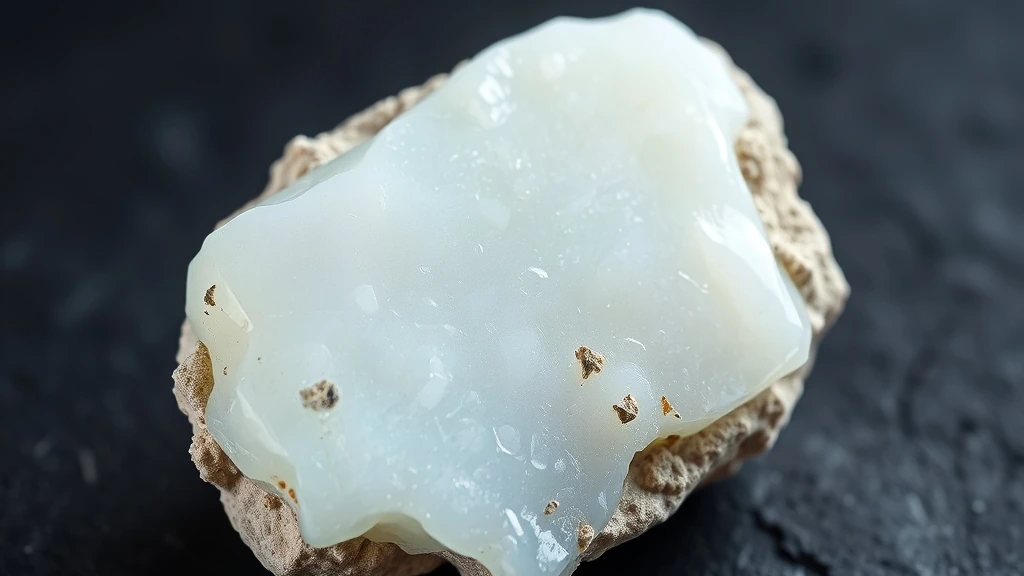
Opal belongs to the unique category of mineraloids, which are naturally occurring solids that lack a defined internal crystalline structure. Unlike true minerals, it does not possess a repeating atomic lattice, making its classification distinct in geological science. This stone forms through the deposition of hydrated silica in sedimentary or volcanic environments. Its amorphous nature allows for the complex optical phenomena that define its visual appeal.
What is White Opal Gemstone? Geological Overview & Definition
White opal is defined by its amorphous structure, meaning it lacks the ordered atomic arrangement found in crystalline minerals. It forms when silica-rich solutions precipitate in cavities, creating a dense mass of tiny spheres. This geological process results in a stone that is technically a mineraloid rather than a true mineral.
The gemstone’s value lies in its play-of-color, caused by the diffraction of light through these spheres. White opal specifically features a high-contrast background that enhances the visibility of spectral flashes. Understanding its mineraloid status is crucial for proper identification and care in the gemological industry.
White Opal Gemstone Chemical Composition & Crystallographic Properties
The crystallographic nature of opal is amorphous, composed of tightly packed hydrated silica spheres rather than a rigid lattice. This structure is classified as a mineraloid because it lacks long-range order. The spheres are arranged in a cubic or hexagonal pattern, but the material itself remains non-crystalline.
Chemically, opal consists of SiO₂ and water, with the water content varying between 3% and 21%. There is no significant cation substitution because the structure is not a true crystal lattice. The chromophore effects are structural, arising from light interference rather than impurities.
Opal is sensitive to acidic environments, which can degrade the silica matrix over time. Thermal behavior is critical, as rapid heating can cause desiccation and cracking. The stone’s Mohs hardness of 5.5 to 6.5 makes it vulnerable to abrasion. Proper storage in a humid environment prevents the loss of structural water.
| Property | Specification |
|---|---|
| Mineral Group | Mineraloid (Hydrated Silica) |
| Chemical Formula | SiO₂·nH₂O (Hydrated Silicon Dioxide) |
| Mohs Hardness | 5.5 – 6.5 |
| Crystal System | Amorphous (Hydrated silica spheres / Mineraloid) |
| Specific Gravity (Density) | 1.98 – 2.25 |
| Refractive Index | 1.370 – 1.470 |
| Color & Optical Properties | Natural White Opal Gemstone color spectrum and optical dispersion |
| Primary Mining Localities | Australia (Coober Pedy, Lightning Ridge), Ethiopia (Welo), Mexico |
| Water & Chemical Resistance | Moderate/Sensitive (%3-%21 water content; avoid prolonged soaking for hydrophane Welo opals) |
| Chakra Alignment (Traditional) | Crown Chakra and Heart Chakra |
| Zodiac Affinity (Traditional) | Libra, Scorpio, Pisces |
| Symbolic Meaning (Traditional) | Creativity, hope, emotional depth, and spontaneous inspiration |
Opal Varieties & Comprehensive Sub-Types
Black Opal
This rare variety features a dark body tone ranging from N1 to N4, primarily sourced from Lightning Ridge, Australia. The deep background creates a striking contrast that amplifies the vivid iridescent play-of-color visible within the stone. Consequently, it commands the highest market value among all opal types due to its intense visual impact.
White / Light Opal
Characterized by a light milky or white body tone, this variety displays soft to bright flashes of spectral colors. It is the most common form of precious opal found in major Australian deposits like Coober Pedy. The opaline luster provides a gentle, ethereal aesthetic that appeals to a broad range of jewelry designers.
Fire Opal
Originating from volcanic rhyolite cavities in Mexico, this stone exhibits a translucent to transparent warm red, orange, or yellow hue. Unlike other opals, it is frequently faceted like colored gemstones to maximize its brilliance and internal fire. This unique cutting style distinguishes it from the cabochon-cut varieties typically seen in the trade.
Boulder Opal
This variety consists of precious opal naturally bonded to host ironstone rock, predominantly from Queensland, Australia. The stone features rich colors confined to narrow undulating seams that follow the contours of the host matrix. Lapidaries often preserve the rock to highlight the natural, rugged aesthetic of the mineral formation.
Ethiopian Welo Opal
Sourced from the Wollo province, this hydrophane volcanic opal is known for its ability to absorb water. When hydrated, it reveals vivid 3D honeycomb or patchwork play-of-color patterns that are highly sought after by collectors. Its unique structural formation sets it apart from traditional Australian opal deposits in both appearance and behavior.
Dendritic Opal (Merlinite)
This common opaque white to cream opal is patterned with black branching manganese dendrites resembling ferns or trees. These intricate inclusions are formed by the diffusion of manganese through the silica matrix during geological processes. It is often valued for its duality symbolism and distinct organic visual texture in metaphysical markets.
Gemologists differentiate these varieties by analyzing body tone, transparency, and specific inclusion patterns during lapidary assessment. The presence of host rock, water absorption properties, and the intensity of play-of-color further define each sub-type. These criteria ensure accurate classification and valuation within the global gemstone trade.
Where is White Opal Gemstone Found? Geological Mining & Extraction
White opal is primarily extracted from residual deposits formed by the weathering of volcanic rocks in arid regions. The most significant mining areas include Coober Pedy and Lightning Ridge in Australia, where silica-rich sediments accumulated over millions of years. These locations offer optimal conditions for the formation of high-quality precious opal.
Extraction methods typically involve open-pit mining or underground tunneling to access the host rock layers. In these regions, opal occurs within sandstone or claystone matrices, requiring careful excavation to preserve the integrity of the stones. The geological stability of these sites allows for consistent yields of commercially viable material.
Historical Significance & Cultural Lore of White Opal Gemstone
Ancient civilizations, including the Romans and Greeks, revered opal as a stone of purity and hope, often incorporating it into ceremonial jewelry. Archaeological findings reveal that opals were traded along ancient routes, indicating their high status in early mediterranean cultures. The stone’s unique optical properties captivated early gemologists and artisans alike.
In modern lore, white opal is associated with clarity of thought and emotional balance, making it a popular choice for engagement rings. Its historical narrative spans from ancient myth to contemporary gemology, reflecting a timeless appeal across diverse cultures. This enduring legacy cements its place as a significant gemstone in both historical and modern contexts.
Modern Uses & Jewelry Applications of White Opal Gemstone
White opal is primarily cut into cabochon shapes to maximize its play-of-color, as faceting often obscures the gem’s optical phenomena. Lapidaries carefully orient the stone to ensure the most vibrant spectral flashes are visible from the primary viewing angle. This cutting style is standard for rings, pendants, and earrings in high-end jewelry collections.
- Cabochon Cutting: The dominant method, preserving the stone’s internal structure and color display.
- Ornamental Carving: Used for intricate sculptures and decorative inlays due to its moderate hardness.
- Jewelry Settings: Commonly set in silver, gold, or platinum to complement its white body tone.
Metaphysical Properties & Traditional Meaning of White Opal Gemstone
According to historical traditions and metaphysical lore, white opal is revered as a stone of emotional clarity and spiritual purification. Practitioners believe it helps users release negative energies and fosters a sense of inner peace. Its luminous quality is often associated with the light of the moon and the purity of the soul.
This gemstone is thought to enhance intuitive perception, allowing wearers to access deeper levels of consciousness. It is frequently used in meditation to quiet the mind and promote a state of balanced awareness. The stone’s gentle energy is said to support emotional healing and mental stability.
Which Chakra and Zodiac Signs Align with White Opal Gemstone?
In metaphysical practice, white opal is strongly aligned with the Crown Chakra, the energy center located at the top of the head. This association supports spiritual connection, higher consciousness, and the reception of universal wisdom. The stone’s white color resonates with the subtle, high-frequency vibrations of this chakra.
Additionally, it is linked to the Heart Chakra, promoting emotional balance and compassionate love. This dual alignment makes the stone particularly powerful for those seeking harmony between spiritual insight and emotional well-being. The interplay of these two centers encourages a holistic approach to personal growth.
For zodiac compatibility, white opal is canonically aligned with Libra, Scorpio, and Pisces. These signs benefit from the stone’s balancing and intuitive properties. Libra finds harmony, Scorpio gains emotional depth, and Pisces enhances their natural spiritual sensitivity.
How to Identify Real vs. Fake White Opal Gemstone
Artificial imitations of white opal include synthetic glass, dyed chalcedony, and plastic composites designed to mimic the natural stone’s appearance. These fakes often lack the unique play-of-color or display it in an unnatural, repetitive pattern. Understanding these distinctions is crucial for buyers to avoid purchasing low-value replicas.
Practical At-Home Authenticity Tests
- Temperature Test (Thermal Feel): Hold the stone in your palm; real opal feels cool to the touch initially, while plastic imitations warm up quickly.
- Specific Gravity & Weight Test: Real opal feels heavier than its size suggests due to its density, whereas glass or plastic feels lighter.
- Scratch & Hardness Test (Mohs Comparison): Opal has a hardness of 5.5-6.5; it will not be scratched by a steel knife, but fakes may show different reactions.
- Microscopic & Loupe Inspection (Internal Inclusions): Use a 10x loupe to look for natural fluid inclusions or a “dusty” appearance; glass often contains bubbles or swirls.
White Opal Gemstone Valuation Factors, Grading & Pricing
Color Saturation dictates the primary value of white opals, with pure, vivid white tones commanding the highest premiums. Uniformity across the stone’s surface ensures visual consistency, preventing dull or patchy areas that diminish aesthetic appeal. High optical clarity and a bright, glassy luster further enhance the gem’s brilliance, making it more desirable to collectors and investors alike.
Carat Weight significantly influences pricing, as larger, high-quality specimens are rarer and thus more expensive per carat. Facet symmetry is critical for maximizing light return, ensuring the stone displays its play-of-color effectively from multiple angles. The presence of matrix or inclusions can either detract from value or add unique character, depending on the specific market demand.
Geographical Provenance Premium plays a crucial role, with stones from renowned Australian mines often fetching higher prices due to established reputation. Wholesale values fluctuate based on supply chain dynamics, while retail prices reflect brand prestige and certification costs. Current market trends indicate a steady appreciation for high-grade white opals, driven by limited new discoveries in major deposits.
How to Clean and Care for White Opal Gemstone
White opals contain 3% to 21% water, making them sensitive to extreme temperature and moisture changes. You must STRICTLY AVOID ultrasonic cleaners and steam, as these methods cause micro-fracturing or crazing due to internal pressure shifts. Such damage is often irreversible and significantly reduces the gemstone’s structural integrity and market value.
For safe maintenance, use only a soft, damp cloth with mild, soap-free water to gently wipe the surface. Dry the stone immediately with a lint-free cloth to prevent any residual moisture from lingering in the porous structure. Store the opal in a soft pouch or separate compartment to protect it from scratches and physical impact.
Cleansing and Recharging White Opal Gemstone (Energetic Care)
Given the stone’s water content, energetic cleansing must avoid direct water immersion to prevent structural stress. Smoke smudging with sage or palo santo is an effective, dry method to clear perceived negative energies without risking physical damage. This technique allows for spiritual purification while maintaining the gem’s delicate internal hydration balance.
Moonlight exposure and placement on a selenite plate are safe, passive recharging methods that do not involve heat or liquid. These dry approaches align with the mineral’s solubility constraints, ensuring the opal remains stable during the energetic process. Always prioritize physical preservation when selecting metaphysical care routines for hydrated gemstones.
Frequently Asked Questions About White Opal Gemstone
Is white opal safe to wear in the shower?
No, you should remove it before showering. The stone contains 3-21% water by weight, making it sensitive to prolonged moisture exposure. Hot water and steam can cause the internal structure to expand unevenly. This leads to stress fractures or crazing over time. Always keep it dry.
Can I clean white opal in an ultrasonic cleaner?
Absolutely not; ultrasonic cleaners are strictly prohibited. The high-frequency vibrations cause micro-fracturing within the delicate silica structure. This damage is often irreversible and ruins the stone’s luster. Use only a soft, damp cloth for cleaning. Never use steam or harsh chemicals.
What zodiac signs are compatible with white opal?
Libra, Scorpio, and Pisces are the primary matches. These water and air signs resonate with the stone’s emotional depth. White opal is believed to enhance intuition and spiritual connection for these individuals. It serves as a powerful talisman for balance. Wear it to amplify your natural energetic traits.
Which chakras does white opal activate?
It primarily activates the Crown and Heart Chakras. This dual alignment bridges spiritual insight with emotional healing. The Crown Chakra connection enhances intuition and higher consciousness. Simultaneously, the Heart Chakra link promotes compassion and love. This unique combination supports holistic well-being.
How hard is white opal on the Mohs scale?
It ranges from 5.5 to 6.5 on the Mohs scale. This makes it softer than quartz and topaz. Consequently, it is susceptible to scratches from daily wear. Store it separately in a soft pouch to prevent abrasion. Handle it with care to maintain its polished surface.
Why does white opal appear cloudy or milky?
The opacity results from microscopic silica spheres. These spheres scatter light, creating a soft, milky appearance rather than transparency. This is a natural characteristic of many white opals. It is not a flaw but a defining trait. The play-of-color may still be visible within this matrix.
Can white opal fade in direct sunlight?
Yes, prolonged exposure can cause fading or drying. Intense UV light and heat can dehydrate the stone. This leads to a duller appearance and potential cracking. Store it in a cool, dark place when not worn. Avoid leaving it in cars or on sunny windowsills. Protect its internal water content from evaporation.
Is white opal a birthstone for any month?
It is the traditional birthstone for October. It shares this distinction with opal in general. White opal specifically symbolizes purity, innocence, and new beginnings. It is a popular choice for anniversary gifts. Its ethereal beauty makes it a timeless gemstone for celebration.