
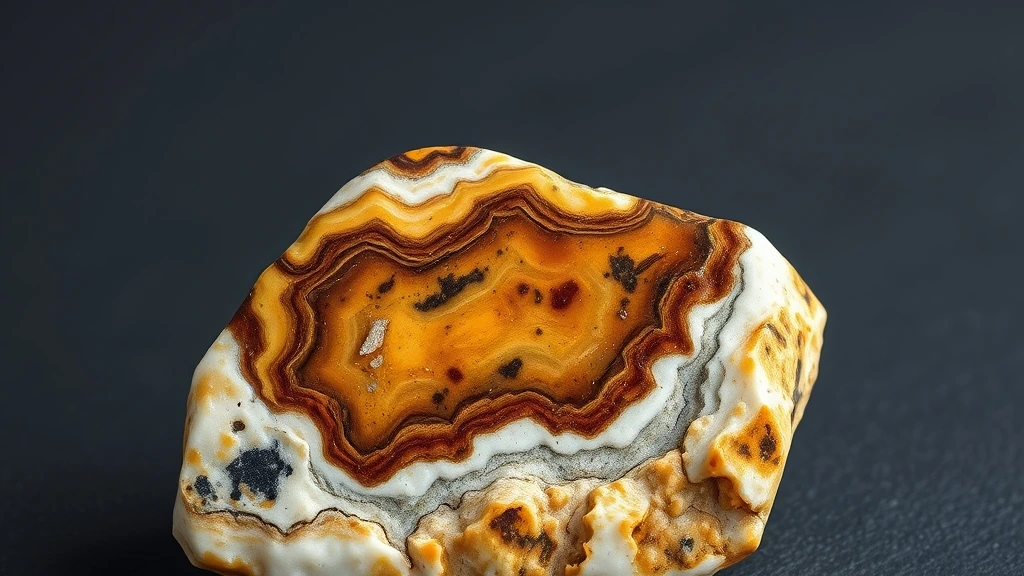
Bumblebee Jasper belongs to the broader class of natural mineral crystals, specifically a form of chalcedony. As a microcrystalline quartz aggregate, it forms through silica precipitation in sedimentary environments, often within volcanic or marine settings. The stone’s distinctive banding results from alternating layers of silica and iron‑rich inclusions, creating a visually striking pattern that has attracted lapidaries for centuries. Its moderate density (2.60–2.65 g cm⁻³) and refractive index (1.530–1.544) reflect its composite nature, balancing the optical properties of quartz with the darker iron oxides.
What is Bumblebee Jasper? Geological Overview & Definition
Bumblebee Jasper is a microcrystalline quartz aggregate that incorporates iron oxides, giving it a characteristic amber‑gold hue with darker streaks. The stone is typically found in sedimentary or volcanic deposits where silica-rich fluids precipitate around iron‑laden inclusions, forming the distinctive banded pattern that resembles a bumblebee’s abdomen. Across ancient lapidary traditions, this gemstone has been prized for its warm coloration and perceived grounding properties. Its classification within the chalcedony family places it among other quartz varieties such as agate and onyx, yet its unique composition sets it apart.
Bumblebee Jasper Chemical Composition & Crystallographic Properties
The chalcedony component of Bumblebee Jasper crystallizes in the trigonal system, characterized by a single three‑fold rotational axis. This lattice structure is defined by a hexagonal close‑packed arrangement of silicon and oxygen atoms, with the quartz framework maintaining a consistent SiO₂ stoichiometry. Iron oxides (hematite and goethite) are incorporated as inclusions rather than as part of the crystal lattice, creating chromophore centers that absorb specific wavelengths and produce the stone’s golden tones. Because the iron oxides are not chemically bonded to the quartz matrix, the aggregate is acid‑resistant, though prolonged exposure to strong acids can leach the iron, altering the color. Thermal stability is high; the quartz framework withstands temperatures up to 1200 °C, while the iron oxides may undergo phase changes at elevated temperatures, potentially darkening the stone.
| Property | Specification |
|---|---|
| Mineral Group | Natural Mineral / Crystal |
| Chemical Formula | Composite: Chalcedony (SiO₂), Chert, and Iron Oxides (Hematite/Goethite) |
| Mohs Hardness | 6.5 – 7.0 |
| Crystal System | Trigonal (Chalcedony component) |
| Specific Gravity (Density) | 2.60 – 2.65 |
| Refractive Index | 1.530 – 1.544 |
| Color & Optical Properties | Natural Bumblebee Jasper color spectrum and optical dispersion |
| Primary Mining Localities | Global primary localities |
| Water & Chemical Resistance | High (Safe for gentle water washing) |
| Chakra Alignment (Traditional) | Root Chakra, Sacral Chakra |
| Zodiac Affinity (Traditional) | Taurus, Virgo, Capricorn |
| Symbolic Meaning (Traditional) | Grounding, stability, protection, and emotional resilience |
Bumblebee Jasper Varieties & Color Spectrum
Bumblebee Jasper is a composite stone primarily composed of Chalcedony and chert, distinguished by its unique banding patterns. The characteristic yellow and brown stripes result from alternating layers of silica and Iron Oxides like hematite. These geological formations create a visual texture reminiscent of a honeycomb, which defines the stone’s identity. While Bumblebee Jasper’s distinct honeycomb patterns are formed by alternating layers of silica and iron oxides, its close relative Moss Agate shares a similar chert-based composition but is defined by its intricate, plant-like inclusions that create a completely different visual narrative.
Classic Bumblebee Jasper
This primary variety features distinct, parallel bands of golden yellow and dark brown. The coloration arises from the deposition of Goethite within the silica matrix during formation. It is the most commercially available type, prized for its consistent, honey-like appearance. In comparative mineralogical collections, practitioners and geologists frequently study Yemeni Agate Aqeeq alongside this crystal to appreciate their subtle energetic and structural differences.
Green Bumblebee Jasper
Rare specimens exhibit greenish hues due to the presence of Chlorite or other green mineral inclusions. This morph is significantly less common than the classic yellow-brown variant. Collectors value these stones for their deviation from the standard chromatic palette.
Black Bumblebee Jasper
This variety displays deep, dark bands that contrast sharply with lighter yellow sections. The intense darkness is attributed to high concentrations of Carbonaceous material or dense iron oxides. It offers a dramatic, high-contrast aesthetic preferred in bold jewelry designs.
Mottled Bumblebee Jasper
Unlike the linear banding of classic types, this variety shows irregular, patchy color distributions. The Isotropic nature of the chalcedony allows for these complex, non-linear patterns. It is often considered more unique due to its lack of repetitive striping.
Reddish-Brown Bumblebee Jasper
This morph features warmer, rust-colored bands instead of the typical golden yellow. The hue shift is caused by higher levels of Hematite oxidation within the chert layers. It provides a deeper, earthy tone that appeals to traditional lapidary preferences.
Where is Bumblebee Jasper Found? Geological Mining & Extraction
Bumblebee Jasper forms within Pegmatite dikes and sedimentary chert deposits, where silica-rich fluids cool slowly. The primary source is the Cerrado region of Brazil, specifically the state of Minas Gerais. These geological settings provide the necessary pressure and mineral composition for banding.
Extraction involves open-pit mining, where large blocks are removed and cut into rough slabs. The stone is then polished to reveal the internal Banding Structure. While other regions produce similar cherts, Brazilian deposits remain the global standard for quality and consistency.
Historical Significance & Cultural Lore of Bumblebee Jasper
Ancient civilizations valued banded cherts for their durability and visual appeal in ceremonial objects. In Greco-Roman contexts, similar jasper varieties were used in intaglio carvings and protective amulets. These artifacts often depicted mythological scenes, highlighting the stone’s cultural importance.
In Vedic traditions, jasper was associated with the earth element and physical vitality. Archaeological records from Mesopotamia reveal its use in seal stones and trade goods. The stone’s enduring legacy lies in its role as a symbol of stability and grounding.
Modern Uses & Jewelry Applications of Bumblebee Jasper
Bumblebee Jasper is prized for its vibrant yellow‑gold matrix and contrasting black veins, making it a favorite for both contemporary and artisanal lapidary work. Skilled cutters often shape the stone into smooth cabochons that showcase its natural pattern, while selective faceting highlights its subtle translucency. In addition to rings and pendants, the material is carved into ornamental beads, small figurines, and decorative inlays for furniture or architectural accents.
- Cabochon pendants that emphasize the stone’s honey‑like hue
- Faceted rings that play with light on the iron‑oxide inclusions
- Carved beads for mala necklaces or beaded bracelets
- Ornamental plaques and small sculptures for interior décor
Metaphysical Properties & Traditional Meaning of Bumblebee Jasper
According to historical traditions and metaphysical lore, Bumblebee Jasper is associated with grounding energy that stabilizes the wearer’s physical and emotional foundation. Across ancient Mediterranean lapidary practices, the stone was believed to protect against negativity and to foster resilience during periods of change. Vedic references describe it as a catalyst for inner strength, encouraging perseverance and a steady heart. In general lapidary folklore, the stone’s bright bands symbolize the union of light and shadow, reminding the bearer to balance optimism with realistic outlooks.
Which Chakra and Zodiac Signs Align with Bumblebee Jasper?
The stone resonates strongly with the Root Chakra, anchoring personal energy to the Earth and promoting a sense of security. It also activates the Sacral Chakra, enhancing creativity and emotional flow, which supports the stone’s reputation for nurturing stability and passion alike.
In astrological alignment, Bumblebee Jasper is traditionally linked to the Earth signs of Taurus, Virgo, and Capricorn. These signs share qualities of practicality, endurance, and methodical progress, mirroring the gemstone’s reputed ability to foster steadfastness and reliable action.
How to Identify Real vs. Fake Bumblebee Jasper
Artificial imitations of Bumblebee Jasper often include dyed chalcedony, colored glass, or resin composites that mimic its distinctive banding. Synthetic glass may display a uniform sheen and lack the natural iron‑oxide inclusions, while dyed replicas can exhibit overly bright, unnatural coloration that fades under prolonged light exposure. Recognizing these differences requires careful visual and tactile assessment.
Practical At-Home Authenticity Tests
- Temperature Test (Thermal Feel): Natural Jasper feels cool to the touch initially and gradually warms, whereas glass or plastic retains a room‑temperature feel.
- Specific Gravity & Weight Test: Real Bumblebee Jasper weighs about 2.60–2.65 g/cm³; a noticeably lighter stone may indicate glass or resin.
- Scratch & Hardness Test (Mohs Comparison): Use a steel file (hardness ~5.5); genuine Jasper (6.5–7.0) resists scratching, while softer imitations will show marks.
- Microscopic & Loupe Inspection (Internal Inclusions): Under 10× magnification, authentic Jasper reveals fine, irregular iron‑oxide specks and natural fracture patterns, unlike the uniform bubbles or smooth surfaces of synthetic glass.
Bumblebee Jasper Valuation Factors, Grading & Pricing
The market value of bumblebee jasper hinges first on color saturation. Stones that exhibit a vivid, evenly distributed honey‑gold hue with contrasting black or brown swirls command premium prices, as their visual vibrancy signals both aesthetic appeal and a robust energetic luster.
Second, crystal size and weight play a decisive role. Larger, heavier specimens—measured in grams—are preferred, especially when they retain their natural matrix inclusions. Whether the stone is raw or has undergone a gentle tumble polish, its overall mass and the integrity of its surface finish determine its desirability among collectors and holistic practitioners alike.
Finally, ethical sourcing and locality premium influence pricing. Stones extracted from responsible, traceable deposits are valued higher, reflecting the growing demand for sustainably mined minerals. Provenance from renowned jasper beds, such as those in the United States or the United Kingdom, can add a significant premium in both the holistic and collector markets.
How to Clean and Care for Bumblebee Jasper
Cleaning bumblebee jasper should be performed with warm soapy water and a soft cloth. Gently wipe the stone’s surface, ensuring no abrasive materials are used, and then dry it thoroughly with a clean, dry microfiber cloth. Avoid ultrasonic cleaners, as the vibration can induce microfractures in the chalcedony matrix.
Cleansing and Recharging Bumblebee Jasper (Energetic Care)
To cleanse the energetic charge of bumblebee jasper, place the stone in a quiet space and allow it to absorb gentle moonlight for several hours; this natural illumination helps reset its vibrational field without exposing it to harmful heat. Alternatively, surround the jasper with a selenite charging slab and leave it overnight; the selenite’s subtle electromagnetic influence will gently recharge the stone’s grounding properties while preserving its crystal lattice integrity.
Frequently Asked Questions About Bumblebee Jasper
Bumblebee Jasper displays distinct mineralogical characteristics across its geological varieties and structural habits. Gemologists evaluate these natural varieties based on crystal habit, trace chromophore concentrations, and visual luster.
Primary Natural Bumblebee Jasper
The benchmark natural variety exhibiting diagnostic color saturation and classic crystallographic symmetry.
Distinct Geological Morphs of Bumblebee Jasper
Secondary regional and structural varieties formed under localized geological temperature and pressure conditions.
Is Bumblebee Jasper safe to wear in the shower?
Yes, it is safe for gentle water exposure. As a dense variety of chalcedony, it possesses high water resistance. You can wear it during brief showers without fear of dissolution or structural damage. However, avoid prolonged soaking in hot water to preserve the integrity of any surface treatments or inclusions.
How should I clean Bumblebee Jasper jewelry?
Use warm soapy water and a soft cloth. This gentle method effectively removes oils and dirt without harming the stone. Avoid ultrasonic cleaners entirely, as the high-frequency vibrations can cause micro-fractures in the composite structure. A soft-bristled brush helps clean intricate carvings or textured surfaces safely.
What is the Mohs hardness of Bumblebee Jasper?
It measures between 6.5 and 7.0 on the Mohs scale. This places it firmly in the quartz family, making it durable for everyday wear. It resists scratches from common materials like steel or glass. This high hardness ensures the stone maintains its polish and structural integrity over time.
Which zodiac signs are compatible with Bumblebee Jasper?
Taurus, Virgo, and Capricorn are the primary alignments. These earth signs resonate with the stone’s grounding energy and stability. The mineral’s earthy tones and structural density complement the practical nature of these zodiac profiles. Wearing it can enhance their natural connection to physical and emotional balance.
Which chakras does Bumblebee Jasper activate?
It primarily activates the Root and Sacral Chakras. The stone’s deep orange and brown hues correspond to these lower energy centers. It promotes grounding and emotional resilience, anchoring the wearer to the present moment. This alignment supports stability and a sense of security in daily life.
What is the chemical composition of Bumblebee Jasper?
It is a composite of chalcedony, chert, and iron oxides. The base material is silicon dioxide (SiO₂), providing its quartz-like properties. Hematite and goethite inclusions create the distinctive honeycomb pattern. This unique mixture gives the stone its characteristic bumblebee-like appearance and coloration.
Can I use an ultrasonic cleaner on this stone?
No, you must avoid ultrasonic cleaners. The intense vibrations can propagate existing micro-fractures within the composite structure. This risk is higher due to the iron oxide inclusions that create the pattern. Stick to manual cleaning with warm soapy water and a soft cloth to ensure longevity.
Does Bumblebee Jasper have a specific crystal system?
The chalcedony component crystallizes in the trigonal system. While the stone appears massive and non-crystalline to the naked eye, its microscopic structure follows this pattern. This trigonal arrangement contributes to its optical properties and refractive index. Understanding this helps in identifying authentic specimens versus synthetic imitations.