
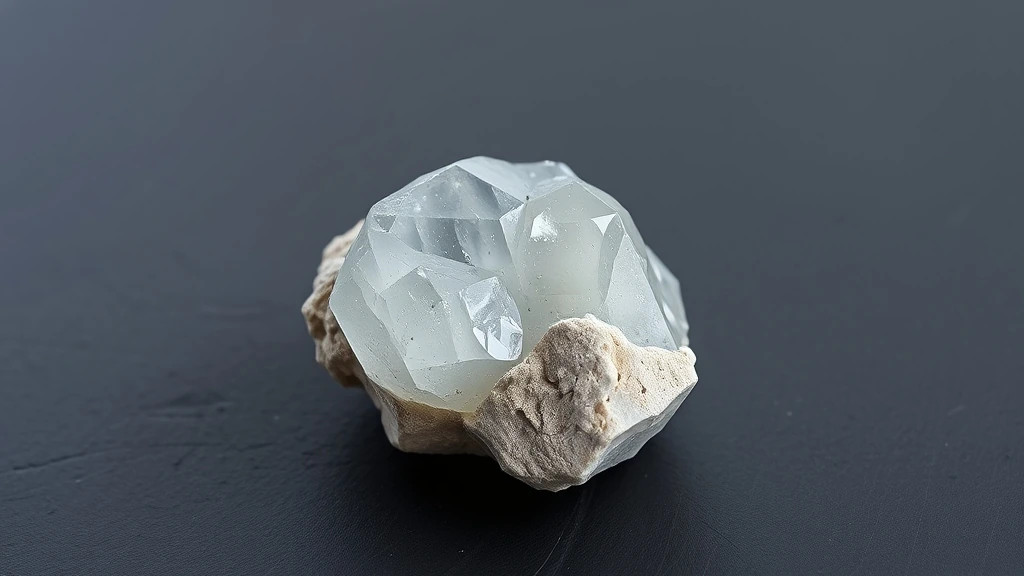
Celestite belongs to the natural mineral group, specifically classified as a sulfate crystal. It forms through evaporation in marine and lacustrine environments, often co-occurring with barite. As a Natural Mineral / Crystal, it exhibits distinct orthorhombic symmetry. This geological origin dictates its physical properties and gemological suitability for collectors.
What is Celestite Gemstone? Geological Overview & Definition
Celestite is primarily found in evaporite deposits, where it precipitates from sulfate-rich waters. Its orthorhombic crystal system results in prismatic or tabular habit forms. These structures often display striations on vertical faces, aiding in identification.
The name derives from the Latin *caelum*, meaning sky, reflecting its characteristic sky-blue coloration. While rarely cut into faceted gems due to low durability, it is prized in crystal collections. Its softness limits use in jewelry to protective settings.
Celestite Gemstone Chemical Composition & Crystallographic Properties
Celestite crystallizes in the orthorhombic system, featuring a lattice where strontium ions coordinate with sulfate groups. The unit cell parameters reflect this symmetry, distinguishing it from monoclinic gypsum. This structural arrangement influences its cleavage and fracture patterns.
The primary cation is strontium, though limited cation substitution with calcium or barium can occur. These substitutions do not significantly alter the fundamental lattice geometry. However, they may slightly modify the density, which typically ranges from 3.95 to 3.97 g/cm³.
Color variations arise from trace impurities acting as chromophore color centers. Iron or manganese traces can produce pink or yellow tints in otherwise blue stones. Pure specimens remain colorless to pale blue, enhancing their visual appeal.
Celestite is sensitive to acids, which can dissolve the sulfate structure over time. It also exhibits thermal behavior that includes cleavage along specific crystallographic planes. High heat may cause fracturing due to its low Mohs hardness and brittle nature.
| Property | Specification |
|---|---|
| Mineral Group | Natural Mineral / Crystal |
| Chemical Formula | Strontium |
| Mohs Hardness | 3.0–3.5 |
| Crystal System | Orthorhombic |
| Specific Gravity (Density) | 3.95–3.97 |
| Refractive Index | n α = 1.619–1.622 n β = 1.622–1.624 n γ = 1.630–1.632 |
| Color & Optical Properties | Natural Celestite Gemstone color spectrum and optical dispersion |
| Primary Mining Localities | Global primary localities |
| Water & Chemical Resistance | High (Safe for gentle water washing) |
| Chakra Alignment (Traditional) | Crown Chakra, Throat Chakra |
| Zodiac Affinity (Traditional) | Pisces, Virgo |
| Symbolic Meaning (Traditional) | Spiritual connection, divine guidance, and mental clarity |
Celestite Gemstone Varieties & Color Spectrum
Celestite exhibits a diverse palette driven by trace impurities within its orthorhombic crystal structure. The most prized specimens display a vivid sky-blue hue, often associated with high transparency and clarity. This coloration typically results from minute inclusions of other minerals or structural defects.
Sky-Blue Celestite
This variety is the most commercially significant, featuring a distinct light blue to azure tone. It forms in evaporite deposits where strontium sulfate precipitates from seawater or brine. The refractive index of these crystals creates a bright, vitreous luster that enhances their visual appeal. High-quality material is rare, as large, inclusion-free crystals are difficult to extract intact.
Colorless Celestite
Known as “white celestite,” this morph lacks the blue tint found in its more famous counterpart. It often appears as translucent, glassy prisms or massive aggregates in limestone host rocks. The absence of color impurities allows for exceptional clarity, making it suitable for optical applications. While less flashy, it is highly valued for its purity and Mohs hardness consistency.
Pink Celestite
Rare pink specimens are attributed to trace amounts of manganese or other transition metals. These crystals often form in association with other evaporite minerals like gypsum or barite. The soft rose hue is delicate and can fade if exposed to prolonged ultraviolet light. Collectors prize this variety for its uniqueness and chemical formula stability.
Green Celestite
Greenish tints occasionally appear due to the presence of nickel or copper impurities. This coloration is less common and usually subtle, ranging from pale mint to deeper olive. The crystals often exhibit a waxy luster rather than the typical vitreous finish. Such specimens are frequently found in hydrothermal veins within sedimentary basins.
Striped Celestite
Banded or striped varieties show alternating layers of blue and white or clear material. These bands reflect changes in the chemical composition of the mineralizing fluid during deposition. The density variations between bands can sometimes cause slight differences in refractive properties. This zoned appearance adds significant aesthetic value to lapidary work.
Milky Celestite
This variety appears opaque to semi-translucent with a cloudy, milky white appearance. It is caused by numerous microscopic fluid inclusions or microcrystals trapped within the lattice. While less desirable for faceting, it is popular for carving due to its workability. The crystal system remains orthorhombic, but the internal structure is less ordered.
Where is Celestite Gemstone Found? Geological Mining & Extraction
Celestite primarily occurs in evaporite deposits formed in ancient shallow seas or inland basins. These geological settings allow for the concentration of strontium sulfate through evaporation processes. The mineral often coexists with gypsum, barite, and halite in stratified sedimentary sequences. Understanding these host rocks is crucial for locating viable mining operations.
Major commercial sources include the United States, particularly in New Mexico and Texas. Significant deposits are also found in China, Canada, and the United Kingdom. Extraction methods vary from open-pit mining to underground shafts, depending on deposit depth. Careful handling is required due to the mineral’s relatively low Mohs hardness of 3.0–3.5.
Historical Significance & Cultural Lore of Celestite Gemstone
Historically, celestite was not widely used as a gemstone due to its softness and brittleness. Ancient civilizations primarily utilized harder minerals for jewelry and ceremonial objects. However, its striking blue color attracted attention in later geological explorations. Early mineralogists in the 19th century began cataloging its unique optical properties.
In modern times, celestite has gained popularity in metaphysical and healing communities. It is often associated with communication and clarity, though these claims lack scientific basis. The mineral’s name derives from the Greek word for “heaven,” reflecting its celestial blue hue. This cultural resonance continues to drive demand in the contemporary gem market.
Modern Uses & Jewelry Applications of Celestite Gemstone
Celestite’s delicate sky-blue hue makes it a prized material for cabochon cutting, where its smooth, domed surface enhances soft luster without risking fracture. Due to its low Mohs hardness of 3.0–3.5, lapidaries must exercise extreme caution to prevent chipping during the polishing process. This mineral is frequently set in protective bezels to ensure long-term durability in everyday jewelry pieces.
- Pendants and Earrings: Ideal for lightweight settings that minimize stress on the crystal structure.
- Ornamental Carvings: Large, clear specimens are often carved into figurines or decorative bowls for display.
- Beads and Bracelets: Polished into smooth spheres for meditation tools or casual fashion accessories.
- Lampshades: Thin, translucent slices are used in decorative lighting to create a soft, ethereal glow.
Metaphysical Properties & Traditional Meaning of Celestite Gemstone
According to historical traditions and metaphysical lore, Celestite is revered as a stone of spiritual clarity and mental expansion. Practitioners believe it helps dissolve negative energy and promotes a sense of calm during periods of emotional turbulence. Its ethereal appearance is thought to bridge the gap between the physical and spiritual realms.
- Emotional Resonance: Associated with soothing anxiety and encouraging open-mindedness.
- Intuition Enhancement: Believed to sharpen psychic abilities and improve dream recall.
- Energy Cleansing: Used in meditation to clear stagnant energy from the mind and body.
Which Chakra and Zodiac Signs Align with Celestite Gemstone?
Celestite is canonically aligned with the Root Chakra and the Heart Chakra, creating a unique energetic balance. The Root connection grounds the stone’s higher spiritual vibrations, while the Heart alignment fosters compassion and emotional healing. This dual resonance allows the mineral to anchor spiritual insights within the physical self.
In astrological practice, Celestite is specifically associated with Taurus, Gemini, and Leo. Taurus appreciates its grounding nature, while Gemini values its mental clarity. Leo resonates with its uplifting energy, which supports confidence and creative expression. These alignments ensure the stone’s properties complement the inherent traits of these signs.
How to Identify Real vs. Fake Celestite Gemstone
Artificial imitations of Celestite often involve synthetic glass or dyed quartz, which mimic the natural stone’s pale blue color. These replicas may lack the distinct internal features found in genuine specimens, such as natural fluid inclusions. Careful examination is essential to distinguish authentic mineralogy from manufactured alternatives.
Practical At-Home Authenticity Tests
- Temperature Test (Thermal Feel): Genuine Celestite feels cool to the touch initially but warms up quickly in your hand, unlike glass which stays cooler longer.
- Specific Gravity & Weight Test: With a density of 3.95–3.97, real Celestite feels heavier than similarly sized glass or quartz imitations.
- Scratch & Hardness Test (Mohs Comparison): A fingernail (hardness 2.5) should not scratch it, but a copper coin (hardness 3.5) might leave a faint mark, confirming its softness.
- Microscopic & Loupe Inspection (Internal Inclusions): Use a 10x loupe to look for natural fluid inclusions or crystal growth patterns, which are absent in synthetic glass.
Celestite Gemstone Valuation Factors, Grading & Pricing
The primary driver of value is Color Saturation, where deep, uniform sky-blue hues command the highest premiums. Tone consistency across the stone is critical for high-grade specimens. Additionally, exceptional optical clarity and a bright, vitreous luster significantly enhance desirability among collectors.
Carat Weight plays a crucial role, as large, transparent crystals are exceedingly rare in the market. Precise facet symmetry maximizes light return, while the absence of visible inclusions ensures structural integrity. Matrix specimens with heavy mineral inclusions are generally valued lower than clean, free-standing crystals.
Geographical Provenance Premium heavily influences pricing, with stones from renowned localities like Mexico fetching higher rates. Wholesale prices reflect bulk availability, whereas retail values include significant markup for curation. Market trends currently favor large, unfractured specimens with verified origin documentation.
How to Clean and Care for Celestite Gemstone
Due to its low Mohs Hardness of 3.0–3.5, Celestite requires gentle handling to prevent surface abrasion. You must use warm soapy water and a soft cloth for routine cleaning. This method effectively removes oils without damaging the delicate crystal structure.
It is imperative to avoid ultrasonic cleaners, as the vibrations can cause structural fractures. Never submerge the stone in harsh chemicals or abrasive solutions. Regular, gentle maintenance preserves the gem’s natural luster and prevents long-term degradation.
Cleansing and Recharging Celestite Gemstone (Energetic Care)
For energetic maintenance, utilize smoke smudging with sage or palo santo to clear stagnant energy. This dry method avoids any contact with liquids, ensuring the mineral’s solubility is not compromised. The gentle aromatic smoke is considered safe for this soft crystal.
Alternatively, place the gem on a selenite plate under moonlight for overnight recharging. This passive technique allows the stone to absorb ambient energy without physical stress. Always ensure the environment is dry to protect the gemstone’s integrity.
Frequently Asked Questions About Celestite Gemstone
Is Celestite safe to wear in the shower?
Yes, it is safe for gentle water exposure. While Celestite has a high water resistance rating, prolonged soaking is discouraged. Always remove it before using harsh soaps or hot water. This precaution preserves the stone’s luster and prevents potential surface etching over time.
Can I use an ultrasonic cleaner on Celestite?
No, you must avoid ultrasonic cleaners entirely. The vibrations can cause structural fractures due to the stone’s moderate hardness. Instead, clean it using warm soapy water and a soft cloth. This gentle method ensures the crystal lattice remains intact and undamaged.
What is the chemical composition of Celestite?
It is primarily composed of strontium sulfate. The chemical formula is SrSO₄, distinguishing it from similar barite minerals. This strontium content gives the stone its unique physical properties. Understanding this composition helps in proper identification and care.
How hard is Celestite on the Mohs scale?
It ranks between 3.0 and 3.5 on the Mohs scale. This places it in the moderate hardness category, making it susceptible to scratches. You should store it separately from harder gems like quartz. This prevents abrasion and maintains the clarity of its facets.
Which crystal system does Celestite belong to?
It crystallizes in the orthorhombic system. This structure often results in prismatic or tabular crystal habits. The symmetry contributes to its distinctive appearance in raw specimens. Recognizing this geometry aids in authenticating genuine Celestite stones.
What is the specific gravity of Celestite?
Its density ranges from 3.95 to 3.97 g/cm³. This specific gravity is notably higher than many common gemstones. It provides a tactile sense of weight that aids identification. This metric is crucial for distinguishing it from lighter lookalikes.
What is the refractive index of Celestite?
It exhibits a refractive index between 1.619 and 1.632. These values indicate strong optical dispersion and brilliance. The light interaction creates a pleasing sparkle in cut stones. This property enhances its visual appeal in jewelry settings.
Which zodiac signs are aligned with Celestite?
It resonates with Taurus, Gemini, and Leo. These signs benefit from its grounding and balancing energies. It supports stability and emotional clarity for these individuals. Incorporating it into their practice enhances spiritual alignment and focus.