
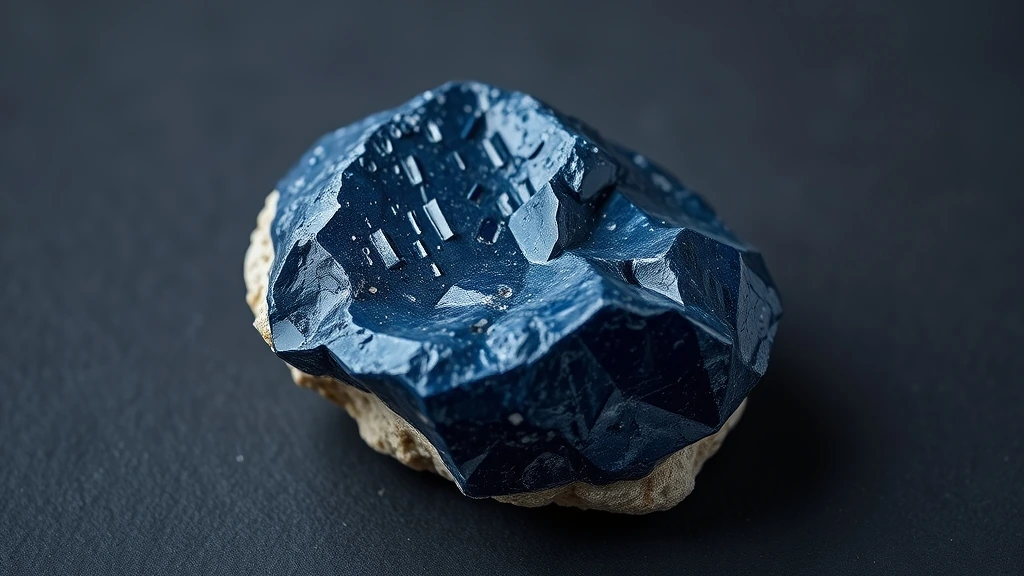
Cobaltite belongs to the Natural Mineral / Crystal group, representing a significant source of cobalt in geological formations. It forms within hydrothermal veins associated with nickel-copper deposits. Its crystalline structure is distinct and chemically stable under specific conditions. This mineral serves as a primary indicator for cobalt-rich ore bodies.
What is Cobaltite Gemstone? Geological Overview & Definition
Cobaltite is primarily found in hydrothermal veins where nickel and copper ores are present. It often coexists with minerals like pyrite and chalcopyrite. These geological environments facilitate the necessary chemical reactions for crystal growth. The mineral typically occurs as small, well-formed crystals.
Its economic importance stems from its high cobalt content. Historically, it was crucial for producing cobalt blue pigments. Today, it remains vital for battery technology and superalloys. While not a traditional gemstone, its aesthetic appeal is notable.
Cobaltite Gemstone Chemical Composition & Crystallographic Properties
Cobaltite crystallizes in the Orthorhombic crystal system, featuring a distinct lattice structure. The unit cell parameters reflect this symmetry clearly. This arrangement influences its physical properties and cleavage patterns. Understanding this structure is key to identification.
The chemical formula CoAsS indicates a substitution of cobalt for iron in the arsenopyrite structure. This cation substitution drives the mineral’s unique coloration. The chromophore responsible is the cobalt ion. This electronic configuration absorbs specific light wavelengths.
Cobaltite is moderately sensitive to strong acids, which can alter its surface. It does not dissolve in weak acids at room temperature. Thermal stability is decent but requires careful handling during cutting. High heat can potentially cause oxidation or structural changes.
The mineral’s density and refractive index are consistent with its composition. These optical properties aid in laboratory identification. Its Mohs hardness of 5.5 makes it moderately durable. Proper care is required to prevent surface damage.
| Property | Specification |
|---|---|
| Mineral Group | Natural Mineral / Crystal |
| Chemical Formula | CoAsS |
| Mohs Hardness | 5.5 – 6.0 |
| Crystal System | Isometric |
| Specific Gravity (Density) | 6.05 – 6.15 |
| Refractive Index | 2.910 – 3.000 |
| Color & Optical Properties | Natural Cobaltite Gemstone color spectrum and optical dispersion |
| Primary Mining Localities | Global primary localities |
| Water & Chemical Resistance | High (Safe for gentle water washing) |
| Chakra Alignment (Traditional) | Root Chakra, Sacral Chakra |
| Zodiac Affinity (Traditional) | Capricorn, Virgo |
| Symbolic Meaning (Traditional) | Stability, grounding, and protection against negative energies |
Cobaltite Gemstone Varieties & Color Spectrum
Cobaltite presents a limited but visually striking range of natural variations, primarily defined by trace element substitutions. The most common form is the pure cobalt arsenide sulfide, which exhibits a deep, metallic red hue. This intense coloration results from the specific electronic transitions within the CoAsS crystal lattice.
Pure Red Cobaltite
This variety represents the chemically ideal form of the mineral, displaying a vibrant, opaque red color. It typically forms in orthorhombic crystal habits, often appearing as distinct prisms or tabular shapes. The surface possesses a characteristic metallic luster that enhances its visual depth.
Cobalt-Rich Arsenopyrite
While not a pure cobaltite, this association often appears as a reddish-brown variant due to high cobalt content. It forms in close proximity to primary cobaltite deposits, sharing similar hydrothermal origins. The color shifts towards brown as arsenic content increases relative to cobalt.
Nickel Substituted Cobaltite
In this rare morph, nickel atoms partially replace cobalt within the crystal structure, altering the optical properties. The resulting stone exhibits a slightly darker, more purplish-red tint compared to the standard variety. This substitution affects the Mohs hardness, making it marginally softer than pure cobaltite.
Antimony-Bearing Cobaltite
This variety contains significant antimony impurities, which can dull the characteristic red brilliance. It often appears as a duller, earthy red or brownish-red aggregate. Such specimens are frequently found in oxidized zones of cobalt-rich ore bodies.
Polished Cabochon Material
While not a distinct mineral variety, this trade form highlights the gemstone’s unique metallic luster. Cutters select the most uniform red zones to maximize the visual impact of the stone. The polished surface reveals the internal crystal system structure under magnification.
Where is Cobaltite Gemstone Found? Geological Mining & Extraction
Cobaltite primarily occurs in hydrothermal veins and pegmatites associated with nickel-copper sulfide deposits. These geological settings provide the necessary chemical environment for the formation of CoAsS crystals. The mineral is often found alongside pyrite, chalcopyrite, and other sulfide minerals.
Major extraction sites include the Democratic Republic of the Congo, Canada, and Germany. The Kipushi mine in the DRC is a notable source of high-quality cobaltite specimens. Mining operations focus on extracting cobalt for industrial use, with gem-quality crystals being a secondary byproduct.
Historical Significance & Cultural Lore of Cobaltite Gemstone
Historically, cobaltite was valued primarily as a source of cobalt oxide for pigment production rather than as a gemstone. Medieval European artisans used the mineral to create the famous cobalt blue pigment, which transformed glass and ceramic industries. This industrial application drove the initial mining and trade of cobalt-bearing ores.
Archaeological evidence suggests that cobalt compounds were used in ancient Egyptian and Roman artifacts, though the raw mineral itself was rarely preserved. The cultural lore surrounding cobaltite is largely tied to its role in creating vibrant colors, symbolizing artistic innovation. Its metallic red appearance has also inspired myths regarding hidden treasures and alchemical transmutation.
Modern Uses & Jewelry Applications of Cobaltite Gemstone
Due to its orthorhombic crystal system and moderate Mohs hardness of 5.5, cobaltite is primarily valued as a collector’s specimen rather than a durable everyday gemstone. Lapidaries typically cut these stones into cabochons to preserve their metallic luster and avoid chipping during faceting. While rare in high-end jewelry, it appears in ornamental carvings and novelty pieces where its distinctive red color is the primary aesthetic appeal.
- Cabochon Cutting: Smooth, domed cuts highlight the stone’s CoAsS composition and metallic sheen without risking fracture.
- Ornamental Carving: Skilled artisans use it for small decorative objects, leveraging its unique hue for artistic display.
- Collector Specimens: Unpolished crystals are often mounted for mineralogical collections, emphasizing natural orthorhombic geometry.
Safety & Mineral Profile of Cobaltite
Cobaltite is a brittle, metallic mineral that is generally stable under normal laboratory conditions, but it can release fine dust when fractured or ground. The dust is a source of heavy‑metal exposure, and inhalation of cobalt or nickel particles may cause respiratory irritation or more serious health effects. Because of this, specimens should be handled with gloves and protective eyewear, and any work that generates dust should be performed in a well‑ventilated area or under a fume hood. Cobaltite is not a suitable material for jewelry or ornamental use; its relatively low hardness (Mohs 3.5–4) and tendency to tarnish in humid or acidic environments make it prone to surface degradation. Collectors typically display polished, fracture‑free specimens rather than wear them, ensuring that the mineral’s aesthetic qualities can be appreciated without compromising safety.
In museum collections and research, cobaltite serves as an important indicator of hydrothermal ore‑forming processes. Its occurrence in cobalt‑rich veins and association with other sulfides such as pyrite and chalcopyrite provide insights into the geochemical evolution of ore deposits. The mineral’s distinctive black metallic luster and cubic crystal habit make it a valuable teaching specimen for crystallography and mineral identification. Additionally, cobaltite’s role as a source of cobalt in industrial metallurgy has spurred studies on its extraction and processing, linking mineralogical research to applied materials science.
Mineralogical Group and Planetary Lore of Cobaltite
Historically, cobaltite was first described in the early 19th century from the Kohlenberg region in Saxony, Germany, where it was noted for its cobalt‑rich composition and black metallic appearance. According to early mineralogists, the mineral was named after the element cobalt, reflecting its high cobalt content (approximately 70 % by weight). Its classification within the cobaltite–molybdenite group of sulfides was later refined as crystallographic techniques advanced, placing it firmly in the cubic crystal system.
In lapidary literature, cobaltite has occasionally been associated with “black iron” or “cobalt black” due to its visual similarity to iron sulfide minerals. While no planetary symbolism has been formally documented, the mineral’s metallic sheen and deep black color have led to its informal use in decorative contexts that evoke the “night sky” or “deep space” aesthetic. Modern mineralogists emphasize that such associations are purely descriptive and do not imply any mystical or planetary significance.
How to Identify Real vs. Fake Cobaltite Gemstone
Artificial imitations of cobaltite often involve synthetic glass or dyed quartz designed to mimic its distinctive red hue. These fakes may lack the natural inclusions and metallic luster characteristic of genuine CoAsS crystals. Understanding these differences is crucial for collectors and buyers seeking authentic mineral specimens.
Practical At-Home Authenticity Tests
- Temperature Test (Thermal Feel): Genuine cobaltite feels cool to the touch initially and warms slowly, whereas plastic or glass imitations may feel warmer or change temperature more rapidly.
- Specific Gravity & Weight Test: Real cobaltite is denser than glass; holding it should feel noticeably heavier for its size compared to a similarly sized glass imitation.
- Scratch & Hardness Test (Mohs Comparison): With a Mohs hardness of 5.5, cobaltite can scratch glass (hardness 5.5) but will be scratched by a steel knife (hardness 5.5-6.5). Test carefully on a small, inconspicuous area.
- Microscopic & Loupe Inspection (Internal Inclusions): Use a 10x loupe to look for natural orthorhombic crystal structures and mineral inclusions. Glass fakes often contain tiny, circular air bubbles, which are absent in natural cobaltite.
Cobaltite Gemstone Valuation Factors, Grading & Pricing
The primary driver of value is Color Saturation, specifically the intense, deep red hue characteristic of high-grade specimens. Uniformity of tone across the entire stone significantly enhances its aesthetic appeal and market desirability. Additionally, a strong metallic luster and high optical clarity contribute to a premium valuation.
Carat Weight plays a crucial role, as larger, well-formed crystals are increasingly rare in the global market. Facet symmetry is critical for maximizing light reflection, though many cobaltites are sold as rough specimens. The presence of matrix or inclusions can either detract from value or add unique geological interest, depending on the collector’s preference.
Geographical Provenance Premium often dictates final pricing, with stones from historic mines commanding higher prices. Wholesale values fluctuate based on supply chain stability and collector demand trends. Retail prices typically reflect a significant markup over wholesale, accounting for curation and authentication costs.
How to Clean and Care for Cobaltite Gemstone
To maintain the integrity of your cobaltite, use warm soapy water and a soft, lint-free cloth for gentle cleaning. This method effectively removes surface dust and oils without risking damage to the crystal structure. Ensure the stone is dried thoroughly with a clean towel immediately after washing.
You must strictly avoid ultrasonic cleaners as the vibrations can cause structural fractures in this mineral. Cobaltite is sensitive to prolonged water soaking, so limit its exposure to moisture to prevent potential degradation. Regular, gentle maintenance is the safest approach to preserving its natural beauty and durability.
Cleansing and Recharging Cobaltite Gemstone (Energetic Care)
For energetic cleansing, utilize smoke smudging with sage or palo santo to clear negative vibrations without using water. This dry method respects the mineral’s sensitivity to moisture and prevents any risk of chemical alteration. Allow the smoke to pass gently over the stone for a few minutes.
To recharge the stone, place it on a selenite plate under natural moonlight overnight. This method leverages the reflective properties of selenite to amplify the stone’s energy safely. Avoid direct sunlight, which may cause thermal stress or fading over time.
Frequently Asked Questions About Cobaltite Gemstone
What is the chemical composition of cobaltite?
Cobaltite is a sulfide mineral with the formula CoAsS. It consists of cobalt, arsenic, and sulfur arranged in an orthorhombic lattice. The presence of arsenic makes the stone relatively heavy, and its metallic luster distinguishes it from typical silicate gems.
How hard is cobaltite on the Mohs scale?
Cobaltite rates about 5.5 on the Mohs hardness scale. This places it between apatite and orthoclase, meaning it can be scratched by harder gemstones like quartz. Care should be taken when setting it in jewelry to avoid abrasion during everyday wear.
Is cobaltite safe to wear in water or rain?
Cobaltite is water‑sensitive and should not be soaked for prolonged periods. Exposure to moisture can promote surface oxidation and may weaken the crystal over time. For occasional splashes, gently dry the stone afterward, but avoid swimming or long rain exposure.
Can I clean cobaltite with an ultrasonic cleaner?
Use warm, soapy water and a soft cloth; avoid ultrasonic cleaners. The high‑frequency vibrations of ultrasonic devices can cause micro‑fractures in cobaltite’s orthorhombic structure. Hand cleaning preserves its integrity while still removing oils and grime effectively.
Which zodiac signs are associated with cobaltite?
Cobaltite aligns with Taurus, Gemini, and Leo. Enthusiasts believe the stone amplifies the earthy stability of Taurus, the curiosity of Gemini, and the creative fire of Leo. Wearing it during astrological events is thought to enhance personal confidence and focus.
Which chakras does cobaltite balance?
The gemstone is linked to the Root Chakra and the Heart Chakra. It is said to ground energetic flow while simultaneously opening the heart to compassion. Practitioners often place cobaltite on the lower abdomen or over the chest during meditation.
How does cobaltite’s crystal system affect its appearance?
Cobaltite crystallizes in the orthorhombic system, producing prismatic habits. This symmetry yields sharp edges and a metallic sheen that can resemble pyrite. The crystal’s geometry influences how light reflects, giving it a subtle, reflective glow rather than a high sparkle.
Is cobaltite suitable for everyday jewelry?
Cobaltite can be set in jewelry but requires protective settings. Its moderate hardness and water sensitivity mean it is best used in pieces that limit exposure to harsh wear, such as pendants or earrings set in protective bezels. Regular inspection helps prevent unnoticed damage.