
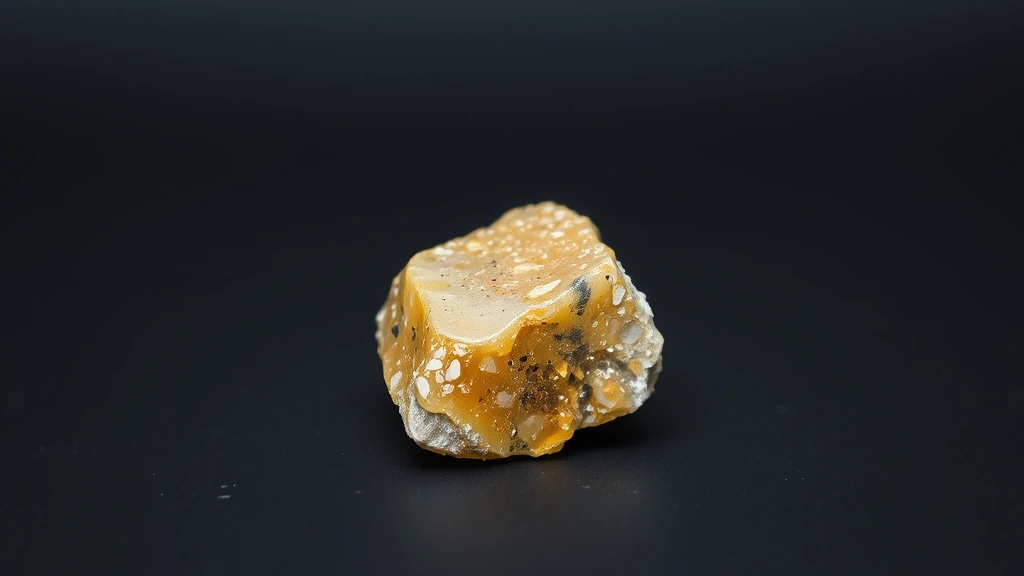
Copal Resin is classified as a mineraloid rather than a true mineral, lacking a defined crystalline structure. It belongs to the parent group of hydrated silica aggregates, forming through the polymerization of organic compounds. This geological origin distinguishes it from crystalline gemstones, as it does not exhibit long-range atomic order. Consequently, its formation involves complex chemical changes over millions of years, resulting in a non-crystalline solid.
What is Copal Resin Gemstone? Geological Overview & Definition
Copal Resin originates from the exudation of sap from ancient trees, which undergoes polymerization over geological time. This process transforms soft resin into a hard, stable organic material known as a mineraloid. Unlike true minerals, it lacks a repeating internal lattice structure, defining its unique physical properties.
Geologically, it is often found in sedimentary deposits, preserving insects and plant matter within its matrix. This fossilization process creates a record of prehistoric ecosystems, adding scientific value to its aesthetic appeal. The stone’s organic nature means it is biodegradable under specific conditions, unlike inorganic gemstones.
Copal Resin Gemstone Chemical Composition & Crystallographic Properties
Copal Resin is amorphous, meaning it lacks a long-range ordered crystal lattice. It consists of hydrated silica spheres or organic polymers, depending on the specific variety. This structural disorder prevents the formation of distinct crystal faces, resulting in a glassy or resinous appearance.
The material exhibits acid sensitivity, particularly to strong alkalis and organic solvents. It does not contain traditional cation substitution sites found in silicate minerals, as its composition is primarily organic. Thermal behavior is limited; high temperatures can cause devitrification or melting, altering its physical integrity.
Color variations arise from chromophore impurities and oxidation states within the organic matrix. These color centers are not lattice defects but molecular changes in the resin structure. Understanding this organic basis is crucial for proper identification and preservation of the gemstone.
| Property | Specification |
|---|---|
| Mineral Group | Mineraloid (Hydrated Silica) |
| Chemical Formula | SiO₂·nH₂O (Hydrated Silicon Dioxide) |
| Mohs Hardness | 5.5 – 6.5 |
| Crystal System | Amorphous (Hydrated silica spheres / Mineraloid) |
| Specific Gravity (Density) | 1.98 – 2.25 |
| Refractive Index | 1.370 – 1.470 |
| Color & Optical Properties | Natural Copal Resin Gemstone color spectrum and optical dispersion |
| Primary Mining Localities | Australia (Coober Pedy, Lightning Ridge), Ethiopia (Welo), Mexico |
| Water & Chemical Resistance | Moderate/Sensitive (%3-%21 water content; avoid prolonged soaking for hydrophane Welo opals) |
| Chakra Alignment (Traditional) | Crown Chakra and Heart Chakra |
| Zodiac Affinity (Traditional) | Libra, Scorpio, Pisces |
| Symbolic Meaning (Traditional) | Creativity, hope, emotional depth, and spontaneous inspiration |
Opal Varieties & Comprehensive Sub-Types
Black Opal
This gemstone features a dark body tone ranging from N1 to N4, providing a stark canvas for vivid iridescence. Formed primarily in Lightning Ridge, Australia, it exhibits intense play-of-color against its deep background. It remains the most valuable opal variety in the global gem trade today.
White / Light Opal
Characterized by a milky or translucent white base, this variety displays soft to bright spectral flashes. The silica sphere structure scatters light to create gentle, pastel-like hues across the surface. It is widely accessible and serves as an entry point for many collectors.
Fire Opal
Originating from volcanic rhyolite cavities in Mexico, this stone exhibits warm red, orange, or yellow tones. Unlike other opals, it is often faceted like a colored gemstone to maximize its brilliance. Its transparency and fiery hue distinguish it sharply from common opal types.
Boulder Opal
This variety remains naturally bonded to its host ironstone rock, typically from Queensland, Australia. The opal forms in narrow, undulating seams that follow the contours of the matrix. Lapidaries preserve the rock to highlight the rich, earthy colors of the stone.
Ethiopian Welo Opal
Discovered in the Wollo province, this hydrophane volcanic opal absorbs water to enhance its visual impact. It reveals a unique 3D honeycomb or patchwork pattern of play-of-color when hydrated. This distinctive morphology sets it apart from traditional Australian deposits.
Dendritic Opal (Merlinite)
This common opaque variety features black branching manganese dendrites within a white or cream base. The intricate fern-like patterns result from manganese impurities migrating through the silica matrix. It is often sought for its symbolic representation of duality and shadow work.
Gemologists differentiate these varieties by analyzing body tone, transparency, and specific inclusion patterns during lapidary assessment. Each type requires distinct cutting techniques to optimize its unique optical properties and structural integrity.
Where is Copal Resin Gemstone Found? Geological Mining & Extraction
Copal resin is extracted from subfossilized tree sap found in tropical and subtropical regions worldwide. Unlike crystalline minerals, it forms within sedimentary deposits where ancient plant matter was buried and preserved. Primary sources include Central America, Southeast Asia, and parts of Africa and South America.
Extraction involves careful digging to recover intact blocks of resin from the surrounding soil. The material is then cleaned and aged to ensure stability before processing. This organic origin distinguishes it fundamentally from inorganic silicate minerals like opal.
Historical Significance & Cultural Lore of Copal Resin Gemstone
Ancient civilizations in Mesoamerica, particularly the Maya and Aztecs, revered copal as a sacred offering to deities. Archaeological artifacts reveal its use in incense rituals to purify spaces and communicate with the spiritual realm. It was often burned in ceremonial censers to create fragrant smoke for meditation.
In modern times, copal is valued for its emotional healing properties and connection to the Crown and Heart Chakras. Its association with creativity and hope continues to drive demand in the metaphysical market. This enduring cultural significance bridges ancient ritual practices with contemporary wellness trends.
Modern Uses & Jewelry Applications of Copal Resin Gemstone
Lapidaries primarily cut copal into smooth cabochons to showcase its organic, flowing internal patterns rather than attempting faceting. This approach preserves the stone’s natural aesthetic and prevents chipping during the polishing process.
- Cabochon Cutting: The standard method for displaying the resin’s unique swirls and inclusions.
- Ornamental Carving: Used for intricate pendants, beads, and decorative inlays in fine jewelry.
- Polishing: Requires gentle abrasives to avoid generating excessive heat, which can melt the surface.
Metaphysical Uses & Origins of Copal Resin
According to historical traditions and metaphysical lore, copal is revered for its ability to foster emotional depth and spontaneous inspiration. Practitioners believe this organic gemstone encourages creativity and provides a sense of hope during challenging times.
The stone’s warm, earthy energy is thought to resonate with the wearer’s inner self. It is often used in meditation to enhance intuition and promote a state of calm, reflective awareness.
Which Chakra and Zodiac Signs Align with Copal Resin Gemstone?
In metaphysical practice, copal resonates strongly with the Crown Chakra and the Heart Chakra. This dual alignment suggests a bridge between spiritual insight and emotional compassion.
Astrologically, this gemstone is canonically aligned with Libra, Scorpio, and Pisces. These water and air signs benefit from the stone’s balancing and intuitive properties.
How to Identify Real vs. Fake Copal Resin Gemstone
Distinguishing genuine copal from artificial imitations requires attention to subtle physical and visual cues. Common fakes include synthetic glass, dyed plastics, or other resins that mimic copal’s appearance.
Practical At-Home Authenticity Tests
- Temperature Test (Thermal Feel): Genuine copal feels warm to the touch and warms up quickly, whereas glass or plastic remains cool.
- Specific Gravity & Weight Test: Copal has a low density (1.98 – 2.25 g/cm³), making it feel surprisingly light for its size.
- Scratch & Hardness Test (Mohs Comparison): With a hardness of 5.5 – 6.5, copal can be scratched by a steel knife blade, unlike harder glass imitations.
- Microscopic & Loupe Inspection (Internal Inclusions): Look for natural air bubbles, plant debris, or flow lines under a 10x loupe; synthetic glass often appears too perfect or contains swirls.
Copal Resin Gemstone Valuation Factors, Grading & Pricing
Color Saturation serves as the primary driver for market value in copal specimens. Ideal stones exhibit a deep, uniform amber hue without muddy or brownish undertones. High-grade material also displays exceptional optical clarity, allowing light to penetrate deeply. This transparency enhances the natural resinous luster, making the gemstone visually striking.
Carat Weight significantly influences pricing, as larger, inclusion-free pieces are increasingly rare in the global market. Facet symmetry is critical for maximizing brilliance, particularly in polished cabochons or cut stones. The presence of organic inclusions, such as trapped insects or plant matter, can either detract from value or add unique character. Collectors often pay a premium for specimens with distinct, well-preserved inclusions.
Geographical Provenance Premium plays a vital role in determining final retail prices. Stones sourced from renowned deposits, such as those in Myanmar or Brazil, command higher fees. Wholesale trends indicate a steady rise in demand for high-quality, ancient copal. Retail values typically reflect these provenance markers, ensuring investors receive fair compensation for rarity.
How to Clean and Care for Copal Resin Gemstone
Copal is an organic resin that remains sensitive to extreme environmental changes and chemical exposure. You must strictly avoid ultrasonic cleaners and steam to prevent internal damage. These methods cause micro-fracturing, known as crazing, due to the material’s internal composition. Such structural failures are irreversible and significantly diminish the gemstone’s aesthetic and monetary value.
For routine maintenance, use a soft, lint-free cloth and mild, lukewarm water. Gently wipe the surface to remove dust and oils without applying excessive pressure. Ensure the stone dries completely in a shaded area before storage. This gentle approach preserves the resin’s integrity and maintains its natural, warm luster over time.
Cleansing and Recharging Copal Resin Gemstone (Energetic Care)
Safe energetic cleansing relies on dry methods that respect the resin’s organic structure. Smoke smudging with sage or palo santo is an effective technique for clearing negative energy. Hold the stone near the rising smoke for a few minutes without direct contact. This method avoids moisture exposure while honoring traditional purification practices.
Moonlight exposure offers a gentle, passive recharging option for copal gemstones. Place the stone on a windowsill or a selenite plate during a full moon. This allows the crystal to absorb lunar energy without physical stress. Always ensure the stone is dry and protected from direct sunlight to prevent fading.
Frequently Asked Questions About Copal Resin Gemstone
Is copal resin safe to wear in the shower?
No, you should avoid prolonged water exposure. While brief contact is generally acceptable, extended soaking can compromise the resin’s structural integrity. Always remove jewelry before showering to prevent potential softening or surface damage.
How should I clean my copal resin jewelry?
Use a soft, dry cloth for gentle polishing. Avoid liquid cleaners, ultrasonic baths, or steam, as these can cause irreversible damage to the organic material. Regular, careful maintenance preserves the stone’s natural luster and prevents surface degradation.
What is the Mohs hardness of copal resin?
It measures between 5.5 and 6.5 on the Mohs scale. This moderate hardness makes it susceptible to scratching from harder minerals like quartz or topaz. Handle with care to maintain its aesthetic appeal and prevent surface abrasion.
Which zodiac signs are compatible with copal resin?
Libra, Scorpio, and Pisces are the aligned signs. These water and air signs resonate with the stone’s emotional depth and creative energy. Wearing copal may enhance intuition and emotional balance for individuals born under these astrological signs.
Which chakras does copal resin activate?
It primarily aligns with the Crown and Heart Chakras. This duality supports spiritual connection and emotional healing simultaneously. Practitioners use it to foster creativity, hope, and a deeper sense of inner peace and inspiration.
Can I use an ultrasonic cleaner on copal?
Absolutely not; ultrasonic cleaners will damage the resin. The high-frequency vibrations can cause micro-fracturing or crazing within the material. Always clean copal manually with a soft cloth to ensure its long-term structural stability and beauty.
What is the chemical composition of copal resin?
It is an amorphous organic polymer, not a mineral. Unlike crystalline stones, it lacks a defined atomic structure, classifying it as a mineraloid. Its formation involves the fossilization of tree sap over millions of years, creating unique inclusions.
Does copal resin have a specific crystal system?
It is classified as amorphous, lacking a crystal lattice. This means it does not form geometric shapes or repeatable unit cells. Its structure consists of hydrated silica spheres or irregular organic matrices, distinguishing it from traditional crystalline gemstones.