
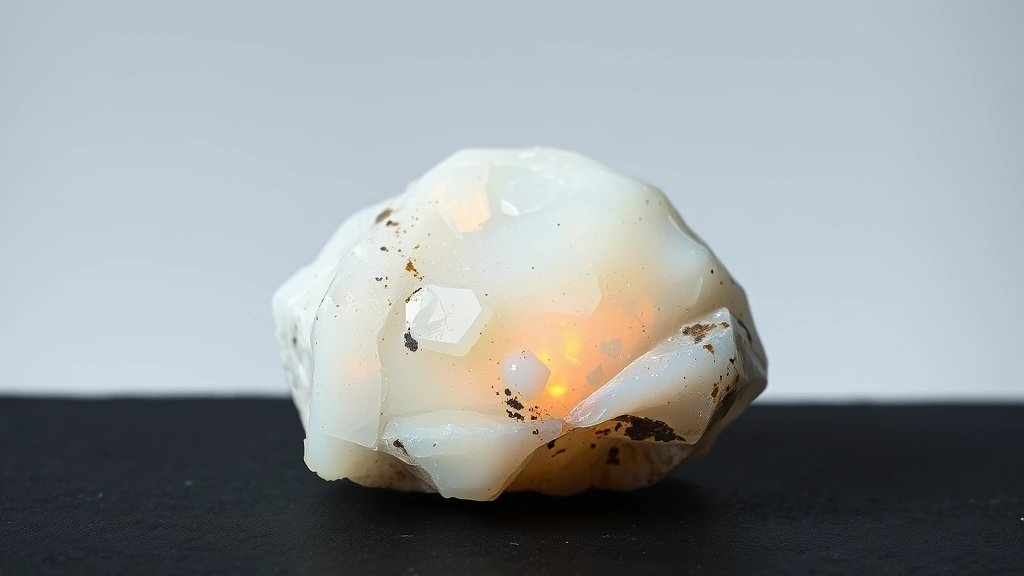
Ethiopian Welo opal belongs to the Mineraloid group, specifically classified as hydrated silica. Unlike true minerals, it lacks a long-range ordered crystal lattice, forming instead from amorphous silica spheres. This geological origin distinguishes it from crystalline quartz varieties, placing it within the broader category of hydrated silica deposits. Its formation involves the slow precipitation of silica gel in volcanic ash layers, creating unique optical properties.
What is Ethiopian Welo Opal? Geological Overview & Definition
Ethiopian Welo opal forms within volcanic ash deposits in the Welo region of Ethiopia. These deposits are rich in silica, which precipitates into gel-like structures over millions of years. The stone is prized for its intense play-of-color, caused by light diffraction within its internal structure. Similarly, the vibrant hues of Strawberry Opal, formed in volcanic environments, showcase a comparable play‑of‑color that highlights the dynamic energy of silica‑rich deposits.
Geologically, it is an amorphous mineraloid rather than a crystalline mineral. This classification stems from its lack of a defined crystal lattice. The material consists of tightly packed silica spheres that scatter light to produce iridescent flashes. Its geological setting is distinct from Australian opals, which form in different sedimentary environments. In comparative mineralogical collections, practitioners and geologists frequently study Purple Opal Morado Opal alongside this crystal to appreciate their subtle energetic and structural differences.
Ethiopian Welo Opal Chemical Composition & Crystallographic Properties
The chemical formula SiO₂·nH₂O reflects its nature as hydrated silicon dioxide. The water content typically ranges from 3 to 21 percent, influencing its physical stability. This hydration makes the stone acid-sensitive, as strong acids can degrade the silica matrix. Understanding this composition is crucial for proper gemological care and identification.
Crystallographically, opal is amorphous, meaning it lacks a repeating atomic pattern. Instead, it features a close-packed arrangement of silica spheres with water in the interstitial spaces. This structure creates the diffraction grating responsible for its spectral colors. The absence of a true lattice distinguishes it from crystalline quartz.
The refractive index varies between 1.370 and 1.470, depending on the water content. Higher hydration levels generally result in lower refractive indices. This property allows gemologists to distinguish opal from other silica-based gems. The density ranges from 1.98 to 2.25, reflecting the variable water saturation.
Thermal behavior is a critical concern due to the hydrated structure. Rapid temperature changes can cause dehydration, leading to cracking or crazing. This thermal instability necessitates careful handling during cutting and polishing. Proper storage in humid environments helps maintain the stone’s structural integrity and optical brilliance.
| Property | Specification |
|---|---|
| Mineral Group | Mineraloid (Hydrated Silica) |
| Chemical Formula | SiO₂·nH₂O (Hydrated Silicon Dioxide) |
| Mohs Hardness | 5.5 – 6.5 |
| Crystal System | Amorphous (Hydrated silica spheres / Mineraloid) |
| Specific Gravity (Density) | 1.98 – 2.25 |
| Refractive Index | 1.370 – 1.470 |
| Color & Optical Properties | Natural Ethiopian Welo Opal color spectrum and optical dispersion |
| Primary Mining Localities | Australia (Coober Pedy, Lightning Ridge), Ethiopia (Welo), Mexico |
| Water & Chemical Resistance | Moderate/Sensitive (%3-%21 water content; avoid prolonged soaking for hydrophane Welo opals) |
| Chakra Alignment (Traditional) | Crown Chakra and Heart Chakra |
| Zodiac Affinity (Traditional) | Libra, Scorpio, Pisces |
| Symbolic Meaning (Traditional) | Creativity, hope, emotional depth, and spontaneous inspiration |
Ethiopian Welo Opal Varieties & Color Spectrum
Ethiopian Welo Opal displays distinct mineralogical characteristics across its geological varieties and structural habits. Gemologists evaluate these natural varieties based on crystal habit, trace chromophore concentrations, and visual luster.
Primary Natural Ethiopian Welo Opal
The benchmark natural variety exhibiting diagnostic color saturation and classic crystallographic symmetry.
Distinct Geological Morphs of Ethiopian Welo Opal
Secondary regional and structural varieties formed under localized geological temperature and pressure conditions.
Welo Fire Opal
Formed in silica‑rich volcanic ash layers that later hydrated, Welo Fire Opal displays a vivid orange‑to‑red body color punctuated by bright yellow or green flashes. Microscopic silica spheres create a play of light known as *opalescence*, though it is less pronounced than in Australian opal. This variety is relatively common in the Wollo highlands, yet high‑intensity fire tones remain prized by collectors.
Welo Water Opal
Developing in fine‑grained, water‑saturated tuff, Welo Water Opal exhibits a translucent, milky base with pastel blues, greens, and pinks that shift with viewing angle. The mineral contains abundant micro‑inclusions of calcite and iron oxides, giving each stone a subtle internal lattice. Its soft pastel palette makes it a favorite for high‑end jewelry, though large, clear plates are scarce.
Welo Black Opal
Rare in Ethiopia, Welo Black Opal forms within deep‑seated, carbon‑rich volcanic breccias where silica replaces organic matter. The dark matrix, ranging from charcoal to deep brown, enhances the vivid play of colors, especially reds and blues, producing a dramatic contrast. Because the host rock is limited to isolated pockets near the town of Dessie, specimens are highly sought after and command premium prices.
Welo Crystal Opal
Occurring in fissure‑filled quartz veins, Welo Crystal Opal grows as well‑formed, translucent crystals rather than the typical amorphous mass. Its crystal habit yields a glassy luster and a delicate, pastel rainbow that is most visible under direct light. The rarity of true crystal habit in Ethiopian opal makes this sub‑variety a collector’s gem, often cut as cabochons to showcase its clarity.
Welo Banded Opal
Developed in layered sedimentary deposits, Welo Banded Opal shows distinct concentric bands of amber, ivory, and soft green, each band reflecting subtle changes in silica sphere size during formation. Thin iron‑oxide streaks run through the bands, adding a natural veining effect. While more abundant than fire opal, high‑contrast banding with vivid hues is uncommon and prized for artistic settings.
Welo Trade‑Cut Opal
Exported primarily through Addis Ababa, Welo Trade‑Cut Opal refers to stones that have been laser‑cut or hand‑polished to enhance market appeal. These opals often combine multiple color zones from a single rough, creating a kaleidoscopic effect favored by international buyers. The processing does not alter the mineral’s SiO₂·nH₂O composition, but careful cutting preserves the delicate opalescence that defines Ethiopian opal.
Where is Ethiopian Welo Opal Found? Geological Mining & Extraction
Welo opal occurs chiefly within the volcanic sequences of the Ethiopian Highlands, where silica‑rich ash layers were buried by subsequent basaltic flows. Over millions of years, hydrothermal fluids introduced water, converting the ash into the hydrated silica mineraloid that defines opal. The host rocks are typically tuff, breccia, and quartz‑filled fissures, each imparting distinct color characteristics to the opal.
Modern extraction focuses on the Wollo and Amhara provinces, especially near the towns of Dessie, Kombolcha, and Lalibela. Miners employ hand tools and small‑scale drilling to follow opal‑bearing seams, then use water‑based sluicing to separate the lightweight opal from heavier basalt fragments. Although artisanal, the industry supplies a steady flow of raw material to both local artisans and international markets.
Historical Significance & Cultural Lore of Ethiopian Welo Opal
Across ancient lapidary traditions, opal was revered for its shifting colors, a quality that linked it to the divine. In Greco‑Roman texts, opal symbolized hope and prophecy, while Egyptian amulets fashioned from opaline material were buried with the dead to guide the soul through the afterlife. Ethiopian opal, though less documented, appears in early Christian manuscripts from the Axumite kingdom, where it was set into ceremonial crosses as a symbol of creativity and spiritual illumination.
In Vedic astrology, opal corresponds to the Crown Chakra and Heart Chakra, aligning with the zodiac signs Libra, Scorpio, and Pisces, and is believed to foster emotional depth and spontaneous inspiration. Throughout early Ethiopian trade routes, the stone was exchanged for incense and textiles, embedding it in regional folklore as a talisman for protection and prosperity. Its enduring allure reflects a convergence of geological rarity and cross‑cultural reverence.
Modern Uses & Jewelry Applications of Ethiopian Welo Opal
Ethiopian Welo opals are primarily cut into cabochons to maximize their vibrant play-of-color, as faceting often diminishes the optical phenomenon. Lapidaries carefully polish these stones to reveal the characteristic “fire” that dances across the surface. The material’s moderate hardness allows for intricate ornamental carving, though it requires careful handling to prevent fracturing.
- Cabochon Cutting: The standard cut for Welo opals, preserving the full spectrum of color flashes.
- Jewelry Settings: Typically set in protective bezels or prong settings to shield the stone from impact.
- Ornamental Carvings: Used in decorative objects where the stone’s translucency and color play are showcased.
Metaphysical Properties & Traditional Meaning of Ethiopian Welo Opal
According to historical traditions and metaphysical lore, opal has long been associated with emotional depth and the stimulation of spontaneous inspiration. Ancient Mediterranean and Vedic texts often linked the stone to the fluid nature of human consciousness and creative expression. Practitioners believe that holding the stone can help release emotional blockages and foster a sense of hope.
The gem is revered for its ability to enhance creativity and balance the wearer’s emotional state. In universal lapidary lore, the shifting colors are seen as a mirror of the soul’s multifaceted nature. This spiritual resonance encourages introspection and a deeper connection to one’s inner world.
Which Chakra and Zodiac Signs Align with Ethiopian Welo Opal?
Ethiopian Welo opal is canonically aligned with the Crown Chakra and the Heart Chakra. The Crown Chakra connection stems from the stone’s association with higher consciousness and spiritual insight. Meanwhile, the Heart Chakra alignment reflects its role in nurturing emotional balance and compassion.
In astrological practice, this gemstone is specifically suited for individuals born under the signs of Libra, Scorpio, and Pisces. These water and air signs are believed to resonate with the opal’s fluid energy. This alignment supports emotional clarity and creative expression for these zodiac groups.
How to Identify Real vs. Fake Ethiopian Welo Opal
The market for Welo opals is frequently infiltrated by artificial imitations, including synthetic glass and dyed replicas. These fakes often mimic the play-of-color but lack the natural structural integrity of genuine hydrated silica. Understanding the subtle differences in optical behavior and physical properties is essential for accurate identification.
Practical At-Home Authenticity Tests
- Temperature Test (Thermal Feel): Genuine opal feels cool to the touch initially and warms up slowly. Glass imitations, however, tend to retain ambient temperature or feel warmer immediately upon contact.
- Specific Gravity & Weight Test: Real opal has a density of 1.98 – 2.25, making it feel lighter than similarly sized glass or quartz. A stone that feels unexpectedly heavy for its size may be a dense synthetic substitute.
- Scratch & Hardness Test (Mohs Comparison): With a Mohs hardness of 5.5 – 6.5, opal can be scratched by steel or harder minerals. Glass, typically harder, will not scratch easily, while softer fakes may show deep scratches from a fingernail.
- Microscopic & Loupe Inspection (Internal Inclusions): Under a 10x loupe, natural opal often shows irregular, organic inclusions and a lack of bubbles. Synthetic glass frequently contains circular air bubbles or a uniform, artificial color distribution.
Ethiopian Welo Opal Valuation Factors, Grading & Pricing
The foremost driver of market value is color saturation. Deep, vivid blues, greens, and reds that shift with viewing angle create a luminous, energetic luster prized by collectors. Uniform vibrancy across the stone’s surface signals high-quality opal and commands premium prices, while muted tones reduce valuation.
Crystal size & weight (grams) is the second key metric. Larger specimens measured in grams, especially those retaining natural matrix patterns, are more valuable than smaller, heavily polished pieces. Raw, minimally altered stones with visible silica sphere structures fetch higher bids than heavily tumbled, uniform finishes.
The final consideration is ethical sourcing & locality premium. Stones mined in the Welo region of Ethiopia, when verified through fair‑trade channels, attract collectors seeking provenance and social responsibility. Transparent supply chains and community‑benefit initiatives add a noticeable premium to otherwise comparable opals.
How to Clean and Care for Ethiopian Welo Opal
Cleaning must avoid any exposure to liquids or ultrasonic vibration. Gently dust the opal with a completely dry, soft microfiber cloth or a camel‑hair brush to remove surface debris, then store it in a low‑humidity environment, preferably in a sealed pouch with silica desiccant. This prevents moisture ingress that could trigger internal crazing.
Ultrasonic cleaners and steam are strictly prohibited because the internal water content of Welo opal expands under vibration, causing micro‑fracturing. Never immerse the stone in water, apply soaps, or expose it to steam; even brief contact can compromise the delicate hydrated silica matrix and diminish both appearance and structural integrity.
Cleansing and Recharging Ethiopian Welo Opal (Energetic Care)
For holistic maintenance, place the opal in a clean, dry area and gently smudge it with white sage or palo santo, allowing the aromatic smoke to pass over the surface without touching the stone. This dry method clears stagnant energy while respecting the mineral’s moisture sensitivity.
Alternatively, expose the opal to soft moonlight for several hours or rest it on a clean selenite slab overnight; both practices recharge the stone’s Crown and Heart Chakras without introducing heat or moisture. After energetic cleansing, return the opal to its dry storage container to preserve its physical integrity.
Frequently Asked Questions About Ethiopian Welo Opal
Ethiopian Welo Opal displays distinct mineralogical characteristics across its geological varieties and structural habits. Gemologists evaluate these natural varieties based on crystal habit, trace chromophore concentrations, and visual luster.
Primary Natural Ethiopian Welo Opal
The benchmark natural variety exhibiting diagnostic color saturation and classic crystallographic symmetry.
Distinct Geological Morphs of Ethiopian Welo Opal
Secondary regional and structural varieties formed under localized geological temperature and pressure conditions.
What is the chemical composition of Ethiopian Welo opal?
It is hydrated silicon dioxide, expressed as SiO₂·nH₂O. The mineral consists of a network of silica spheres that trap varying amounts of water, typically 3‑21 % by weight, giving the opal its characteristic play‑of‑color and its amorphous mineraloid structure.
How hard is Welo opal compared to other gemstones?
Its Mohs hardness ranges from 5.5 to 6.5. This places it between apatite and orthoclase, meaning it scratches more easily than quartz but is still suitable for many jewelry settings when protected from hard impacts and abrasive cleaning.
Can I wear Ethiopian Welo opal in the shower or while swimming?
No, prolonged exposure to water should be avoided. The opal’s moderate water sensitivity (3‑21 % internal water) makes it prone to swelling and surface clouding if soaked, especially for hydrophane varieties that absorb moisture quickly.
What is the safest way to clean a Welo opal piece?
Use a dry, lint‑free microfiber cloth or a soft brush to remove dust. Because ultrasonic cleaners and steam can induce micro‑fracturing (crazing), any liquid cleaning agents or vigorous agitation should be strictly avoided.
Does Ethiopian Welo opal respond to ultrasonic cleaning?
Absolutely not; ultrasonic cleaners must be avoided. The internal water content expands under ultrasonic vibrations, creating stress that leads to crazing and irreversible damage to the delicate silica sphere lattice.
Which zodiac signs are traditionally associated with Welo opal?
Libra, Scorpio, and Pisces are the aligned signs. In astrological lore, these signs are believed to benefit from the stone’s creativity‑enhancing and emotional‑depth qualities, reinforcing personal insight and artistic expression.
Which chakras does Welo opal activate?
It is linked to the Crown Chakra and the Heart Chakra. The gemstone’s play‑of‑color is thought to stimulate higher consciousness while also opening the heart to hope and spontaneous inspiration.
How does the density of Welo opal compare to other opals?
Its specific gravity falls between 1.98 and 2.25. This relatively low density reflects the high water content within the silica matrix, distinguishing it from denser, less hydrated opal varieties and influencing its float‑ability in water‑based testing.