
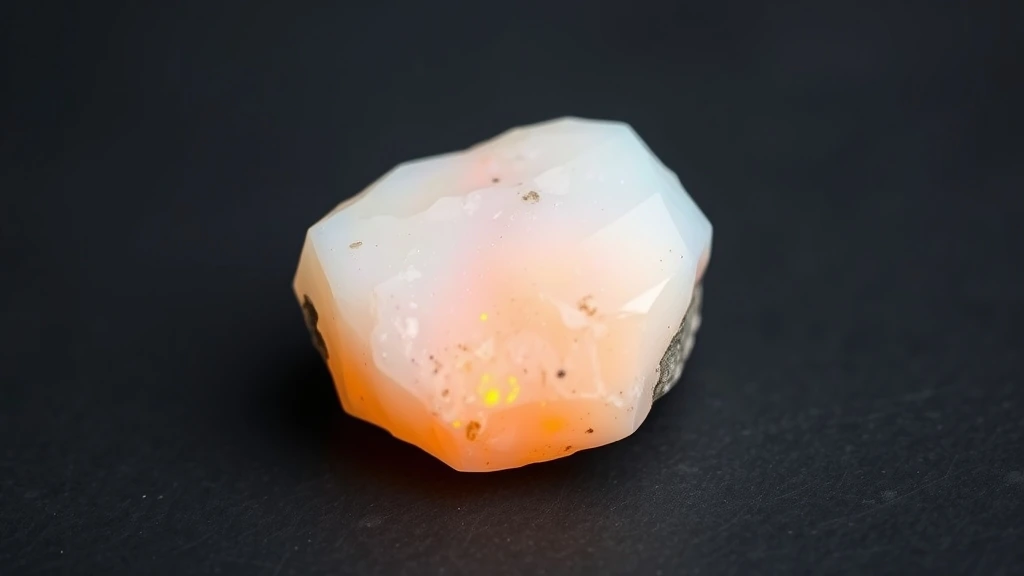
Fire opal belongs to the mineraloid family, a non‑crystalline form of hydrated silica that precipitates in volcanic and hydrothermal environments. Unlike true opals that may exhibit a regular lattice, fire opal consists of amorphous silica spheres lacking long‑range order, which gives it a unique internal diffraction that produces its characteristic fire. Its formation is typically associated with silica‑rich volcanic ash deposits in Brazil, Mexico, and the United States.
What is Fire Opal Gemstone? Geological Overview & Definition
Fire opal is defined as a hydrous silica mineraloid whose body color ranges from pale yellow to intense orange‑red, often displaying vivid internal flashes of color when viewed from different angles. The gemstone’s brilliance arises from the interference of light within the irregularly packed silica spheres, a phenomenon distinct from the crystal‑lattice diffraction seen in true gemstones.
The stone is classified within the opal group but is set apart by its lack of a defined crystal system; it is amorphous, meaning it does not possess a repeating atomic lattice. This amorphous nature results in a lower density (≈2.1 g/cm³) and contributes to its relatively high water content, which can reach up to 10 % by weight.
Fire Opal Gemstone Chemical Composition & Crystallographic Properties
Fire opal’s chemistry is essentially SiO₂·nH₂O, where the variable “n” reflects the amount of structural water trapped between the silica spheres. No long‑range order exists, so the material is described as amorphous, lacking the symmetry elements that define crystal systems such as triclinic or hexagonal.
Because the structure is non‑crystalline, fire opal does not have a conventional lattice; instead, it comprises a random packing of sub‑micron silica spheres that create a porous network. This framework allows cation substitution (e.g., trace Fe³⁺, Mn²⁺) to occupy interstitial sites, acting as chromophore centers that generate the stone’s fire‑like hues.
The amorphous matrix makes fire opal highly sensitive to acids; exposure to dilute hydrochloric or sulfuric acid can dissolve the silica spheres, leading to surface pitting. Consequently, cleaning should be limited to mild soap and distilled water, avoiding any acidic solutions.
Thermally, fire opal exhibits thermochromism: gentle heating (≈150 °C) can intensify its orange‑red tones, while rapid temperature changes may cause micro‑cracking due to differential expansion of the water‑filled pores. This behavior underscores the importance of stable temperature conditions for long‑term preservation.
| Property | Specification |
|---|---|
| Mineral Group | Mineraloid (Hydrated Silica) |
| Chemical Formula | SiO₂·nH₂O (Hydrated Silicon Dioxide) |
| Mohs Hardness | 5.5 – 6.5 |
| Crystal System | Amorphous (Hydrated silica spheres / Mineraloid) |
| Specific Gravity (Density) | 1.98 – 2.25 |
| Refractive Index | 1.370 – 1.470 |
| Color & Optical Properties | Natural Fire Opal Gemstone color spectrum and optical dispersion |
| Primary Mining Localities | Australia (Coober Pedy, Lightning Ridge), Ethiopia (Welo), Mexico |
| Water & Chemical Resistance | Moderate/Sensitive (%3-%21 water content; avoid prolonged soaking for hydrophane Welo opals) |
| Chakra Alignment (Traditional) | Crown Chakra and Heart Chakra |
| Zodiac Affinity (Traditional) | Libra, Scorpio, Pisces |
| Symbolic Meaning (Traditional) | Creativity, hope, emotional depth, and spontaneous inspiration |
Opal Varieties & Comprehensive Sub-Types
Black Opal
Black Opal forms in the silica‑rich, weathered sandstones of Lightning Ridge, Australia, where groundwater deposits amorphous SiO₂·nH₂O into voids left by ancient organic matter. The dark body tone (N1‑N4) acts as a light‑absorbing canvas, allowing the vivid play‑of‑color to flash across the surface with minimal background interference. In the market, Black Opal commands premium prices; its rarity and intense color contrast make it the most valuable opal on record, often sold as polished cabochons or high‑grade slabs.
White / Light Opal
White or Light Opal crystallizes in similar sedimentary basins but with a higher proportion of calcite‑filled matrix, producing a milky or translucent body tone. The subtle banding morphology consists of fine, parallel layers of silica that diffract light into soft, pastel flashes rather than the saturated hues of darker varieties. While less expensive than Black Opal, fine‑quality Light Opal remains sought after for its delicate aesthetic and is frequently set in earrings and pendants.
Fire Opal
Fire Opal originates in volcanic rhyolite cavities of the Mexican states of Michoacán and Guerrero, where silica‑rich fluids precipitate in translucent to transparent red, orange, or yellow hues. Unlike classic opal, its color derives primarily from iron impurities rather than diffraction, though a faint play‑of‑color may still be present in high‑grade stones. Because of its vivid body color, Fire Opal is often faceted like a traditional gemstone and commands strong demand in the jewelry market, especially when cut to maximize brilliance.
Boulder Opal
Boulder Opal is a unique composite where precious opal grows directly onto ironstone host rock in Queensland’s Winton Formation. The opal fills narrow, undulating seams within the host, creating striking color seams that appear to float on a dark, metallic background. Trade value hinges on the contrast between the host and the opal; specimens with vivid reds, blues, or greens against deep black ironstone fetch premium prices among collectors.
Ethiopian Welo Opal
Ethiopian Welo Opal is a hydrophane volcanic opal from the Wollo province, distinguished by its ability to absorb water and temporarily enhance its color. The stone displays a three‑dimensional honeycomb or patchwork pattern of play‑of‑color that changes with humidity, making each piece uniquely dynamic. Its market appeal lies in this interactive quality, and high‑grade Welo Opal is increasingly used in contemporary designs that celebrate its mutable nature.
Dendritic Opal (Merlinite)
Dendritic Opal, also known as Merlinite, forms in sedimentary deposits where manganese‑rich fluids create black, tree‑like dendrite patterns within an opaque white or cream matrix. The banding morphology is dominated by these branching inclusions, giving the stone a striking contrast that is prized for metaphysical work rather than jewelry. Although it lacks traditional play‑of‑color, Merlinite is widely traded as a “master stone” for duality and shadow practices, often sold as polished cabochons or raw slabs.
*Comparative Summary*: Gemologists differentiate these opal varieties by examining body tone, host rock, and inclusion patterns under magnification. Black and White Opals are identified by their dark or light silica matrices and classic play‑of‑color, while Fire Opal’s vivid body color stems from iron content. Boulder Opal is recognized by its ironstone substrate, Ethiopian Welo by its hydrophane response, and Dendritic Opal by its characteristic manganese dendrites. These diagnostic features guide cutting decisions, valuation, and appropriate market placement.
Where is Fire Opal Gemstone Found? Geological Mining & Extraction
Fire Opal is mined primarily from volcanic rhyolite and andesitic lava flows in the states of Michoacán and Guerrero, Mexico. The opal fills gas‑filled cavities and fissures created during the cooling of the lava, where silica‑rich fluids precipitate under low‑temperature hydrothermal conditions. Modern extraction employs careful hand‑picking and low‑impact blasting to preserve the delicate, thin‑shelled crystals that are later stabilized for faceting.
Secondary deposits occur in Brazil’s Minas Gerais region, where similar volcanic breccias host thin layers of transparent fire‑colored opal. In both locales, miners sort the raw material on‑site, separating high‑grade translucent stones from the more common milky or opaque material, then ship the premium pieces to cutting centers in Mexico, the United States, and Europe.
Historical Significance & Cultural Lore of Fire Opal Gemstone
The Aztecs revered fire‑colored opal as a manifestation of the sun god Huitzilopochtli, incorporating it into ceremonial masks, headdresses, and sacrificial altars uncovered at the Templo Mayor. Spanish conquistadors recorded that the stone was believed to protect warriors in battle, a belief that persisted into colonial Mexico where fire opal adorned ecclesiastical regalia and elite jewelry.
In contemporary folklore, fire opal is said to amplify creativity and passion, echoing its ancient role as a talisman for artists and warriors alike. Modern collectors value the stone not only for its striking hue but also for its storied past, which links present‑day wearers to a lineage of mythic power that spans millennia.
Modern Uses & Jewelry Applications of Fire Opal Gemstone
Lapidaries primarily cut fire opals into cabochons to maximize their vibrant play-of-color and translucency. This smooth, domed shape protects the delicate silica structure while enhancing the stone’s fiery internal glow. Faceted cuts are rare due to the material’s fragility and high inclusion density.
- Cabochon Settings: Dominant in rings and pendants to showcase the stone’s organic beauty.
- Ornamental Carvings: Used for intricate figurines where the stone’s fluid color patterns are artistic assets.
- Bezel Settings: Preferred over prong settings to secure the soft, brittle gemstone securely.
Metaphysical Properties & Traditional Meaning of Fire Opal Gemstone
According to historical traditions and metaphysical lore, fire opal is revered as a stone of emotional transformation and spiritual awakening. Practitioners believe it ignites the inner flame, helping individuals navigate complex emotional landscapes with courage. It is often associated with balancing the heart’s desires against higher spiritual aspirations.
The stone’s intense orange and red hues symbolize passion, vitality, and creative energy. In various cultural contexts, it serves as a talisman for personal empowerment and self-expression. Users report a heightened sense of confidence and clarity when wearing this gemstone during significant life transitions.
Which Chakra and Zodiac Signs Align with Fire Opal Gemstone?
Fire opal is canonically aligned with the Crown Chakra and the Heart Chakra. The Crown connection stems from its ability to bridge earthly passion with divine inspiration. Simultaneously, its fiery warmth resonates deeply with the Heart, fostering unconditional love and emotional openness.
This gemstone is specifically attuned to the zodiac signs of Libra, Scorpio, and Pisces. For Librans, it aids in balancing relationships; for Scorpios, it deepens emotional intensity; and for Pisceans, it grounds their spiritual sensitivity. These alignments enhance the wearer’s natural traits without conflicting with other astrological associations.
How to Identify Real vs. Fake Fire Opal Gemstone
Distinguishing genuine fire opal from artificial imitations requires careful examination of its internal structure and optical properties. Common fakes include synthetic glass, dyed chalcedony, and lab-created quartz composites. These replicas often lack the natural irregularities and specific refractive index of authentic opal.
Practical At-Home Authenticity Tests
- Temperature Test (Thermal Feel): Genuine opal feels cool to the touch initially and warms slowly. Glass imitations typically heat up much faster and retain heat longer due to different thermal conductivity.
- Specific Gravity & Weight Test: Real fire opal has a specific gravity of approximately 2.08. It should feel lighter than glass (SG 2.4-2.5) of the same size when held in the hand.
- Scratch & Hardness Test (Mohs Comparison): Opal ranks 5.5-6.5 on the Mohs scale. A steel knife (hardness 5.5) should not easily scratch the surface, whereas glass may show different scratch resistance patterns.
- Microscopic & Loupe Inspection (Internal Inclusions): Use a 10x loupe to look for natural silica spheres or “fire” patterns. Glass often contains tiny bubbles or swirls, while dyed stones show color concentrated in cracks.
Fire Opal Gemstone Valuation Factors, Grading & Pricing
Color Saturation serves as the primary determinant of value, with intense orange to red hues commanding the highest premiums. Uniformity of tone across the stone’s surface significantly enhances its visual appeal and market desirability. Additionally, high optical clarity and a vibrant vitreous luster are critical for achieving top-tier gemological grades.
Carat Weight directly influences pricing, as larger stones of exceptional quality are exponentially rarer than smaller specimens. Precise facet symmetry maximizes light return, thereby amplifying the stone’s inherent fiery brilliance and depth. The presence of visible matrix or internal inclusions will inevitably reduce the overall valuation and commercial appeal.
Geographical Provenance Premium is heavily influenced by origin, with Mexican and Australian stones often fetching higher prices due to reputation. Current wholesale and retail market trends show steady demand for high-quality, untreated fire opals. Buyers should expect significant price variations based on cut quality and certified authenticity documentation.
How to Clean and Care for Fire Opal Gemstone
Ultrasonic cleaners and steam will cause micro-fracturing (crazing) due to internal water content, so you must strictly avoid them. These aggressive cleaning methods can permanently damage the delicate silica structure of the gemstone. Always prioritize gentle, manual cleaning techniques to preserve the integrity and beauty of your fire opal.
Use a soft, lint-free cloth dampened with lukewarm water and a mild, soap-free detergent for routine maintenance. Gently wipe the surface to remove oils and dust without applying excessive pressure. Ensure the stone is thoroughly dried with a clean towel immediately after cleaning to prevent moisture retention.
Cleansing and Recharging Fire Opal Gemstone (Energetic Care)
For energetic cleansing, utilize smoke smudging with sage or palo santo to clear static charges safely. This dry method respects the stone’s sensitivity to moisture and heat while effectively purifying its vibrational energy. Hold the opal in the smoke for a few minutes without direct flame contact.
To recharge, place the gemstone on a selenite plate under natural moonlight for several hours. Selenite is a gentle, non-abrasive mineral that complements the opal’s energy without causing physical stress. This passive approach ensures the stone remains hydrated and energetically balanced without risk of damage.
Frequently Asked Questions About Fire Opal Gemstone
What is the primary cause of fire opal’s vivid colors?
The play of color comes from dispersed light scattering within its silica matrix. The internal nanometer‑scale voids filled with water and oil refract light, producing the characteristic orange‑to‑red fire. Variations in water content and impurity levels intensify the hue.
How should fire opal be cleaned without damaging it?
Use a soft, dry microfiber cloth and mild lukewarm water only when necessary. Avoid ultrasonic cleaners and steam, as the internal water (3‑21 %) can cause micro‑fracturing or crazing. Gentle hand‑washing with a mild soap solution and thorough drying is safest.
Can fire opal be worn while swimming or showering?
No, prolonged exposure to water should be avoided, especially for hydrophane “Welo” opals. Their moderate water sensitivity means soaking can leach water from the structure, leading to dullness or cracks. Remove the piece before swimming, bathing, or heavy rain.
Is fire opal compatible with any zodiac signs for personal jewelry?
Yes, fire opal is traditionally linked to Libra, Scorpio, and Pisces. Wearers of these signs may feel enhanced intuition and emotional balance, as the stone’s vibrational energy is said to resonate with their astrological traits.
Which chakras does fire opal support in crystal healing practices?
Fire opal aligns with the Crown Chakra and the Heart Chakra. It is believed to foster spiritual connection and unconditional love, channeling high‑frequency energy upward through the Crown while opening the Heart to compassion.
How can I tell if a fire opal is treated or natural?
Look for uniform color and a lack of natural inclusions, which may indicate dyeing or polymer impregnation. Natural fire opal often displays microscopic water‑filled cavities and subtle color zoning. Laboratory testing (e.g., FTIR) can confirm treatment.
What is the best way to store fire opal to preserve its brilliance?
Store each piece separately in a padded, low‑humidity pouch or a soft‑lined jewelry box. Keeping it away from hard minerals prevents scratches, and a stable environment limits moisture loss that could trigger crazing.
Does fire opal have any notable industrial or scientific uses?
Beyond jewelry, fire opal is studied for its unique silica‑water structure in materials science. Researchers examine its photonic properties for potential applications in optics and sensors, leveraging the same light‑scattering mechanisms that give the gem its fire.