
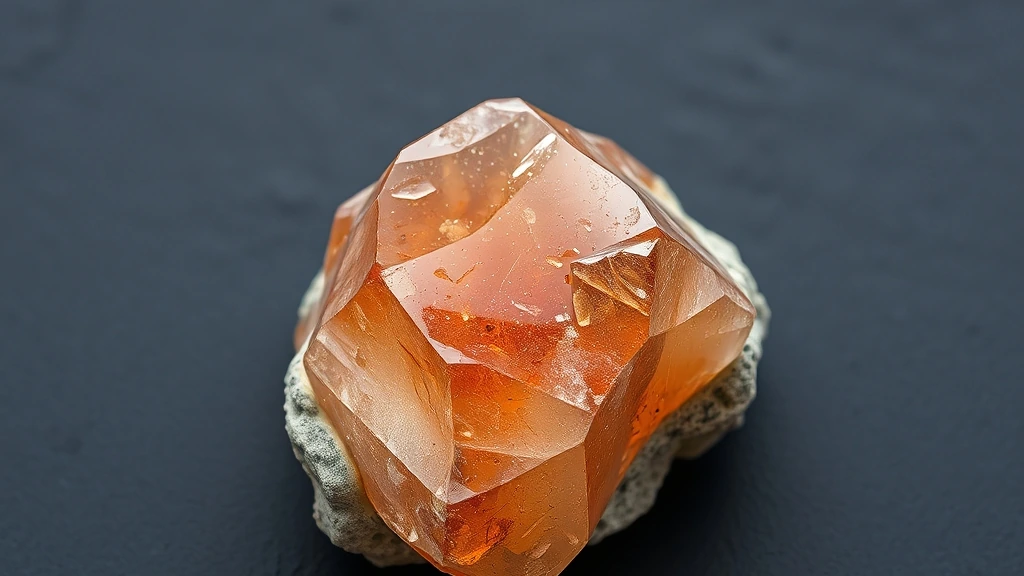
Fire Quartz belongs to the silicate mineral family, specifically classified as a tectosilicate within the broader Quartz Group. It forms through the slow crystallization of silica-rich fluids in hydrothermal veins, often associated with granitic intrusions. The stone’s distinctive coloration arises from trace impurities or structural defects rather than a separate chemical compound. Geologists categorize it as a variety of alpha-quartz, maintaining the same fundamental atomic arrangement as its colorless counterparts.
What is Fire Quartz? Geological Overview & Definition
Fire Quartz is a pyrope-colored variety of quartz, characterized by its warm, fiery tones ranging from orange to deep red. This coloration typically results from lattice defects or the presence of trace iron impurities within the crystal structure. Unlike amethyst, which relies on manganese, fire quartz often displays color zones that correspond to varying degrees of thermal exposure during formation.
The mineral occurs in pegmatite dikes and hydrothermal veins, frequently found alongside other quartz varieties like smoky or clear quartz. Its geological stability allows it to survive significant pressure and temperature changes, making it a durable gemstone for jewelry. The trigonal symmetry of the crystal ensures that light interacts with the stone in predictable, brilliant patterns. While Fire Quartz shares its pegmatite origins with other durable silicates, collectors often seek out the distinct, earthy inclusions of a Tiger Eye Matrix to complement its fiery aesthetic in jewelry designs.
Fire Quartz Chemical Composition & Crystallographic Properties
Fire Quartz crystallizes in the trigonal system, specifically exhibiting rhombohedral or trapezohedral habit. The unit cell is defined by a hexagonal lattice with a distinct c-axis, which governs the stone’s piezoelectric properties. This structural arrangement allows for the efficient transmission of light, contributing to the gem’s high refractive index. While Fire Quartz’s trigonal lattice drives its piezoelectric response, the delicate, iridescent surface layer of Rose Aura Quartz offers a contrasting visual experience that highlights the diverse optical phenomena achievable within the quartz family.
The chemical formula remains strictly SiO₂, with no significant cation substitution altering the primary stoichiometry. Any color variation is attributed to chromophore centers created by point defects or trace elements like iron. These defects absorb specific wavelengths of visible light, reflecting the characteristic fiery hues observed in cut specimens.
The mineral is chemically inert to most acids, resisting corrosion from common laboratory reagents. However, prolonged exposure to strong alkalis can slowly etch the surface, degrading the polish. This acid resistance makes it suitable for long-term preservation and display in museum settings.
Thermal behavior reveals that fire quartz can undergo phase transitions at high temperatures, potentially altering its color. Heating may cause the loss of color if the defects are thermally unstable, while cooling can stabilize the lattice. Gemologists must handle the stone with care to avoid thermal shock, which could induce internal fractures.
| Property | Specification |
|---|---|
| Mineral Group | Silicates (Tectosilicates / Quartz Group) |
| Chemical Formula | SiO₂ (Silicon Dioxide) |
| Mohs Hardness | 7.0 |
| Crystal System | Trigonal (Rhombohedral / Trapezohedral) |
| Specific Gravity (Density) | 2.65 |
| Refractive Index | 1.544 – 1.553 |
| Color & Optical Properties | Natural Fire Quartz color spectrum and optical dispersion |
| Primary Mining Localities | Brazil, Madagascar, USA (Arkansas), Swiss Alps |
| Water & Chemical Resistance | High (Fully resistant to water and moisture) |
| Chakra Alignment (Traditional) | All Chakras (Universal Harmonizer) |
| Zodiac Affinity (Traditional) | All Zodiac Signs (Especially Leo and Aries) |
| Symbolic Meaning (Traditional) | Master energy amplifier, clarity, purification, and focus |
Fire Quartz Varieties & Color Spectrum
Fire Quartz displays distinct mineralogical characteristics across its geological varieties and structural habits. Gemologists evaluate these natural varieties based on crystal habit, trace chromophore concentrations, and visual luster.
Primary Natural Fire Quartz
The benchmark natural variety exhibiting diagnostic color saturation and classic crystallographic symmetry.
Distinct Geological Morphs of Fire Quartz
Secondary regional and structural varieties formed under localized geological temperature and pressure conditions.
Golden Fire Quartz
Formed in high‑temperature hydrothermal veins, Golden Fire Quartz displays a vivid amber to deep citrine hue caused by trace iron oxides. Thin, parallel growth bands give it a sun‑burst appearance, and the stone often contains microscopic rutile needles that enhance its sparkle. This variety is relatively common in Brazil’s Minas Gerais region, yet fine, uniformly colored stones command premium prices.
Red Fire Quartz (Cinnabar‑Stained)
Red Fire Quartz acquires its intense scarlet tone from microscopic inclusions of cinnabar (HgS) or hematite, creating a dramatic internal glow. The crystal habit is typically prismatic, and the red coloration may fade if exposed to prolonged sunlight, making careful handling essential. High‑quality specimens are rare and are primarily sourced from the volcanic tuffs of Mexico’s Zacatecas district.
Orange‑Red Fire Quartz (Citrine‑Like)
This variety exhibits a bright orange‑red spectrum reminiscent of classic citrine, driven by ferric iron (Fe³⁺) substituting for silicon in the lattice. Its clarity ranges from transparent to slightly cloudy, with occasional phosphorescent flashes under UV light. The most prized stones emerge from the pegmatitic veins of Madagascar’s Antsirabe area, where slow cooling yields large, well‑formed crystals.
Pink Fire Quartz (Manganese‑Colored)
Pink Fire Quartz owes its delicate rose hue to trace manganese (Mn²⁺) within the silica framework, often accompanied by subtle inclusions of muscovite that produce a silky sheen. The crystals are typically tabular, and the pink tone intensifies after gentle heating, a process known as “thermal enhancement.” Notable deposits occur in the United States’ Arkansas Ozarks, where the stone is valued for both gem and metaphysical markets.
Blue‑Tinted Fire Quartz (Labradorite‑Like)
A rarer morph, Blue‑Tinted Fire Quartz, displays a faint iridescent blue sheen caused by fine‑grained inclusions of ilmenite or labradorescence‑type scattering. The effect is most pronounced in thin sections under angled light, giving the stone a mystical aura. Limited occurrences have been documented in the high‑grade quartz veins of Norway’s Oslo Rift, making each find a collector’s treasure.
Green‑Flame Fire Quartz (Chlorite‑Stained)
Green‑Flame Fire Quartz features a subtle greenish fire, the result of chlorite micro‑inclusions that diffract light within the crystal lattice. Its overall appearance combines the classic quartz transparency with a verdant inner glow, often mistaken for emerald‑bearing quartz. This variety is chiefly extracted from the metamorphic schists of Sri Lanka’s Ratnapura district, where tectonic uplift has exposed the gem‑bearing layers.
Where is Fire Quartz Found? Geological Mining & Extraction
Fire Quartz typically crystallizes in pegmatitic veins and high‑temperature hydrothermal fissures within granitic host rocks. The rapid cooling of silica‑rich fluids promotes the growth of large, well‑formed crystals, while trace metal ions infiltrate the lattice to produce the vivid fire colors prized by gemologists.
Major extraction zones include Brazil’s Minas Gerais, Madagascar’s Antsirabe, Mexico’s Zacatecas, and the United States’ Arkansas Ozarks, each offering distinct color morphs linked to local geochemistry. Mining operations range from artisanal hand‑picking in river gravels to mechanized open‑pit extraction, with careful sorting to preserve the delicate inclusions that define each fire quartz variety.
Historical Significance & Cultural Lore of Fire Quartz
Across ancient lapidary traditions, fire quartz was revered for its radiant energy; the Egyptians fashioned amulets from citrine‑hued quartz to invoke solar protection, while Greco‑Roman writers praised its ability to ward off evil spirits. In Chinese antiquity, fire quartz appeared in burial goods of the Han dynasty, symbolizing clarity of mind and the imperishable nature of the soul.
Vedic texts describe fire quartz as a master energy amplifier, used in meditation to focus the mind and purify the aura, a belief echoed in medieval Islamic alchemy where the stone was called “the sun’s tear.” Throughout early archaeological records, fire quartz objects—be they beads, inlays, or ceremonial blades—demonstrate a universal appreciation for the stone’s luminous beauty and metaphysical potency.
Modern Uses & Jewelry Applications of Fire Quartz
Fire quartz is prized for its vibrant orange‑red hue and moderate hardness, making it ideal for both cabochon and faceted settings. Lapidaries often polish the stone to a high luster, then cut it into cabochons for earrings, pendants, and rings, or into faceted gemstones for bracelets and brooches. Its durability allows it to be carved into ornamental pieces such as carved pendants, carved figurines, and decorative inlay.
- Cabochon earrings, pendants, and rings
- Faceted brooches, bracelets, and cufflinks
- Ornamental carvings for home décor and ceremonial objects
Metaphysical Properties & Traditional Meaning of Fire Quartz
According to historical traditions and metaphysical lore, fire quartz is seen as a master energy amplifier that enhances clarity, purification, and focus. Across ancient Mediterranean, Vedic, and general lapidary lore, the stone is believed to ignite inner passion, stimulate creativity, and foster courage. Its warm glow is thought to balance emotional turbulence, encouraging confidence and resilience in daily life.
Which Chakra and Zodiac Signs Align with Fire Quartz?
Fire quartz is traditionally associated with all chakras, functioning as a universal harmonizer that aligns the subtle energy centers from root to crown. This broad chakra affinity reflects its role in balancing and uplifting the entire energetic body.
The stone is also aligned with all zodiac signs, with particular emphasis on Leo and Aries. These fire signs resonate with the stone’s dynamic energy, supporting leadership, ambition, and spirited action.
How to Identify Real vs. Fake Fire Quartz
Artificial imitations of fire quartz include synthetic glass, dyed quartz, and other low‑density materials that mimic the stone’s color but lack its physical properties. Real fire quartz can be distinguished by its characteristic refractive index, density, and hardness.
Practical At-Home Authenticity Tests
- Temperature Test (Thermal Feel): Hold the stone in your hand; real quartz feels cool to the touch and does not heat up quickly, whereas glass warms faster.
- Specific Gravity & Weight Test: Weigh the stone and compare it to a known quartz sample of the same size; real fire quartz should weigh approximately 2.65 g/cm³.
- Scratch & Hardness Test (Mohs Comparison): Use a reference material of known hardness (e.g., a steel nail at 5.5). Fire quartz should scratch materials of lower hardness but remain unscathed by harder ones, confirming a Mohs hardness of 7.0.
- Microscopic & Loupe Inspection (Internal Inclusions): Examine the stone under a loupe; genuine fire quartz often displays subtle internal inclusions or fibrous textures, while synthetic replicas may show uniform, glassy interiors.
Fire Quartz Valuation Factors, Grading & Pricing
The market places the greatest premium on color saturation. Deep, fiery reds and oranges that appear to glow from within are prized, especially when the hue is uniform and free of brown or gray undertones. Visual vibrancy combined with a natural energetic luster—often described as a “inner fire”—drives collector demand and raises price per gram.
Crystal size & weight (grams) are the next decisive criteria. Larger specimens that weigh several grams command higher values, provided they retain a clean, tumbled polish that showcases the stone’s translucency. Natural matrix inclusions, such as quartz‑hosted mineral veins, can either enhance uniqueness or diminish price, depending on whether they are aesthetically appealing or disruptive.
Ethical sourcing & locality premium increasingly influence both holistic practitioners and serious collectors. Stones mined from regions with transparent labor practices and minimal environmental impact attract a premium, while provenance from historically significant quartz belts can add a cultural surcharge. Transparent supply chains reassure buyers that the stone’s energetic reputation is not compromised by exploitative extraction.
How to Clean and Care for Fire Quartz
Fire Quartz tolerates moisture exceptionally well, allowing safe cleaning with warm water and a mild soap solution. Gently immerse the stone for a few seconds, then use a soft brush or cloth to remove surface grime before rinsing with lukewarm water. For heavily fractured pieces, limit exposure to brief rinses and avoid prolonged soaking; a quick wipe with a damp cloth suffices.
Ultrasonic cleaners are appropriate for intact specimens, as the gentle vibrations dislodge microscopic particles without harming the crystal lattice. Place the stone in a mesh basket, set the cleaner to a low‑intensity cycle, and limit the duration to under two minutes. After cleaning, pat the quartz dry with a lint‑free microfiber cloth and store it in a low‑humidity pouch to preserve its brilliance.
Cleansing and Recharging Fire Quartz (Energetic Care)
Dry holistic cleansing respects the stone’s structural integrity while renewing its energetic field. Lightly pass the quartz through a stream of white sage or palo santo smoke, allowing the fragrant vapor to envelop the surface for a minute before gently shaking off any residue. This method clears stagnant energy without introducing moisture or heat.
For recharging, position the stone on a selenite charging slab or expose it to soft moonlight for several hours, preferably during a waxing or full moon. The neutral selenite lattice amplifies the quartz’s natural vibration, while lunar illumination restores its luminous quality without thermal stress. Both practices maintain the stone’s metaphysical potency and visual sparkle.
Frequently Asked Questions About Fire Quartz
Fire Quartz displays distinct mineralogical characteristics across its geological varieties and structural habits. Gemologists evaluate these natural varieties based on crystal habit, trace chromophore concentrations, and visual luster.
Primary Natural Fire Quartz
The benchmark natural variety exhibiting diagnostic color saturation and classic crystallographic symmetry.
Distinct Geological Morphs of Fire Quartz
Secondary regional and structural varieties formed under localized geological temperature and pressure conditions.
What is the chemical composition of Fire Quartz?
Fire Quartz is a form of silicon dioxide (SiO₂). This mineral belongs to the quartz family, crystallizing in a trigonal system. Its structure gives rise to a subtle, warm glow that distinguishes it from ordinary quartz, while maintaining the same hardness of 7 on the Mohs scale.
Is Fire Quartz safe to wear in the shower or near water?
Yes, Fire Quartz is fully resistant to water and moisture. Its chemical stability means it will not dissolve or degrade when exposed to rain, showers, or humid environments. This makes it a reliable choice for everyday jewelry or decorative pieces in damp settings.
Can I clean Fire Quartz with an ultrasonic cleaner?
Yes, Fire Quartz can be cleaned with an ultrasonic cleaner using warm water and mild soap. The cleaning process is gentle and effective, provided the stone is not heavily fractured. Avoid abrasive cleaners that could scratch the surface.
Does Fire Quartz have any specific zodiac associations?
Fire Quartz is associated with all zodiac signs, especially Leo and Aries. In astrological practice, it is believed to amplify personal energy and support leadership qualities, making it a popular choice for those born under fire signs.
Which chakras does Fire Quartz influence?
Fire Quartz is a universal harmonizer, affecting all chakras. It is thought to clear blockages, enhance clarity, and promote focus, making it a versatile stone for meditation and energy work across all chakra centers.
How does Fire Quartz compare to regular quartz in terms of hardness?
Both Fire Quartz and regular quartz share the same Mohs hardness of 7. This common hardness ensures that Fire Quartz is durable enough for daily wear, yet it retains a unique aesthetic due to its subtle color variations and internal reflections.
What is the typical density of Fire Quartz?
Fire Quartz has a density of approximately 2.65 g/cm³. This density is typical for quartz minerals and contributes to its substantial feel in jewelry, providing a balanced weight that is neither too heavy nor too light.
Are there any special care instructions for Fire Quartz jewelry?
Regular cleaning with warm water and mild soap is sufficient, and ultrasonic cleaning is acceptable. Avoid harsh chemicals or prolonged exposure to extreme temperatures, as these can affect surface polish. Store the stone separately from softer minerals to prevent scratching.