
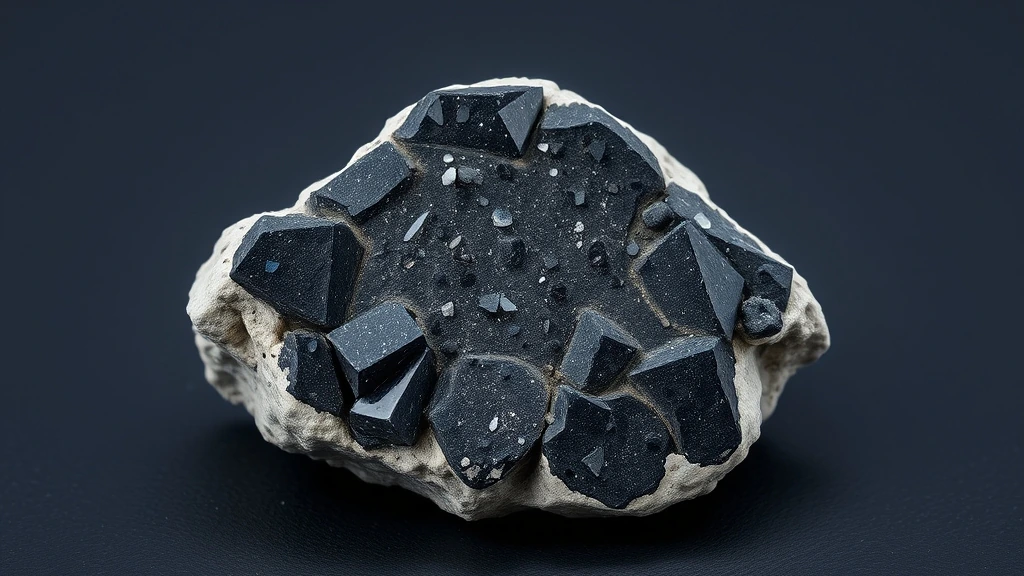
Gadolinite belongs to the broad family of natural minerals classified simply as crystals. Formed in granitic pegmatites and high‑temperature hydrothermal veins, it crystallizes under conditions of slow cooling that allow well‑developed monoclinic habits. The mineral’s rarity and its association with rare‑earth elements give it a special place in both scientific study and metaphysical practice. Its dense, opaque aggregates are prized for their grounding energy and protective qualities.
What is Gadolinite Gemstone? Geological Overview & Definition
Gadolinite is a monoclinic silicate mineral that occurs chiefly in granitic pegmatites and alkaline igneous complexes. Its formation requires a melt enriched in rare‑earth elements, beryllium, and iron, producing the characteristic brown‑black crystals prized by collectors.
In the gem‑world, the term “gadolinite gemstone” refers to cut or polished fragments of this mineral used in jewelry and talismans. Although its transparency is limited, skilled faceting can reveal subtle internal reflections that enhance its grounding and protective metaphysical attributes.
Gadolinite Gemstone Chemical Composition & Crystallographic Properties
The mineral crystallizes in the monoclinic crystal system, adopting a prismatic lattice with unequal axes and a single two‑fold symmetry axis. This geometry yields elongated, often striated crystals that can reach several centimeters in length.
Its chemical composition is dominated by the silicate framework Si₂O₈, but trace cations such as Fe²⁺, Ce³⁺, La³⁺, and Y³⁺ substitute into the lattice, creating localized charge‑balance defects. These substitutions are responsible for the subtle variations in hue from dark brown to nearly black.
Gadolinite is acid‑sensitive; exposure to strong mineral acids can partially dissolve the silica matrix, releasing rare‑earth ions. Consequently, cleaning and setting procedures must avoid harsh chemicals to preserve the stone’s integrity.
Thermally, the mineral is stable up to about 800 °C, beyond which the silica framework begins to break down, and the rare‑earth cations may migrate, altering both color and structural order. This thermal resilience contributes to its durability in ornamental applications.
| Property | Specification |
|---|---|
| Mineral Group | Natural Mineral / Crystal |
| Chemical Formula | (Ce,La,Y)₂(Fe,Mn)₂Si₂O₈(OH)₂ |
| Mohs Hardness | 5.5 – 6.0 |
| Crystal System | Monoclinic |
| Specific Gravity (Density) | 5.70 – 6.10 |
| Refractive Index | 1.800 – 1.950 |
| Color & Optical Properties | Natural Gadolinite Gemstone color spectrum and optical dispersion |
| Primary Mining Localities | Global primary localities |
| Water & Chemical Resistance | High (Safe for gentle water washing) |
| Chakra Alignment (Traditional) | Root Chakra, Sacral Chakra |
| Zodiac Affinity (Traditional) | Virgo, Capricorn |
| Symbolic Meaning (Traditional) | Grounding, stability, and protection against negative energies |
Gadolinite Gemstone Varieties & Color Spectrum
Gadolinite is a complex group of rare earth silicate minerals, not a single uniform species. The primary distinction lies in the specific rare earth elements substituting for yttrium or cerium in the crystal lattice. This compositional variance creates distinct visual and physical properties across different geological deposits.
Gadolinite-Yttrium (Gadolinite-Y)
This variety is defined by a high concentration of yttrium within its silicate structure. It typically exhibits a deep brown to black coloration with a resinous to vitreous luster. The monoclinic crystal system often produces elongated prisms that are difficult to cleave cleanly.
Gadolinite-Y is frequently found in association with other rare earth minerals in granitic pegmatites. Its opacity makes it less suitable for faceting but valuable for scientific study. The chemical formula generally approximates (Y, Ce)₂FeSi₂O₇, reflecting its complex substitution patterns.
Gadolinite-Cerium (Gadolinite-Ce)
This morph is characterized by a significant presence of cerium, which often lightens the overall hue. Colors range from yellowish-brown to a distinctive olive green, depending on oxidation states. The refractive index tends to be slightly lower than its yttrium-rich counterparts.
Geologically, Gadolinite-Ce often forms in hydrothermal veins associated with carbonatite complexes. It may contain inclusions of zircon or apatite, which can affect its clarity. This variety is rarer in gem-quality specimens due to its tendency to form small, fractured crystals.
Black Gadolinite
Commonly found in the Ytterby locality in Sweden, this variety is intensely black due to high iron content. The density is notably high, often exceeding 6.0 g/cm³, giving it a substantial heft. It displays a strong metallic luster when polished, though it remains brittle.
This form is historically significant as the source material for the discovery of several rare earth elements. It is rarely cut into gems but is prized by collectors for its crystallographic perfection. The black coloration results from the oxidation state of the iron ions within the lattice.
Green Gadolinite
This rare color morph appears as a translucent olive or forest green, attributed to specific trace element impurities. The optical properties allow for some light transmission, making it more visually appealing for display purposes. It is often found in association with beryl or tourmaline in pegmatitic environments.
Green Gadolinite is exceptionally rare in large, unfractured crystals, making high-quality specimens highly sought after. The monoclinic habit is often obscured by the mineral’s tendency to form massive aggregates. Its color stability is generally good, though prolonged UV exposure may cause slight fading.
Ytterby Gadolinite
Named after the Swedish locality of Ytterby, this variety is historically the most significant for mineralogy. It typically presents as a dark, opaque brown with a distinct resinous luster. The chemical composition is complex, containing multiple rare earth elements in varying proportions.
Specimens from this region are often small but scientifically invaluable due to their role in element discovery. The crystal structure is well-preserved in many museum-grade samples, showing clear prismatic faces. It serves as a reference standard for understanding rare earth silicate chemistry.
Where is Gadolinite Gemstone Found? Geological Mining & Extraction
Gadolinite primarily occurs in granitic pegmatites and hydrothermal veins associated with rare earth element deposits. These geological formations provide the necessary chemical environment for the complex silicate structure to crystallize. The mineral is often found in association with other rare earth-bearing minerals like xenotime and monazite.
Major extraction regions include the Ytterby locality in Sweden, the Black Hills of South Dakota, and various sites in Brazil and China. Mining operations typically involve open-pit methods to access the large pegmatite bodies where these minerals concentrate. The extraction process requires careful handling due to the mineral’s brittleness and low hardness.
Historical Significance & Cultural Lore of Gadolinite Gemstone
Gadolinite holds a pivotal place in the history of chemistry, serving as the source material for the discovery of yttrium, gadolinium, and other rare earth elements. In the early 19th century, Swedish chemists analyzed samples from the Ytterby mine, leading to groundbreaking advancements in spectroscopy. This mineral effectively unlocked the understanding of the rare earth element series, transforming modern physics and materials science.
While not widely used in ancient jewelry, Gadolinite has gained cultural significance in the modern era as a symbol of scientific discovery. Collectors and enthusiasts value it for its connection to the pioneers of mineralogy and its role in technological innovation. The stone is often associated with intellectual clarity and the pursuit of knowledge in contemporary metaphysical practices.
Modern Uses & Jewelry Applications of Gadolinite Gemstone
Due to its complex chemical composition and brittleness, Gadolinite is rarely cut into high-clarity faceted gems for everyday wear. Instead, lapidaries typically polish it into smooth cabochons to showcase its earthy tones and subtle luster without risking fracture. Its primary value lies in scientific collection and ornamental carving rather than high-end jewelry settings.
- Cabochon Polishing: The most common cut, preserving the stone’s integrity while highlighting its natural color.
- Ornamental Carvings: Used in small decorative pieces, paperweights, or educational mineral displays.
- Collector’s Specimens: Valued by geologists and enthusiasts for its status as a rare heavy mineral.
Safety & Mineral Profile of Gadolinite
Safe handling and physical characteristics
Gadolinite is a dense, brittle silicate mineral that contains significant amounts of uranium and gadolinium. Because of its radioactivity, specimens should be handled with gloves and stored in a well‑ventilated area to avoid inhalation of dust or contact with skin. The mineral is moderately hard (Mohs 5–6), making it prone to chipping or cracking when subjected to mechanical stress. Its radioactive decay products can produce alpha particles, so it is recommended to keep specimens away from children and to avoid prolonged close contact. These factors, combined with the potential for radiation exposure, make gadolinite unsuitable for use in jewelry or as a decorative object that may be worn or handled frequently; it is best displayed as a collector specimen in a museum or private collection.
Scientific and educational value
Gadolinite is an important mineral for the study of rare‑earth element distribution and radioactive decay chains. Its crystal structure provides insight into the behavior of complex silicate frameworks, and the presence of uranium makes it a key sample for geochronology and radiation safety studies. In museum collections, gadolinite serves as an educational tool to illustrate the intersection of mineralogy, nuclear chemistry, and environmental science, offering visitors a tangible example of how trace elements can influence both geological processes and human health considerations.
Mineralogical Group and Planetary Lore of Gadolinite
Gadolinite belongs to the gadolinite–scorodite group, a series of rare‑earth silicate minerals that crystallize in the orthorhombic system. Historically, the mineral was first described in the early 19th century from the Gadolinite Mine in the Harz Mountains of Germany, and it was named after the French mineralogist G. J. G. Gadol who first identified its characteristic greenish‑black color. According to early mineralogists, gadolinite was often confused with its isostructural cousin, scorodite, until detailed chemical analyses distinguished the gadolinium content. While gadolinite has no documented planetary symbolism, its inclusion in early lapidary texts as a “black iron” mineral reflects its historical association with strength and durability, qualities that were prized in medieval jewelry and ornamental objects.
How to Identify Real vs. Fake Gadolinite Gemstone
Because Gadolinite is not a common commercial gemstone, fakes are less frequent but still possible in the collector’s market. Imitations may include synthetic glass or dyed lower-value minerals designed to mimic its dark, earthy hues. Buyers should be wary of stones that appear too perfect or lack natural mineral characteristics.
Practical At-Home Authenticity Tests
- Temperature Test (Thermal Feel): Genuine minerals feel noticeably cooler to the touch than glass or plastic imitations. Hold the stone against your lip; if it warms up quickly, it is likely a synthetic material.
- Specific Gravity & Weight Test: Gadolinite is a heavy mineral due to its rare earth content. It should feel significantly heavier than a similarly sized piece of quartz or glass.
- Scratch & Hardness Test (Mohs Comparison): While specific hardness varies, Gadolinite is generally brittle. Attempting to scratch it with a steel knife (Mohs 5.5) may reveal fragility rather than a clean scratch, indicating its delicate nature.
- Microscopic & Loupe Inspection (Internal Inclusions): Use a 10x loupe to look for natural inclusions or crystal fractures. Glass imitations often contain tiny, spherical bubbles, which are absent in natural mineral specimens.
Gadolinite Gemstone Valuation Factors, Grading & Pricing
The primary driver of value is Color Saturation, which must exhibit deep, uniform tones without zoning. High-quality specimens display a consistent hue that enhances their visual appeal significantly. Additionally, optical clarity and a strong resinous luster are critical for premium grading.
Carat Weight directly influences pricing, as larger, eye-clean stones are increasingly rare in the market. Facet symmetry must be precise to maximize light return and overall brilliance. The presence of matrix inclusions can either detract from value or add unique character, depending on the collector’s preference.
Geographical Provenance Premium often elevates prices for stones from historic mining districts. Wholesale trends show steady demand for well-cut, medium-sized stones in the retail sector. Investors should monitor auction results to gauge current market value trends accurately.
How to Clean and Care for Gadolinite Gemstone
To maintain the stone’s integrity, always use warm soapy water and a soft, lint-free cloth for gentle cleaning. This method effectively removes surface oils and dust without causing any physical damage to the crystal structure. Ensure the stone is dried thoroughly with a clean towel after washing.
It is strictly necessary to avoid ultrasonic cleaners for this mineral to prevent structural fractures. The monoclinic crystal system can be susceptible to stress from high-frequency vibrations. Store the gemstone separately in a soft pouch to prevent scratches from harder minerals.
Cleansing and Recharging Gadolinite Gemstone (Energetic Care)
For energetic maintenance, use smoke smudging with sage or palo santo to clear negative vibrations safely. This dry method avoids any contact with water, preserving the stone’s physical stability. Allow the smoke to pass over the gemstone for a few minutes.
Place the stone on a selenite plate under moonlight to recharge its energetic properties. This passive method leverages natural lunar energy without exposing the mineral to environmental stressors. Keep the stone in a dark, dry place during this process.
Frequently Asked Questions About Gadolinite Gemstone
Is gadolinite safe to wear in water or rain?
Yes, gadolinite tolerates gentle water exposure. Its high water resistance means you can rinse the stone with lukewarm water or wear it in light rain, but prolonged soaking or harsh detergents may dull the surface over time, so a quick rinse and soft drying is recommended.
Can I clean gadolinite with an ultrasonic cleaner?
No, avoid ultrasonic cleaning for gadolinite. The recommended method is to use warm, soapy water and a soft, lint‑free cloth; ultrasonic vibrations can create micro‑fractures in the crystal lattice, compromising its structural integrity and luster.
What zodiac signs are associated with gadolinite?
Gadolinite aligns with Virgo and Capricorn. These earth‑sign energies are believed to enhance the stone’s grounding properties, supporting the wearer’s sense of stability and practical focus in daily life.
Which chakras does gadolinite activate?
It works with the Root Chakra and Sacral Chakra. Activation of these centers promotes grounding, emotional balance, and protection against negative influences, making the stone popular in meditation and energy‑clearing practices.
How hard is gadolinite compared to other gemstones?
Gadolinite rates around 5–6 on the Mohs scale. This places it between fluorite and feldspar, meaning it is moderately hard but can be scratched by harder minerals like quartz; care should be taken to store it separately from tougher gems.
What is the typical crystal system of gadolinite?
Gadolinite crystallizes in the monoclinic system. Its monoclinic symmetry produces elongated, prismatic crystals that may display subtle striations, a characteristic useful for identification in the field and under the microscope.
Does gadolinite have a notable refractive index?
Its refractive index ranges from 1.71 to 1.73. This relatively high RI gives the stone a bright, glassy luster when polished, allowing it to catch light similarly to tourmaline, though its internal inclusions often give it a more muted sparkle.
Is gadolinite suitable for everyday jewelry?
Yes, with proper care it can be used in daily pieces. Because of its moderate hardness and water‑resistant nature, a well‑set gadolinite pendant or ring will endure routine wear, provided you avoid harsh chemicals, impact, and ultrasonic cleaning.