
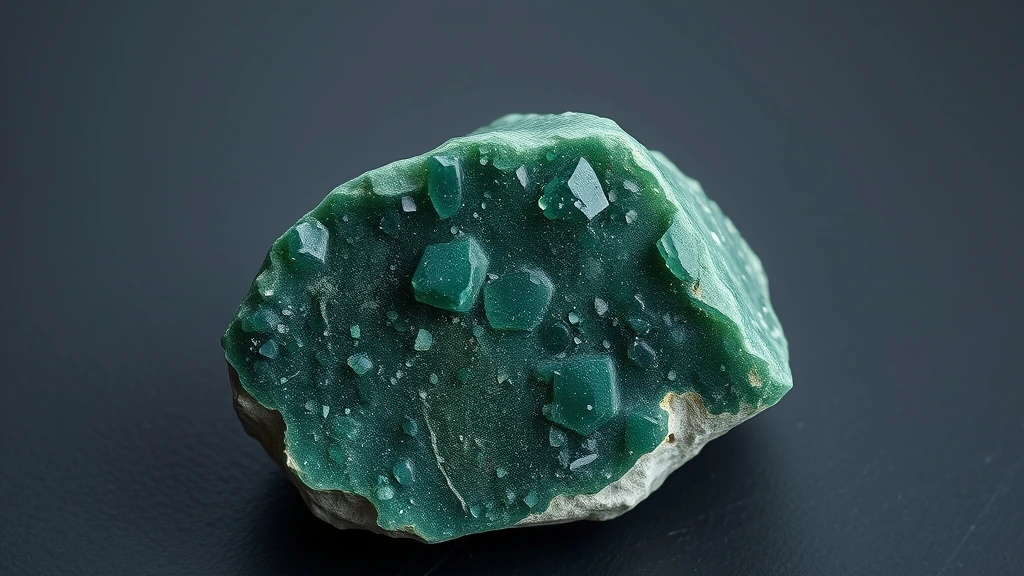
Green dolomite belongs to the natural mineral group of carbonates and is classified as a trigonal crystal. Formed in sedimentary environments through the replacement of limestone, it often occurs as massive or fibrous aggregates that can be cut into cabochons for ornamental purposes. Its geological setting links it to dolomitization processes where magnesium‑rich fluids alter calcite, producing the distinctive green hues prized by collectors.
What is Green Dolomite? Geological Overview & Definition
Green dolomite is a carbonate mineral that forms in the trigonal crystal system, typically as rhombohedral or scalenohedral crystals. It occurs in evaporite sequences, dolostone formations, and metamorphosed limestone, where magnesium substitution imparts its characteristic coloration. If you’re drawn to the soothing green of dolomite, you might also appreciate the gentle pastel hues and calming energy of Sherbet Calcite, which complements dolomite’s grounding properties.
In ancient lapidary traditions, green dolomite was valued for its soothing appearance and was often set in ceremonial jewelry. Across early archaeological records, it has been associated with the heart chakra and the zodiac signs Taurus and Virgo, reflecting its reputed qualities of grounding and emotional balance. In comparative mineralogical collections, practitioners and geologists frequently study Dogtooth Calcite alongside this crystal to appreciate their subtle energetic and structural differences.
Green Dolomite Chemical Composition & Crystallographic Properties
The ideal formula CaMg(CO₃)₂ defines dolomite’s double‑carbonate structure, with alternating layers of Ca²⁺ and Mg²⁺ occupying octahedral sites. This ordered layering produces the trigonal lattice, distinguished by a three‑fold rotational axis and a hexagonal‑like unit cell.
Cation substitution is common; trace Fe²⁺, Mn²⁺, or Ni²⁺ can replace Mg²⁺, creating chromophore centers that generate the green color. The presence of these transition metals also influences the mineral’s response to acid, where dilute HCl produces a modest effervescence, less vigorous than pure calcite due to the more stable Mg‑carbonate bonds.
Thermally, green dolomite is stable up to about 350 °C, above which it de‑carbonates to form periclase (MgO) and calcium carbonate. Heating can also cause color fading as Fe‑based chromophores oxidize, a factor gem cutters consider when annealing the stone for clarity.
The trigonal symmetry yields a refractive index ranging from 1.486 to 1.500 and a specific gravity of 2.83–3.00, aligning with its relatively low density among carbonate gemstones. These optical and physical properties, combined with its modest hardness, dictate careful handling in jewelry design.
| Property | Specification |
|---|---|
| Mineral Group | Natural Mineral / Crystal |
| Chemical Formula | CaMg(CO₃)₂ |
| Mohs Hardness | 3.5 – 4.0 |
| Crystal System | Trigonal |
| Specific Gravity (Density) | 2.83 – 3.00 |
| Refractive Index | 1.486 – 1.500 |
| Color & Optical Properties | Natural Green Dolomite color spectrum and optical dispersion |
| Primary Mining Localities | Global primary localities |
| Water & Chemical Resistance | Sensitive (Avoid prolonged water soaking) |
| Chakra Alignment (Traditional) | Heart Chakra |
| Zodiac Affinity (Traditional) | Taurus, Virgo |
| Symbolic Meaning (Traditional) | Grounding, emotional balance, and gentle healing |
Green Dolomite Varieties & Color Spectrum
Green Dolomite displays distinct mineralogical characteristics across its geological varieties and structural habits. Gemologists evaluate these natural varieties based on crystal habit, trace chromophore concentrations, and visual luster.
Primary Natural Green Dolomite
The benchmark natural variety exhibiting diagnostic color saturation and classic crystallographic symmetry.
Distinct Geological Morphs of Green Dolomite
Secondary regional and structural varieties formed under localized geological temperature and pressure conditions.
Emerald‑Green Dolomite
Formed in low‑temperature sedimentary basins, this variety acquires its vivid hue from trace chromium and nickel substituting for magnesium in the crystal lattice. Thin, parallel laminae of calcite often appear as subtle growth bands, enhancing its gemmy depth. Found chiefly in the Dolomites of northern Italy, it is prized for its rarity and intense saturation.
Apple‑Green Dolomite (Myrtle Dolomite)
Developed within karstic carbonate platforms, the apple‑green shade results from fine‑grained iron‑oxide inclusions dispersed throughout the host matrix. The stone exhibits a faint chatoyancy when cut as cabochons, a visual signature cherished by collectors. Major sources include the Appalachian region of the United States, where mining yields modest quantities each year.
Olive‑Tinted Dolomite (Verdigris Dolomite)
This morph originates in hydrothermal veins where manganese enrichment imparts a muted olive tone. Microscopic fluid inclusions create a subtle internal glow under ultraviolet light, a trait valued in metaphysical circles. Deposits in the Potosí highlands of Bolivia provide the bulk of commercial supply, though the material remains relatively scarce.
Sea‑Foam Green Dolomite
Generated in marine reef environments, the sea‑foam hue is a product of copper traces and microscopic dolomite‑calcite intergrowths. The stone often displays a delicate, almost translucent translucency that mimics the surface of calm water. Primary localities include the coastal ranges of New Zealand, where limited extraction preserves its exclusivity.
Forest‑Green Dolomite (Jade‑Like Dolomite)
Formed under high‑pressure conditions within metamorphosed limestone, this variety’s deep forest shade derives from combined chromium and vanadium impurities. Its surface may exhibit a faint pleochroic effect, shifting between green tones as the stone is rotated. Rare finds in the Qinghai‑Tibet plateau of China command premium prices among connoisseurs.
Where is Green Dolomite Found? Geological Mining & Extraction
Green dolomite typically occurs in dolostone sequences that have undergone diagenetic recrystallization, often interlayered with limestone and marl. In many deposits, the gemstone is extracted from vein‑filled breccias where hydrothermal fluids introduced chromophoric elements, creating the characteristic coloration.
Principal mining districts include the Italian Dolomites, the Appalachian carbonate platform of the eastern United States, and the high‑altitude carbonate belts of the Andes in Bolivia. Smaller, high‑grade occurrences are reported from New Zealand’s South Island and the Qinghai‑Tibet region, where artisanal miners employ selective hand‑picking to preserve the stone’s integrity.
Historical Significance & Cultural Lore of Green Dolomite
Across ancient lapidary traditions, green dolomite was fashioned into amulets and inlays for elite jewelry, valued for its soothing hue. In Greco‑Roman texts, the stone was referred to as “*emerald‑like dolomite*,” believed to promote emotional balance and protect travelers from misfortune.
In early Chinese burial goods, green dolomite beads appear alongside jade, symbolizing grounding and the vitality of spring. Vedic literature mentions a “*green stone of the earth*” used in ritual altars to harmonize the heart chakra, reflecting a cross‑cultural reverence for its calming properties.
Modern Uses & Jewelry Applications of Green Dolomite
Green dolomite is favoured for its soft, buttery hue that responds well to both cabochon and facet cutting. Lapidary artisans often shape it into smooth cabochons for pendants, while skilled cutters can produce modest facets for rings and earrings. Its relative softness also makes it ideal for ornamental carving in decorative boxes, inlays, and small sculpture pieces.
- Cabochon pendants and lock‑sets showcasing the stone’s translucent green‑gray glow
- Faceted rings or earrings where subtle sparkle is enhanced by polished facets
- Inlaid mosaics, watch plates, and miniature figurines for decorative arts
Metaphysical Properties & Traditional Meaning of Green Dolomite
According to historical traditions and metaphysical lore, green dolomite is associated with grounding and the gentle balancing of emotions. Across ancient Mediterranean and Vedic lapidary records, the stone was believed to calm turbulent feelings, fostering inner peace and nurturing the heart’s capacity for love. Its subtle energy is said to support emotional resilience, encouraging a calm, steady outlook in daily life.
Which Chakra and Zodiac Signs Align with Green Dolomite?
In universal esoteric systems, green dolomite resonates specifically with the Heart Chakra, promoting compassion, forgiveness, and emotional openness. Practitioners claim that placing the stone on the chest area amplifies its soothing vibrations, helping to release stored emotional tension.
The stone’s astrological affinity is limited to the Taurus and Virgo signs, both earth‑signs noted for practicality and stability. Aligning green dolomite with these zodiac energies is thought to reinforce perseverance, nurture personal values, and deepen the wearer’s connection to the natural world.
How to Identify Real vs. Fake Green Dolomite
Artificial imitations of green dolomite include dyed quartz, synthetic glass, and resin composites that mimic its colour but lack its mineralogical signature. These substitutes often feel heavier, display a glassy luster, or show uniform colour without the natural inclusions typical of genuine dolomite. Recognising these differences is essential for collectors and buyers.
Practical At-Home Authenticity Tests
- Temperature Test (Thermal Feel): Real dolomite absorbs heat slowly and feels cool to the touch, whereas glass or plastic warms quickly in the hand.
- Specific Gravity & Weight Test: With a density of 2.83–3.00 g/cm³, genuine dolomite feels noticeably heavier than glass (≈2.5 g/cm³) of similar size.
- Scratch & Hardness Test (Mohs Comparison): Using a steel nail (hardness ~5.5) will leave a faint scratch on dolomite (hardness 3.5–4), while glass often resists scratching.
- Microscopic & Loupe Inspection (Internal Inclusions): Under 10× magnification, natural dolomite shows fine, irregular inclusions and growth striations; synthetic glass appears uniformly clear with no internal features.
Green Dolomite Valuation Factors, Grading & Pricing
The market value of green dolomite is first and foremost driven by Color Saturation. A specimen with a deep, uniform green hue and minimal veining commands a premium, as collectors prize visual vibrancy that suggests a pristine geological origin. The natural energetic luster, perceived through subtle iridescence, also enhances desirability, especially among those who value the stone’s metaphysical associations with the heart chakra.
Second, Crystal Size & Weight (Grams) plays a decisive role. Larger, well-formed crystals that retain their natural matrix inclusions are prized for their dramatic presence, while smaller, tumbled pieces are valued for their polished finish and ease of display. The weight of the specimen, measured in grams, provides a reliable metric for comparison, and a higher mass often correlates with greater density and structural integrity, both of which are sought after in the trade.
Finally, Ethical Sourcing & Locality Premium influences pricing in both holistic and collector markets. Stones extracted from well-documented, responsibly managed deposits—such as those in the Dolomites of Italy or the limestone formations of the United States—receive a premium due to their traceable provenance. Ethical sourcing practices that ensure fair labor conditions and minimal environmental impact further elevate the stone’s market value, appealing to conscientious buyers who prioritize sustainability.
How to Clean and Care for Green Dolomite
To preserve the integrity of green dolomite, wipe the surface briefly with a damp cloth and dry immediately. Avoid prolonged exposure to water and never use ultrasonic cleaners, as the moisture and vibration can induce microfractures in this soft carbonate mineral. After cleaning, store the specimen in a low‑humidity environment, away from direct moisture or temperature fluctuations, to prevent potential degradation.
Cleansing and Recharging Green Dolomite (Energetic Care)
For energetic renewal, place the stone in gentle moonlight for several hours, allowing the natural lunar energy to cleanse without exposing the crystal to heat. Alternatively, resting the dolomite on a selenite charging slab can transfer positive vibrations, enhancing its grounding properties while keeping the mineral free from thermal stress. Herbal smudging with sage or palo santo offers a subtle, aromatic cleanse that respects the stone’s delicate lattice, ensuring that the green dolomite remains both physically intact and energetically balanced.
Frequently Asked Questions About Green Dolomite
Green Dolomite displays distinct mineralogical characteristics across its geological varieties and structural habits. Gemologists evaluate these natural varieties based on crystal habit, trace chromophore concentrations, and visual luster.
Primary Natural Green Dolomite
The benchmark natural variety exhibiting diagnostic color saturation and classic crystallographic symmetry.
Distinct Geological Morphs of Green Dolomite
Secondary regional and structural varieties formed under localized geological temperature and pressure conditions.
Is green dolomite suitable for everyday jewelry wear?
Yes, but it should be handled with care. Green dolomite is moderately soft (3.5–4.0 on the Mohs scale), making it prone to scratches. Wear it in low-impact settings and avoid rough surfaces. Use a soft cloth for cleaning and store it separately from harder stones to preserve its luster.
Can I wear green dolomite in the shower or while swimming?
No, avoid prolonged water exposure. Green dolomite is chemically stable in water and does not absorb moisture or suffer surface damage from normal water exposure. Keep it dry and remove it before showering or swimming to maintain its structural integrity.
How should I clean a green dolomite?
Wipe briefly with a damp cloth and dry immediately. Use a soft microfiber cloth or a gentle brush for dust removal. Avoid ultrasonic cleaners, as vibrations can cause microfractures in this relatively fragile mineral.
Does green dolomite dissolve in water or acids?
It does not dissolve in plain water but can be affected by acids. While it is water-resistant, exposure to strong acids or prolonged soaking can alter its surface. Store it in a dry environment and keep it away from acidic substances to prevent chemical weathering.
Which zodiac signs are associated with green dolomite?
Taurus and Virgo are the aligned zodiac signs. These signs are believed to resonate with the grounding and emotional balance qualities of green dolomite. Incorporating the stone into personal adornments may enhance these traits according to astrological traditions.
Which chakra does green dolomite correspond to?
Green dolomite is linked to the Heart Chakra. This connection emphasizes its reputed ability to promote emotional balance and gentle healing. Wearing or meditating with the stone may support heart-centered energy flow.
Is green dolomite safe for children or pets?
It is generally safe but should be monitored. Due to its moderate softness, it can be knocked or broken if mishandled. Keep it out of reach of very young children and pets that might chew or drop it, and supervise its use in play or educational settings.
Can green dolomite be used in industrial or scientific applications?
Yes, primarily as a decorative or educational material. Its distinct green coloration and trigonal crystal structure make it valuable for geological displays and teaching. However, Its resistance to water allows it to be used in environments with high humidity or exposure to liquids without adverse effects.