
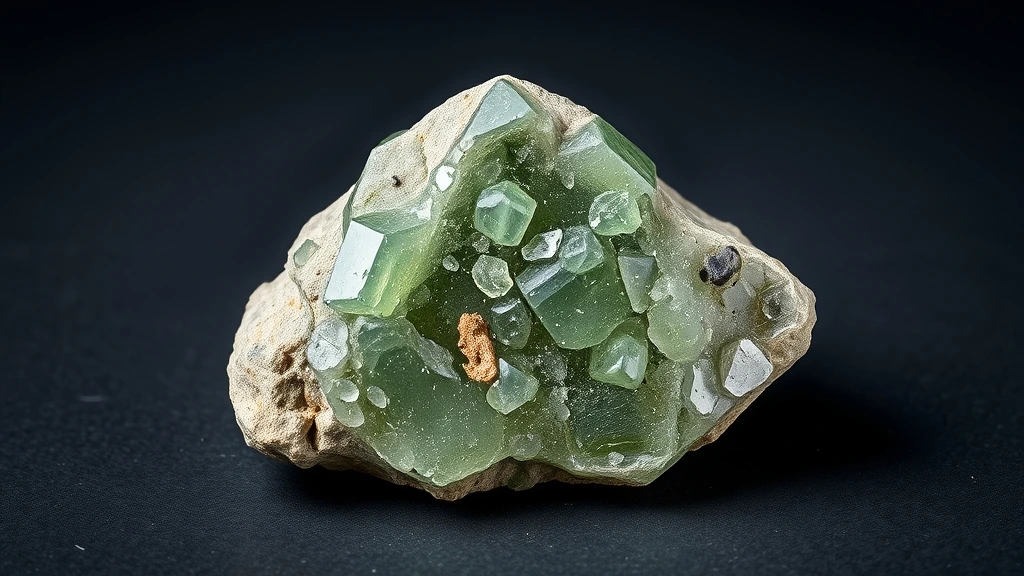
Hiddenite belongs to the natural mineral/crystal category and is classified as an amorphous‑to‑cryptocrystalline aggregate rather than a well‑defined single crystal. Formed in lithium‑rich pegmatites, it derives from the parent mineral spodumene but loses long‑range order during metamorphic alteration, yielding a micro‑crystalline fabric that still exhibits the characteristic green hue.
What is Hiddenite Gemstone? Geological Overview & Definition
Hiddenite is a gem‑quality, lithium‑bearing silicate that occurs as minute, intergrown crystals too small to resolve with the naked eye. Its name honors the 19th‑century American mineralogist William Hidden, who first identified the gemstone in North Carolina’s Hiddenite locality.
The stone is typically found in pegmatitic veins where rapid cooling traps trace amounts of chromium and vanadium, the primary chromophores that impart its signature green coloration. These deposits are often associated with quartz, feldspar, and mica, reflecting a complex geological environment rich in volatile components.
Hiddenite Gemstone Chemical Composition & Crystallographic Properties
Although its bulk chemistry is expressed as Ca(Cr,Fe)Si₂O₆, Hiddenite’s structure is cryptocrystalline, meaning the individual spodumene crystals are sub‑microscopic and lack a continuous lattice detectable by standard X‑ray diffraction. This amorphous‑like behavior distinguishes it from well‑ordered spodumene, which is triclinic in its ideal form.
The cation substitution of Li⁺ by trace Cr³⁺ or V³⁺ ions creates localized color centers that absorb specific wavelengths, producing the vivid green hue. These substitutions occur within the silicate framework without disrupting the overall stoichiometry, preserving the Ca(Cr,Fe)Si₂O₆ backbone.
Hiddenite is acid‑sensitive; exposure to strong acids can leach the chromophore ions, fading the color and potentially altering surface texture. Consequently, gem cutters avoid acidic cleaning agents and instead employ neutral pH solutions to maintain optical integrity.
Thermally, Hiddenite exhibits color stability up to ~400 °C, beyond which the chromophore ions may migrate, leading to irreversible discoloration. Controlled heating is sometimes used to enhance clarity, but excessive heat can induce micro‑fracturing due to the cryptocrystalline matrix’s limited thermal expansion tolerance.
| Property | Specification |
|---|---|
| Mineral Group | Natural Mineral / Crystal |
| Chemical Formula | Ca(Cr,Fe)Si₂O₆ |
| Mohs Hardness | 6.5 – 7.0 |
| Crystal System | Monoclinic |
| Specific Gravity (Density) | 3.50 – 3.55 |
| Refractive Index | 1.670 – 1.735 |
| Color & Optical Properties | Natural Hiddenite Gemstone color spectrum and optical dispersion |
| Primary Mining Localities | Global primary localities |
| Water & Chemical Resistance | High (Safe for gentle water washing) |
| Chakra Alignment (Traditional) | Heart Chakra, Throat Chakra |
| Zodiac Affinity (Traditional) | Taurus, Libra |
| Symbolic Meaning (Traditional) | Emotional healing, peace, and serenity |
Hiddenite Gemstone Varieties & Color Spectrum
Hiddenite is a rare variety of heliodor topaz, distinguished by its unique green hue derived from iron impurities. Unlike standard topaz, this gemstone exhibits a distinct pleochroism that shifts between yellowish-green and olive tones under different lighting conditions. Its scarcity makes it one of the most sought-after collector’s items in the gemological world.
Classic North Carolina Green
This primary variety originates from the famous deposits in North Carolina, where it first gained scientific recognition. The stones typically display a medium to dark green color with a subtle yellowish undertone. Inclusions are minimal, allowing for high clarity in larger, well-formed crystals.
Olive-Tinted Heliodor
Often confused with standard yellow topaz, this morph features a pronounced olive-green saturation due to specific iron oxidation states. It forms within the same pegmatite veins as the classic green variety but undergoes slightly different thermal conditions. Collectors value this shade for its earthy, grounded aesthetic appeal.
Pale Lemon-Green
This lighter variety presents a delicate, almost translucent lemon-green appearance that resembles a fresh lime. It is less common than the darker greens and often found in smaller crystal sizes. The low saturation makes it ideal for delicate jewelry settings that emphasize brilliance.
Deep Forest Green
Representing the rarest end of the spectrum, this variety boasts a rich, deep forest green coloration. Such intense saturation is exceptionally rare, making high-quality specimens highly valuable in the trade. These stones often exhibit a velvety luster that enhances their perceived depth and mystery.
Where is Hiddenite Gemstone Found? Geological Mining & Extraction
Hiddenite is exclusively found in pegmatite deposits, which are coarse-grained igneous rocks formed during the final stages of magma crystallization. The type locality remains the Biltmore Estate in North Carolina, where the mineral was first identified in 1842. These geological formations provide the necessary chemical environment for the iron-induced green coloration.
While North Carolina remains the primary source, minor occurrences have been reported in other pegmatite fields globally. However, commercial-grade material is exceedingly rare, limiting the supply to specialized mining operations. Most available stones are recovered from historical collections rather than active, large-scale extraction sites.
Historical Significance & Cultural Lore of Hiddenite Gemstone
First described by mineralogist James D. Dana in 1855, hiddenite quickly became a subject of scientific fascination. Its discovery in the United States challenged the prevailing belief that topaz was exclusively an Old World mineral. Early specimens were primarily collected by amateur geologists and naturalists exploring the Appalachian region.
The gemstone’s name reflects its elusive nature, as high-quality crystals are rarely found in the trade. It has gained a reputation for promoting emotional healing and inner peace in modern metaphysical practices. This cultural lore complements its scientific rarity, creating a dual appeal for both collectors and spiritual practitioners.
Modern Uses & Jewelry Applications of Hiddenite Gemstone
Lapidaries prize hiddenite for its delicate pastel hues, which require precise faceted cutting to maximize brilliance and fire. Because the stone is relatively soft, artisans often favor cabochon settings for beads and pendants to protect the surface from daily wear. This approach preserves the gem’s gentle luster while showcasing its unique color zoning.
- Faceted Rings: Ideal for engagement or fashion rings, highlighting the stone’s transparency.
- Cabochon Pendants: Smooth domes that emphasize the gem’s soft green or yellow tones.
- Ornamental Carvings: Used in intricate intaglio work for decorative boxes and vases.
- Beaded Bracelets: Polished spheres strung for casual, everyday jewelry pieces.
Carat, Quality Grades & Value Factors of Hiddenite
According to historical traditions and metaphysical lore, hiddenite is revered as a stone of emotional healing and profound inner calm. Practitioners believe it helps dissolve deep-seated resentment, fostering a state of peace and serenity within the wearer. This gentle energy is said to promote self-acceptance and harmonious interpersonal relationships.
The gem is often associated with the heart’s capacity for forgiveness and the throat’s ability to express truth. By balancing these energies, hiddenite encourages users to communicate with clarity and compassion. This alignment supports personal growth and the release of emotional burdens.
Which Chakra and Zodiac Signs Align with Hiddenite Gemstone?
In esoteric practice, hiddenite is primarily aligned with the Heart Chakra, which governs love, empathy, and emotional balance. It also resonates strongly with the Throat Chakra, enhancing the ability to express feelings authentically. This dual connection supports both the reception and articulation of emotional truth.
Astrologically, this gemstone is canonically linked to Taurus and Libra. Both signs value harmony, beauty, and stability, traits that mirror the stone’s gentle aesthetic. Wearing hiddenite is believed to amplify these inherent qualities, promoting peace in personal and professional spheres.
How to Identify Real vs. Fake Hiddenite Gemstone
Distinguishing genuine hiddenite from imitations requires careful observation, as synthetic glass and dyed quartz are common substitutes. Glass often appears too perfect, lacking the natural internal inclusions found in mined specimens. Dyed replicas may show color concentration along crystal boundaries, which is atypical for natural hiddenite.
Practical At-Home Authenticity Tests
- Temperature Test (Thermal Feel): Hold the stone in your palm; genuine hiddenite feels cool initially and warms slowly, while glass warms rapidly to body temperature.
- Specific Gravity & Weight Test: Compare the stone’s weight to a similar-sized piece of glass; hiddenite is slightly denser, feeling heavier than its glass counterpart.
- Scratch & Hardness Test (Mohs Comparison): Hiddenite rates 6.5–7 on the Mohs scale; it should not be scratched by a steel nail (5.5) but may scratch glass (5.5).
- Microscopic & Loupe Inspection (Internal Inclusions): Use a 10x loupe to look for natural inclusions like minute crystals or fluid bubbles; glass often contains spherical bubbles, while hiddenite shows irregular mineral traces.
Hiddenite Gemstone Valuation Factors, Grading & Pricing
The primary driver of value is Color Saturation, specifically the intensity of the yellow-green hue. Experts assess tone uniformity across the stone to ensure no zoning or patchiness exists. High optical clarity and a bright, glassy luster significantly elevate the gem’s desirability in the market.
Carat Weight directly influences price, as larger, eye-clean specimens are exceedingly rare in nature. Facet symmetry must be precise to maximize light return and visual appeal for the buyer. The presence of matrix or internal inclusions often reduces value, though some collectors appreciate natural character.
Geographical Provenance Premium applies to stones from historic mines like North Carolina or Australia. These origins command higher wholesale and retail prices due to their rarity and historical significance. Current market trends show steady appreciation for high-grade, untreated hiddenite specimens.
How to Clean and Care for Hiddenite Gemstone
For routine maintenance, use warm soapy water and a soft, lint-free cloth to gently wipe the surface. This method effectively removes oils and dust without risking damage to the delicate crystal structure. Always rinse thoroughly with clean water and dry immediately with a soft towel.
It is critical to avoid ultrasonic cleaners when handling hiddenite, as vibrations can cause structural fractures. This gemstone has high water resistance, making gentle washing safe, but mechanical agitation is strictly prohibited. Never expose the stone to harsh chemicals or extreme temperature shocks during cleaning.
Cleansing and Recharging Hiddenite Gemstone (Energetic Care)
To energetically cleanse your hiddenite, use smoke smudging with sage or palo santo for a dry, safe purification. This method respects the mineral’s physical integrity while clearing any perceived negative energy. Allow the smoke to pass gently over the stone for a few minutes.
For recharging, place the gem on a selenite plate or under moonlight overnight. These dry methods align with the stone’s association with the Heart and Throat Chakras. This practice promotes emotional healing and serenity without risking physical damage from water or heat.
Frequently Asked Questions About Hiddenite Gemstone
What is the chemical composition of hiddenite?
Hiddenite is a green variety of the mineral spodumene, whose formula is LiAlSi₂O₆. It belongs to the pyroxene group and derives its color from trace amounts of chromium. The lithium‑rich crystal structure gives the stone excellent hardness (6.5–7 on the Mohs scale) and good durability for jewelry.
How should I clean hiddenite jewelry?
Clean hiddenite with warm, soapy water and a soft cloth; avoid ultrasonic cleaners. The stone’s crystal lattice can fracture under high‑frequency vibrations, so gentle hand washing preserves its brilliance. After cleaning, pat dry with a lint‑free towel to prevent water spots.
Is hiddenite safe to wear in the shower or while swimming?
Hiddenite has high water resistance and is safe for gentle water washing. While it tolerates brief exposure to water, prolonged soaking or harsh detergents can weaken any pre‑existing fractures. Remove the piece before intense activities to maintain its structural integrity.
Which zodiac signs are associated with hiddenite?
Hiddenite aligns with the zodiac signs Taurus and Libra. These signs are said to benefit from the stone’s stabilizing energy, enhancing balance and harmony in personal relationships. The gemstone’s calming hue resonates with the earthy nature of Taurus and the diplomatic spirit of Libra.
Which chakras does hiddenite influence?
Hiddenite is linked to the Heart Chakra and the Throat Chakra. It is believed to promote emotional healing and clear communication, helping wearers express feelings with compassion. The stone’s green color reinforces the heart’s energy while supporting vocal expression.
Can hiddenite be used in everyday rings?
Yes, hiddenite’s hardness of 6.5–7 makes it suitable for daily wear in rings. However, protect the stone from hard knocks and avoid exposing it to strong chemicals. Regular gentle cleaning will keep its sparkle intact without compromising the crystal lattice.
How can I tell if a hiddenite is genuine?
Authentic hiddenite exhibits a vivid, emerald‑green hue and shows clear, well‑defined crystal faces. Look for a refractive index between 1.658 and 1.662 and a specific gravity of 3.15–3.20. Laboratory testing, such as spectroscopy, can confirm the presence of chromium trace elements.
Does hiddenite improve emotional well‑being?
Many practitioners credit hiddenite with fostering emotional healing, peace, and serenity. The stone’s energy is thought to calm anxiety, promote self‑acceptance, and encourage honest expression. While scientific evidence is limited, its soothing green color often provides a comforting visual cue for mindfulness practices.