
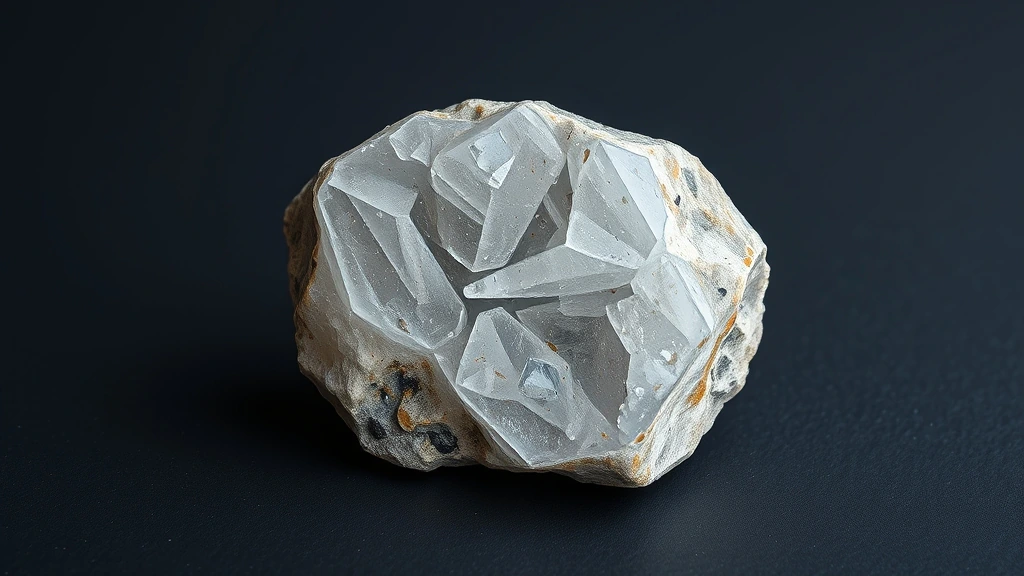
Himalayan Quartz belongs to the extensive Quartz Group within the silicate mineral family. Specifically, it is classified as a tectosilicate, characterized by a continuous three-dimensional framework of silicon-oxygen tetrahedra. This structural arrangement provides the mineral with its characteristic rigidity and chemical stability. The stone forms through the slow cooling of silica-rich magmas or hydrothermal solutions. Its geological origin is distinct from other quartz varieties due to specific trace element inclusions.
What is Himalayan Quartz? Geological Overview & Definition
This gemstone is a macrocrystalline form of silicon dioxide found primarily in the Himalayan mountain range. It often appears as clear, translucent, or slightly opaque specimens with a glassy luster. The stone’s formation is linked to tectonic activity and metamorphic processes. These geological forces create the unique stress patterns visible in some samples. While pure Himalayan Quartz displays these stress patterns, its cousin, Tourmalinated Quartz, incorporates dark tourmaline needles within the same silicate matrix, offering a striking visual contrast that highlights the diverse mineral inclusions possible in these high-altitude formations.
Himalayan Quartz is distinct from smoky or amethyst varieties due to its color impurities. It typically lacks significant iron or manganese inclusions that cause darker tones. Instead, it maintains a high degree of purity and clarity. This makes it a preferred material for precision optical instruments. Its geological setting also influences its internal lattice symmetry.
Himalayan Quartz Chemical Composition & Crystallographic Properties
The mineral crystallizes in the Trigonal system, specifically within the rhombohedral or trapezohedral classes. This symmetry dictates the geometric arrangement of atoms in the crystal lattice. The unit cell is defined by equal axes with non-90-degree angles. Such structural precision contributes to the stone’s piezoelectric properties. In comparative mineralogical collections, practitioners and geologists frequently study Mica In Quartz alongside this crystal to appreciate their subtle energetic and structural differences.
The primary chemical component is SiO₂, with a density of 2.65 g/cm³. Minor cation substitutions, such as aluminum replacing silicon, can occur but are rare. These substitutions do not significantly alter the overall stoichiometry. The refractive index ranges from 1.544 to 1.553. This optical property allows for effective light refraction in cut gems.
The stone exhibits high acid sensitivity only under extreme conditions. Generally, it is resistant to common acids and alkalis. Thermal behavior remains stable up to high temperatures without phase changes. Color centers, if present, are usually due to lattice defects. These defects can shift slightly under intense radiation exposure.
| Property | Specification |
|---|---|
| Mineral Group | Silicates (Tectosilicates / Quartz Group) |
| Chemical Formula | SiO₂ (Silicon Dioxide) |
| Mohs Hardness | 7.0 |
| Crystal System | Trigonal (Rhombohedral / Trapezohedral) |
| Specific Gravity (Density) | 2.65 |
| Refractive Index | 1.544 – 1.553 |
| Color & Optical Properties | Natural Himalayan Quartz color spectrum and optical dispersion |
| Primary Mining Localities | Brazil, Madagascar, USA (Arkansas), Swiss Alps |
| Water & Chemical Resistance | High (Fully resistant to water and moisture) |
| Chakra Alignment (Traditional) | All Chakras (Universal Harmonizer) |
| Zodiac Affinity (Traditional) | All Zodiac Signs (Especially Leo and Aries) |
| Symbolic Meaning (Traditional) | Master energy amplifier, clarity, purification, and focus |
Himalayan Quartz Varieties & Color Spectrum
The geological diversity of this mineral is defined by trace element impurities that alter its optical properties. Himalayan Pink Quartz is the most commercially recognized morph, deriving its hue from lithium and manganese inclusions. This variety typically exhibits a soft, translucent rose coloration that is highly sought after in the lapidary market.
Clear Himalayan Quartz represents the purest crystalline form, lacking significant chromophoric elements. It displays high refractive index values, resulting in exceptional brilliance and transparency. This colorless variant serves as the baseline for assessing the purity of other regional specimens.
Smoky Himalayan Quartz arises from natural irradiation of silicon atoms within the crystal lattice. This process creates color centers that absorb light, producing a range from pale gray to deep brown. The intensity of the smoky tone correlates directly with the duration of geological exposure to radiation.
Amethystine Himalayan Quartz features violet to purple hues caused by iron impurities combined with natural irradiation. While rarer than its pink counterpart, this variety commands a premium due to its distinctive color saturation. Collectors value specimens that maintain a uniform, eye-clean appearance without visible fractures.
Milky Himalayan Quartz contains microscopic fluid inclusions or gas bubbles that scatter light. This results in an opaque to semi-translucent white appearance, often referred to as chalcedony in finer-grained forms. It is abundant in the region and frequently used for carving ornamental objects.
Citrine-like Himalayan Quartz occasionally appears with a warm yellow to orange tint, mimicking natural citrine. This coloration is attributed to specific trace elements interacting with the silica structure under unique pressure conditions. Such specimens are rare and often confused with heat-treated amethyst in the trade.
Himalayan Pink Quartz
This variety forms within pegmatite deposits where lithium-rich fluids interact with the silica matrix. The resulting pink coloration is subtle and often fades near the surface due to oxidation. Geologists identify these deposits by their association with other lithium-bearing minerals like spodumene.
Visually, high-quality specimens exhibit a uniform, pastel rose hue with minimal internal fracturing. The Mohs hardness of seven makes it durable enough for jewelry, though it remains susceptible to sharp impacts. Rarity increases with size, as large, unfractured crystals are difficult to extract from the host rock.
Clear Himalayan Quartz
Pure silica crystals form in hydrothermal veins where the solution is devoid of coloring impurities. These specimens display a trigonal crystal system with well-defined faces and sharp terminations. The lack of inclusions allows for maximum light transmission and sparkle.
In gemological assessment, clarity is the primary determinant of value for this variety. Flawless stones are exceptionally rare, as even minor fluid inclusions can reduce transparency. It is frequently cut into cabochons or faceted gems to enhance its natural luster.
Smoky Himalayan Quartz
Natural irradiation from surrounding uranium-bearing rocks alters the electronic structure of the silicon atoms. This creates color centers that absorb specific wavelengths of visible light, resulting in brown tones. The depth of color varies based on the intensity of the radiation field.
These crystals often exhibit a glassy luster and high transparency when viewed against light. Smoky quartz is valued for its ability to retain color without the need for artificial heat treatment. Large, eye-clean specimens are highly prized by collectors worldwide.
Amethystine Himalayan Quartz
Iron impurities within the crystal lattice are responsible for the violet to purple coloration. Natural irradiation then modifies these iron atoms to produce the characteristic amethyst hue. This variety is less common than clear or pink quartz in the Himalayan region.
The color stability of these stones is excellent, resisting fading under normal lighting conditions. Gemologists assess the saturation and tone to determine market value, with deeper purples commanding higher prices. Inclusions are less common in high-grade specimens, enhancing their overall appeal.
Milky Himalayan Quartz
Microscopic bubbles of water or gas trapped during crystal growth create a cloudy appearance. This fluid inclusion density scatters light, resulting in an opaque to semi-translucent white stone. It is the most abundant variety found in the region’s quartz veins.
Due to its abundance, it is often used for carvings, beads, and decorative objects. The stone’s soft, waxy luster distinguishes it from the glassy appearance of clearer varieties. It is durable and easy to work with, making it popular for artisanal jewelry.
Citrine-like Himalayan Quartz
This rare variety exhibits yellow to orange hues caused by specific trace element interactions. The color is stable and does not fade under sunlight or artificial light. It is often mistaken for natural citrine, which is more commonly associated with
Modern Uses & Jewelry Applications of Himalayan Quartz
Himalayan quartz is prized for its subtle milky translucency, making it a versatile canvas for both classic and contemporary lapidary art. Artisans often employ cabochon cuts to showcase its soft glow, while precision faceting highlights internal striations for a sparkling effect. Ornamental carvings—ranging from prayer beads to intricate figurines—capitalize on the stone’s durability and ease of polishing.
- Cabochon pendants and earrings emphasizing the stone’s gentle sheen
- Faceted rings and brooches that amplify light play and sparkle
- Carved amulets, beads, and decorative objects for spiritual and aesthetic purposes
Metaphysical Properties & Traditional Meaning of Himalayan Quartz
According to historical traditions and metaphysical lore, Himalayan quartz functions as a master energy amplifier, enhancing clarity of thought and purifying the aura. Across ancient Mediterranean and Vedic lapidary records, the stone is revered for its ability to focus intention, promote emotional balance, and support meditation practices. Its gentle resonance is said to calm turbulence, fostering a sense of inner peace while encouraging transparent communication.
Which Chakra and Zodiac Signs Align with Himalayan Quartz?
In universal chakra systems, Himalayan quartz aligns with all chakras, acting as a universal harmonizer that balances each energy center from root to crown. Practitioners claim it can bridge gaps between physical grounding and higher spiritual insight, making it a versatile tool for holistic healing.
Astrologically, the stone is associated with all zodiac signs, with a particular emphasis on Leo and Aries. These fire signs are believed to benefit from the stone’s amplifying properties, which support confidence, leadership, and dynamic expression while still resonating with the broader energies of every sign.
How to Identify Real vs. Fake Himalayan Quartz
Artificial imitations of Himalayan quartz include high‑refractive glass, resin composites, and dyed quartz substitutes that mimic its milky appearance. Synthetic glass often lacks the subtle internal striations of natural stone, while dyed replicas may display uneven coloration under close inspection. Recognizing these differences is essential for collectors and buyers seeking authentic material.
Practical At-Home Authenticity Tests
- Temperature Test (Thermal Feel): Natural quartz feels cool to the touch and retains that coolness longer than glass, which quickly warms to skin temperature.
- Specific Gravity & Weight Test: Genuine Himalayan quartz has a density around 2.65 g/cm³; a simple heft comparison with a known quartz sample can reveal lighter, glassy fakes.
- Scratch & Hardness Test (Mohs Comparison): With a hardness of 7, the stone will resist scratches from a steel file but will be scratched by a diamond point, unlike softer glass which shows visible marks.
- Microscopic & Loupe Inspection (Internal Inclusions): Under 10× magnification, natural quartz displays fine, wispy inclusions and growth lines, whereas glass typically appears uniformly clear or shows bubble patterns.
Himalayan Quartz Valuation Factors, Grading & Pricing
The market first assesses color saturation, noting the depth of pink, rose, or violet hues that differentiate Himalayan Quartz from ordinary clear quartz. Vibrancy is judged under natural lighting, with specimens displaying a uniform, luminous glow commanding higher prices. Collectors also value the subtle internal sheen that suggests energetic purity.
Next, crystal size & weight (grams) drives valuation, as larger, heavier pieces offer greater visual impact and command premium rates. Raw, unpolished blocks are priced lower than expertly tumbled stones that reveal a smooth, reflective surface. Natural matrix inclusions, such as mica or mineral veining, can enhance uniqueness but may reduce price if they obscure clarity.
Finally, ethical sourcing & locality premium influences both holistic and collector markets. Stones mined responsibly in the Himalayan foothills, with documented fair‑trade practices, attract buyers seeking provenance and sustainability. Provenance adds a cultural narrative that can elevate price, especially when paired with certifications from recognized gemological labs.
How to Clean and Care for Himalayan Quartz
Himalayan Quartz tolerates moisture, so it can be gently washed with warm water and a mild soap solution. Use a soft, lint‑free cloth to rub the surface, then rinse thoroughly and pat dry with a clean microfiber towel. The stone is also safe for ultrasonic cleaning, provided it is not heavily fractured or cracked.
Cleansing and Recharging Himalayan Quartz (Energetic Care)
For holistic maintenance, place the quartz in a bowl of dried herbs such as sage or lavender, allowing the aromatic smoke to drift over the stone for a few minutes; this clears residual energetic debris without physical contact. Alternatively, lay the crystal on a clean selenite slab overnight, where the neutral selenite field gently restores its vibrational balance.
Expose the stone to gentle moonlight for several hours, preferably during a full moon, to absorb lunar energy and enhance its natural clarity. Avoid direct, intense sunlight or any heat source, as excessive thermal stress can fracture the crystal lattice and diminish both its aesthetic and metaphysical qualities.
Frequently Asked Questions About Himalayan Quartz
Himalayan Quartz displays distinct mineralogical characteristics across its geological varieties and structural habits. Gemologists evaluate these natural varieties based on crystal habit, trace chromophore concentrations, and visual luster.
Primary Natural Himalayan Quartz
The benchmark natural variety exhibiting diagnostic color saturation and classic crystallographic symmetry.
Distinct Geological Morphs of Himalayan Quartz
Secondary regional and structural varieties formed under localized geological temperature and pressure conditions.
Is Himalayan quartz safe to wear in the shower?
Yes, Himalayan quartz is fully resistant to water and moisture. The crystal’s SiO₂ composition and high density make it impervious to rain, steam, or prolonged exposure to water, ensuring it retains its clarity and structural integrity in wet environments.
Can I clean Himalayan quartz with an ultrasonic cleaner?
Yes, it can be cleaned with an ultrasonic cleaner using warm water and mild soap. The quartz’s robust lattice tolerates ultrasonic vibrations, but avoid heavy fracturing; otherwise, gentle hand washing with a soft brush is preferable to preserve surface polish.
Does Himalayan quartz have any special chakra associations?
It harmonizes all chakras as a universal energizer. Across ancient lapidary traditions, this quartz is prized for its ability to balance the entire energy body, promoting clarity, purification, and focused intention in meditation practices.
Which zodiac signs benefit most from Himalayan quartz?
All zodiac signs, especially Leo and Aries, find resonance with this stone. Its energetic amplification aligns with the dynamic traits of fire signs while providing grounding support for the entire zodiac spectrum.
Is Himalayan quartz suitable for jewelry that will be exposed to sunlight?
Yes, it remains stable under UV exposure. The crystal’s refractive index of 1.544–1.553 ensures minimal color shift, making it ideal for daily wear in bright environments without fading or degradation.
How does Himalayan quartz compare to other quartz varieties in terms of hardness?
It shares the same Mohs hardness of 7.0 as other quartz types. This uniform hardness allows it to resist scratches from common metals and everyday wear, maintaining its pristine appearance over time.
Can Himalayan quartz be used in industrial or scientific applications?
Absolutely, its purity and crystalline structure make it valuable for precision optics and electronic components. The material’s consistent refractive properties and chemical stability are essential in laser optics, crystal oscillators, and high‑frequency circuits.
Does Himalayan quartz contain any trace elements that affect its color or clarity?
Typically, it is colorless or milky with minimal inclusions. Occasional trace impurities may produce faint hues, but these do not alter its fundamental SiO₂ composition or its functional properties in gemological or metaphysical contexts.