
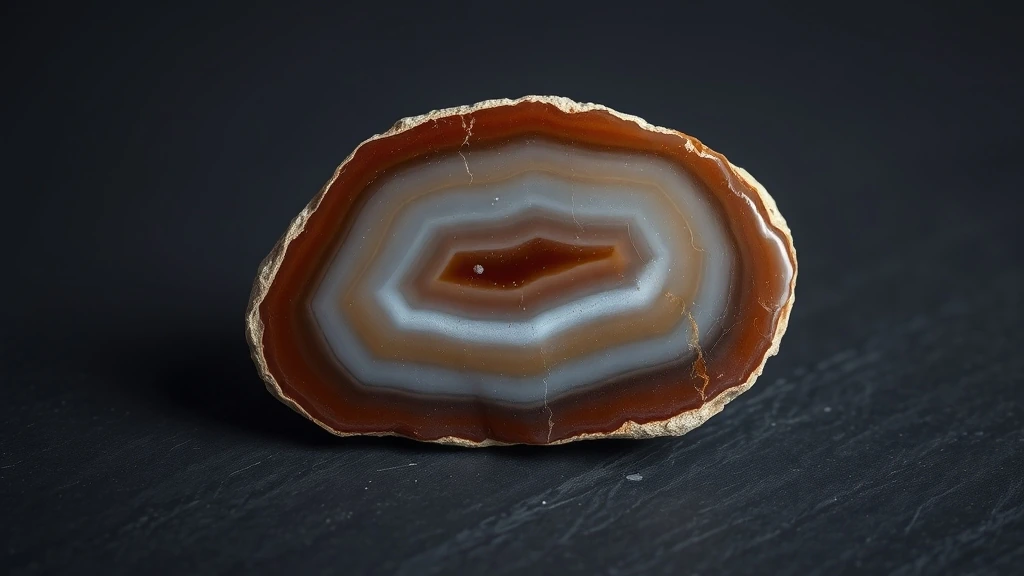
Indonesia agate belongs to the chalcedony family, a cryptocrystalline quartz aggregate whose fibers interlock on a microscopic scale. Formed in volcanic tuffs and silica‑rich hydrothermal veins, the stone records successive episodes of mineral precipitation, producing its characteristic concentric banding. Its genesis ties to the tectonically active Sunda Arc, where rapid cooling of silica‑laden fluids yields the fine‑grained, trigonal fabric that defines true agate.
What is Indonesia Agate? Geological Overview & Definition
Indonesia agate is a cryptocrystalline silica rock composed of intergrown quartz microfibers that lack visible crystal faces to the naked eye. The stone’s banded appearance results from periodic changes in impurity concentrations, chiefly iron oxides and manganese, which act as natural pigments during formation. Across the Indonesian archipelago, especially on Java and Sulawesi, these deposits occur in volcanic ash layers that have been silicified over millions of years.
In lapidary tradition, agate is prized for its hardness and translucency, allowing artisans to polish it to a high sheen without fracturing. Its microstructure imparts a distinctive conchoidal fracture, enabling precise carving of beads, cabochons, and intaglios. The stone’s durability, combined with its vivid color bands, has secured a lasting place in both ancient trade routes and modern gemstone markets. Among the diverse spectrum of banded varieties, Strawberry Onyx stands out for its unique pinkish-red hues, offering a striking contrast to the traditional earth tones typically associated with Indonesian agate.
Indonesia Agate Chemical Composition & Crystallographic Properties
The aggregate is fundamentally SiO₂, yet it does not possess a single, uniform crystal lattice; instead, it consists of countless quartz fibers aligned in a trigonal (microcrystalline/cryptocrystalline fibrous) arrangement. These fibers share the same hexagonal symmetry of quartz but are randomly oriented on a macroscopic scale, giving agate its isotropic optical behavior despite the underlying trigonal order. In comparative mineralogical collections, practitioners and geologists frequently study Pink Banded Onyx alongside this crystal to appreciate their subtle energetic and structural differences.
Trace cations such as Fe²⁺, Mn²⁺, and Ti⁴⁺ substitute for silicon within the silica framework, creating chromophore color centers that produce the stone’s brown, red, and orange bands. These substitutions do not alter the overall density (2.60–2.65 g/cm³) but influence the refractive index, which varies between 1.544 and 1.553 across different layers.
Agate is chemically stable in neutral water but reacts slowly with strong acids, which can dissolve the silica matrix and release the embedded metal ions. This acid sensitivity is a diagnostic feature distinguishing it from more resistant crystalline quartz. Thermal treatment can induce color changes by altering the oxidation state of iron impurities, a process exploited in heat‑enhanced gemstone grading.
The aggregate’s thermal expansion is modest and isotropic, reflecting the uniform distribution of microfibers. Upon heating above 573 °C, the structure may transition toward macrocrystalline quartz, potentially reducing the characteristic banding. However, typical gemstone processing temperatures remain well below this threshold, preserving the stone’s distinctive appearance.
| Property | Specification |
|---|---|
| Mineral Group | Silicates (Chalcedony / Cryptocrystalline Quartz) |
| Chemical Formula | SiO₂ (Silicon Dioxide) |
| Mohs Hardness | 6.5 – 7.0 |
| Crystal System | Trigonal (Microcrystalline / Cryptocrystalline fibrous aggregates) |
| Specific Gravity (Density) | 2.60 – 2.65 |
| Refractive Index | 1.544 – 1.553 |
| Color & Optical Properties | Natural Indonesia Agate color spectrum and optical dispersion |
| Primary Mining Localities | Brazil, Uruguay, Turkey, India, Madagascar |
| Water & Chemical Resistance | High (Safe for gentle warm water and mild soap; avoid harsh acids and chlorine) |
| Chakra Alignment (Traditional) | Root Chakra and Sacral Chakra |
| Zodiac Affinity (Traditional) | Gemini, Virgo, Taurus |
| Symbolic Meaning (Traditional) | Grounding, emotional balance, physical endurance, and protection |
Indonesia Agate Varieties & Color Spectrum
Indonesia Agate displays distinct mineralogical characteristics across its geological varieties and structural habits. Gemologists evaluate these natural varieties based on crystal habit, trace chromophore concentrations, and visual luster.
Primary Natural Indonesia Agate
The benchmark natural variety exhibiting diagnostic color saturation and classic crystallographic symmetry.
Distinct Geological Morphs of Indonesia Agate
Secondary regional and structural varieties formed under localized geological temperature and pressure conditions.
Borneo Band Agate
Formed in the volcanic tuffs of Kalimantan, Borneo Band Agate displays concentric layers of milky white, amber, and deep brown. The bands result from rhythmic silica deposition during cooling of hydrothermal fluids, creating a cryptocrystalline texture that diffracts light with a subtle sheen. This variety is moderately common in local markets but prized for its consistent banding pattern.
Java Moss Agate
Originating from the basaltic flows of Central Java, Java Moss Agate incorporates fine green inclusions that mimic moss or foliage. Microscopic chlorite and epidote crystals become trapped in the silica gel, producing a verdant, almost translucent matrix. Its rarity stems from the precise conditions required for green mineral inclusion, making it a collector’s favorite.
Sulawesi Fire Agate
Found in the high‑temperature fissure veins of Sulawesi’s limestone cliffs, Sulawesi Fire Agate exhibits iridescent flashes of orange, red, and gold. The play of color is caused by thin‑film interference within layered silica lamellae, a phenomenon known as the “fire effect.” Limited to a few active quarries, this variety commands premium prices among gem traders.
Bali Oceanic Agate
Bali’s coastal volcanic ash beds yield Bali Oceanic Agate, characterized by deep blue and turquoise swirls reminiscent of sea foam. The hue arises from trace amounts of iron oxide and copper inclusions that oxidize during diagenesis. Though abundant along the island’s east coast, high‑quality stones with vivid coloration are comparatively scarce.
Sumatra Rainbow Agate
In the granitic pegmatites of North Sumatra, Sumatra Rainbow Agate showcases a kaleidoscope of pink, lavender, and citrine bands. The multicolored pattern reflects variations in silica supersaturation and episodic fluid influx, producing alternating layers of differing impurity concentrations. Its striking visual complexity makes it a sought‑after material for high‑end jewelry.
Lombok Desert Agate
Extracted from the arid volcanic fields of Lombok, Lombok Desert Agate features warm ochre, rust, and cream tones with occasional white chalcedony veins. The desert palette is a product of iron‑rich groundwater percolating through silica‑rich sediments, leaving mineral stains that harden into the agate matrix. While relatively plentiful, stones with minimal veining are considered premium.
Where is Indonesia Agate Found? Geological Mining & Extraction
Agate deposits in Indonesia are primarily hosted within silicified volcanic tuffs and basaltic lava flows that have undergone secondary silica replacement. These cryptocrystalline bodies often occur as nodules or veins within the porous matrix of ancient eruptions, where hydrothermal fluids precipitate SiO₂ under low‑temperature conditions, preserving delicate banding and inclusions.
The most productive mining districts include Kalimantan’s Borneo Basin, Central Java’s Dieng Plateau, Sulawesi’s Minahasa highlands, Bali’s eastern volcanic fringe, and North Sumatra’s granitic pegmatite fields. Extraction relies on manual splitting of host rock, followed by careful hand‑sorting to separate agate nodules from surrounding basalt, a practice that has sustained local artisanal economies for generations.
Historical Significance & Cultural Lore of Indonesia Agate
Across ancient lapidary traditions, Indonesian agate entered trade routes linking the Spice Islands to the Roman Empire, where it was prized as a protective amulet. Archaeological sites in Java have yielded agate beads dating to the 2nd century CE, indicating its use in elite adornments and as a status symbol in early Southeast Asian kingdoms.
In historical metaphysical lore, agate from Indonesia was believed to anchor the Root and Sacral Chakras, fostering grounding, emotional balance, and physical endurance. Vedic texts reference “silica stones of the east” for their stabilizing properties, while Chinese travelers recorded the stone’s role in ceremonial rites, underscoring its enduring cross‑cultural reverence.
Modern Uses & Jewelry Applications of Indonesia Agate
Indonesian agate is prized by lapidaries for its vibrant, banded patterns that range from deep ocean blues to striking reds and greens. The stone’s Mohs hardness of 6.5 to 7.0 makes it exceptionally durable for daily wear in rings, pendants, and bracelets. Skilled artisans often utilize cabochon cutting to highlight the smooth, polished surface and the natural concentric banding inherent to this cryptocrystalline silica variety.
- Cabochon Jewelry: Polished domes that emphasize the stone’s luster and complex internal banding without faceting.
- Ornamental Carvings: Intricate sculptures and decorative inlays used in high-end architectural and interior design projects.
- Beads and Carvings: Small, drilled beads for necklaces and elaborate carved figurines showcasing the stone’s translucency.
- Watch Cases and Pens: Durable inlays for luxury accessories where the stone’s resilience against scratching is essential.
Metaphysical Properties & Traditional Meaning of Indonesia Agate
According to historical traditions and metaphysical lore, agate has long been revered as a stone of grounding and stability. Ancient Mediterranean and Vedic texts often associated this silica variety with the ability to calm the mind and foster emotional balance. Practitioners believe that wearing agate helps anchor the wearer’s energy, providing a sense of security during times of transition or stress.
In universal lapidary lore, the stone is also linked to physical endurance and protective qualities. Historical records suggest that warriors and travelers carried agate amulets to ward off negative influences and maintain resilience. This enduring reputation for protection has solidified its place in modern spiritual practices as a stabilizing force for the body and spirit.
Which Chakra and Zodiac Signs Align with Indonesia Agate?
Indonesia agate is primarily aligned with the Root Chakra and the Sacral Chakra. The Root Chakra, located at the base of the spine, governs feelings of safety, security, and physical survival. The stone’s earthy tones and grounding energy are believed to stimulate this center, helping individuals feel connected to the physical world and reducing anxiety related to basic needs.
The Sacral Chakra, situated in the lower abdomen, is associated with creativity, emotions, and pleasure. Agate’s ability to promote emotional balance supports this energy center by encouraging healthy emotional expression and fluidity. This dual alignment makes the stone particularly effective for those seeking harmony between physical stability and creative vitality.
Regarding zodiac compatibility, Indonesia agate resonates strongly with Taurus, Gemini, and Virgo. Taurus, an earth sign, finds additional stability and grounding through the stone’s robust energy. Gemini, an air sign, benefits from the agate’s capacity to anchor its rapid mental activity, promoting focus and clarity.
Virgo, another earth sign, appreciates the stone’s connection to physical endurance and meticulous detail. The agate’s structured banding mirrors the Virgo’s analytical nature, helping to organize thoughts and enhance productivity. These three signs share a common need for balance and stability, which the agate effectively provides through its metaphysical properties.
How to Identify Real vs. Fake Indonesia Agate
The market for Indonesian agate is frequently saturated with artificial imitations designed to mimic the stone’s distinctive banding. Common fakes include synthetic glass and dyed replicas made from lower-quality chalcedony or even plastic. These substitutes often lack the natural irregularities and subtle color variations found in genuine geological formations. Understanding the differences is crucial for collectors and buyers to avoid purchasing inferior or fraudulent materials.
Practical At-Home Authenticity Tests
- Temperature Test (Thermal Feel): Genuine agate feels cool to the touch initially and warms up slowly due to its low thermal conductivity. Glass imitations may feel warmer faster or have a different tactile texture.
- Specific Gravity & Weight Test: With a density of 2.60 – 2.65, real agate feels heavier than it looks compared to plastic or lightweight glass. A scale can help verify if the weight matches the expected specific gravity for the stone’s volume.
- Scratch & Hardness Test (Mohs Comparison): Agate has a Mohs hardness of 6.5 – 7.0, meaning it can scratch glass (hardness 5.5) but will not be scratched by a steel knife (hardness 5.5). If the stone is easily scratched by a coin or knife, it is likely a fake.
- Microscopic & Loupe Inspection (Internal Inclusions): Use a 1
Indonesia Agate Valuation Factors, Grading & Pricing
The market value of Indonesia agate hinges first on Color Saturation. Stones with vivid, evenly distributed hues—often a blend of warm reds, oranges, and subtle greens—command higher prices because they reflect superior natural energetic luster. A specimen that displays a harmonious gradient rather than stark banding is especially prized by collectors seeking visual vibrancy.
Second, Crystal Size & Weight (Grams) play a decisive role. Larger, heavier agates typically fetch a premium, but the raw versus tumbled polish quality also matters. A well‑polished surface that reveals the stone’s natural matrix inclusions without compromising structural integrity is more desirable than a rough, unpolished piece of the same weight. The presence of subtle, natural inclusions can add character, yet excessive fracturing reduces value.
Finally, Ethical Sourcing & Locality Premium influences pricing in both holistic and collector markets. Stones sourced from reputable, traceable mines in Indonesia—particularly those that adhere to fair‑trade practices—receive a premium. Provenance from well‑documented localities, such as the renowned Banten or West Java deposits, adds an aura of authenticity that collectors actively seek.
How to Clean and Care for Indonesia Agate
Physical cleaning of Indonesia agate should be performed with warm soapy water, which is gentle enough for solid agates yet effective at removing surface grime. After rinsing, gently pat the stone dry with a soft, lint‑free cloth. Avoid ultrasonic cleaners whenever the specimen is dyed, heavily fractured, or treated, as the vibration can exacerbate existing damage or alter surface coatings.
Cleansing and Recharging Indonesia Agate (Energetic Care)
To cleanse the stone’s energetic field, place the agate on a selenite charging slab under gentle moonlight for several hours. This method allows the mineral to absorb subtle lunar vibrations without exposure to heat or direct sunlight, preserving its crystal lattice. Alternatively, a brief herbal smudging session—using sage or palo santo—can help clear residual energies, provided the stone is kept dry and away from any liquid during the process.
Frequently Asked Questions About Indonesia Agate
Indonesia Agate displays distinct mineralogical characteristics across its geological varieties and structural habits. Gemologists evaluate these natural varieties based on crystal habit, trace chromophore concentrations, and visual luster.
Primary Natural Indonesia Agate
The benchmark natural variety exhibiting diagnostic color saturation and classic crystallographic symmetry.
Distinct Geological Morphs of Indonesia Agate
Secondary regional and structural varieties formed under localized geological temperature and pressure conditions.
What is the chemical composition of Indonesian agate?
It is composed of silicon dioxide (SiO₂). Indonesian agate belongs to the cryptocrystalline quartz family, where countless microscopic silica crystals interlock to form the characteristic banded patterns. This structure gives the stone its durability, a Mohs hardness of 6.5‑7, and a refractive index near 1.55.
How dense is Indonesian agate and what does that mean for jewelry?
Its specific gravity ranges from 2.60 to 2.65. This moderate density makes the gemstone feel solid yet comfortable on the body, allowing it to be set in rings, pendants, or beads without excessive weight. The density also contributes to its resistance against everyday wear.
Is Indonesian agate safe to wear in the shower or while swimming?
Yes, it tolerates gentle warm water and mild soap. The silica framework is water‑resistant, so routine exposure to lukewarm water and a mild cleanser will not damage the stone. However, avoid harsh acids, chlorine, or prolonged submersion in pool water to prevent surface etching.
What is the recommended method for cleaning Indonesian agate?
Warm, soapy water followed by a soft cloth rinse is ideal. Submerge the piece briefly in lukewarm water with a mild detergent, then gently rub with a soft brush or microfiber cloth to release trapped dirt. Rinse and pat dry; ultrasonic cleaning should be avoided for dyed or fractured specimens.
Which zodiac signs are traditionally linked to Indonesian agate?
Gemini, Virgo, and Taurus are the aligned signs. Across ancient lapidary traditions, these signs have been associated with the stone’s grounding energy, supporting mental clarity for Gemini, analytical focus for Virgo, and steady determination for Taurus. The connection reinforces the gem’s reputation for balance.
Which chakras does Indonesian agate influence?
It resonates with the Root Chakra and Sacral Chakra. In metaphysical practice, the stone is believed to anchor the wearer to the earth, fostering security, while also stimulating the sacral center to enhance creativity and emotional flow. This dual alignment supports both stability and vitality.
Can Indonesian agate be used in high‑impact settings like rings?
Its hardness of 6.5‑7 makes it suitable for everyday wear. While not as hard as corundum or diamond, the stone’s microcrystalline structure resists scratches and chips under normal conditions. For high‑impact activities, consider protective settings or avoid exposing the piece to sharp blows.
Does Indonesian agate exhibit any notable optical properties?
It displays a refractive index between 1.544 and 1.553, giving a subtle shine. The stone’s banded translucency produces a gentle luster that catches light without the fire of true gemstones. This optical consistency, combined with its vibrant colors, makes it a favorite for both collectors and designers.