
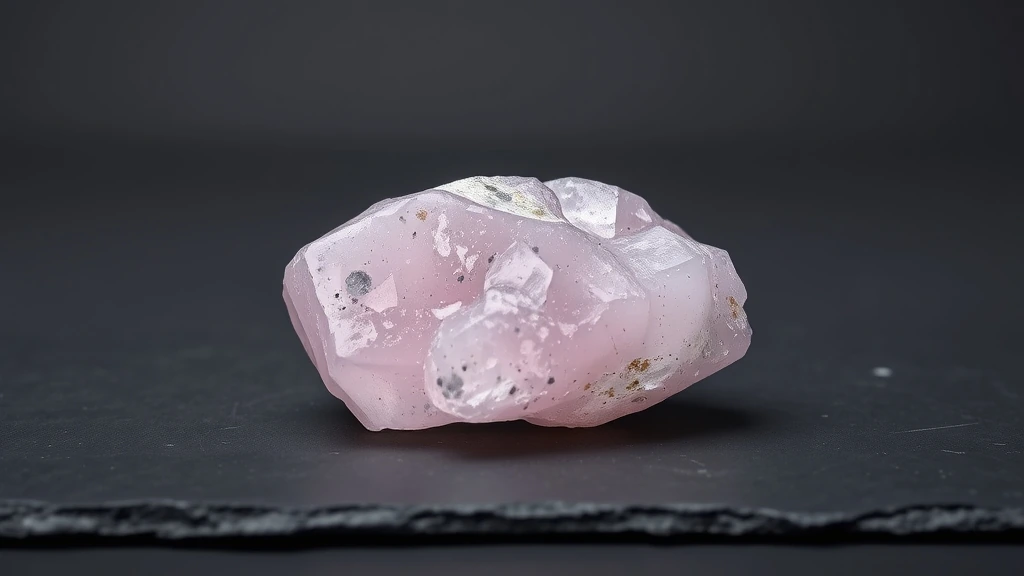
Kunzite belongs to the natural mineral/crystal category and is a member of the spodumene group, a suite of lithium‑rich silicates that crystallize in the monoclinic system. Formed in lithium‑bearing granitic pegmatites, it typically occurs as well‑formed prismatic crystals that are prized for their pleochroic pink hues and moderate durability, bridging the worlds of gemology and economic geology.
What is Kunzite Gemstone? Geological Overview & Definition
Kunzite is the pink‑violet variety of spodumene, a lithium aluminium silicate that crystallizes in the monoclinic crystal system. It is found in late‑stage pegmatitic environments where lithium‑rich fluids infiltrate granitic bodies, producing elongated, tabular crystals that display strong pleochroism.
The gemstone’s name honors the American mineralogist George Frederick Kunz, who first described its distinct coloration in the early 20th century. Its gem-quality transparency, combined with a relatively high refractive index, gives it a brilliant fire that rivals more common pink stones such as rose quartz.
Kunzite Gemstone Chemical Composition & Crystallographic Properties
Kunzite’s ideal formula is LiAl(SiO₃)₂, a stoichiometric lithium aluminium silicate that occupies the monoclinic space group C2/c. The crystal lattice consists of chains of SiO₄ tetrahedra linked by AlO₆ octahedra, with lithium ions occupying interstitial sites that stabilize the structure.
Trace amounts of manganese (Mn²⁺) substitute for lithium, creating the chromophore responsible for its characteristic pink to violet hue. This color center is sensitive to heat; gentle annealing can fade the pink, while controlled heating may enhance a deeper violet tone.
Kunzite is acid‑sensitive; exposure to strong acids can leach lithium and damage the surface, so cleaning should be limited to mild, pH‑neutral solutions. Its specific gravity ranges from 3.03 to 3.23, reflecting the dense packing of the monoclinic lattice.
Thermally, kunzite exhibits pleochroic reversal: heating above ~400 °C can permanently alter its color, often shifting it toward a paler pink or even colorless state. Consequently, gem cutters must manage temperature carefully during polishing to preserve the stone’s vivid coloration.
| Property | Specification |
|---|---|
| Mineral Group | Natural Mineral / Crystal |
| Chemical Formula | lithium aluminium silicate, LiAl(SiO₃ )₂ |
| Mohs Hardness | 6.5–7 |
| Crystal System | Monoclinic |
| Specific Gravity (Density) | 3.03–3.23 |
| Refractive Index | n α = 1.648–1.661 n β = 1.655–1.670 n γ = 1.662–1.679 |
| Color & Optical Properties | Natural Kunzite Gemstone color spectrum and optical dispersion |
| Primary Mining Localities | Global primary localities |
| Water & Chemical Resistance | High (Safe for gentle water washing) |
| Chakra Alignment (Traditional) | Crown Chakra, Heart Chakra |
| Zodiac Affinity (Traditional) | Pisces, Libra |
| Symbolic Meaning (Traditional) | Spiritual connection, emotional balance, and clarity |
Kunzite Gemstone Varieties & Color Spectrum
Pink Kunzite
Formed in lithium‑rich pegmatitic veins, pink kunzite derives its delicate hue from trace manganese substituting for aluminum in the crystal lattice. The stone often exhibits fine, hair‑like inclusions of quartz or feldspar that create a subtle “cloudy” effect. High‑grade material from Brazil displays a vivid, uniform pink that is prized for its rarity and consistent pleochroism.
Lavender‑Rose Kunzite
Lavender‑rose kunzite occurs when trace molybdenum and titanium introduce a soft violet tint to the classic pink. Typically sourced from the United States (California) and Afghanistan, these stones show a characteristic double‑refraction that shifts from pink to lavender under different lighting. The presence of minute rutile needles can produce a delicate asterism, enhancing its desirability among collectors.
Light‑Pink “Beryl‑Like” Kunzite
In certain Afghan deposits, kunzite crystals grow with a pale, almost beryl‑like pink that is exceptionally translucent. These stones form in coarse‑grained granite‑pegmatite bodies where slow cooling allows large, inclusion‑free crystals to develop. Their subtle coloration and high clarity make them a favorite for high‑end jewelry, though the limited geographic source adds to their scarcity.
Deep‑Pink “Sardonyx” Kunzite
Deep‑pink kunzite, sometimes marketed as “sardonyx,” is enriched by higher concentrations of manganese and occasional iron inclusions that deepen the color. Primarily mined in Madagascar, these gems display a striking chatoyancy when cut en cabochon, revealing a luminous band of light. The intense hue and unique optical effect contribute to a premium market price.
Heat‑Treated Pink Kunzite
Heat treatment is employed to intensify the pink of lower‑grade kunzite, especially from Russian deposits. The process alters the oxidation state of Mn²⁺, producing a richer, more saturated pink without compromising the stone’s hardness (6.5–7 on Mohs). While treated stones are abundant, discerning gemologists can identify them by subtle color zoning and the absence of natural inclusions.
“Kunzite‑Citrine” Hybrid
A rare hybrid occurs where kunzite crystals intergrow with citrine‑colored inclusions of iron‑bearing mica, creating a bi‑chromatic effect. Found chiefly in the Kola Peninsula of Russia, these specimens exhibit a dual pleochroic response—pink when viewed along one axis and golden‑yellow along another. Their complex formation makes them highly collectible and often displayed in museum collections.
Where is Kunzite Gemstone Found? Geological Mining & Extraction
Kunzite is hosted almost exclusively in lithium‑bearing pegmatites, where slow crystallization permits the growth of large, well‑formed crystals. These pegmatites are typically associated with granitic intrusions rich in feldspar, quartz, and mica, providing the necessary chemical environment for lithium, aluminum, and silicon to combine into LiAl(SiO₃)₂.
The most productive mines are located in Brazil’s Minas Gerais, Afghanistan’s Panjshir Valley, and Madagascar’s Ilakaka district, each yielding distinct color morphs. Smaller but historically significant deposits exist in the United States (California), Russia’s Kola Peninsula, and Sri Lanka, where artisanal miners extract kunzite using hand‑picked sieving and gravity‑separation techniques.
Historical Significance & Cultural Lore of Kunzite Gemstone
Discovered in 1902 and named for gem‑ologist George F. Kunz, kunzite quickly entered the jewelry market of the early 20th century, adorning Art Deco pieces and royal tiaras. Ancient Chinese texts reference a “pink stone of the heavens,” suggesting that kunzite‑like minerals were valued for their spiritual connection long before modern classification.
In contemporary metaphysical practice, kunzite is linked to the Crown and Heart Chakras, believed to promote emotional balance, clarity, and a deeper link to the divine. Its association with Pisces and Libra zodiac signs reinforces themes of compassion and harmony, cementing its status as both a treasured gemstone and a conduit for esoteric healing.
Modern Uses & Jewelry Applications of Kunzite Gemstone
Lapidaries favor kunzite for its high luster and delicate pastel hues, which require careful handling due to its moderate hardness. The stone is primarily cut into faceted gems to maximize brilliance, though large, clean crystals are sometimes carved into ornamental pieces. Its monoclinic crystal system allows for distinctive step cuts that highlight the stone’s internal clarity and subtle color zoning.
- Faceted Cuts: Standard round, oval, and emerald cuts enhance the stone’s transparency and fire.
- Cabochons: Rarely used, but employed when the stone contains significant inclusions or unique color patterns.
- Ornamental Carving: Large, high-quality crystals are occasionally carved into figurines or decorative panels for collectors.
- Jewelry Settings: Typically set in silver, white gold, or platinum to complement its cool, ethereal tones.
Carat, Quality Grades & Value Factors of Kunzite
According to historical traditions and metaphysical lore, kunzite is revered as a stone of profound emotional balance and spiritual clarity. Practitioners believe it helps dissolve negative energies and fosters a deep sense of inner peace during times of transition. This gemstone is often associated with enhancing spiritual connection, allowing wearers to access higher states of consciousness with greater ease.
The stone’s gentle pink and lilac hues are thought to resonate with the heart, promoting compassion and unconditional love. Many users report that kunzite aids in releasing past traumas, creating a clear pathway for clarity in decision-making. Its energy is described as soft yet persistent, encouraging emotional healing without forcing the process.
Which Chakra and Zodiac Signs Align with Kunzite Gemstone?
In metaphysical practice, kunzite is primarily aligned with the Crown Chakra, the energy center located at the top of the head. This connection supports spiritual awareness, intuition, and a sense of unity with the universe. By stimulating this chakra, the stone is believed to enhance meditation practices and facilitate higher states of consciousness and enlightenment.
Additionally, kunzite resonates strongly with the Heart Chakra, bridging the gap between emotional well-being and spiritual insight. This dual alignment makes it particularly effective for balancing the heart’s emotional demands with the mind’s spiritual aspirations. The stone encourages a harmonious flow of energy between these two vital centers, promoting holistic well-being.
Astrologically, kunzite is considered a protective and harmonizing stone for Pisces and Libra. For Pisces, it amplifies natural intuition and emotional sensitivity, helping to ground their dreamy nature. For Libra, it enhances their innate desire for balance and fairness, supporting their diplomatic and relational strengths.
How to Identify Real vs. Fake Kunzite Gemstone
Distinguishing natural kunzite from imitations requires attention to subtle optical and physical properties, as synthetic alternatives are increasingly common. Synthetic glass and dyed quartz are the most frequent fakes, often mimicking the stone’s color but lacking its natural inclusions. Understanding these differences is crucial for buyers to avoid purchasing low-value replicas that do not possess the genuine mineral’s characteristics.
Practical At-Home Authenticity Tests
- Temperature Test (Thermal Feel): Natural kunzite feels cool to the touch initially and warms up slowly, whereas plastic or glass imitations may warm up faster or feel uniformly temperature-neutral.
- Specific Gravity & Weight Test: With a density of 3.03–3.23, kunzite feels heavier than its size suggests compared to lighter glass or plastic substitutes.
- Scratch & Hardness Test (Mohs Comparison): Kunzite rates 6.5–7 on the Mohs scale, meaning it can scratch glass (5.5) but may be scratched by quartz (7).
- Microscopic & Loupe Inspection (Internal Inclusions): Use a 10x loupe to look for natural inclusions like silk or fractures; synthetic glass is often perfectly clear or contains bubble-like imperfections.
Kunzite Gemstone Valuation Factors, Grading & Pricing
Color Saturation is the primary determinant of value, with deep, uniform pink hues commanding the highest premiums. Gemologists assess tone consistency across the stone to ensure no visible zoning or color banding exists. High optical clarity and a strong vitreous luster further enhance the gem’s visual appeal and market desirability.
Carat Weight significantly impacts pricing, as larger, inclusion-free crystals are increasingly rare in global deposits. Facet symmetry and precision cutting maximize light return, directly influencing the stone’s brilliance and fire. The presence of matrix material or internal inclusions typically reduces the overall valuation of the piece.
Geographical Provenance Premium often applies to stones from renowned mines like Minas Gerais, Brazil. Wholesale prices fluctuate based on supply chain stability, while retail values reflect brand positioning and certification. Market trends currently favor untreated, high-clarity specimens with vivid, unapologetic pink coloration for serious collectors.
How to Clean and Care for Kunzite Gemstone
To maintain the gem’s integrity, immerse it in warm soapy water and gently agitate with a soft cloth. This method effectively removes surface oils and dust without risking damage to the crystal structure. Rinse thoroughly under lukewarm running water to eliminate any residual soap film.
It is critical to avoid ultrasonic cleaners entirely, as the vibrations can induce structural fractures in the monoclinic lattice. Kunzite possesses a Mohs hardness of 6.5–7, making it susceptible to stress-induced cracking from high-frequency sound waves. Always store the gemstone separately to prevent scratches from harder minerals like quartz or topaz.
Cleansing and Recharging Kunzite Gemstone (Energetic Care)
For energetic maintenance, place the stone on a selenite plate overnight to absorb negative energies and restore vibrational balance. This dry method respects the mineral’s physical properties while aligning with its association with the Crown and Heart Chakras. Avoid submerging the gem in water during this process to ensure long-term preservation.
Alternatively, use smoke smudging with sage or palo santo to purify the stone’s aura without physical contact. Expose the kunzite to gentle moonlight for several hours to recharge its spiritual connection and emotional clarity. These non-invasive techniques safely enhance the gem’s metaphysical properties without risking structural integrity.
Frequently Asked Questions About Kunzite Gemstone
What is the chemical composition of kunzite?
Kunzite is a lithium aluminium silicate with the formula LiAl(SiO₃)₂. This specific mineralogical structure classifies it as a member of the spodumene group. Understanding this composition helps explain its unique optical properties and physical behavior. It is essential for accurate gemological identification and valuation.
How hard is kunzite on the Mohs scale?
Kunzite measures 6.5 to 7 on the Mohs hardness scale. This moderate hardness makes it durable enough for most jewelry types, including rings. However, it remains susceptible to scratches from harder minerals like quartz or diamond. Proper storage is vital to maintain its surface luster over time.
Can I wear kunzite in water?
Yes, kunzite is safe for gentle water washing and exposure. It possesses high water resistance, allowing it to withstand rain or brief immersion without damage. You can safely clean it under running water if needed. Avoid prolonged soaking in harsh chemical solutions to preserve its integrity.
Is kunzite safe for ultrasonic cleaning?
No, you must avoid ultrasonic cleaners for kunzite. The intense vibrations can cause structural fractures due to its cleavage planes. Instead, use warm soapy water and a soft cloth for cleaning. This gentle method ensures the stone remains undamaged and retains its brilliance.
Which zodiac signs are aligned with kunzite?
Kunzite is traditionally associated with Pisces and Libra. These signs resonate with the stone’s gentle, balancing energy. Wearing kunzite may enhance emotional harmony for individuals born under these astrological signs. It serves as a supportive talisman for personal growth and intuition.
Which chakras does kunzite activate?
Kunzite primarily activates the Crown Chakra and Heart Chakra. It bridges spiritual awareness with emotional balance, fostering deep inner peace. This dual alignment supports holistic well-being and mental clarity. It is a powerful tool for meditation and energy alignment practices.
What is the crystal system of kunzite?
Kunzite crystallizes in the monoclinic system. This structure often results in elongated, prismatic crystals with distinct cleavage. The optical properties are influenced by this arrangement, producing high refractive index values. Recognizing this system aids in distinguishing kunzite from other similar gemstones.
How should I store my kunzite jewelry?
Store kunzite separately to prevent scratches from harder gems. Its moderate hardness requires protection from accidental impacts or abrasion. Use a soft pouch or a lined jewelry box for safekeeping. This simple habit preserves the stone’s polish and prevents surface damage.