
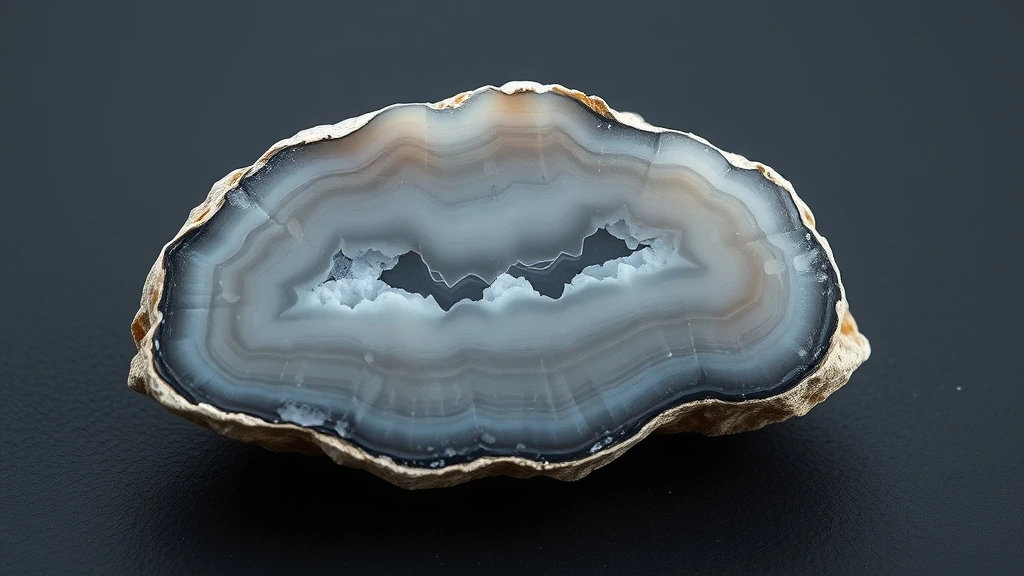
Lattice Lace Agate belongs to the broad silicate mineral group, specifically classified as a chalcedony variety. It forms through the slow precipitation of silica-rich solutions within volcanic or sedimentary rock cavities. This process creates a dense, microcrystalline aggregate rather than a single large crystal structure. The stone’s unique aesthetic arises from the interlocking fibrous bands that develop during these geological cycles.
What is Lattice Lace Agate? Geological Overview & Definition
Lattice Lace Agate is defined by its intricate, web-like internal structure formed by fibrous chalcedony. This pattern results from the directional growth of microscopic quartz fibers within confined geological spaces. Unlike macrocrystalline quartz, this stone lacks visible individual crystals to the naked eye. Instead, it presents a uniform, waxy luster characteristic of cryptocrystalline aggregates.
The term “Lattice” refers to the specific geometric arrangement of these silica fibers. These structures often resemble a woven mesh or netting within the stone’s matrix. Geologically, it forms in hydrothermal veins where silica saturation fluctuates over time. This creates the distinct layered and interlocking visual patterns prized by lapidaries. In comparative mineralogical collections, practitioners and geologists frequently study Pink Lace Chalcedony alongside this crystal to appreciate their subtle energetic and structural differences.
Lattice Lace Agate Chemical Composition & Crystallographic Properties
The fundamental crystal system of the constituent quartz fibers is trigonal. However, the stone exists as a microcrystalline fibrous aggregate, meaning the individual crystals are too small to be resolved optically. The overall structure is a dense intergrowth of these tiny trigonal units. This arrangement contributes to the stone’s high durability and isotropic optical properties. If you appreciate the dense intergrowth of micro‑crystalline fibers in Lattice Lace Agate, you’ll also enjoy the similarly robust, banded texture of Pink Botswana Agate, which shares a comparable durability thanks to its tightly packed silica structure.
Chemically, the material is nearly pure SiO₂, with trace impurities influencing its coloration. Cation substitution is minimal, as the silica tetrahedra form a rigid, continuous framework. Any color variations stem from trace elements like iron or manganese, or organic inclusions. The stone is chemically stable and resistant to most common acids, though prolonged exposure to strong alkalis can degrade the surface.
Thermal behavior is stable within standard jewelry temperatures, but rapid heating can cause thermal shock. This may lead to fracturing along the fibrous growth planes. The refractive index remains consistent at 1.544 to 1.553, typical for quartz varieties. No significant birefringence is observed due to the random orientation of the microcrystals.
The density of Lattice Lace Agate ranges from 2.60 to 2.65 g/cm³. This value aligns with standard chalcedony, confirming its silica-rich composition. The lack of large voids or porous structures ensures a solid, non-porous feel. This physical consistency makes it suitable for detailed carving and polished gemstone work.
| Property | Specification |
|---|---|
| Mineral Group | Silicates (Chalcedony / Cryptocrystalline Quartz) |
| Chemical Formula | SiO₂ (Silicon Dioxide) |
| Mohs Hardness | 6.5 – 7.0 |
| Crystal System | Trigonal (Microcrystalline / Cryptocrystalline fibrous aggregates) |
| Specific Gravity (Density) | 2.60 – 2.65 |
| Refractive Index | 1.544 – 1.553 |
| Color & Optical Properties | Natural Lattice Lace Agate color spectrum and optical dispersion |
| Primary Mining Localities | Brazil, Uruguay, Turkey, India, Madagascar |
| Water & Chemical Resistance | High (Safe for gentle warm water and mild soap; avoid harsh acids and chlorine) |
| Chakra Alignment (Traditional) | Root Chakra and Sacral Chakra |
| Zodiac Affinity (Traditional) | Gemini, Virgo, Taurus |
| Symbolic Meaning (Traditional) | Grounding, emotional balance, physical endurance, and protection |
Lattice Lace Agate Varieties & Color Spectrum
Lattice Lace Agate exhibits a diverse range of chromatic expressions driven by trace elemental impurities within the silicate matrix. The visual complexity arises from the interplay of fibrous quartz structures and mineral staining agents. These variations define distinct market categories and geological classifications.
Classic White Lace Agate
This variety features a pristine white to pale gray background with delicate, web-like inclusions. The fibrous quartz structure creates a translucent, lace-like pattern that is highly prized for carving. It forms through slow precipitation in geode cavities over millions of years.
Red Lace Agate
Characterized by deep crimson to cherry-red hues, this morph results from iron oxide impurities. The hematite inclusions intensify the color saturation within the lattice structure. It is often found in association with jasper deposits in specific geological zones.
Blue Lace Agate
Distinguished by its soothing sky-blue to lavender tones, this variety is geologically distinct from other agates. The coloration stems from trace amounts of cobalt or other metallic ions. It typically occurs in massive nodules rather than thin geode linings.
Green Lace Agate
This rare morph displays sage to emerald green shades due to copper or iron compounds. The chlorite inclusions contribute to the distinct greenish tint in the crystalline matrix. It is significantly less common than its white or red counterparts.
Black Lace Agate
Featuring a dark gray to jet-black background with subtle white veining, this variety is dense and opaque. The carbonaceous material or magnetite inclusions create the deep, shadowy appearance. It is often mistaken for jet but lacks the organic origin.
Banded Lace Agate
This variety combines the lace-like texture with distinct, parallel banding patterns. The concentric layering results from periodic changes in mineral deposition rates. It offers a unique visual contrast between the fibrous and banded zones.
Where is Lattice Lace Agate Found? Geological Mining & Extraction
Lattice Lace Agate primarily forms in hydrothermal veins and geode cavities within volcanic and sedimentary rock formations. The mineral precipitates from silica-rich fluids that cool slowly, allowing the fibrous structure to develop. These deposits are often associated with basaltic lava flows and igneous intrusions.
Major extraction regions include Brazil, Uruguay, and the United States, particularly in South Dakota. Open-pit mining and careful hand extraction are used to preserve the integrity of the delicate lattice structures. Regional variations in host rock composition significantly influence the final color and pattern of the agate.
Historical Significance & Cultural Lore of Lattice Lace Agate
Ancient civilizations revered agate for its perceived protective and healing properties, often embedding it in jewelry and amulets. In Greco-Roman culture, agate was believed to ward off evil spirits and promote mental clarity. Egyptian artisans also utilized agate in scarabs and seals, associating it with stability and endurance.
Throughout Vedic traditions, agate was linked to the earth element, grounding practitioners during meditation. Archaeological findings reveal agate beads in Neolithic sites across Europe and Asia, indicating early trade networks. The stone’s enduring appeal lies in its unique combination of aesthetic beauty and historical mystique.
Modern Uses & Jewelry Applications of Lattice Lace Agate
Lattice Lace Agate is prized for its delicate, lace‑like banding that lends itself to both classic and contemporary designs. Lapidary artisans typically cut the stone into cabochons to showcase its translucent depth, while skilled faceting can accentuate the internal netted patterns for a sparkling effect. Ornamental carving also thrives, producing beads, pendants, and decorative inlays that highlight the stone’s natural elegance.
- Cabochon pendants for everyday wear
- Faceted rings that catch light on the lace‑like inclusions
- Carved beads for mala strands and beaded jewelry
- Inlay work in watch faces, decorative boxes, and architectural accents
Metaphysical Properties & Traditional Meaning of Lattice Lace Agate
According to historical traditions and metaphysical lore, Lattice Lace Agate is associated with grounding and emotional balance, offering a stabilizing influence that helps calm turbulent feelings. Across ancient Mediterranean and Vedic lapidary records, the stone is believed to fortify physical endurance and provide subtle protection against negative energies, making it a favored talisman for travelers and laborers alike. Its intricate pattern is thought to mirror the interconnectedness of life, encouraging mindfulness and a sense of inner harmony.
Which Chakra and Zodiac Signs Align with Lattice Lace Agate?
In the chakra system, Lattice Lace Agate resonates most strongly with the Root Chakra, anchoring the wearer to the earth and fostering a sense of safety. It also vibrates with the Sacral Chakra, supporting creative flow and emotional expression, thereby balancing the body’s foundational and expressive energies.
Astrologically, the stone aligns with the zodiac signs Gemini, Virgo, and Taurus. Gemini benefits from its mental clarity, Virgo finds reinforcement for practical tasks, and Taurus experiences enhanced stability and sensual appreciation, all reflecting the stone’s grounding and nurturing qualities.
How to Identify Real vs. Fake Lattice Lace Agate
Artificial imitations of Lattice Lace Agate often include dyed quartz, synthetic glass, or resin composites that mimic the lace‑like banding but lack the stone’s authentic density and refractive qualities. These replicas may appear visually similar under casual inspection but fail to exhibit the characteristic heft, thermal response, and internal inclusions of genuine agate.
Practical At-Home Authenticity Tests
- Temperature Test (Thermal Feel): Real agate feels cool to the touch and retains that coolness longer than glass or plastic, which quickly equilibrates to ambient temperature.
- Specific Gravity & Weight Test: Genuine Lattice Lace Agate has a density of 2.60–2.65 g/cm³; a simple water displacement test will reveal a heavier weight compared with lighter synthetic substitutes.
- Scratch & Hardness Test (Mohs Comparison): With a Mohs hardness of 6.5–7.0, the stone can scratch glass (hardness ~5.5) but will be scratched by a steel file (hardness ~6.5). Observe the scratch pattern for consistency.
- Microscopic & Loupe Inspection (Internal Inclusions): Under 10×–30× magnification, authentic agate displays fine, fibrous, cryptocrystalline textures and natural lace‑like banding, whereas fakes often show uniform bubbles, sharp edges, or artificial coloring.
Lattice Lace Agate Valuation Factors, Grading & Pricing
The most prized specimens exhibit Color Saturation that radiates from the surface, delivering a visual vibrancy that feels almost alive. A deep, even hue across the lattice pattern signals natural energetic luster and enhances the stone’s metaphysical appeal. Collectors often seek a balanced spectrum where no single band dominates, ensuring the agate’s energy remains harmonious.
Crystal Size & Weight (Grams) is the primary metric for market value, with larger, heavier pieces commanding higher prices. Raw agates are valued for their unaltered, fibrous structure, while tumbled polish can elevate a specimen’s aesthetic without compromising its natural matrix inclusions. The presence of subtle, natural inclusions—such as fine fibrous strands or subtle veining—adds character and can increase desirability among discerning buyers.
Ethical Sourcing & Locality Premium plays a critical role in both holistic and collector markets. Stones sourced from responsibly managed quarries with transparent supply chains often receive a premium, reflecting the growing demand for sustainable practices. Provenance from renowned localities, such as the historically rich deposits of the Caucasus or the ancient mines of the Himalayas, can further elevate a piece’s status and market value.
How to Clean and Care for Lattice Lace Agate
Gentle cleaning of solid agates is best performed with warm soapy water, using a mild, fragrance‑free soap and a soft microfiber cloth. After rinsing with clean water, pat the stone dry with a lint‑free towel, avoiding any abrasive materials that could scratch the surface. Store the agate in a dry, low‑humidity environment, preferably in a soft pouch or wrapped in a cotton cloth to prevent accidental abrasion.
Cleansing and Recharging Lattice Lace Agate (Energetic Care)
To cleanse the stone’s energetic field, place it under gentle moonlight for a few hours, allowing the natural lunar energy to refresh its vibrations. Alternatively, a brief exposure to a selenite charging slab can help realign the agate’s subtle energies without subjecting it to heat or direct sunlight, which could damage the crystal lattice. These dry, holistic methods preserve both the physical integrity and the metaphysical potency of Lattice Lace Agate.
Frequently Asked Questions About Lattice Lace Agate
Lattice Lace Agate displays distinct mineralogical characteristics across its geological varieties and structural habits. Gemologists evaluate these natural varieties based on crystal habit, trace chromophore concentrations, and visual luster.
Primary Natural Lattice Lace Agate
The benchmark natural variety exhibiting diagnostic color saturation and classic crystallographic symmetry.
Distinct Geological Morphs of Lattice Lace Agate
Secondary regional and structural varieties formed under localized geological temperature and pressure conditions.
What is the chemical composition of Lattice Lace Agate?
Lattice Lace Agate is a form of quartz with the chemical formula SiO₂. This silicon dioxide crystal is part of the quartz family, known for its durability and widespread occurrence in igneous and metamorphic rocks. The microcrystalline structure gives it a distinctive lace‑like pattern that is prized by collectors.
How durable is Lattice Lace Agate for everyday wear?
It has a Mohs hardness of 6.5–7.0, making it suitable for daily jewelry. The hardness ensures resistance to scratching by common metals and stones, while its density of 2.60–2.65 keeps it lightweight enough for comfortable wear. Proper care prevents surface wear over time.
Is Lattice Lace Agate safe to clean with water?
Yes, it is water‑resistant and can be washed with gentle warm water and mild soap. Avoid harsh acids, chlorine, or prolonged soaking, as these can dull the surface or damage any surface treatments. A soft cloth or mild detergent is sufficient for routine cleaning.
Can I use an ultrasonic cleaner on Lattice Lace Agate?
Warm soapy water is ideal; ultrasonic cleaners should be avoided if the stone is dyed or heavily fractured. Ultrasonic vibration can dislodge surface coatings or exacerbate fractures, potentially compromising the stone’s structural integrity and appearance.
Which zodiac signs are associated with Lattice Lace Agate?
The stone aligns with Gemini, Virgo, and Taurus. These signs are believed to resonate with the stone’s grounding and emotional‑balance properties, enhancing communication and practicality in daily life.
Which chakras does Lattice Lace Agate influence?
It is linked to the Root Chakra and the Sacral Chakra. These energy centers are thought to benefit from the stone’s grounding qualities and its ability to stabilize emotional flow, supporting both physical endurance and inner balance.
Does Lattice Lace Agate have any special care instructions for storage?
Store it in a soft pouch or lined jewelry box away from direct sunlight. Prolonged exposure to UV light can fade the lace pattern, while a cushioned environment protects it from accidental scratches or impacts.
What should I avoid when handling Lattice Lace Agate?
Avoid exposing it to strong acids, chlorine, or abrasive cleaning tools. These substances can erode the surface or alter the stone’s natural sheen, while abrasive tools may create micro‑scratches that compromise its visual appeal.