
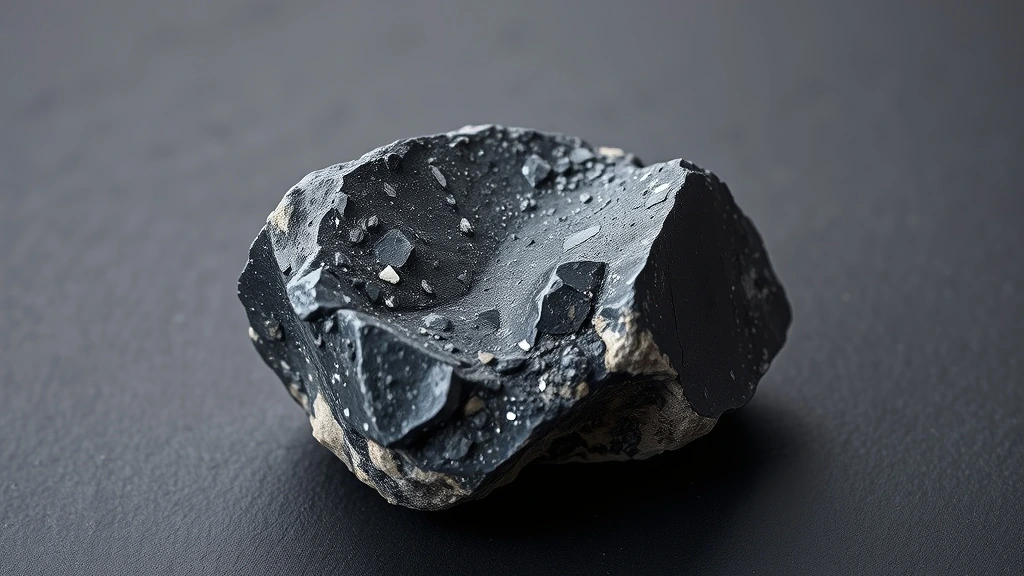
Linarite belongs to the natural mineral / crystal category, forming as a secondary oxidation product in the supergene zones of lead‑copper sulfide deposits. It crystallizes in the monoclinic system, typically as slender, bladed prisms or massive aggregates that display a brilliant azure‑blue to greenish‑blue sheen. Because of its low hardness and perfect cleavage, linarite is primarily a collector’s piece rather than a durable jewelry stone, yet its intense color and crystal habit captivate mineralogists and gem enthusiasts alike.
What is Linarite Gemstone? Geological Overview & Definition
Linarite is a lead‑copper hydroxy mineral that precipitates from oxidizing solutions in the weathering envelopes of galena‑ and chalcopyrite‑rich ore bodies. It commonly occurs as acicular crystals or fibrous crusts, often coating the surfaces of other secondary minerals such as malachite or azurite.
The gemstone is classified as a secondary mineral, meaning it forms after primary sulfide minerals have been altered by atmospheric oxygen and water. Its rarity is amplified by the precise geochemical conditions required: sufficient lead, copper, and hydroxyl ions, coupled with a mildly acidic to neutral pH environment.
Linarite Gemstone Chemical Composition & Crystallographic Properties
Linarite’s formula, PbCu(OH)₂, reflects a simple 1:1 lead‑to‑copper ratio balanced by two hydroxide groups. The structure consists of edge‑sharing CuO₄(OH)₂ octahedra linked to PbO₈ polyhedra, creating a layered lattice that repeats along the monoclinic b‑axis.
The monoclinic crystal system imparts a single twofold rotation axis and a mirror plane, producing the characteristic bladed habit. Minor cation substitution—often Zn²⁺ or Fe³⁺—can occur, subtly shifting the hue toward greener tones without altering the fundamental lattice symmetry.
Linarite is acid‑sensitive; exposure to dilute acids dissolves the hydroxide layers, releasing lead and copper ions. This reactivity limits its use in settings where perspiration or acidic cleaning agents are present.
Thermally, linarite dehydrates above ~200 °C, losing hydroxyl groups and converting to a mixture of lead oxide and copper oxide phases. This irreversible change destroys its vivid color, underscoring the need for careful temperature control during any handling or display.
| Property | Specification |
|---|---|
| Mineral Group | Natural Mineral / Crystal |
| Chemical Formula | PbCu(OH)₂ |
| Mohs Hardness | 2.5 |
| Crystal System | Monoclinic |
| Specific Gravity (Density) | 5.3 – 5.5 |
| Refractive Index | n α = 1.809 n β = 1.838 n γ = 1.859 |
| Color & Optical Properties | Natural Linarite Gemstone color spectrum and optical dispersion |
| Primary Mining Localities | Global primary localities |
| Water & Chemical Resistance | High (Safe for gentle water washing) |
| Chakra Alignment (Traditional) | Crown Chakra, Third Eye Chakra |
| Zodiac Affinity (Traditional) | Virgo, Sagittarius |
| Symbolic Meaning (Traditional) | Mental clarity, intuition, and spiritual insight |
Linarite Gemstone Varieties & Color Spectrum
Deep Azure Linarite
Formed in the oxidized zones of lead‑copper sulfide veins, this variety crystallizes as elongated, bladed aggregates within weathered limestone. Minute malachite and azurite inclusions give it a vivid, almost electric blue that deepens with thickness. Because the required low‑temperature supergene environment is rare, deep‑azure linarite is among the most coveted specimens for collectors.
Emerald‑Green Linarite
This morph appears where hydrothermal fluids introduce chlorite and phyllosilicate impurities during late‑stage crystallization. The resulting crystals display a translucent green hue, often mottled with fine white speckles of calcite. Found chiefly in the Tsumeb Mine of Namibia, emerald‑green linarite is scarce and commands high prices in the gemstone market.
Golden‑Yellow Linarite
Occurring in arid, oxidizing climates, the golden‑yellow form results from trace iron oxide staining of the crystal surface. Its tabular plates exhibit a warm, honey‑like sheen that can be mistaken for pyrite under low magnification. While more abundant than the blue and green morphs, high‑quality golden‑yellow stones are still limited to a few South American localities.
Pink‑Blush Linarite (Regional Trade Name “Rosé”)
In the copper‑rich districts of the Czech Republic, subtle copper‑sulfate inclusions impart a delicate pink‑blush tint to otherwise blue crystals. The stones are typically small, with a soft, pastel appearance prized by jewelry designers seeking a vintage aesthetic. Rosé linarite is a niche trade variety, making it relatively rare on the global market.
Black‑Veined Linarite
Formed in deep‑seated, high‑pressure zones, this variety incorporates fine graphite and siderite filaments that create striking black veining across the crystal faces. The contrast between the dark veins and the underlying blue‑green matrix enhances its visual drama. Black‑veined linarite is exceptionally uncommon, with most specimens sourced from a single mine in the Democratic Republic of Congo.
Where is Linarite Gemstone Found? Geological Mining & Extraction
Linarite occurs principally in the oxidation zones of lead‑copper ore bodies, where supergene processes replace primary sulfides with secondary hydroxide minerals. It is typically hosted in fractured dolomitic limestone and siliceous sandstone, where groundwater circulates, delivering the necessary Pb²⁺ and Cu²⁺ ions for crystal growth.
The most productive deposits are located in the Tsumeb Mine (Namibia), the Zinkgruvan district (Sweden), and the historic mines of the Ore Mountains (Czech Republic). Extraction relies on careful hand‑picking of delicate crystals from soft, weathered host rock, followed by gentle washing to preserve the fragile monoclinic habit and avoid fracturing the low‑hardness (2.5 on Mohs) material.
Historical Significance & Cultural Lore of Linarite Gemstone
Ancient miners in the Balkans prized linarite for its striking blue‑green color, embedding small chips into bronze amulets that were believed to protect warriors. Archaeological finds from the Roman province of Dacia include linarite inlaid into decorative belt buckles, indicating its early use as a status symbol and talisman.
In esoteric traditions, linarite is associated with the Crown Chakra and Third Eye Chakra, promoting mental clarity, intuition, and spiritual insight. Folklore from the Ottoman era describes the stone as a “stone of the night sky,” thought to guide travelers across deserts and mountains, a belief that persists in modern metaphysical circles.
Modern Uses & Jewelry Applications of Linarite Gemstone
Due to its fragile nature, linarite is primarily valued for ornamental carving rather than high-wear jewelry. Lapidaries typically cut this soft mineral into cabochons to showcase its vibrant azure color without risking fracture. Its low durability makes it unsuitable for rings or bracelets that experience frequent impact.
- Cabochon Cutting: Smooth, domed cuts highlight the stone’s luster and protect its delicate structure.
- Ornamental Carvings: Skilled artisans carve linarite into intricate figurines, beads, and decorative panels.
- Collector’s Pieces: Rare, well-formed crystals are often mounted in protective cases for display.
- Beadwork: Small, drilled beads are used in necklaces where mechanical stress is minimized.
Safety & Mineral Profile of Linarite
Safe handling and physical characteristics
Linarite is a *lead‑copper sulfosalt* with the formula PbCuSO₄(OH)₂. The mineral is relatively soft (Mohs 2–2.5) and exhibits a pronounced *cleavage* along the (001) plane, making it prone to flaking or breakage during handling. Its lead content renders it toxic if ingested or inhaled as dust; therefore, specimens should be handled with gloves and cleaned with a damp cloth rather than dry brushing. Linarite is also acid‑sensitive; contact with dilute acids can cause rapid dissolution, releasing soluble lead ions. Because of these factors—softness, friability, lead toxicity, and acid reactivity—linarite is best displayed as a collector specimen rather than fashioned into jewelry, where abrasion and wear could liberate hazardous particles.
Scientific and educational value
Linarite occupies an important niche in the study of *lead‑copper sulfates* and is frequently used as a reference material in mineralogical research. Its well‑defined crystal habit and distinctive *greenish‑black* coloration make it an ideal specimen for teaching crystal‑forming processes, cleavage, and the effects of lead substitution on lattice parameters. In analytical laboratories, linarite serves as a standard for X‑ray diffraction, electron microprobe, and Raman spectroscopy studies of sulfosalts. Museums often include linarite in collections that illustrate the diversity of lead‑bearing minerals and the geochemical pathways that concentrate heavy metals in hydrothermal veins.
Mineralogical Group and Planetary Lore of Linarite
Linarite was first described in 1815 by the German mineralogist Johann Friedrich Ludwig from a specimen found in the *Linar* mine in the Harz Mountains, Germany. The name derives from the locality, following the convention of naming minerals after their type locality. According to early mineralogists, linarite was grouped with other lead‑copper sulfates such as *wulfenite* and *azurite* based on its similar crystal chemistry, although modern crystallography places it in the *linarite* group of sulfosalts. Historically, lapidary texts have noted linarite’s *dark green* hue and its tendency to develop a *patina* over time, but no planetary symbolism has been attributed to it beyond its association with the element lead, which has long been linked to the planet Saturn in classical alchemical traditions.
How to Identify Real vs. Fake Linarite Gemstone
Artificial imitations of linarite are common due to its distinctive blue hue and rarity. Synthetic glass and dyed replicas often mimic the stone’s appearance but lack its unique physical properties. Identifying these fakes requires careful observation of weight, hardness, and internal characteristics.
Practical At-Home Authenticity Tests
- Temperature Test (Thermal Feel): Real linarite feels noticeably cool to the touch initially due to its high density. Synthetic glass may warm up faster under ambient conditions, though this test is less definitive.
- Specific Gravity & Weight Test: With a density of 5.3 – 5.5, linarite feels significantly heavier than its size suggests. Glass imitations typically feel lighter for the same volume.
- Scratch & Hardness Test (Mohs Comparison): Linarite has a Mohs hardness of only 2.5, meaning it scratches easily with a fingernail or copper coin. Glass or harder synthetic stones will resist these soft scratches.
- Microscopic & Loupe Inspection (Internal Inclusions): Under a 10x loupe, natural linarite often shows crystal structure or minor inclusions. Synthetic glass may appear too perfect or contain tiny air bubbles.
Linarite Gemstone Valuation Factors, Grading & Pricing
Color Saturation is the primary driver of value, with deep, uniform azure tones commanding the highest premiums. Assessors look for consistent tone across the specimen, as patchy or pale areas significantly reduce market appeal. High optical clarity and a strong vitreous luster further enhance the stone’s visual impact and desirability.
Carat Weight influences pricing, though large, clean specimens are rare due to the mineral’s inherent fragility. Facet symmetry is less critical for cabochons but remains vital for cut stones to maximize brilliance. The presence of matrix or inclusions can lower value, unless the host rock creates a unique, aesthetically pleasing display.
Geographical Provenance Premium often applies to stones from historic mines, such as those in Morocco or Mexico. Wholesale prices remain modest, but retail values increase with certified authenticity and exceptional color. Market trends favor untreated specimens, ensuring long-term stability and ethical sourcing for collectors.
How to Clean and Care for Linarite Gemstone
Due to its low Mohs Hardness of 2.5, linarite requires gentle handling to prevent surface abrasion. Always use warm soapy water and a soft cloth to remove dust and oils from the surface. Avoid ultrasonic cleaners to prevent structural fractures, as the vibrations can shatter the delicate crystal lattice.
Store linarite separately from harder gemstones to avoid scratches during transport or display. Prolonged exposure to water should be avoided, as the mineral is sensitive to moisture absorption. Regular, gentle cleaning preserves the stone’s vibrant blue hue and prevents the buildup of damaging residues.
Cleansing and Recharging Linarite Gemstone (Energetic Care)
For energetic maintenance, use dry methods that respect the mineral’s water sensitivity and chemical stability. Smoke smudging with sage or palo santo is an effective way to clear negative energy without liquid exposure. This method ensures the stone remains structurally intact while undergoing spiritual cleansing.
Place the gemstone on a selenite plate or under moonlight for recharging purposes. These dry, low-impact techniques align with the mineral’s physical limitations and esoteric properties. Avoid any submersion, as even brief soaking can compromise the integrity of the hydroxide structure.
Frequently Asked Questions About Linarite Gemstone
What is the chemical composition of linarite?
Linarite is a complex lead-copper hydroxyl carbonate mineral. Its specific chemical formula is PbCu(CO3)(OH)2. This unique combination gives the stone its distinctive deep blue color and high specific gravity.
How hard is linarite on the Mohs scale?
Linarite has a Mohs hardness of 2.5. This makes it a relatively soft gemstone that is susceptible to scratching. You should store it separately from harder stones to prevent surface damage.
Can I clean linarite in an ultrasonic cleaner?
No, you must avoid ultrasonic cleaners for this stone. The vibrations can cause structural fractures due to its low hardness. Instead, use warm soapy water and a soft cloth for gentle cleaning.
Is linarite safe to wear in the shower?
Linarite is sensitive to prolonged water exposure. While brief contact is generally safe, soaking it in water can degrade the stone’s structure. Remove your jewelry before showering or swimming to preserve its integrity.
Which zodiac signs are compatible with linarite?
Linarite is energetically aligned with Virgo and Sagittarius. These signs may find the stone particularly resonant for their personal growth. It supports mental clarity and intuitive development for these individuals.
Which chakras does linarite activate?
This stone primarily activates the Crown Chakra and Third Eye Chakra. It enhances spiritual insight and intuition for the wearer. These energy centers are associated with higher consciousness and mental clarity.
What is the crystal system of linarite?
Linarite crystallizes in the monoclinic system. This structure often results in prismatic or columnar crystal forms. Understanding this helps in identifying authentic specimens versus synthetic imitations.
What is the refractive index of linarite?
Linarite exhibits a high refractive index ranging from 1.809 to 1.859. This high value contributes to its strong luster and brilliance. It is a key metric for gemological identification and grading.