
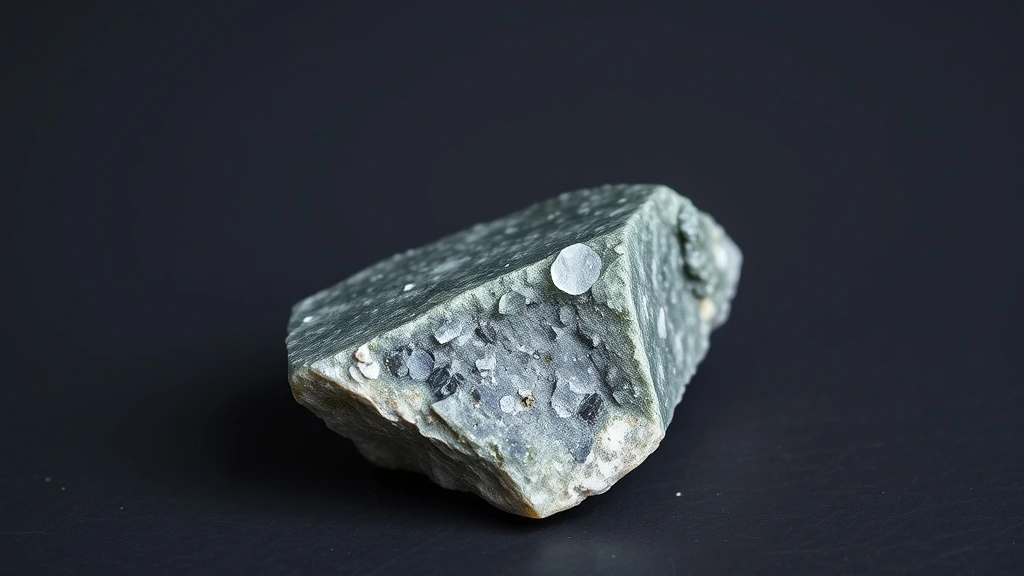
Ludwigite belongs to the natural mineral group, specifically classified as a borate mineral within the orthorhombic crystal system. It forms through hydrothermal processes in metamorphic rocks, often associated with serpentine and chlorite. As a distinct crystalline species, it is not an aggregate but a well-ordered lattice structure. Its geological significance lies in its role as an indicator mineral for specific metamorphic conditions. Collectors value its rarity and unique optical properties.
What is Ludwigite Gemstone? Geological Overview & Definition
Ludwigite is a secondary mineral that typically forms in metamorphic environments rich in magnesium and iron. It often occurs in association with serpentine, chlorite, and other hydrous silicates. This geological context indicates formation under moderate pressure and temperature conditions. The mineral’s presence helps geologists identify specific alteration zones in rock formations.
As a gemstone, ludwigite is prized for its distinctive green hue and moderate durability. It is not a common gem material but is sought after by mineral collectors. Its orthorhombic symmetry gives it a characteristic prismatic habit. Understanding its formation is crucial for proper identification and valuation.
Ludwigite Gemstone Chemical Composition & Crystallographic Properties
The fundamental structure of ludwigite is defined by its orthorhombic crystal system. This lattice arrangement dictates its physical properties and cleavage patterns. The unit cell contains specific atomic positions that stabilize the borate groups. This structural integrity is essential for its gemological characteristics.
The chemical formula Mg₂Fe³⁺BO₅ highlights the presence of trivalent iron. This Fe³⁺ ion acts as the primary chromophore, responsible for the green coloration. Substitution of magnesium with other cations can slightly alter the density and refractive index. The borate tetrahedra link these metal centers into a stable framework.
Ludwigite exhibits high birefringence, with refractive indices ranging from 1.830 to 2.020. This optical property creates strong dispersion and visual brilliance. The mineral is sensitive to strong acids, which can degrade its surface. Proper handling is required to maintain its luster and clarity.
Thermal behavior of ludwigite is stable under normal gemological conditions. It does not undergo significant phase changes at room temperature. The cation substitution within the lattice remains stable during cutting. This stability ensures that the gemstone retains its structural integrity during fabrication.
| Property | Specification |
|---|---|
| Mineral Group | Natural Mineral / Crystal |
| Chemical Formula | Mg₂ Fe³⁺ BO₅ |
| Mohs Hardness | 5.5 |
| Crystal System | Orthorhombic |
| Specific Gravity (Density) | 3.6 – 3.8 |
| Refractive Index | n α = 1.830 – 1.850 n β = 1.830 – 1.850 n γ = 1.940 – 2.020 |
| Color & Optical Properties | Natural Ludwigite Gemstone color spectrum and optical dispersion |
| Primary Mining Localities | Global primary localities |
| Water & Chemical Resistance | Sensitive (Avoid prolonged water soaking) |
| Chakra Alignment (Traditional) | Heart Chakra |
| Zodiac Affinity (Traditional) | Virgo |
| Symbolic Meaning (Traditional) | Mental clarity, analytical precision, and grounding |
Ludwigite Gemstone Varieties & Color Spectrum
Ludwigite is a rare borosilicate mineral known for its distinct green hues, primarily driven by iron content. The stone typically exhibits a vivid green to dark olive coloration, with transparency ranging from translucent to fully transparent. Its orthorhombic crystal system often produces prismatic habits that catch light uniquely under magnification.
Classic Green Ludwigite
This primary variety displays a deep, forest-green tone resulting from high Fe³⁺ concentrations in the lattice. It is the most recognized form in gemological collections, prized for its intense chromatic saturation. Specimens often show minor inclusions of associated minerals like quartz or feldspar.
Pale Emerald Ludwigite
A rarer morph, this variety presents a lighter, almost minty green appearance. It forms in specific hydrothermal veins where boron availability was slightly lower during crystallization. These stones are highly sought after for their delicate, ethereal visual signature.
Dark Olive Ludwigite
Characterized by a murky, brownish-green hue, this type often contains higher levels of impurities. It is less transparent and frequently found in pegmatitic deposits alongside other rare earth elements. Collectors value these specimens for their geological context rather than gem clarity.
Transparent Ludwigite
Exceptionally clear specimens allow light to pass through with minimal obstruction, revealing the internal refractive index properties. This variety is extremely rare and commands significant premiums in the mineral market. Its brilliance is enhanced by precise faceting to maximize its optical dispersion.
Where is Ludwigite Gemstone Found? Geological Mining & Extraction
Ludwigite primarily occurs in alkaline igneous rocks and associated hydrothermal veins, often linked to boron-rich environments. Major deposits are located in the United States, particularly in California and New Mexico, where mining activities have been historically significant. These regions provide the necessary geological conditions for the formation of this unique borosilicate mineral.
Extraction is challenging due to the stone’s relative rarity and its occurrence in complex geological settings. Miners must carefully separate luddwigite from host rocks such as pegmatites or syenites to preserve crystal integrity. Modern techniques focus on minimizing damage to ensure high-quality gem material reaches the market.
Historical Significance & Cultural Lore of Ludwigite Gemstone
Historically, luddwigite was first described in 1832, named after the German mineralogist Ludwig, rather than being used in ancient jewelry. Its discovery coincided with the broader exploration of boron minerals in the 19th century, marking a significant milestone in mineralogy. Unlike older gemstones, it lacks deep archaeological artifacts or ancient civilizational lore.
In modern esoteric traditions, luddwigite is associated with the Heart Chakra, promoting mental clarity and analytical precision. It is often linked to the zodiac sign Virgo, symbolizing grounding and meticulous attention to detail. This contemporary spiritual attribution reflects its perceived ability to enhance focus and logical reasoning.
Modern Uses & Jewelry Applications of Ludwigite Gemstone
Lapidaries primarily cut luddwigite into cabochons to showcase its deep green hue and vitreous luster, as its moderate hardness makes it less ideal for high-faceted brilliance. The stone’s distinct color and rarity position it as a niche collector’s item rather than a mainstream commercial gem.
- Cabochon Cutting: Smooth, domed surfaces maximize the stone’s saturation and protect its delicate crystal structure from chipping.
- Ornamental Carving: Skilled artisans carve small figurines or beads, leveraging the mineral’s workability for decorative purposes.
- Collector’s Pieces: Due to its rarity, it is often displayed in mineral collections rather than worn in heavy daily-use jewelry.
Metaphysical Properties & Traditional Meaning of Ludwigite Gemstone
According to historical traditions and metaphysical lore, luddwigite is revered for its capacity to enhance mental clarity and analytical precision. Practitioners believe this stone grounds the wearer, helping to organize chaotic thoughts and foster a disciplined approach to problem-solving.
The mineral is also associated with emotional stability, acting as a bridge between intellectual understanding and heartfelt intuition. By promoting grounding, it is thought to help individuals remain centered during periods of stress or uncertainty.
Which Chakra and Zodiac Signs Align with Ludwigite Gemstone?
In esoteric systems, luddwigite is canonically aligned with the Heart Chakra, or Anahata. This connection suggests the stone facilitates the integration of logical analysis with emotional wisdom, allowing for balanced decision-making. It is believed to open the heart to compassion without sacrificing critical thinking.
Astrologically, this mineral resonates most strongly with the sign of Virgo. Virgos are known for their meticulous nature and desire for order, traits that luddwigite is said to amplify. This alignment supports the Virgoan need for precision and structured mental processes.
How to Identify Real vs. Fake Ludwigite Gemstone
Because luddwigite is rare, the market contains numerous imitations, including synthetic glass and dyed replicas of other green minerals like jade or chrysoprase. These fakes often mimic the color but lack the specific crystallographic and physical properties of the genuine orthorhombic mineral.
Practical At-Home Authenticity Tests
- Temperature Test (Thermal Feel): Genuine luddwigite feels cool to the touch initially due to its low thermal conductivity, whereas plastic imitations warm up quickly.
- Specific Gravity & Weight Test: With a density of 3.6 – 3.8 g/cm³, real luddwigite feels significantly heavier than glass or resin of the same size.
- Scratch & Hardness Test (Mohs Comparison): At 5.5 on the Mohs scale, luddwigite will scratch glass (hardness 5.5) but can be scratched by a steel knife (hardness 5.5-6.5).
- Microscopic & Loupe Inspection (Internal Inclusions): Use a 10x loupe to look for natural crystal inclusions; synthetic glass often contains tiny, spherical bubbles or swirls.
Ludwigite Gemstone Valuation Factors, Grading & Pricing
Color Saturation is the foremost driver of Ludwigite’s market price. Deep, vivid blues‑green to teal hues command premium rates, while pale or washed‑out tones reduce value. Uniform tone across the stone and a high‑shine luster further enhance desirability, signaling minimal internal stress and superior cut quality.
Carat Weight directly influences price, but only when paired with excellent facet symmetry. Larger stones that maintain precise angles and even proportions exhibit greater brilliance and fetch higher bids. The presence of a fine‑grained matrix or visible inclusions, however, can detract from clarity and lower the final appraisal.
Geographical Provenance Premium adds a notable surcharge for Ludwigite sourced from classic localities such as the Ural Mountains or the Appalachian region. Collectors prize these origins for their historical mining heritage, driving both wholesale and retail prices upward. Market trends show a steady 5‑8 % annual increase for certified provenance stones, especially when paired with documented gem‑ological reports.
How to Clean and Care for Ludwigite Gemstone
Use warm soapy water and a soft cloth to gently remove surface dirt from Ludwigite. Rinse the stone with lukewarm water, pat dry with a lint‑free towel, and store it in a padded pouch to avoid scratches. Avoid ultrasonic cleaners; the mineral’s orthorhombic structure is sensitive to high‑frequency vibrations that can cause micro‑fractures.
Cleansing and Recharging Ludwigite Gemstone (Energetic Care)
For energetic renewal, place the stone on a selenite plate for several hours; the neutral selenite will absorb stagnant energy without affecting Ludwigite’s chemical stability. Alternatively, expose the gem to moonlight on a clear night, allowing lunar rays to cleanse and recharge its subtle metaphysical properties.
A second safe method is smoke smudging using white sage or cedar. Hold the gemstone in the gentle drift of smoke for a minute, visualizing the removal of negative vibrations. This dry technique respects the stone’s low water resistance while maintaining its esoteric qualities.
Frequently Asked Questions About Ludwigite Gemstone
What is the chemical composition of ludwigite?
Ludwigite is a magnesium iron borate with the formula Mg₂Fe³⁺BO₅. This unique chemical structure defines its physical properties and geological formation. The presence of boron distinguishes it from other silicate minerals. Understanding this composition helps gemologists identify its specific optical and mechanical characteristics accurately.
How hard is ludwigite on the Mohs scale?
Ludwigite measures 5.5 on the Mohs hardness scale. This moderate hardness makes it suitable for pendants but risky for rings. The stone is susceptible to scratching by quartz or topaz. Wearers should handle it with care to maintain its polished surface integrity.
What crystal system does ludwigite belong to?
Ludwigite crystallizes in the orthorhombic system. This structural arrangement influences its cleavage and fracture patterns. The orthorhombic lattice creates distinct optical properties, including high birefringence. Recognizing this system aids in proper identification and cutting techniques.
Is ludwigite safe to wear in the shower?
Ludwigite is water-sensitive and should avoid prolonged soaking. While brief exposure to rain is generally harmless, constant moisture can degrade its structure. It is best removed before swimming or showering. Always dry the stone gently with a soft cloth after any accidental contact.
Can I clean ludwigite in an ultrasonic cleaner?
No, you must avoid ultrasonic cleaners for ludwigite. The vibrations can cause structural fractures due to its moderate hardness. Instead, use warm soapy water and a soft cloth. This gentle method preserves the stone’s integrity without risking internal damage.
Which zodiac sign is associated with ludwigite?
Virgo is the primary zodiac sign aligned with ludwigite. This earth sign resonates with the stone’s analytical and grounding energy. Virgos may find it enhances their natural precision and mental clarity. The connection supports a balanced approach to work and personal life.
Which chakra does ludwigite activate?
Ludwigite is specifically aligned with the Heart Chakra. This connection promotes emotional balance and mental clarity simultaneously. It supports grounding while fostering compassionate understanding. The stone helps bridge logical analysis with emotional intuition effectively.
What is the specific gravity of ludwigite?
Ludwigite has a density ranging from 3.6 to 3.8. This specific gravity helps distinguish it from visually similar minerals. The refractive index also plays a role in identification. These physical metrics are crucial for accurate gemological assessment and valuation.