
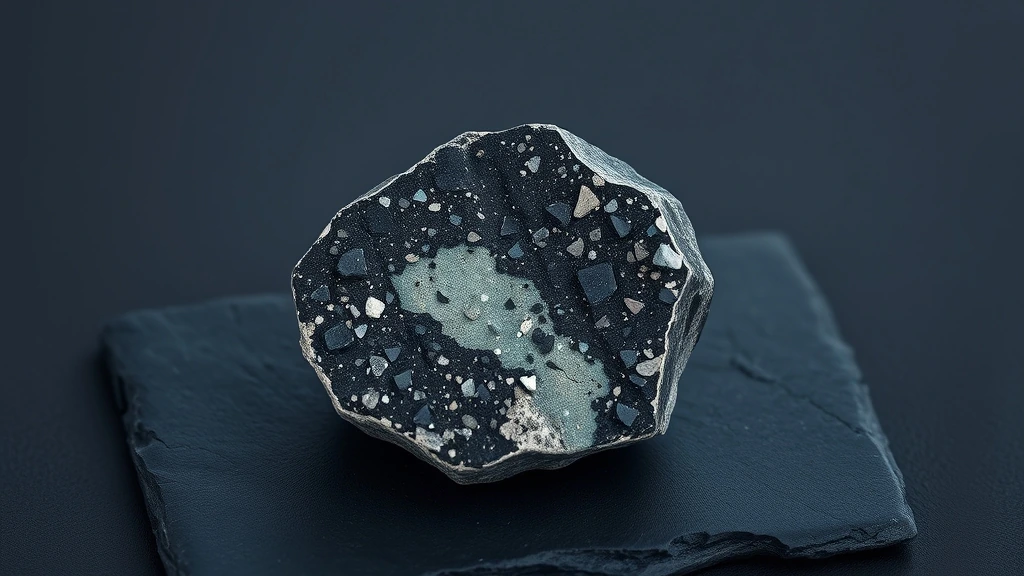
Musgravite belongs to the taaffeite family, a distinct group of beryllium‑aluminum oxides that crystallize as individual, well‑formed crystals rather than as aggregates. Recognized as a natural mineral / crystal, it forms in metamorphic pegmatites and high‑grade alluvial deposits where beryllium‑rich fluids interact with magnesium, iron and zinc. Its rarity and striking hue have placed it among the most coveted gemstones in high‑end markets.
What is Musgravite Gemstone? Geological Overview & Definition
Musgravite is a trigonal oxide mineral first identified in the Musgrave Ranges of Australia, from which its name derives. It occurs as isolated, often transparent crystals that can reach several centimeters, and its scarcity is amplified by the limited geological settings that provide the necessary beryllium‑rich environment.
In gemological terms, musgravite is prized for its high refractive index (nω = 1.739, nε = 1.735) and its ability to exhibit strong pleochroism, shifting from violet to gray under different lighting. These optical properties, combined with a hardness of 8–8.5, give it a durability comparable to sapphire, allowing it to be set in rings and other high‑wear pieces.
Musgravite Gemstone Chemical Composition & Crystallographic Properties
The mineral crystallizes in the trigonal crystal system, adopting a hexagonal‑like lattice where the c‑axis is threefold symmetric. Its structure consists of BeO₄ tetrahedra linked to AlO₆ octahedra, forming a robust framework that accommodates Mg, Fe, and Zn cations in interchangeable sites.
Cation substitution is a key driver of color: Mg²⁺, Fe²⁺, and Zn²⁺ replace one another within the octahedral sites, creating subtle variations in the crystal field that generate the violet‑gray hues. These trace elements act as chromophore centers, absorbing specific wavelengths and producing the gemstone’s characteristic pleochroism.
Musgravite is chemically stable but sensitive to strong acids, which can attack the Al–O bonds over prolonged exposure. In laboratory settings, dilute hydrochloric acid produces only surface etching, while concentrated acids may cause measurable dissolution, underscoring the need for careful cleaning protocols.
Thermally, musgravite exhibits low thermal expansion and retains its optical clarity up to ~600 °C before irreversible color fading occurs. Heating above this threshold can alter the oxidation state of Fe²⁺/Fe³⁺, diminishing the gemstone’s prized violet tones and potentially inducing a permanent loss of brilliance.
| Property | Specification |
|---|---|
| Mineral Group | Natural Mineral / Crystal |
| Chemical Formula | (Mg,Fe,Zn)₂ BeAl₆ O₁₂ |
| Mohs Hardness | 8–8.5 |
| Crystal System | Trigonal |
| Specific Gravity (Density) | 3.62–3.68 |
| Refractive Index | n ω = 1.739, n ε = 1.735 |
| Color & Optical Properties | Natural Musgravite Gemstone color spectrum and optical dispersion |
| Primary Mining Localities | Global primary localities |
| Water & Chemical Resistance | High (Safe for gentle water washing) |
| Chakra Alignment (Traditional) | Root Chakra, Sacral Chakra |
| Zodiac Affinity (Traditional) | Capricorn, Virgo |
| Symbolic Meaning (Traditional) | Grounding, stability, and protection |
Musgravite Gemstone Varieties & Color Spectrum
Musgravite is an exceptionally rare beryl variety, distinguished by its unique chemical composition and optical properties. Unlike common emerald or aquamarine, this mineral features a distinct trigonal crystal system that influences its internal structure. Its scarcity makes it a prized object of study for mineralogists and collectors alike.
Classic Musgravite
The most recognized form exhibits a deep, saturated green hue, often compared to high-grade emeralds. This coloration arises from trace amounts of chromium and vanadium within the beryl lattice structure. Specimens typically display excellent clarity, though minor inclusions are common in natural crystals.
Zinc-Rich Morphs
Some deposits contain elevated levels of zinc, which subtly shifts the spectral absorption characteristics. These variants may appear slightly bluer or more neutral in tone compared to chromium-dominant stones. The refractive index remains consistent, but the specific gravity can vary slightly due to the zinc substitution.
Iron-Dominant Varieties
Iron impurities can introduce yellowish or olive-green tints to the overall color palette. This geological variation occurs in specific pegmatite zones where iron-rich fluids interacted with the beryl. Such stones are rarer and often command higher premiums among specialized collectors.
High-Clarity Type I
A select group of musgravite crystals exhibits near-flawless transparency, classified as Type I clarity. These stones lack the typical inclusions found in other beryl varieties, allowing for exceptional light transmission. The Mohs hardness of 8–8.5 ensures durability, making them suitable for fine jewelry settings.
Regional Trade Variants
Trade names sometimes emerge based on the specific mine of origin, such as “Muscovite Green.” These designations help buyers identify the geological provenance and expected quality standards. Understanding these regional distinctions is crucial for accurate valuation and authentication.
Where is Musgravite Gemstone Found? Geological Mining & Extraction
Musgravite forms exclusively within alkaline pegmatites, which are coarse-grained igneous rocks rich in rare elements. These geological formations require specific pressure and temperature conditions to crystallize the complex beryl structure. The host rocks often contain other rare minerals, indicating a highly evolved magmatic environment.
Primary deposits are extremely limited, with significant finds reported from specific locations in Australia and Brazil. Mining operations in these regions focus on careful extraction to preserve the integrity of the delicate crystals. The rarity of these sites underscores the exceptional nature of musgravite in the global gemstone market.
Historical Significance & Cultural Lore of Musgravite Gemstone
Due to its extreme rarity, musgravite has a limited historical record compared to more common gemstones. Ancient civilizations likely did not distinguish it from other green beryls, leading to its absence in major archaeological artifacts. Its modern recognition began in the 20th century, when mineralogists identified its unique chemical signature.
Contemporary lore associates musgravite with grounding and stability, reflecting its dense and durable physical properties. Collectors often view it as a symbol of protection and resilience, aligning with its association with the Root Chakra. This modern spiritual interpretation complements its scientific prestige in the gemological community.
Modern Uses & Jewelry Applications of Musgravite Gemstone
Musgravite’s exceptional hardness (8–8.5 on the Mohs scale) and high refractive index (nω = 1.739, nε = 1.735) make it a prized material for fine lapidary work. Artisans typically cut the stone into elegant cabochons that showcase its silky luster, while skilled faceters can produce brilliant round or cushion cuts for high‑end rings and pendants. In addition, the mineral’s rarity and striking gray‑violet hue are exploited in ornamental carvings such as miniature figurines and decorative inlays for luxury watches.
- Cabochon settings for necklaces and earrings
- Faceted solitaire rings and cocktail rings
- Inlays in watch dials, pens, and high‑end accessories
- Small ornamental carvings for collector displays
Safety & Mineral Profile of Musgravite Gemstone
Handling musgravite poses no chemical hazard; the mineral is chemically stable and does not release toxic gases under normal conditions. Because it is a collector mineral, it is primarily valued for scientific study and museum‑grade specimen display rather than for any crystal‑healing practice. Historical lore occasionally links musgravite to grounding and protection, but such esoteric claims lack empirical support and should be treated with caution.
Mineralogical Group and Planetary Lore of Musgravite Gemstone
Musgravite belongs to the taaffeite family, a rare group of beryllium‑aluminum oxides that share a trigonal crystal system and a density of 3.62–3.68 g/cm³. Its structure is closely related to that of spinel, yet the presence of magnesium, iron, and zinc distinguishes it chemically as (Mg,Fe,Zn)₂BeAl₆O₁₂.
In planetary symbolism, musgravite has been associated with the Earth element, echoing its alignment with the Root and Sacral chakras and the zodiac signs Capricorn and Virgo. Traditional narratives describe it as a stone of grounding, stability, and protection, though modern gemology emphasizes its physical properties over any metaphysical attribution.
How to Identify Real vs. Fake Musgravite Gemstone
Artificial imitations of musgravite include high‑index glass, cubic zirconia, and dyed synthetic spinel, all designed to mimic its color and brilliance. These substitutes lack the mineral’s characteristic specific gravity and the subtle internal inclusions visible under magnification. Because genuine musgravite is exceedingly rare and expensive, buyers should approach any “cheap” offering with skepticism and verify authenticity through reliable testing.
Practical At-Home Authenticity Tests
- Temperature Test (Thermal Feel): Real musgravite feels cool to the touch and retains that coolness longer than glass or cubic zirconia, which quickly warm to skin temperature.
- Specific Gravity & Weight Test: Using a calibrated balance and a simple water‑displacement method, genuine musgravite will register a specific gravity between 3.62 and 3.68, noticeably heavier than most imitative materials.
- Scratch & Hardness Test (Mohs Comparison): A mineral with a hardness of 8–8.5 will not be scratched by a sapphire (hardness 9) but will easily scratch quartz (hardness 7); glass and many synthetics will show visible scratches.
- Microscopic & Loupe Inspection (Internal Inclusions): Under 10×–30× magnification, authentic musgravite often exhibits minute, naturally occurring inclusions or growth lines, whereas glass and synthetic stones appear uniformly flawless.
Musgravite Gemstone Valuation Factors, Grading & Pricing
Color Saturation is the foremost driver of price. Deep violet‑purple hues with vivid saturation command the highest premiums, while pastel tones are less sought after. Uniform tone across the stone enhances perceived value, and a high‑luster, glassy optical clarity further distinguishes top‑tier specimens.
Carat Weight scales exponentially in the market; a 2‑carat musgravite may fetch several times the price of a 0.5‑carat stone of similar quality. Precise facet symmetry maximizes brilliance and is closely inspected by graders. Minimal matrix or inclusions—especially feather‑like fractures—preserve structural integrity and sustain price stability.
Geographical Provenance Premium rewards stones from historically renowned localities such as Madagascar or Sri Lanka, where rarity amplifies demand. Wholesale prices fluctuate with inventory cycles, but retail values typically carry a 2‑3× markup, reflecting cutting costs and brand positioning. Market trends show a steady rise as collectors recognize musgravite’s scarcity.
How to Clean and Care for Musgravite Gemstone
Use warm soapy water and a soft cloth to gently remove surface dirt. Rinse briefly with lukewarm water, then pat dry with a lint‑free microfiber towel. Avoid ultrasonic cleaners; the high‑frequency vibrations can induce micro‑fractures in the crystal lattice, compromising both brilliance and durability.
Cleansing and Recharging Musgravite Gemstone (Energetic Care)
For energetic renewal, pass the stone through smoke smudging using white sage or palo santo; the gentle ash clears stagnant vibrations without exposing the mineral to moisture. Limit exposure to a few seconds to prevent surface residue buildup.
Alternatively, place musgravite on a moonlit windowsill or a polished selenite plate overnight. Moonlight imparts subtle charging, while selenite’s neutral energy cleanses without any physical contact, preserving the gem’s structural integrity.
Frequently Asked Questions About Musgravite Gemstone
What is the chemical composition of musgravite?
Musgravite is a complex oxide with the formula (Mg,Fe,Zn)2BeAl6O12. This structure places magnesium, iron, and zinc in interchangeable sites, while beryllium and aluminum form a robust framework that contributes to its high hardness (8–8.5 on the Mohs scale) and distinctive trigonal crystal symmetry.
How hard is musgravite compared to other gemstones?
Musgravite rates 8–8.5 on the Mohs hardness scale, making it comparable to sapphire and harder than most quartz. Its durability stems from strong Al–O bonds within the crystal lattice, allowing it to resist scratches in everyday wear while still requiring careful handling to avoid impact damage.
Is musgravite safe to wear in water or during gentle washing?
Yes, musgravite has high water resistance and is safe for gentle water washing. You can rinse the stone with lukewarm water and a mild soap, then pat dry with a soft cloth; however, prolonged soaking or harsh detergents should be avoided to preserve its surface luster.
Can I clean musgravite with an ultrasonic cleaner?
No, ultrasonic cleaning is not recommended for musgravite. The recommended method is warm soapy water and a soft cloth; ultrasonic vibrations can create micro‑fractures in the crystal, compromising its structural integrity and potentially dulling its brilliant refractive index (nω = 1.739, nε = 1.735).
Which zodiac signs are associated with musgravite?
Musgravite is linked to the zodiac signs Capricorn and Virgo. In astrological tradition, these earth signs are thought to benefit from the stone’s grounding energy, enhancing stability and practical focus for the wearer.
Which chakras does musgravite balance?
The gemstone aligns with the Root Chakra and the Sacral Chakra. This dual connection is believed to promote grounding while also stimulating creative flow and emotional stability, making it a popular choice for meditation and energy work.
How dense is musgravite and what does that mean for its feel?
Musgravite has a specific gravity of 3.62–3.68, giving it a noticeably heavy hand feel. The relatively high density results from the presence of heavy elements like beryllium and aluminum, contributing to a solid, luxurious sensation when set in jewelry.
Is musgravite suitable for everyday jewelry such as rings?
Yes, musgravite’s hardness and water resistance make it suitable for daily‑wear pieces like rings. While it can endure routine activities, protect it from hard impacts and avoid ultrasonic cleaning to maintain its brilliant optical properties and prevent internal fractures.