
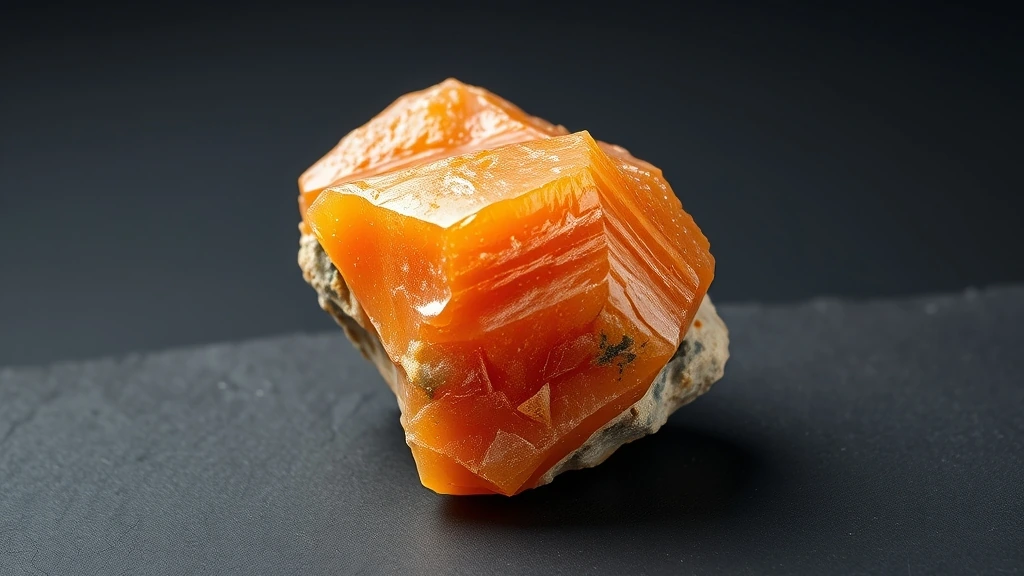
Orange aventurine belongs to the broad class of natural minerals and crystals, specifically categorized as a variety of quartz. Unlike pure quartz, it contains microscopic inclusions that scatter light, creating a distinctive shimmer. This geological formation results from the slow cooling of silica-rich magma. The stone’s identity is defined by its aggregate structure rather than a single large crystal.
What is Orange Aventurine? Geological Overview & Definition
Orange aventurine is technically a quartz variety characterized by the presence of fine, plate-like inclusions. These inclusions, often composed of fuchsite or other mica minerals, reflect light to produce an aventurescent effect. The stone forms in hydrothermal veins and pegmatites worldwide. Its coloration depends entirely on the specific mineral impurities trapped within the silica matrix. In comparative mineralogical collections, practitioners and geologists frequently study Red Aventurine alongside this crystal to appreciate their subtle energetic and structural differences.
The term “aventurine” derives from the Italian phrase “per avventura,” meaning by chance. This reflects the historical discovery of the glass-like stone by Italian glassmakers. In gemology, it is valued for its play-of-color and warm aesthetic appeal. The stone is not a single crystal but a polycrystalline aggregate of quartz grains. In comparative mineralogical collections, practitioners and geologists frequently study Himalayan Quartz alongside this crystal to appreciate their subtle energetic and structural differences.
Orange Aventurine Chemical Composition & Crystallographic Properties
The primary constituent of orange aventurine is silicon dioxide (SiO₂), which crystallizes in the trigonal system. This lattice structure features a helical arrangement of silicon-oxygen tetrahedra. The trigonal symmetry dictates the stone’s physical properties, including its cleavage and fracture patterns. Understanding this lattice is crucial for accurate gemological identification.
The characteristic orange hue arises from chromophore color centers within the quartz lattice. These are often caused by trace elements or structural defects that absorb specific wavelengths of light. Unlike pure quartz, the color is not intrinsic to the silica but is a result of impurity-driven optical effects. The inclusions themselves may contribute to the overall warm tone of the specimen.
As a silica-based mineral, orange aventurine exhibits low acid sensitivity under standard gemological testing conditions. It does not react with weak acids, distinguishing it from carbonate-bearing stones. The thermal behavior is stable, with high resistance to heat and thermal shock. This stability makes it suitable for various jewelry applications without risk of degradation.
The cation substitution in the quartz lattice is minimal, as silicon is rarely replaced by other cations. However, trace amounts of aluminum or lithium may be present in the host quartz. These substitutions can subtly influence the stone’s piezoelectric properties. The overall chemical purity remains high, ensuring long-term structural integrity.
| Property | Specification |
|---|---|
| Mineral Group | Natural Mineral / Crystal |
| Chemical Formula | SiO₂ |
| Mohs Hardness | 6.5 – 7.0 |
| Crystal System | Trigonal |
| Specific Gravity (Density) | 2.65 |
| Refractive Index | 1.544 – 1.545 |
| Color & Optical Properties | Natural Orange Aventurine color spectrum and optical dispersion |
| Primary Mining Localities | Global primary localities |
| Water & Chemical Resistance | High (Safe for gentle water washing) |
| Chakra Alignment (Traditional) | Heart Chakra (Anahata) |
| Zodiac Affinity (Traditional) | Leo, Sagittarius |
| Symbolic Meaning (Traditional) | Emotional balance, compassion and inner peace |
Orange Aventurine Varieties & Color Spectrum
Orange Aventurine displays distinct mineralogical characteristics across its geological varieties and structural habits. Gemologists evaluate these natural varieties based on crystal habit, trace chromophore concentrations, and visual luster.
Primary Natural Orange Aventurine
The benchmark natural variety exhibiting diagnostic color saturation and classic crystallographic symmetry.
Distinct Geological Morphs of Orange Aventurine
Secondary regional and structural varieties formed under localized geological temperature and pressure conditions.
Classic Orange Aventurine
This variety derives from quartz crystals with iron‑oxide inclusions that scatter light, creating a subtle orange hue. The inclusions are typically needle‑like hematite or goethite, giving a gentle sparkle. It is most common in the United States and Brazil, where it is prized for its warm, translucent appearance and moderate rarity.
Sunset Aventurine
Formed in pegmatitic veins rich in manganese, Sunset Aventurine displays a deeper, almost reddish‑orange tone. The mineral’s color spectrum is intensified by fine‑grained manganese oxide inclusions, producing a velvety sheen. Though widely available in Brazil, it is less common in European deposits, making it a sought‑after specimen for collectors.
Amber‑Tinted Aventurine
This rare variant contains trace amounts of titanium and vanadium, which shift the quartz’s color toward a golden amber. The inclusions are microscopic, giving the stone a subtle opal-like play of light. It is predominantly found in the high‑altitude pegmatites of the Andes, where its scarcity enhances its value.
Citrus Aventurine
Citrus Aventurine is distinguished by a bright, lemon‑yellow to orange banding within the quartz matrix. The banding results from alternating layers of silica and iron‑rich inclusions formed during rapid crystal growth. It is chiefly mined in the Philippines and parts of Africa, where its vivid color makes it a favorite for ornamental carving.
Sunburst Aventurine
This variety features a central core of intense orange surrounded by a halo of lighter, translucent quartz. The core is formed by concentrated iron‑oxide inclusions, while the halo consists of clear quartz with minimal impurities. Sunburst Aventurine is rare in the United States and is often sourced from the Appalachian region, where its unique visual signature commands premium prices.
Coral‑Red Aventurine
Although technically a red‑orange mix, Coral‑Red Aventurine is included for its distinct hue. It contains chromium and iron inclusions that produce a warm, coral tint. Found mainly in the Brazilian states of Minas Gerais and São Paulo, this variety is prized for its rarity and the striking contrast between its core and outer layers.
Where is Orange Aventurine Found? Geological Mining & Extraction
Orange Aventurine typically occurs in pegmatitic quartz veins that form during the late stages of granite crystallization. The iron‑oxide and manganese inclusions that give the stone its color are introduced by hydrothermal fluids circulating through these veins. Major mining districts include the Brazilian states of Minas Gerais and São Paulo, the Appalachian region of the United States, and the Andean provinces of Peru and Chile.
Extraction methods involve open‑pit or underground quarrying, followed by crushing and hand‑sorting to isolate the desired color grades. Once extracted, the stones are often polished to enhance their natural sparkle, with the finest specimens undergoing meticulous grading to ensure consistency in hue and clarity.
Historical Significance & Cultural Lore of Orange Aventurine
Across ancient Greco‑Roman lapidary traditions, orange aventurine was valued for its association with the Anahata or heart chakra, believed to promote emotional balance and compassion. Egyptian artisans incorporated the stone into amulets and jewelry, attributing to it protective qualities against envy and jealousy. In Vedic lore, the gem was linked to the Suryā (sun) deity, symbolizing vitality and courage.
Chinese geomancers also revered orange aventurine, using it in feng shui to attract prosperity and harmonious relationships. Archaeological finds from the Han dynasty reveal carved pendants and bracelets featuring the stone’s warm glow, underscoring its enduring appeal across cultures.
Modern Uses & Jewelry Applications of Orange Aventurine
Lapidaries primarily cut orange aventurine into cabochons to maximize the visibility of its characteristic glittery inclusions. This cutting style enhances the aventurescence effect, where light reflects off numerous microscopic mineral plates within the stone. Faceted cuts are less common but occasionally used for smaller, cleaner specimens that lack heavy inclusions.
- Cabochon Jewelry: The most popular setting, showcasing the shimmering surface without risking fracture during faceting.
- Ornamental Carvings: Used in decorative objects, beads, and pendants due to its workability and warm aesthetic.
- Inlay Work: Incorporated into wooden or metal bases for artistic lapidary pieces.
Metaphysical Properties & Traditional Meaning of Orange Aventurine
According to historical traditions and metaphysical lore, this stone is revered for its capacity to foster emotional balance and inner resilience. Ancient Mediterranean and Vedic practitioners often associated warm-toned quartz varieties with vitality and the strengthening of the spirit. It is believed to help individuals navigate life changes with grace and optimism.
In contemporary spiritual practice, orange aventurine is frequently employed during meditation to cultivate compassion and inner peace. Practitioners suggest that holding the stone can help dissolve emotional blockages, allowing for a more open and loving perspective. This aligns with its reputation as a stone of courage and positive transformation.
Which Chakra and Zodiac Signs Align with Orange Aventurine?
The Heart Chakra (Anahata) is the primary energetic center associated with orange aventurine in metaphysical systems. This chakra governs love, compassion, and emotional well-being, which mirrors the stone’s traditional attributes. By resonating with this energy center, the stone is thought to promote harmony and self-acceptance.
Astrologically, this gemstone is canonically aligned with the fire signs Leo and Sagittarius. Leos may find it enhances their natural confidence and creative expression, while Sagittarians might use it to support their adventurous spirit and philosophical outlook. These associations emphasize the stone’s connection to vitality and forward momentum.
How to Identify Real vs. Fake Orange Aventurine
Artificial imitations of orange aventurine are common, often involving dyed chalcedony or synthetic glass designed to mimic the natural sparkle. These replicas may lack the subtle color variations and natural inclusions found in genuine mineral specimens. Understanding the differences is crucial for collectors and jewelry buyers to avoid purchasing misleading products.
Practical At-Home Authenticity Tests
- Temperature Test (Thermal Feel): Genuine quartz feels cool to the touch initially and warms slowly, whereas plastic or glass imitations may warm up faster or feel different in texture.
- Specific Gravity & Weight Test: Real aventurine has a specific gravity of approximately 2.65; it should feel slightly heavier than similarly sized glass or plastic substitutes.
- Scratch & Hardness Test (Mohs Comparison): With a Mohs hardness of 6.5 to 7.0, genuine aventurine will scratch glass but may be scratched by a steel file or topaz, distinguishing it from softer fakes.
- Microscopic & Loupe Inspection (Internal Inclusions): Use a 10x loupe to look for natural mineral inclusions and the specific glitter of aventurescence; synthetic glass often contains bubbles or lacks the natural, irregular distribution of inclusions.
Orange Aventrine Valuation Factors, Grading & Pricing
The market first gauges color saturation, looking for a vivid, uniform orange hue that glows from within. Stones with a bright, even tone and a natural, glassy luster command higher prices, while muted or unevenly colored pieces are discounted. Collectors prize a lively visual impact that reflects the stone’s internal inclusions of mica or hematite.
Next, crystal size & weight (grams) drives valuation, with larger, heavier specimens fetching premium rates. Raw blocks are priced lower than tumbled, polished pieces that showcase a smooth, reflective surface, and any natural matrix inclusions are noted as character rather than flaws. Buyers compare gram‑per‑inch dimensions to assess cost efficiency and rarity.
Finally, ethical sourcing & locality premium influences both holistic and collector markets. Stones mined responsibly in regions with transparent labor practices attract a surcharge, especially when provenance can be traced to historic quarries known for high‑quality aventurine. Ethical provenance adds spiritual credibility and appeals to environmentally conscious purchasers.
How to Clean and Care for Orange Aventurine
Cleaning should be gentle: immerse the stone in warm soapy water, then wipe with a soft cloth to remove surface grime. Rinse briefly with clean water and pat dry with a lint‑free microfiber towel. Avoid ultrasonic cleaners, as the vibrations can cause micro‑fractures in the crystal lattice.
Cleansing and Recharging Orange Aventurine (Energetic Care)
Across ancient lapidary traditions, a brief exposure to moonlight is considered a safe way to refresh the stone’s subtle energy without heating the lattice. Place the aventurine on a windowsill during a clear night, allowing lunar photons to bathe the surface for an hour or two. This method respects the mineral’s structural integrity while clearing residual energetic imprints.
Another gentle approach is herbal smudging, using sage or cedar smoke to sweep away stagnant vibrations. Hold the stone above the rising smoke for a few breaths, ensuring the flame never contacts the surface. Alternatively, resting the stone on a clean selenite slab can passively recharge its vibrational field, as selenite is reputed to transmit pure, non‑thermal energy.
Frequently Asked Questions About Orange Aventurine
Orange Aventurine displays distinct mineralogical characteristics across its geological varieties and structural habits. Gemologists evaluate these natural varieties based on crystal habit, trace chromophore concentrations, and visual luster.
Primary Natural Orange Aventurine
The benchmark natural variety exhibiting diagnostic color saturation and classic crystallographic symmetry.
Distinct Geological Morphs of Orange Aventurine
Secondary regional and structural varieties formed under localized geological temperature and pressure conditions.
What is the chemical composition of orange aventurine?
Orange aventurine is a variety of quartz with the chemical formula SiO₂. The mineral’s structure is trigonal, and it typically exhibits a hardness of 6.5–7.0 on the Mohs scale, making it durable for everyday wear. Its vibrant orange hue results from iron impurities and micro‑inclusions that create a distinctive chatoyancy effect.
Is orange aventurine safe to wear in the shower?
Yes, orange aventurine is water‑resistant and safe for gentle washing in the shower. It can be cleaned with warm soapy water and a soft cloth, but avoid prolonged exposure to harsh chemicals or high‑pressure jets that could loosen surface inclusions. The stone’s quartz matrix resists most everyday moisture.
How should I clean my orange aventurine jewelry?
Use warm soapy water and a soft cloth, then dry with a lint‑free towel. Avoid ultrasonic cleaners, as the vibration can cause micro‑fractures in the quartz. Gentle cleaning preserves the stone’s natural luster and prevents damage to any delicate surface inclusions.
Can I use ultrasonic cleaning on orange aventurine?
No, ultrasonic cleaning should be avoided for orange aventurine. The high‑frequency vibrations can crack the quartz’s internal structure, especially where iron‑rich inclusions are present. Stick to manual cleaning with mild soap and a soft cloth to maintain the stone’s integrity.
Which zodiac signs are associated with orange aventurine?
Orange aventurine is linked to the zodiac signs Leo and Sagittarius. In astrological lore, these signs are believed to resonate with the stone’s vibrant energy, enhancing confidence and optimism. The association reflects the stone’s warm, sun‑like color.
Which chakra does orange aventurine correspond to?
Orange aventurine aligns with the Heart Chakra (Anahata). This chakra governs compassion, emotional balance, and inner peace. The stone’s warm tones are thought to stimulate heart‑centered healing and emotional release.
Does orange aventurine contain any hazardous elements?
No, orange aventurine does not contain hazardous elements. It is a pure quartz variant, free from heavy metals or toxic inclusions. This makes it safe for everyday wear and suitable for those concerned about allergic reactions.
How durable is orange aventurine for daily wear?
Orange aventurine is highly durable, with a hardness of 6.5–7.0 on the Mohs scale. Its quartz composition resists scratches and wear, making it ideal for rings, pendants, and bracelets. Regular gentle cleaning preserves its bright orange glow and structural integrity.