
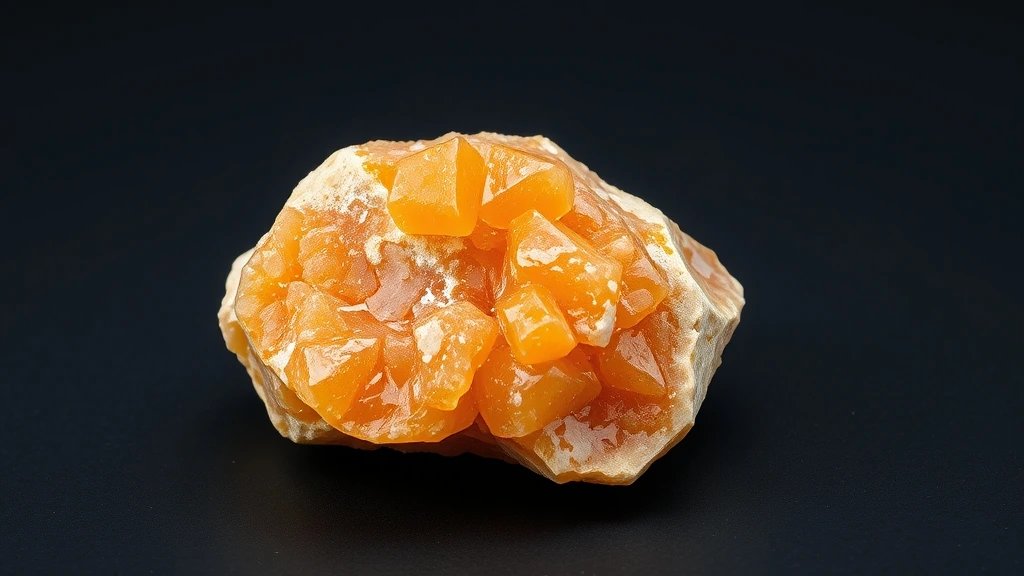
Geologically, orange feldspar belongs to the vast feldspar group, which constitutes the most abundant mineral family in the Earth’s crust. It is classified as a natural mineral crystal, forming primarily in igneous and metamorphic environments. Unlike organic gemstones, its structure is defined by a rigid lattice of silicon, oxygen, and metal cations. This classification places it firmly within the silicate supergroup, distinguishing it from carbonate or oxide minerals. Its formation is intimately linked to the cooling of magma or the recrystallization of existing rocks under intense pressure.
What is Orange Feldspar? Geological Overview & Definition
Orange feldspar is not a single distinct species but a color variant within the plagioclase or alkali feldspar series. Its orange tint typically results from the presence of iron oxides or manganese impurities trapped during crystallization. Geologists identify it by its characteristic cleavage planes and glassy luster, which are diagnostic features of the feldspar group. These physical properties allow for easy differentiation from similar silicate minerals like quartz or mica.
In commercial gemology, this stone is often cut into cabochons or faceted gems to highlight its warm, earthy tones. The feldspar group dominates continental crust composition, accounting for approximately sixty percent of all exposed rock. Understanding its origin helps collectors appreciate the geological history embedded in each specimen. Whether found in granite intrusions or metamorphic schists, it reflects significant tectonic activity.
Orange Feldspar Chemical Composition & Crystallographic Properties
The crystal system for orange feldspar is strictly trigonal, reflecting its underlying lattice symmetry. This structure allows for specific cleavage angles that are critical for identification under magnification. The unit cell parameters define the precise arrangement of atoms within the crystal framework. Deviations from this trigonal symmetry would indicate a different mineral species entirely. The same trigonal framework that gives orange feldspar its distinctive cleavage is also found in the high‑temperature alkali feldspar known as **Sanidine**, which shares a similar lattice symmetry yet differs in its potassium content and color spectrum.
Cation substitution is a key factor in its chemical variability, where sodium, potassium, and calcium ions interchange within the lattice. This solid solution series enables the formation of diverse feldspar types with slightly different physical properties. Acid sensitivity is generally low, as the silicate bond is highly resistant to weathering. However, prolonged exposure to strong acids can etch the surface, revealing the internal cleavage structure. While feldspar’s robust silicate lattice resists weathering, mineral collectors often contrast its durability with the more delicate Orange Calcite, which shares a similar warm hue but lacks the same structural resilience.
Color centers in orange feldspar are primarily driven by iron impurities in various oxidation states. These chromophores absorb specific wavelengths of light, resulting in the characteristic orange hue observed in gem-quality specimens. Thermal behavior is stable under normal conditions, but extreme heat can alter the oxidation state of these impurities. This may lead to subtle color shifts or the formation of new mineral phases if the temperature exceeds the melting point.
| Property | Specification |
|---|---|
| Mineral Group | Natural Mineral / Crystal |
| Mohs Hardness | 6.5 – 7.0 |
| Crystal System | Trigonal |
| Color & Optical Properties | Natural Orange Feldspar color spectrum and optical dispersion |
| Primary Mining Localities | Global primary localities |
| Water & Chemical Resistance | High (Safe for gentle water washing) |
| Chakra Alignment (Traditional) | Root Chakra (Muladhara) |
| Zodiac Affinity (Traditional) | Capricorn, Taurus |
| Symbolic Meaning (Traditional) | Grounding, vitality and protection |
Orange Feldspar Varieties & Color Spectrum
Orange Feldspar displays distinct mineralogical characteristics across its geological varieties and structural habits. Gemologists evaluate these natural varieties based on crystal habit, trace chromophore concentrations, and visual luster.
Primary Natural Orange Feldspar
The benchmark natural variety exhibiting diagnostic color saturation and classic crystallographic symmetry.
Distinct Geological Morphs of Orange Feldspar
Secondary regional and structural varieties formed under localized geological temperature and pressure conditions.
Orthoclase (Orange‑Toned)
Orthoclase is the most common orange feldspar, forming in granitic pegmatites. Its orange hue results from trace amounts of iron and manganese, giving a warm, honey‑like appearance. Inclusions of mica or quartz are frequent, creating a subtle speckled effect. While widely available, the most vivid orange specimens are prized for jewelry and are relatively rare in high‑quality cuts.
Albite (Orange‑Toned)
Albite, a sodium‑rich feldspar, can exhibit a pale orange tint when iron is present. It typically forms in low‑temperature hydrothermal veins and is often associated with quartz. The orange coloration is less intense than orthoclase, but the mineral’s transparent to translucent character makes it attractive for cabochon work. Commercially, orange albite is uncommon, with most specimens found in the Alps and the Ural Mountains.
Anorthite (Orange‑Toned)
Anorthite, a calcium‑rich feldspar, occasionally shows a subtle orange tint due to iron impurities. It crystallizes in the trigonal system and is usually found in high‑temperature pegmatites. Inclusions of feldspar twins and mica give it a distinctive banded look. Orange anorthite is scarce, with notable deposits in the Canadian Shield and the Sierra Nevada.
Kyanite‑Associated Orange Feldspar
In some pegmatites, orange feldspar occurs alongside kyanite, forming a striking contrast. The orange feldspar here often contains inclusions of kyanite crystals, giving a speckled appearance. These deposits are typically found in the Appalachian region and the Himalayas. The combination of orange feldspar with kyanite is highly sought after by collectors, making it a rare trade variety.
Orange‑Toned Kyanite‑Feldspar (Trade Variety)
This trade variety is a processed blend of orange feldspar and kyanite, marketed for its vibrant color and durability. The material is often heat‑treated to enhance the orange hue, resulting in a uniform, saturated color. It is commonly sourced from the Philippines and Thailand, where large pegmatite bodies contain both minerals. Due to the processing, it is more affordable than natural orange feldspar but still valued for its aesthetic appeal.
Orange Feldspar from the Kola Peninsula
The Kola Peninsula in Russia yields a unique orange feldspar with a deep, rust‑like tone. Formed in ancient granitic intrusions, this variety often contains iron‑rich inclusions that give it a distinctive marbled effect. Its rarity and striking color make it a favorite among high‑end collectors and designers.
Where is Orange Feldspar Found? Geological Mining & Extraction
Orange feldspar is predominantly extracted from granitic pegmatite bodies, where slow cooling allows large crystals to form. Major mining regions include the Canadian Shield, the Sierra Nevada, and the Kola Peninsula, each providing distinct color variations due to local geochemical conditions.
Extraction typically involves open‑pit or underground quarrying, followed by crushing, washing, and hand‑sorting to isolate the orange specimens. The processed material is then cut, polished, or fashioned into cabochons for the jewelry market, with secondary markets for industrial uses such as refractory materials.
Historical Significance & Cultural Lore of Orange Feldspar
Across ancient Greco‑Roman lapidary traditions, orange feldspar was valued for its warm hue and used in decorative mosaics and architectural ornamentation. In Egyptian funerary art, the mineral’s reddish tones were associated with rebirth and were incorporated into amulets and sarcophagi.
Chinese artisans prized orange feldspar for its symbolic connection to the fire element, incorporating it into imperial jade carvings and ceremonial vessels. Vedic texts also reference orange‑tinged stones as offerings to the sun deity, underscoring the mineral’s enduring spiritual resonance.
Modern Uses & Jewelry Applications of Orange Feldspar
Orange feldspar is prized for its warm, honey‑gold hue and moderate hardness of 6.5–7.0 on the Mohs scale, allowing precise lapidary work without excessive brittleness. Artisans often cut it into cabochons that showcase its subtle chatoyancy, while skilled faceting highlights its trigonal crystal symmetry. The stone also serves ornamental carving for decorative inlays, beads, and small sculpture pieces.
- Cabochon pendants emphasizing a smooth, polished surface
- Faceted rings and earrings that maximize sparkle and fire
- Carved cameos, intaglios, and decorative objects for interior design
Safety & Mineral Profile of Orange Feldspar
Handling orange feldspar poses no toxicological hazards; the mineral is chemically stable, resistant to acids, and does not release harmful fumes under normal conditions. Collectors should store specimens in padded trays to avoid chipping, and use protective eyewear when cutting or polishing. While historic lapidary lore occasionally links feldspar to grounding energies, contemporary science treats it strictly as a collector mineral for study and display, not a therapeutic crystal.
Mineralogical Group and Planetary Lore of Orange Feldspar
Orange feldspar belongs to the feldspar group, specifically the alkali‑feldspar series, sharing a framework silicate structure with potassium, sodium, and calcium. Its trigonal crystal system produces characteristic striations on cleavage faces, aiding identification alongside its distinctive orange to reddish‑brown coloration.
In early astronomical symbolism, feldspar minerals were associated with the planet Saturn, reflecting themes of stability and endurance. Across ancient lapidary traditions, orange feldspar was occasionally used as a talisman for grounding and vitality, echoing its modern alignment with the Root Chakra (Muladhara) and zodiac signs Capricorn and Taurus.
How to Identify Real vs. Fake Orange Feldspar
Artificial imitations of orange feldspar include dyed quartz, synthetic glass, and resin composites that mimic its color but lack the mineral’s intrinsic crystal structure. These substitutes often feel lighter, display uniform coloration without natural inclusions, and may exhibit a glassy sheen inconsistent with feldspar’s typical luster. Careful testing can differentiate authentic specimens from these replicas.
Practical At-Home Authenticity Tests
- Temperature Test (Thermal Feel): Hold the stone against the skin; genuine feldspar feels cool initially and warms slowly, whereas glass or plastic warms quickly.
- Specific Gravity & Weight Test: Compare the stone’s heft to a known feldspar sample; authentic orange feldspar has a specific gravity around 2.55–2.76, making it noticeably heavier than glass.
- Scratch & Hardness Test (Mohs Comparison): Use a steel file (hardness ~6.5) to attempt a scratch; real feldspar will resist minor scratching, while softer imitations will show marks.
- Microscopic & Loupe Inspection (Internal Inclusions): Examine under 10×–30× magnification; natural feldspar displays characteristic striations, tiny inclusions, or growth patterns, whereas synthetic glass appears uniformly clear or shows bubble patterns.
Orange Feldspar Valuation Factors, Grading & Pricing
The first key determinant of market value is specimen aesthetic quality. A well‑formed crystal habit with minimal inclusions and a clean matrix enhances visual appeal, while a flawless surface free of fractures or weathering signals superior preservation. Collectors prize specimens that display a natural, unaltered appearance, as this reflects both geological integrity and careful handling.
Rarity and specimen dimensions drive the second major factor. Larger, intact crystal clusters measured in centimeters or grams command higher prices, especially when the specimen remains free from handling damage such as chips or scratches. The overall size, combined with the absence of any visible wear, signals a specimen that has been preserved in its original state, thereby increasing its desirability among scientific collectors.
The final valuation element centers on mineralogical provenance and locality value. Specimens sourced from renowned localities—such as the Harz Mountains in Germany, the Jabal al‑Hajar in Oman, or the Kola Peninsula in Russia—carry added prestige in museum and academic circles. Provenance records that trace a specimen’s geological history enhance its scientific significance, thereby elevating its status within the collector market.
How to Clean and Care for Orange Feldspar
To maintain the integrity of orange feldspar, gently clean the specimen with warm soapy water and a soft cloth. After rinsing, dry thoroughly with a lint‑free towel to prevent water spots. Avoid ultrasonic cleaners, as the vibration can induce microfractures in the crystal lattice, compromising structural stability.
Cleansing and Recharging Orange Feldspar (Energetic Care)
For energetic renewal, place the feldspar under gentle moonlight for several hours, allowing the natural lunar energy to cleanse and recharge its vibrational field. Alternatively, resting the stone on a selenite charging slab can facilitate the transfer of positive energy without exposing the crystal to heat or direct sunlight, thereby preserving its physical and metaphysical qualities.
Frequently Asked Questions About Orange Feldspar
Orange Feldspar displays distinct mineralogical characteristics across its geological varieties and structural habits. Gemologists evaluate these natural varieties based on crystal habit, trace chromophore concentrations, and visual luster.
Primary Natural Orange Feldspar
The benchmark natural variety exhibiting diagnostic color saturation and classic crystallographic symmetry.
Distinct Geological Morphs of Orange Feldspar
Secondary regional and structural varieties formed under localized geological temperature and pressure conditions.
Is orange feldspar safe to wear in the shower?
Yes, orange feldspar is water‑resistant and can be safely washed with gentle water. The mineral’s crystalline structure resists moisture, so a quick rinse or mild soap solution will not damage it. However, avoid prolonged soaking or harsh chemicals that could dull its natural luster.
Can I clean my orange feldspar with an ultrasonic cleaner?
No, ultrasonic cleaning should be avoided for orange feldspar. The vibrations can cause micro‑fractures in the crystal lattice, compromising its integrity. Instead, use warm soapy water and a soft cloth, gently wiping the surface to preserve its clarity.
What is the typical hardness of orange feldspar?
Orange feldspar has a Mohs hardness ranging from 6.5 to 7.0. This makes it durable enough for everyday jewelry, yet still susceptible to scratching by harder materials. Handle with care and store separately from harder gems to maintain its surface quality.
Which zodiac signs are associated with orange feldspar?
The zodiac signs Capricorn and Taurus are linked to orange feldspar. In astrological traditions, these signs are believed to resonate with the stone’s grounding and protective energies, enhancing stability and confidence for wearers.
Which chakra does orange feldspar correspond to?
Orange feldspar aligns with the Root Chakra (Muladhara). This chakra governs grounding, security, and physical vitality, and the stone’s warm hue is thought to reinforce these foundational energies in metaphysical practices.
How should I store my orange feldspar jewelry?
Store orange feldspar separately in a soft pouch or lined jewelry box. This prevents scratches from harder stones and protects it from accidental impacts. Keep it away from direct sunlight to avoid fading of its natural orange tones.
Does orange feldspar have any special care instructions for cleaning?
Use a warm soapy solution and a soft cloth for cleaning, avoiding abrasive materials. The mineral’s structure can be weakened by harsh scrubbing or ultrasonic vibration, so gentle cleaning preserves its natural brilliance and structural integrity.
Is orange feldspar suitable for children’s jewelry?
Yes, orange feldspar is suitable for children’s jewelry due to its moderate hardness and durability. Its water resistance and low risk of breakage make it a practical choice, though parents should still supervise handling to avoid accidental drops.