
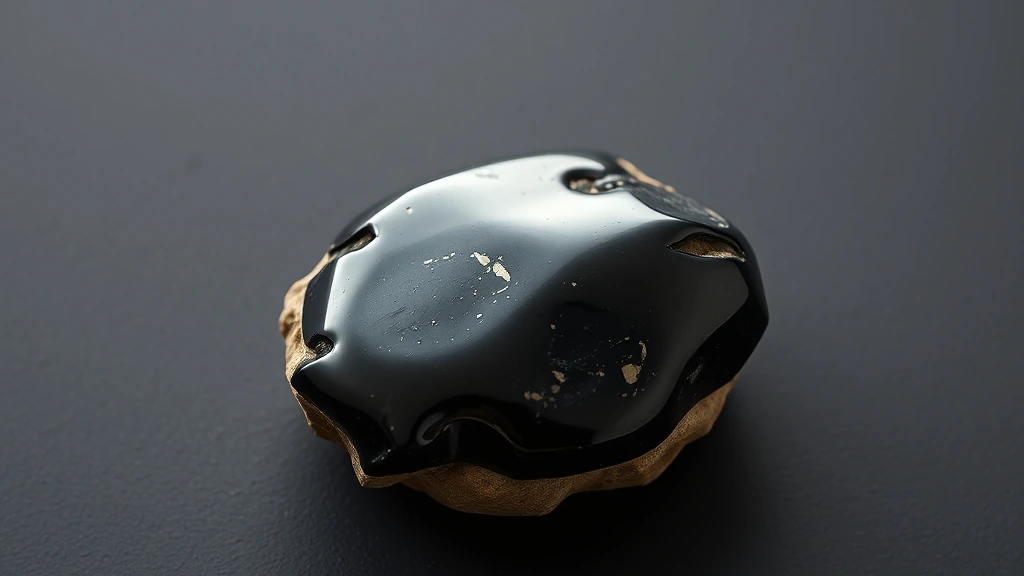
Peanut Obsidian belongs to the Mineraloid classification, specifically as an extrusive volcanic glass. It forms when felsic lava cools rapidly, preventing the development of a crystalline structure. This rapid quenching traps gas bubbles and mineral inclusions, creating its unique texture. Unlike true minerals, it lacks long-range atomic order, defining its amorphous nature.
What is Peanut Obsidian? Geological Overview & Definition
Peanut Obsidian is a felsic volcanic glass characterized by its distinctive tan, brown, and black mottling. This pattern results from the interplay of silica-rich glass and suspended mineral inclusions. The stone forms in subaerial lava flows where rapid cooling inhibits crystal growth. Its texture resembles crushed peanuts, hence the common descriptive name. In comparative mineralogical collections, practitioners and geologists frequently study Golden Sheen Obsidian alongside this crystal to appreciate their subtle energetic and structural differences.
Geologically, it is classified as a mineraloid rather than a true mineral. This distinction arises because it lacks a defined crystalline lattice structure. The material is an amorphous solid formed from supercooled magma. Its formation is typically associated with stratovolcanoes in tectonically active regions. In comparative mineralogical collections, practitioners and geologists frequently study Flower Obsidian alongside this crystal to appreciate their subtle energetic and structural differences.
Peanut Obsidian Chemical Composition & Crystallographic Properties
The primary chemical component is silicon dioxide (SiO₂), often exceeding 70 percent by weight. Trace elements such as iron and magnesium act as chromophores, influencing the brownish hues. The structure is amorphous, meaning it lacks a repeating atomic lattice. This disordered arrangement distinguishes it from crystalline silicates like quartz.
Cation substitution within the glass network involves minor amounts of aluminum and potassium. These elements integrate into the silica tetrahedra, altering the local charge balance. The material exhibits acid sensitivity, particularly to strong hydrofluoric acid. Prolonged exposure can etch the surface, reducing its luster and clarity.
Thermal behavior is characterized by a glass transition temperature rather than a sharp melting point. Upon heating, the amorphous structure gradually softens before fully liquefying. Rapid cooling during formation creates internal thermal stress. This stress can lead to conchoidal fracture patterns if the stone is improperly cut.
| Property | Specification |
|---|---|
| Mineral Group | Mineraloid (Extrusive Volcanic Glass) |
| Chemical Formula | Volcanic glass (70%+ SiO₂ with Fe, Mg silicates) |
| Mohs Hardness | 5.0 – 5.5 |
| Crystal System | Amorphous (Non-crystalline volcanic glass) |
| Specific Gravity (Density) | 2.35 – 2.60 |
| Refractive Index | 1.480 – 1.510 |
| Color & Optical Properties | Natural Peanut Obsidian color spectrum and optical dispersion |
| Primary Mining Localities | Mexico, USA (Oregon, Utah), Turkey (Kars, Agri), Armenia, Iceland |
| Water & Chemical Resistance | High (Natural volcanic glass; safe in water) |
| Chakra Alignment (Traditional) | Root Chakra (Muladhara) |
| Zodiac Affinity (Traditional) | Scorpio, Sagittarius, Capricorn |
| Symbolic Meaning (Traditional) | Aura shield, emotional truth mirroring, cord-cutting, and shadow grounding |
Peanut Obsidian Varieties & Color Spectrum
Peanut Obsidian displays distinct mineralogical characteristics across its geological varieties and structural habits. Gemologists evaluate these natural varieties based on crystal habit, trace chromophore concentrations, and visual luster.
Primary Natural Peanut Obsidian
The benchmark natural variety exhibiting diagnostic color saturation and classic crystallographic symmetry.
Distinct Geological Morphs of Peanut Obsidian
Secondary regional and structural varieties formed under localized geological temperature and pressure conditions.
Classic Peanut
Formed from rapidly cooled rhyolitic lava, Classic Peanut displays the signature brown‑orange matrix interlaced with dark, peanut‑shaped inclusions of iron‑rich magnetite. The inclusions create a mottled pattern that resembles roasted peanuts, a visual cue prized by collectors. This variety is abundant in the United States, particularly in the western volcanic fields of Oregon and Idaho, making it relatively common but still valued for its distinctive texture.
Mahogany Peanut
Mahogany Peanut originates in high‑silica lava flows enriched with trace chromium and manganese, yielding a deep reddish‑brown base with darker, elongated specks. The mineral’s internal fractures often trap microscopic bubbles that scatter light, giving a subtle sheen reminiscent of polished mahogany wood. Found primarily in the volcanic provinces of Mexico’s Sierra Madre Occidental, this morph is rarer than the classic type and commands higher prices in the gemstone market.
Snow‑Capped Peanut
The Snow‑Capped variant forms when silica‑rich lava encounters pockets of volcanic ash, producing a light tan to creamy background overlaid with darker, nut‑shaped inclusions. Thin layers of calcium carbonate precipitate along the flow margins, creating a frosted appearance that enhances its visual contrast. This variety is most frequently mined in the volcanic terrains of the Andes, especially in northern Chile, where it is prized for its delicate pastel palette.
Midnight Peanut
Midnight Peanut develops in lava flows with elevated iron and titanium concentrations, resulting in a nearly black matrix punctuated by glossy, dark brown inclusions. The high iron content raises the stone’s specific gravity, giving it a weightier feel in hand. Rarely exported, this variety is sourced from isolated volcanic islands of the Pacific, such as the Kamchatka Peninsula, and is sought after by collectors for its dramatic, high‑contrast aesthetic.
Desert Sunset Peanut
Desert Sunset Peanut emerges from basaltic‑andesitic eruptions that incorporate fine‑grained feldspar crystals, imparting a golden‑orange hue with scattered, darker specks. The presence of microscopic hematite crystals creates a subtle metallic glimmer when the stone is rotated under light. This morph is predominantly found in the arid volcanic fields of Namibia and western Australia, where limited mining operations contribute to its relative scarcity.
Alpine Peanut
Alpine Peanut forms in high‑altitude volcanic domes where rapid cooling traps silica‑rich micro‑inclusions that appear as pale, nut‑shaped voids against a muted gray‑brown backdrop. The thin, laminar flow structure often preserves delicate gas bubbles, giving the stone a faint iridescent sheen. Extracted mainly from the volcanic ranges of the Italian Alps, this variety is the least common, prized by lapidaries for its unique combination of altitude‑derived clarity and earthy tones.
Where is Peanut Obsidian Found? Geological Mining & Extraction
Peanut Obsidian occurs in rhyolitic lava flows and volcanic domes where silica concentrations exceed 70 % SiO₂, often interbedded with basaltic tuffs. The glass forms when molten material quenches rapidly against cooler substrates, trapping iron‑rich magnetite and other silicate inclusions that define its characteristic “peanut” pattern. In many deposits, the glass is embedded within fine‑grained tuffaceous host rocks, requiring careful separation during extraction to preserve the delicate inclusions.
Primary mining districts include the western United States (Oregon, Idaho), Mexico’s Sierra Madre Occidental, the Andes of northern Chile, and isolated Pacific islands such as Kamchatka. Small‑scale artisanal operations dominate these regions, employing hand‑picked extraction from exposed flow surfaces and low‑impact blasting to avoid fracturing the amorphous glass. Post‑extraction, the material is sorted by color and inclusion density before being shipped to gem‑cutting centers worldwide.
Historical Significance & Cultural Lore of Peanut Obsidian
Across ancient lapidary traditions, Peanut Obsidian was valued for its protective qualities and its ability to mirror emotional truth, a belief documented in Greco‑Roman texts describing obsidian mirrors used in divination. Egyptian artisans incorporated the stone into funerary amulets, believing its dark sheen could shield the deceased from malevolent forces, while Chinese records from the Han dynasty note its use in ritual blades intended to cut negative karmic ties.
In Vedic literature, the stone is associated with the Root Chakra (Muladhara), where it was ground into powders for grounding ceremonies and placed in altars to anchor spiritual practice. Throughout early Mesoamerican cultures, obsidian—though not specifically the peanut variety—served as a material for sacrificial knives, underscoring a broader symbolic link between volcanic glass and the underworld. The enduring lore of Peanut Obsidian as an aura shield and tool for shadow grounding persists in contemporary metaphysical circles.
Modern Uses & Jewelry Applications of Peanut Obsidian
Peanut Obsidian is prized for its subtle mottled sheen and natural “peanut” pattern, making it a favorite in contemporary lapidary work. Artisans often employ cabochon polishing to enhance its translucency, while faceted cuts highlight the glass’s internal fractures for a dramatic sparkle. In jewelry, the stone is set in rings, pendants, and earrings, and it is also carved into ornamental pieces such as keychains or small figurines.
- Cabochon polishing for smooth, reflective surfaces
- Faceted cuts to accentuate internal fissures
- Carving into ornamental motifs for decorative objects
- Setting in metal or polymer jewelry for everyday wear
Metaphysical Uses & Origins of Peanut Obsidian
Across ancient lapidary traditions, Peanut Obsidian has been revered for its grounding energy. Practitioners use it in meditation to anchor emotional truth and to cut psychic cords, fostering a sense of stability during transformative practices. In architectural and decorative arts, the stone’s natural patterns are incorporated into mosaics and wall panels, symbolizing resilience and protective energy.
Which Chakra and Zodiac Signs Align with Peanut Obsidian?
Peanut Obsidian aligns with the Root Chakra (Muladhara), the energy center governing stability, safety, and physical grounding. This association makes the stone a powerful tool for those seeking to reinforce their foundational confidence and to manifest tangible goals.
The stone’s astrological resonance is with Scorpio, Sagittarius, and Capricorn. Individuals born under these signs often resonate with Peanut Obsidian’s capacity to transform emotional intensity into constructive action, aligning with the stone’s grounding properties.
How to Identify Real vs. Fake Peanut Obsidian
Artificial imitations of Peanut Obsidian commonly appear as dyed synthetic glass or polymer replicas that mimic the natural mottling. These copies often lack the subtle internal fractures and may exhibit a uniform surface texture. Genuine Peanut Obsidian retains its characteristic volcanic glass composition and shows natural inclusions that are difficult to replicate artificially.
Practical At-Home Authenticity Tests
- Temperature Test (Thermal Feel): Hold the stone in your hand; real volcanic glass feels noticeably cooler than synthetic glass, which tends to retain ambient temperature.
- Specific Gravity & Weight Test: Compare the stone’s weight to a known sample of similar size; real Peanut Obsidian should be denser, falling within 2.35–2.60 g/cm³.
- Scratch & Hardness Test (Mohs Comparison): Use a reference material of known hardness; Peanut Obsidian should scratch or be scratched by materials rated 5.0–5.5 on the Mohs scale.
- Microscopic & Loupe Inspection (Internal Inclusions): Examine the stone under magnification; authentic samples display random, fine inclusions and microfractures typical of volcanic glass, whereas imitations often show uniform, artificial patterns.
Peanut Obsidian Valuation Factors, Grading & Pricing
The most visible attribute that drives value is color variation. Natural hues range from deep black to charcoal gray, sometimes revealing subtle green or brown tints. These tones arise from iron and magnesium silicate inclusions, and the more pronounced the contrast, the higher the aesthetic appeal. Fine, consistent banding or veining can also enhance a specimen’s visual interest, making it more desirable to collectors and decorative users.
Weight and dimensions are decisive in determining market price. Larger blocks or heavier specimens command premium prices because they offer greater surface area for display or carving. The integrity of the block—absence of fractures or crazing—ensures durability, while light diffusion through the glass can create a subtle glow that is prized in ornamental pieces. A well‑finished, structurally sound specimen that diffuses light evenly will fetch a higher valuation.
Origin and authenticity remain critical in a global market that values provenance. Peanut Obsidian sourced from well‑documented volcanic regions, such as the Hawaiian or Icelandic islands, carries a premium due to traceable geological history. Contemporary trends in the wellness and decorative markets favor authentic, ethically sourced materials, and wholesalers often adjust pricing to reflect demand for certified, traceable specimens.
How to Clean and Care for Peanut Obsidian
Cleaning Peanut Obsidian is straightforward because it is a durable volcanic glass. Gently rinse the stone in warm, soapy water, then rinse again with clean water to remove any soap residue. Dry the specimen with a soft, lint‑free cloth, ensuring no moisture remains on the surface. Avoid ultrasonic cleaners, as the vibration can cause brittle glass to chip or fracture.
Cleansing and Recharging Peanut Obsidian (Energetic Care)
To recharge the energetic properties of Peanut Obsidian, place the stone in a quiet, shaded area under gentle moonlight for several hours. This natural light exposure helps restore its grounding vibration without exposing it to direct heat or intense sunlight. Alternatively, resting the stone on a selenite charging slab allows subtle electromagnetic interaction that can cleanse and amplify its aura. Herbal smudging with sage or palo santo can also be used to clear residual energies, but the stone should remain dry throughout the process.
Frequently Asked Questions About Peanut Obsidian
Peanut Obsidian displays distinct mineralogical characteristics across its geological varieties and structural habits. Gemologists evaluate these natural varieties based on crystal habit, trace chromophore concentrations, and visual luster.
Primary Natural Peanut Obsidian
The benchmark natural variety exhibiting diagnostic color saturation and classic crystallographic symmetry.
Distinct Geological Morphs of Peanut Obsidian
Secondary regional and structural varieties formed under localized geological temperature and pressure conditions.
Is peanut obsidian safe to wear in the shower?
Yes, it is completely safe for shower exposure. As a natural volcanic glass, it possesses high water resistance and does not dissolve or degrade when wet. However, you should remove it before applying harsh soaps or lotions to prevent surface residue buildup.
Can I clean peanut obsidian in an ultrasonic cleaner?
No, you must avoid ultrasonic cleaning devices. While safe in warm water, the intense vibrations can cause brittle volcanic glass to chip or fracture. Instead, use a soft, damp cloth to gently wipe the surface and remove any accumulated dust or oils.
What is the Mohs hardness of peanut obsidian?
It ranges between 5.0 and 5.5 on the Mohs scale. This moderate hardness makes it durable enough for daily jewelry wear but susceptible to scratching by harder minerals like quartz or topaz. Careful storage in a separate pouch is recommended to maintain its polished surface integrity over time.
Which zodiac signs are aligned with peanut obsidian?
Scorpio, Sagittarius, and Capricorn are the primary alignments. These earth and water signs resonate with the stone’s grounding energy and protective qualities. Wearing this gemstone may enhance their natural traits of determination, emotional depth, and strategic thinking according to astrological correspondences.
Which chakra does peanut obsidian activate?
It primarily activates the Root Chakra (Muladhara). This stone anchors energy to the physical body, promoting stability and security. It helps practitioners feel grounded during times of stress or uncertainty, reinforcing a strong connection to the earth element and physical reality.
What is the chemical composition of peanut obsidian?
It consists of over 70% silicon dioxide (SiO₂). Trace elements like iron and magnesium silicates contribute to its distinctive dark coloration and unique texture. This amorphous structure lacks a crystalline lattice, resulting in its characteristic conchoidal fracture and smooth, glassy appearance.
Why is it called “peanut” obsidian?
The name refers to its distinctive, bumpy surface texture. Unlike smooth obsidian, this variety features small, rounded protrusions resembling peanut shells. These unique formations occur during rapid volcanic cooling, creating a visually striking textural contrast that appeals to collectors and lapidaries.
Is peanut obsidian a true crystal?
No, it is an amorphous volcanic glass. It lacks the ordered, repeating atomic structure found in true crystals like quartz. Instead, it forms when lava cools too quickly for crystals to develop, resulting in a non-crystalline solid with a refractive index between 1.480 and 1.510.