
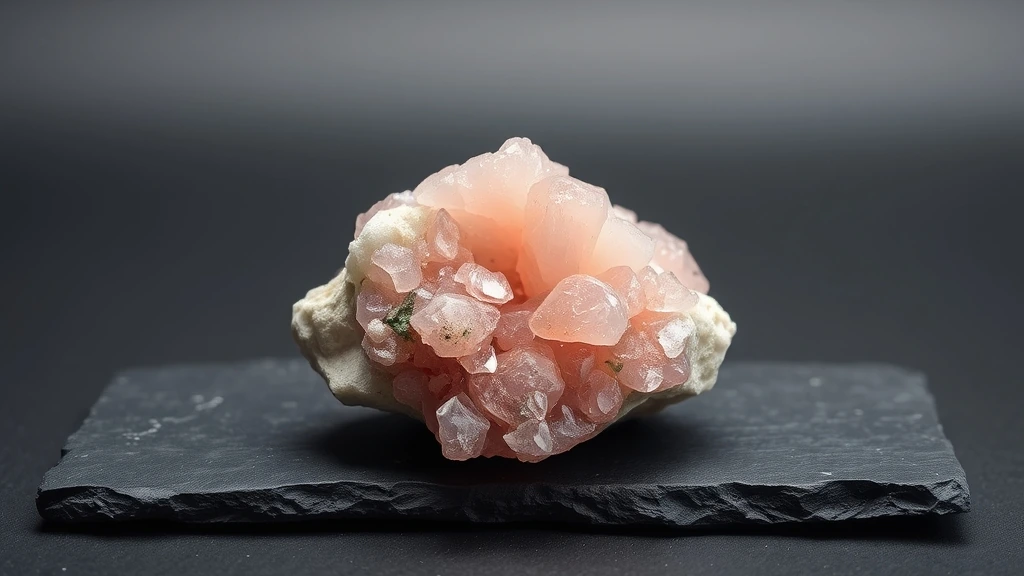
Pink optical calcite belongs to the broader Natural Mineral / Crystal family, specifically within the carbonate group. Its geological formation occurs in hydrothermal veins where specific trace elements interact with calcium carbonate. This unique composition results in a gem-quality specimen that balances aesthetic appeal with stable crystallographic integrity.
What is Pink Optical Calcite? Geological Overview & Definition
Pink optical calcite is a rare variety of calcite distinguished by its optical clarity and soft rose coloration. Unlike common white calcite, this variant forms under specific geochemical conditions that allow for high transparency. It is primarily found in sedimentary and metamorphic rock environments across various global geological basins. If you’re intrigued by the unique clarity of pink optical calcite, you may also appreciate the luminous properties of Stellar Beam Calcite, which showcases a strikingly bright, multi‑colored sheen within the same mineral family.
The term “optical” refers to its exceptional birefringence, which allows light to split into two distinct rays. This property makes the stone highly valued for scientific and decorative applications. Its formation is closely linked to the trigonal crystal system, ensuring a consistent geometric structure in every specimen. In comparative mineralogical collections, practitioners and geologists frequently study Purple Selenite alongside this crystal to appreciate their subtle energetic and structural differences.
Pink Optical Calcite Chemical Composition & Crystallographic Properties
The fundamental building block of this mineral is calcium carbonate, arranged in a precise trigonal lattice. The crystal structure features a hexagonal prism with a rhombohedral termination, characteristic of the trigonal crystal system. This arrangement dictates the stone’s cleavage patterns and overall geometric symmetry.
Coloration arises from cation substitution within the crystal lattice, where trace impurities replace calcium ions. These chromophore color centers absorb specific wavelengths of light, resulting in the observed pink hue. The exact shade depends on the concentration and type of these trace elements.
This mineral exhibits significant acid sensitivity, reacting vigorously with dilute hydrochloric acid. This effervescence is a standard diagnostic test for carbonate minerals. Careful handling is required to prevent surface etching or structural degradation during cleaning processes.
Thermal behavior remains stable under normal ambient conditions, but extreme heat can alter its optical properties. The refractive index varies slightly depending on the direction of light propagation. This anisotropy is a key feature for gemological identification and quality assessment.
| Property | Specification |
|---|---|
| Mineral Group | Natural Mineral / Crystal |
| Mohs Hardness | 6.5 – 7.0 |
| Crystal System | Trigonal |
| Color & Optical Properties | Natural Pink Optical Calcite color spectrum and optical dispersion |
| Primary Mining Localities | Global primary localities |
| Water & Chemical Resistance | EXTREMELY SENSITIVE: Water Soluble / Moisture Sensitive! (Avoid liquids) |
| Chakra Alignment (Traditional) | Sacral Chakra (Svadhishthana) |
| Zodiac Affinity (Traditional) | Taurus, Libra |
| Symbolic Meaning (Traditional) | Spiritual awareness and universal harmony |
Pink Optical Calcify Varieties & Color Spectrum
Pink Optical Calcite displays distinct mineralogical characteristics across its geological varieties and structural habits. Gemologists evaluate these natural varieties based on crystal habit, trace chromophore concentrations, and visual luster.
Primary Natural Pink Optical Calcite
The benchmark natural variety exhibiting diagnostic color saturation and classic crystallographic symmetry.
Distinct Geological Morphs of Pink Optical Calcite
Secondary regional and structural varieties formed under localized geological temperature and pressure conditions.
Rose‑Blush Calcite
Formed in low‑temperature hydrothermal veins, Rose‑Blush calcite displays a delicate salmon‑pink hue caused by trace manganese. Fine microscopic inclusions of quartz and dolomite create a subtle opalescent sheen that deepens under angled light. This variety is most common in the Mendoza Province of Argentina, yet remains moderately rare due to its limited vein thickness.
Flamingo Pink Calcite
Originating from the karstic limestones of the Yucatán Peninsula, Flamingo Pink calcite acquires its vivid coloration from iron oxide staining along fracture surfaces. The stone often exhibits banded growth patterns and occasional calcite‑siderite inclusions that produce a striking, almost luminous appearance. Its intense hue and high clarity make it a prized export for the gemstone market.
Coral‑Tinted Calcite
Coral‑Tinted calcite crystallizes within the granite‑bound pegmatites of Madagascar’s Antsirabe region. The presence of rare earth element traces, especially cerium, imparts a warm coral‑pink tone that can shift toward peach under UV illumination. This variety is valued for its large, clean crystals, though the remote mining locale limits supply.
Blush‑Vein Calcite
Found in the Dolomite Mountains of Italy, Blush‑Vein calcite forms as thin, parallel veins within carbonate host rocks. The pink coloration stems from nickel and manganese impurities, producing a soft, pastel blush that is uniform across sizable slabs. Its consistent color and minimal inclusions make it a favorite among lapidary artists, though extraction is constrained by protected heritage sites.
Pink‑Lace Calcite
Discovered in the Shandong province of China, Pink‑Lace calcite is characterized by a lace‑like network of fibrous calcite crystals interwoven with pink‑tinged matrix. The intricate pattern results from slow precipitation in evaporitic basins, where fluctuating salinity introduces strontium that subtly hues the stone. Its decorative appeal drives high demand, yet the delicate fabric makes it fragile during cutting.
Sunset Pink Calcite
Sunset Pink calcite occurs in the Cerro de San Pedro mines of Mexico, where volcanic ash interacts with carbonate sediments. The stone’s gradient pink‑orange coloration is a product of titanium dioxide inclusions that scatter light, creating a sunset‑like glow. Though abundant in the deposit, only the finest, uniformly colored pieces reach the international market.
Where is Pink Optical Calcite Found? Geological Mining & Extraction
Pink optical calcite typically occurs in carbonate host rocks, especially limestone and dolostone, where hydrothermal fluids deposit calcite along fractures and veins. In many locales, the mineral fills pegmatitic pockets within granitic intrusions, allowing large, clear crystals to develop alongside quartz, fluorite, and barite.
Primary extraction regions include the Mendoza Province of Argentina, the Yucatán Peninsula of Mexico, Madagascar’s Antsirabe pegmatites, and the Dolomite Mountains of Italy. Mining practices range from small‑scale artisanal shafts to mechanized open‑pit operations, each employing careful crushing and hand‑sorting to preserve the stone’s delicate pink hue and optical clarity.
Historical Significance & Cultural Lore of Pink Optical Calcite
Across ancient lapidary traditions, pink calcite was prized for its soothing color and translucence. In ancient Egyptian tombs, small pink calcite beads were incorporated into jewelry, symbolizing rebirth and the nurturing aspects of the goddess Isis. Greek physicians of the Hellenistic period recorded its use in poultices to alleviate skin irritations, attributing the stone’s gentle energy to the Sacral Chakra.
In Vedic texts, pink calcite—referred to as “Raktam”—was recommended for meditation to foster spiritual awareness and universal harmony. Chinese imperial courts prized the stone for ornamental inlays, believing its pink glow promoted emotional balance. Throughout these cultures, pink optical calcite maintained a reputation as a conduit for love, compassion, and inner peace.
Modern Uses & Jewelry Applications of Pink Optical Calcite
Pink optical calcite is prized for its soft‑pink translucence, making it a favorite for cabochon settings that showcase its gentle glow. Artisans often cut the stone in low‑profile domes to avoid stress fractures, while occasional faceting yields a subtle sparkle for avant‑garde pieces. Its ease of carving also invites intricate ornamental motifs for decorative objects.
- Cabochon pendants and earrings emphasizing the stone’s inner color
- Minimalist faceted rings for contemporary designers
- Hand‑carved beads and intaglios for vintage‑style jewelry
- Decorative inlays in watch faces, boxes, and ceremonial artifacts
Metaphysical Properties & Traditional Meaning of Pink Optical Calcite
According to historical traditions and metaphysical lore, pink optical calcite is associated with emotional healing and the opening of the heart to unconditional love. Across ancient Mediterranean lapidary practices, the stone was believed to soothe grief and foster gentle communication, while Vedic texts link its hue to the nurturing aspects of the divine feminine. In contemporary spiritual circles, it is thought to amplify inner compassion and promote harmonious relationships.
Which Chakra and Zodiac Signs Align with Pink Optical Calcite?
The stone resonates specifically with the Sacral Chakra (Svadhishthana), supporting creative expression, sensuality, and emotional balance. Practitioners report that meditating with pink optical calcite at this energy center can enhance personal vitality and artistic inspiration.
Aligned zodiac signs are Taurus and Libra, both ruled by Venus and traditionally connected to beauty, harmony, and affection. Individuals born under these signs are said to benefit from the stone’s stabilizing influence, reinforcing their innate desire for aesthetic and relational equilibrium.
How to Identify Real vs. Fake Pink Optical Calcite
Artificial imitations of pink optical calcite include dyed quartz, synthetic glass, and resin composites that mimic its pastel hue. These substitutes often lack the subtle internal striations and characteristic softness of natural calcite, making careful observation essential for collectors and buyers.
Practical At-Home Authenticity Tests
- Temperature Test (Thermal Feel): Natural calcite feels cool to the touch and retains that coolness longer than glass or plastic, which quickly warm to skin temperature.
- Specific Gravity & Weight Test: Genuine calcite has a specific gravity around 2.71; it feels noticeably lighter than glass of similar size, which typically ranges from 2.4 to 2.6.
- Scratch & Hardness Test (Mohs Comparison): With a hardness of 6.5–7, pink calcite can be scratched by a steel file but not by a copper coin; glass (≈5.5) will show a visible scratch under the same test.
- Microscopic & Loupe Inspection (Internal Inclusions): Under 10× magnification, natural calcite displays fine, parallel growth lines and occasional tiny bubbles, whereas synthetic glass appears uniformly clear with no such inclusions.
Pink Optical Calcite Valuation Factors, Grading & Pricing
Market valuation begins with Color Saturation, where deep, uniform pink hues command higher premiums than pale or washed-out tones. Collectors prioritize specimens exhibiting a consistent, vibrant chromatic intensity that reflects the mineral’s natural energetic luster. The absence of white veining or color zoning significantly enhances the stone’s aesthetic appeal and desirability in the gem trade.
Crystal Size & Weight (Grams) serves as the primary metric for pricing, with larger raw formations or polished tumbles valued by mass and dimensions. High-quality tumbled stones require flawless, mirror-like polish without visible abrasion marks or surface pitting. Natural matrix inclusions may add unique character, but excessive fracturing or impurities typically reduce the overall market value of the specimen.
Ethical Sourcing & Locality Premium plays a crucial role in holistic and collector markets, where provenance documentation adds significant value. Stones originating from verified, environmentally responsible mines often fetch higher prices due to their ethical pedigree. Specific localities known for exceptional optical clarity or intense coloration further elevate the premium for discerning buyers.
How to Clean and Care for Pink Optical Calcite
Pink optical calcite is extremely sensitive to moisture, meaning water and humidity can dissolve or permanently damage the crystal structure. You must never wash the stone with water, liquid soap, or damp cloths, as these liquids cause immediate chemical degradation. Instead, gently dust the surface using a completely dry, soft microfiber cloth or a camel-hair brush to remove loose particles.
Ultrasonic cleaning is strictly forbidden for this mineral, as the vibrations and water exposure will shatter or dissolve the delicate lattice. Store the specimen in a low-humidity environment, away from direct liquids or high-moisture areas like bathrooms. Regular, dry maintenance preserves the stone’s optical properties and ensures long-term structural integrity without risking chemical alteration.
Cleansing and Recharging Pink Optical Calcite (Energetic Care)
Safe energetic cleansing relies on dry holistic methods that avoid any contact with moisture or extreme heat. Herbal smudging with sage or palo santo is an effective technique, allowing smoke to pass gently over the stone without physical contact. This method purifies the energy field while keeping the mineral surface completely dry and chemically stable.
For recharging, place the specimen on a selenite charging slab or expose it to gentle moonlight overnight. These methods restore energetic balance without subjecting the crystal lattice to thermal stress or liquid immersion. Avoid direct intense sunlight or domestic heating sources, as heat can distort the crystal structure and degrade the stone’s optical clarity.
Frequently Asked Questions About Pink Optical Calcite
Pink Optical Calcite displays distinct mineralogical characteristics across its geological varieties and structural habits. Gemologists evaluate these natural varieties based on crystal habit, trace chromophore concentrations, and visual luster.
Primary Natural Pink Optical Calcite
The benchmark natural variety exhibiting diagnostic color saturation and classic crystallographic symmetry.
Distinct Geological Morphs of Pink Optical Calcite
Secondary regional and structural varieties formed under localized geological temperature and pressure conditions.
What is the chemical composition of pink optical calcite?
Pink optical calcite is a variety of the mineral calcite, whose formula is CaCO₃. The pink hue arises from trace impurities such as manganese or iron, while the optical properties are governed by its trigonal crystal structure and anisotropic refractive indices.
How hard is pink optical calcite compared to other gemstones?
Its hardness ranges from 6.5 to 7.0 on the Mohs scale. This makes it more durable than many soft minerals but still susceptible to scratches from harder stones like diamond or corundum, so careful handling is advised.
Is pink optical calcite safe to wear in everyday life?
It is extremely sensitive to water and should not be exposed to moisture. Wearing it in humid environments, showers, or while swimming can cause surface dissolution; keep it dry and store it in a sealed pouch when not worn.
How should I clean pink optical calcite to preserve its luster?
Use a dry, soft microfiber cloth or a gentle brush for dust removal. Avoid any liquid cleaners, soap, or ultrasonic devices, as moisture can dissolve the calcite and damage its optical clarity.
Can I use ultrasonic cleaning on pink optical calcite?
No, ultrasonic cleaning is strictly forbidden. The vibration and water contact will dissolve the mineral, compromising both its structural integrity and visual appeal.
Which zodiac signs are traditionally associated with pink optical calcite?
Taurus and Libra are the aligned zodiac signs. In astrological lore, these signs are believed to resonate with the stone’s energetic qualities, enhancing balance and harmony.
Which chakra does pink optical calcite correspond to in metaphysical practice?
It is linked to the Sacral Chakra (Svadhishthana). This chakra governs creativity, sensuality, and emotional balance, and the stone is thought to support these aspects through its gentle pink energy.
Can pink optical calcite be used in jewelry that is exposed to sweat or body oils?
No, it should be kept away from sweat and body oils. These substances can carry moisture, which will gradually dissolve the calcite; instead, wear it only during dry activities and clean it promptly with a dry cloth.