
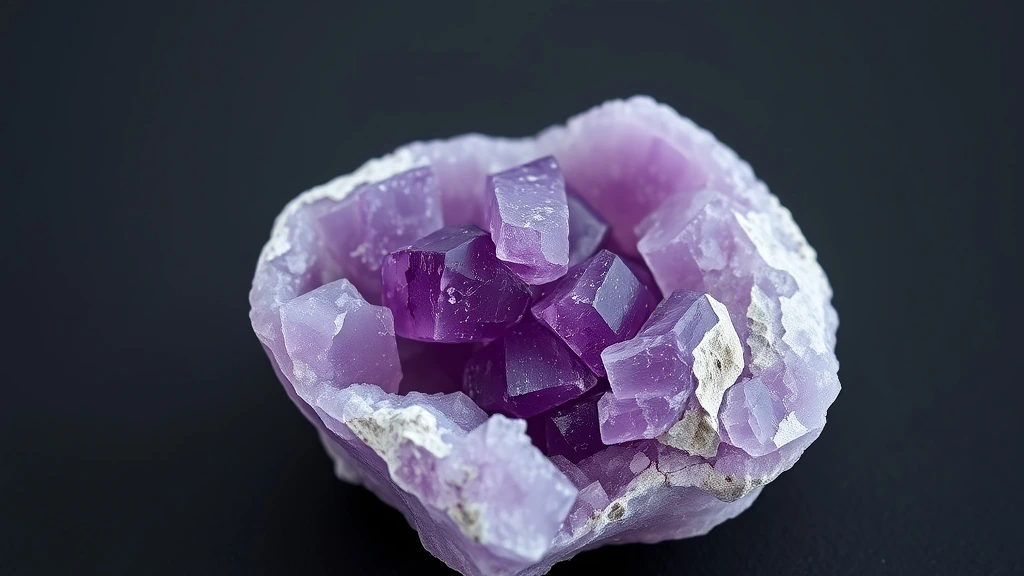
Purple Selenite belongs to the extensive Sulfates mineral group, specifically within the Gypsum Family. Geologically, it forms through the evaporation of sulfate-rich solutions in sedimentary basins. Unlike common white selenite, this variety exhibits distinct purple coloration due to trace impurities. Its crystalline nature allows for the formation of large, translucent prisms. These formations often occur in arid environments where water evaporation concentrates dissolved minerals. The mineral serves as a key indicator of specific diagenetic processes in carbonate and evaporite deposits.
What is Purple Selenite? Geological Overview & Definition
Purple Selenite is a visually striking variant of gypsum, distinguished by its ethereal violet to lavender tones. It crystallizes within the monoclinic system, often displaying elongated, prismatic habits that catch the light beautifully. The coloration arises from subtle structural defects or trace elemental inclusions within the lattice. In comparative mineralogical collections, practitioners and geologists frequently study Pink Halite alongside this crystal to appreciate their subtle energetic and structural differences.
This mineral is prized for its translucency and delicate, glassy luster. It typically forms in evaporite environments, alongside other sulfate minerals like anhydrite. The purple hue is not inherent to the pure calcium sulfate structure but results from external factors. Understanding its formation helps distinguish genuine specimens from dyed imitations.
Purple Selenite Chemical Composition & Crystallographic Properties
The fundamental chemical identity of this mineral is Calcium Sulfate Dihydrate, represented by the formula CaSO₄·2H₂O. Its crystal lattice belongs to the monoclinic system, characterized by prismatic or tabular crystal shapes. The structure consists of calcium ions coordinated with sulfate tetrahedra and water molecules. This arrangement creates a distinct cleavage plane, allowing the mineral to split easily. In comparative mineralogical collections, practitioners and geologists frequently study Purple Aragonite alongside this crystal to appreciate their subtle energetic and structural differences.
The refractive index ranges from 1.520 to 1.530, contributing to its soft, pearly sheen. The density typically measures between 2.31 and 2.33 g/cm³, reflecting its hydrated nature. Cation substitution is minimal, as the lattice is relatively stable against minor ionic exchanges. However, trace impurities can influence optical properties without altering the primary stoichiometry.
The purple coloration likely stems from color centers or trace transition metals. These chromophores interact with light to absorb specific wavelengths, revealing the violet spectrum. The mineral is acid-sensitive, dissolving readily in hydrochloric acid due to its sulfate composition. This chemical reactivity is a standard diagnostic test for identifying gypsum varieties.
Thermal behavior reveals that heating can drive off the water of hydration. This process transforms selenite into anhydrite, a chemically distinct but structurally related mineral. The Mohs hardness of 2.0 indicates high vulnerability to scratching. Proper storage is essential to preserve the integrity of these delicate crystalline formations.
| Property | Specification |
|---|---|
| Mineral Group | Sulfates (Gypsum Family) |
| Chemical Formula | CaSO₄·2H₂O (Calcium Sulfate Dihydrate) |
| Mohs Hardness | 2.0 |
| Crystal System | Monoclinic (Prismatic / tabular crystals) |
| Specific Gravity (Density) | 2.31 – 2.33 |
| Refractive Index | 1.520 – 1.530 |
| Color & Optical Properties | Natural Purple Selenite color spectrum and optical dispersion |
| Primary Mining Localities | Mexico (Naica), Morocco, USA, Spain |
| Water & Chemical Resistance | EXTREMELY SENSITIVE: Water Soluble! (Never submerge in water; Mohs 2) |
| Chakra Alignment (Traditional) | Crown Chakra and Soul Star Chakra |
| Zodiac Affinity (Traditional) | Taurus, Cancer, Pisces |
| Symbolic Meaning (Traditional) | Aura purification, higher vibrational clarity, and serene light |
Purple Selenite Varieties & Color Spectrum
Purple Selenite displays distinct mineralogical characteristics across its geological varieties and structural habits. Gemologists evaluate these natural varieties based on crystal habit, trace chromophore concentrations, and visual luster.
Primary Natural Purple Selenite
The benchmark natural variety exhibiting diagnostic color saturation and classic crystallographic symmetry.
Distinct Geological Morphs of Purple Selenite
Secondary regional and structural varieties formed under localized geological temperature and pressure conditions.
Amethyst‑Stained Selenite
Formed in evaporitic basins where calcium sulfate dihydrate crystals grow alongside trace manganese and iron oxides, this variety displays delicate violet veining that radiates from crystal edges. The inclusions are microscopic, giving a translucent glow that intensifies under UV light. Found primarily in the Naica region of Mexico, it is considered moderately rare due to the precise geochemical conditions required.
Lavender‑Sheened Selenite
Developed within shallow marine lagoons of the Mediterranean, fine‑grained monoclinic selenite absorbs faint lavender hues from dissolved organic matter. Its surface often exhibits a silky, satin‑like luster and occasional fibrous fibrolite inclusions that create subtle striations. The variety is most abundant in the Evros basin of Greece, yet high‑quality slabs remain scarce on the market.
Violet‑Fluorescent Selenite
In arid desert playas of the American Southwest, trace rare‑earth elements such as europium induce a vivid violet fluorescence when exposed to long‑wave UV radiation. Crystals are typically tabular, with a glassy refractive index of 1.525 that enhances the glow. Because the fluorescence diminishes after prolonged daylight exposure, collectors prize only freshly mined specimens, making this morph exceptionally limited.
Royal Purple Selenite (Trade Name)
A commercially treated stone, the raw selenite is soaked in a controlled solution of potassium permanganate, imparting a deep royal purple hue without altering its crystal lattice. The process creates a uniform coloration that mimics natural varieties, yet the underlying mineral retains its characteristic Mohs hardness of 2.0. While abundant in the trade, purists regard it as a lower‑grade alternative to naturally colored forms.
Himalayan Lilac Selenite
Originating from high‑altitude sedimentary layers in the Ladakh region of the Indian Himalayas, this variety incorporates minute quartz and feldspar grains that scatter light, producing a lilac‑tinged translucency. The crystals often grow in elongated prismatic habits, displaying faint growth zoning that records seasonal deposition cycles. Accessibility is limited by rugged terrain, rendering the Himalayan lilac among the most coveted specimens.
Persian Violet Selenite
Extracted from the ancient salt flats of Iran’s Dasht-e Kavir, this morph exhibits a soft violet tint derived from low concentrations of copper sulfide inclusions. The stone’s surface is typically smooth, with occasional honey‑comb voids that enhance its ethereal appearance. Its rarity stems from the fragile nature of the host evaporite deposits, which are prone to rapid dissolution upon exposure.
Where is Purple Selenite Found? Geological Mining & Extraction
Purple‑tinged selenite occurs chiefly within evaporite sequences where gypsum precipitates from supersaturated brines in arid basins. The crystals develop in fine‑grained, low‑permeability mudstones that preserve delicate color‑bearing inclusions, and they are often extracted by careful hand‑picking to avoid fracturing the soft mineral.
Primary mining districts include the Naica mines of Chihuahua, Mexico; the Evros basin in Greece; and the Dasht‑e Kavir salt flats of Iran. In each locale, miners employ low‑impact techniques such as manual splitting of host layers and gentle water washing, ensuring that the fragile monoclinic crystals remain intact for gem‑cutting and scientific study.
Historical Significance & Cultural Lore of Purple Selenite
Across ancient lapidary traditions, purple selenite was prized for its aura‑purifying qualities, a belief documented in Greco‑Roman texts that linked the stone to the goddess Artemis and the night sky. Egyptian tomb inventories from the New Kingdom list selenite tablets painted with violet pigments, suggesting ritual use in funerary rites aimed at guiding the soul through the afterlife.
In Vedic literature, the stone appears as “Shiv‑shila” with a violet hue, symbolizing the Crown Chakra and used in meditative practices to elevate consciousness. Chinese Daoist alchemists recorded the mineral’s capacity to transmit “serene light,” employing it in palace gardens to balance the Soul Star Chakra of imperial occupants. Throughout these cultures, purple selenite served both decorative and metaphysical functions, reinforcing its enduring spiritual legacy.
Modern Uses & Jewelry Applications of Purple Selenite
Due to its low Mohs hardness of 2.0, purple selenite is primarily utilized for ornamental carving rather than durable faceted jewelry. Lapidaries typically shape this soft mineral into polished cabochons, smooth spheres, or intricate decorative objects that showcase its delicate translucency. The stone’s gentle luster and ethereal color make it ideal for spiritual altars and meditative displays.
- Ornamental Carvings: Skilled artisans carve selenite into lotus flowers, angels, and geometric shapes for home decor.
- Polished Cabochons: The stone is often cut into smooth, dome-shaped cabochons for pendants or rings with protective settings.
- Slabbed Panels: Large pieces are sliced and polished into thin panels for chandelier decorations or wall art.
- Tumbled Stones: Small, rounded pieces are tumbled for use in meditation bowls or as pocket stones.
Metaphysical Properties & Traditional Meaning of Purple Selenite
According to historical traditions and metaphysical lore, purple selenite is revered for its capacity to facilitate aura purification and enhance higher vibrational clarity. Practitioners believe this mineral acts as a conduit for serene light, helping to clear stagnant energy from the immediate environment. Its soft violet hue is often associated with calming the mind and promoting a state of deep, restful tranquility.
In ancient Mediterranean and Vedic lapidary lore, translucent sulfates were frequently employed in rituals aimed at spiritual protection and mental clarity. The stone is thought to resonate with the Soul Star Chakra, fostering a connection to higher guidance and ancestral wisdom. Users often report a sense of emotional release and a heightened ability to perceive subtle energetic shifts during meditation.
Which Chakra and Zodiac Signs Align with Purple Selenite?
Purple selenite is canonically aligned with the Crown Chakra and the Soul Star Chakra, both of which govern spiritual connection and higher consciousness. The Crown Chakra, located at the top of the head, serves as the primary interface between the individual and universal energy. The Soul Star Chakra, positioned above the crown, is believed to facilitate communication with higher guides and spiritual ancestors.
Astrologically, this stone resonates most strongly with the water and earth signs of Taurus, Cancer, and Pisces. Taurus benefits from the stone’s grounding stability, while Cancer and Pisces connect with its emotional depth and intuitive clarity. These zodiac signs often use purple selenite to balance their natural sensitivity with a sense of elevated spiritual purpose.
How to Identify Real vs. Fake Purple Selenite
The market for purple selenite includes various imitations, ranging from synthetic glass to dyed white selenite or other soft minerals. These fakes are often created to mimic the stone’s unique color and translucency for commercial gain. Distinguishing genuine material requires careful observation of physical properties that synthetic alternatives cannot easily replicate.
Practical At-Home Authenticity Tests
- Temperature Test (Thermal Feel): Genuine selenite feels noticeably cool to the touch initially, retaining this coolness longer than plastic or glass imitations.
- Specific Gravity & Weight Test: With a density of 2.31–2.33, real selenite feels lighter than similarly sized glass or quartz, which have significantly higher specific gravities.
- Scratch & Hardness Test (Mohs Comparison): Due to its Mohs hardness of 2.0, a copper coin or fingernail can easily scratch the surface of genuine selenite, whereas glass or quartz will not be scratched.
- Microscopic & Loupe Inspection (Internal Inclusions): Under a 10x loupe, real selenite often displays natural internal fractures, fluid inclusions, or a slightly fibrous texture, unlike the uniform, bubble-free clarity of synthetic glass.
Purple Selenite Valuation Factors, Grading & Pricing
The market value of purple selenite hinges first on Color Saturation, where a deep, even violet hue commands premium prices. A specimen that exhibits a uniform, vibrant tone without fading or mottling is considered highly desirable, as it reflects the mineral’s natural energetic luster. Collectors often seek pieces that display a subtle, translucent glow, indicating a pristine crystal lattice.
Second, Crystal Size & Weight (Grams) is the primary metric for grading. Larger, well-formed crystals—measured in grams rather than carats—are prized for their visual impact and tactile presence. A raw, unpolished sample may fetch a lower price than a tumbled, silky‑smooth piece, yet both are evaluated by weight, dimensions, and the presence of natural matrix inclusions that add character without detracting from clarity.
Finally, Ethical Sourcing & Locality Premium influences pricing in holistic and collector markets. Stones sourced from responsibly managed deposits, with transparent supply chains, often carry a premium. Provenance from renowned localities, such as the historically significant gypsum beds of the Middle East, can further elevate a specimen’s market value, reflecting both geological rarity and cultural significance.
How to Clean and Care for Purple Selenite
Because purple selenite is a form of calcium sulfate dihydrate, it is highly water‑soluble and will dissolve or lose its silky luster upon contact with moisture. The only safe method of physical cleaning is to gently dust the specimen with a completely dry, soft microfiber cloth or a camel‑hair brush. Store the stone in a low‑humidity environment, away from liquids, to preserve its structural integrity and visual appeal. Never dust gently with a dry, soft microfiber cloth (strictly avoid water exposure), damp cloths, or ultrasonic cleaners, as these will damage the crystal lattice and diminish its aesthetic value.
Cleansing and Recharging Purple Selenite (Energetic Care)
To cleanse and recharge purple selenite, employ dry holistic methods that respect the mineral’s sensitivity. Herbal smudging with sage or palo santo, performed in a well‑ventilated space, can gently remove negative energies without introducing moisture. Alternatively, expose the stone to gentle moonlight for a few hours, allowing the lunar energy to replenish its vibrational clarity. Resting the selenite on a clean, dry charging slab of the same mineral can also help restore its natural aura, ensuring that no heat or direct sunlight is applied, as intense light or heat can fracture the crystal lattice and compromise its energetic properties.
Frequently Asked Questions About Purple Selenite
Purple Selenite displays distinct mineralogical characteristics across its geological varieties and structural habits. Gemologists evaluate these natural varieties based on crystal habit, trace chromophore concentrations, and visual luster.
Primary Natural Purple Selenite
The benchmark natural variety exhibiting diagnostic color saturation and classic crystallographic symmetry.
Distinct Geological Morphs of Purple Selenite
Secondary regional and structural varieties formed under localized geological temperature and pressure conditions.
Is purple selenite safe to wear in the shower?
No – it is extremely water‑sensitive and will dissolve. With a Mohs hardness of only 2, the gypsum structure breaks down on contact with water, so showering, swimming, or even rain exposure can cause the stone to lose its translucent glow and structural integrity.
How should I clean a purple selenite pendant?
Clean only with a dry, ultra‑soft microfiber cloth or a gentle brush. Because gypsum is water‑soluble, any moisture will erode the surface; a dry cloth removes dust while preserving the silky luster and the delicate monoclinic crystal habit.
Can I use an ultrasonic cleaner on purple selenite jewelry?
Never – ultrasonic cleaning is strictly prohibited. The high‑frequency vibrations combined with any liquid medium will accelerate dissolution of the calcium sulfate dihydrate lattice, leaving the stone cloudy or fragmented.
What zodiac signs are most compatible with purple selenite?
Taurus, Cancer, and Pisces are the aligned signs. In astrological tradition, these water‑ and earth‑signs are said to resonate with the stone’s calming energy, enhancing aura purification and emotional balance.
Which chakras does purple selenite activate?
It works primarily with the Crown Chakra and the Soul Star Chakra. Placement on the crown area is believed to open pathways for higher vibrational clarity, while the Soul Star connection supports spiritual integration and serene light.
Does purple selenite have any therapeutic properties for the mind?
Yes, it is reputed to promote mental purification and calm. The stone’s low refractive index (1.520‑1.530) and gentle translucence are thought to diffuse scattered thoughts, fostering a sense of serene light during meditation.
Is purple selenite suitable for everyday wear?
It can be worn, but only with careful handling. Its low density (2.31‑2.33 g/cm³) and softness make it prone to scratches and breakage, so avoid contact with hard surfaces and store it separately from tougher gemstones.
How does the crystal system affect the appearance of purple selenite?
Purple selenite forms monoclinic, prismatic or tabular crystals. This crystal habit creates smooth, parallel cleavage planes that give the stone its characteristic silky, layered look, enhancing its visual appeal when cut into slabs or cabochons.