
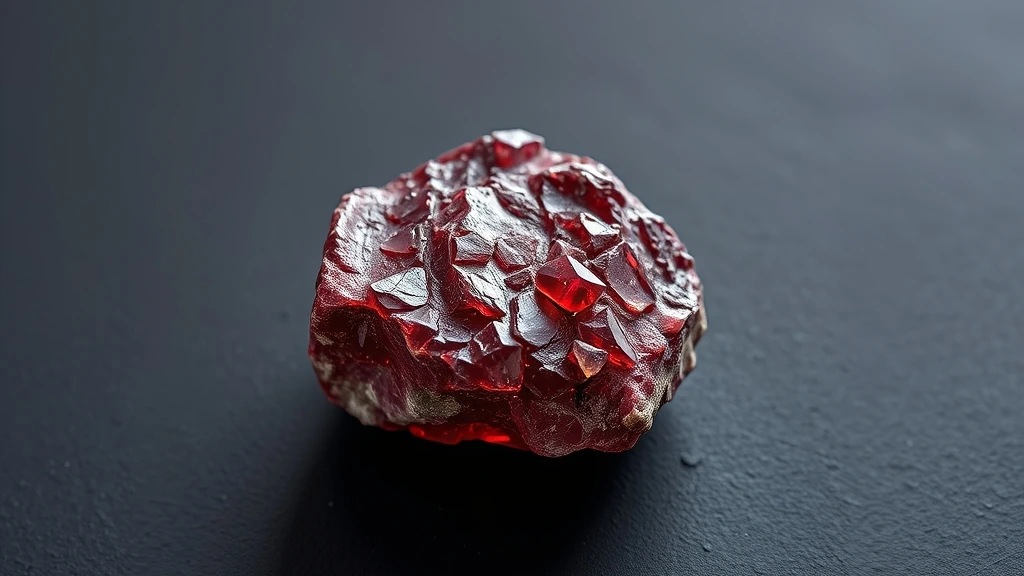
Rubellite belongs to the extensive tourmaline supergroup, which is classified as a natural mineral crystal rather than a rock aggregate. This complex borosilicate mineral forms within granitic pegmatites and metamorphic schists, where volatile-rich fluids facilitate crystal growth. Its geological origin ensures a high degree of purity, distinguishing it from synthetic imitations. Consequently, it is prized by collectors for its natural formation processes and structural integrity within the tourmaline group.
What is Rubellite (red Tourmaline)? Geological Overview & Definition
Rubellite is specifically defined as the red to pink variety of the tourmaline supergroup, a complex borosilicate mineral family. It typically occurs in granitic pegmatites, where slow cooling allows for the development of large, well-formed crystals. The name derives from the Latin *rubellus*, meaning “reddish,” reflecting its characteristic warm coloration. In comparative mineralogical collections, practitioners and geologists frequently study Orthoceras alongside this crystal to appreciate their subtle energetic and structural differences.
Geologically, this stone forms in high-temperature environments rich in sodium, iron, and boron. Its presence often indicates specific geochemical conditions within the host rock, such as the pegmatitic environment. Unlike simpler silicates, tourmaline accommodates a wide range of cations, leading to diverse chemical compositions. This variability results in the wide spectrum of colors observed in natural specimens.
Rubellite (red Tourmaline) Chemical Composition & Crystallographic Properties
Rubellite crystallizes in the trigonal crystal system, characterized by a hexagonal prism with a rhombohedral terminus. Its lattice structure is complex, featuring channels along the c-axis that allow for extensive cation substitution. This structural flexibility enables the incorporation of various metal ions, which directly influence the stone’s optical properties. The trigonal symmetry is a defining feature that distinguishes it from other gem minerals.
The primary chromophore responsible for the red coloration is iron (Fe³⁺) within the crystal lattice. Subtle variations in trace elements, such as manganese or lithium, can shift the hue toward pink or orange. The chemical formula NaFe³⁺₃Si₆O₁₈(BO₃)₃(OH)₃ highlights the essential sodium and iron components. These ionic substitutions are critical for determining the specific shade and saturation of the gemstone.
Thermal behavior of rubellite is stable under normal jewelry conditions, but it is sensitive to strong acids. Prolonged exposure to acidic environments can degrade the surface luster and etch the crystal faces. The acid sensitivity of the borosilicate structure requires careful handling during cleaning and maintenance. Proper care ensures the long-term preservation of its optical clarity and surface integrity.
| Property | Specification |
|---|---|
| Mineral Group | Natural Mineral / Crystal |
| Chemical Formula | NaFe³⁺₃Si₆O₁₈(BO₃)₃(OH)₃ |
| Mohs Hardness | 7.0 – 7.5 |
| Crystal System | Trigonal |
| Specific Gravity (Density) | 3.02 – 3.20 |
| Refractive Index | 1.624 – 1.644 |
| Color & Optical Properties | Natural Rubellite (red Tourmaline) color spectrum and optical dispersion |
| Primary Mining Localities | Global primary localities |
| Water & Chemical Resistance | High (Safe for gentle water washing) |
| Chakra Alignment (Traditional) | Heart Chakra |
| Zodiac Affinity (Traditional) | Leo, Aries |
| Symbolic Meaning (Traditional) | Emotional balance, passion, and creative vitality |
Rubellite (red Tourmaline) Varieties & Color Spectrum
Rubellite represents the reddish to purplish-red end of the tourmaline color spectrum, distinguished by specific trace elements. Its hue intensity depends heavily on the concentration of iron and manganese impurities within the crystal lattice.
Classic Rubellite
This primary variety exhibits a deep, saturated red to pinkish-red tone, often described as “ruby-like” in gemological literature. The crystal structure typically forms elongated hexagonal prisms found in granitic pegmatites.
High-quality specimens display exceptional transparency and vivid color saturation without secondary brownish tints. Such stones are highly prized for faceting due to their favorable refractive index and brilliance.
Pink Rubellite
Often categorized as a lighter morph, this variety ranges from soft rose to intense magenta-pink hues. The coloration is driven by lower iron content compared to classic rubellite, resulting in a lighter tone.
These stones frequently exhibit a pleochroic effect, showing different shades of pink and red when viewed from various angles. This optical property adds depth and visual complexity to the gemstone.
Reddish-Purple Rubellite
This transitional variety blends red and purple tones, creating a rich, wine-like appearance. The presence of manganese impurities contributes significantly to the purplish secondary hue.
Such stones are rarer than pure red or pink variants, making them highly sought after by collectors. The color zoning within these crystals can sometimes be visible to the naked eye.
Bi-Color Rubellite
Occasionally, rubellite crystals display distinct zones of red and green or red and pink within a single stone. These bi-color formations result from changing chemical conditions during crystal growth.
While less common, these unique specimens are valued for their geological curiosity and aesthetic appeal. The boundary between color zones is often sharp and well-defined.
Brazilian Rubellite
Stones from Brazil, particularly Minas Gerais, are renowned for their intense red color and high clarity. This region has historically produced some of the finest gem-quality tourmalines.
The host rock in these deposits often contains other valuable minerals, indicating complex geological processes. Brazilian rubellite remains a benchmark for color purity in the global market.
African Rubellite
Deposits in Mozambique and Nigeria yield rubellite with strong red to purplish-red tones. These stones often feature a slightly deeper hue compared to their Brazilian counterparts.
The mining environment in these regions can produce crystals with unique inclusion patterns. African rubellite is increasingly recognized for its vibrant color and durability.
Where is Rubellite (red Tourmaline) Found? Geological Mining & Extraction
Rubellite primarily forms in granitic pegmatites, which are coarse-grained igneous rocks that cool slowly in the crust. These deposits often contain large, well-formed crystals suitable for gem cutting.
The crystal system of tourmaline allows for the growth of elongated prisms within these pegmatite bodies. Geological surveys identify these formations through their distinct mineral assemblages and chemical signatures.
Major mining regions include Brazil, Mozambique, Nigeria, and Madagascar. These locations host significant pegmatite fields with proven reserves of gem-quality material.
Extraction methods typically involve open-pit mining or small-scale manual digging. Careful handling is required to preserve the integrity of the crystal structure during recovery.
Historical Significance & Cultural Lore of Rubellite (red Tourmaline)
Historically, rubellite was often misidentified as ruby or garnet due to its similar red coloration. Ancient civilizations valued these stones for their perceived protective and healing properties.
Archaeological findings suggest that tourmaline varieties were traded across ancient routes. Their durability and vibrant appearance made them popular in jewelry and amulets.
In modern times, rubellite is associated with the Heart Chakra, symbolizing emotional balance and passion. This esoteric connection has enhanced its popularity in alternative wellness practices.
The stone’s zodiacal associations with Leo and Aries further reinforce its link to vitality and creativity. These cultural narratives continue to influence its market appeal and symbolic significance.
Modern Uses & Jewelry Applications of Rubellite (red Tourmaline)
Rubellite is prized for its vivid pigeon‑blood red hue, making it a favorite in high‑end lapidary work. Artisans often cut the stone into deep‑faced emerald or brilliant cuts to maximize sparkle, while cabochons showcase its silky luster for pendants and rings. Ornamental carving—such as miniature figurines or decorative beads—leverages the mineral’s relative toughness and ease of polishing.
- Emerald‑cut or brilliant‑cut faceted pieces for maximum brilliance
- Smooth cabochons set in rings, earrings, and pendants for a classic look
- Carved cameos, intaglios, and decorative objects for collectors
Carat, Quality Grades & Value Factors of Rubellite (red Tourmanine)
The market values Rubellite primarily on the 4Cs: Color, Clarity, Cut, and Carat weight. A saturated, uniform red with minimal brown or pink undertones commands premium prices, while internal fractures or inclusions lower clarity grades. Expert cutters aim for proportions that enhance depth of color, and larger stones above 2 carats are especially rare.
Durability is a key consideration; with a Mohs hardness of 7–7.5, Rubellite resists everyday wear but can chip if struck sharply. Industry grading follows GIA‑style criteria, emphasizing color saturation, absence of surface blemishes, and precise measurements of carat weight. Stones that combine vivid hue, high clarity, and excellent cut achieve the highest market valuations.
Zodiac and Astrological Lore of Rubellite (red Tourmaline)
In Western astrology, Rubellite aligns with Leo and Aries, reinforcing themes of courage, passion, and creative vitality. The gemstone is believed to amplify the fire‑signs’ natural confidence, encouraging bold self‑expression and decisive action in personal and professional realms.
Historical Near Eastern and Mediterranean royal courts revered Rubellite as an imperial gem of passion, honoring its profound resonance with the Heart Chakra. Historically, it has been set in amulets and royal jewelry to promote emotional balance, protect the wearer’s heart, and stimulate artistic inspiration across cultures.
How to Identify Real vs. Fake Rubellite (red Tourmaline)
Artificial imitations of Rubellite include colored glass, cubic zirconia dyed red, and low‑grade synthetic tourmaline. These substitutes often lack the stone’s characteristic pleochroism and display a glassy, overly uniform surface. Recognizing the subtle optical and physical differences is essential for collectors and buyers.
Practical At-Home Authenticity Tests
- Temperature Test (Thermal Feel): Natural Rubellite feels cool to the touch and retains that coolness longer than glass or plastic, which quickly equilibrates to ambient temperature.
- Specific Gravity & Weight Test: With a density of 3.02–3.20 g/cm³, Rubellite feels noticeably heavier than glass of the same size; a simple water displacement test can confirm the specific gravity.
- Scratch & Hardness Test (Mohs Comparison): Using a steel file (hardness ~6.5) will leave a faint mark on glass but not on genuine Rubellite, which resists scratching due to its 7–7.5 Mohs rating.
- Microscopic & Loupe Inspection (Internal Inclusions): Under 10× magnification, authentic Rubellite shows characteristic needle‑like or feather‑shaped inclusions, whereas glass appears completely clear or shows bubbles without the mineral’s internal texture.
Rubellite (red Tourmarine) Valuation Factors, Grading & Pricing
Color saturation drives the highest premiums for rubellite, as deep, vivid reds command collector interest. Uniform hue across the stone, free of brown or pink streaks, signals natural origin and enhances market appeal. Optical clarity and a bright, glassy luster further elevate price, especially when internal inclusions are invisible to the naked eye.
Carat weight remains a pivotal determinant, with larger stones rarer and exponentially more valuable. Facet symmetry and precision, judged against the 4Cs lapidary standards, affect perceived brilliance and thus price brackets. Even minor deviations in cut quality can reduce a stone’s valuation by several percentage points.
Geographical provenance premium adds a layer of exclusivity; rubellites from Brazil, Afghanistan, or Mozambique often fetch higher bids due to recognized mining districts. Certified gem reports from reputable laboratories substantiate origin claims and assure buyers of authenticity. Market trends show steady appreciation for ethically sourced rubellite, reflecting growing demand among high‑end jewelry designers.
How to Clean and Care for Rubellite (red Tourmarine)
Rubellite tolerates gentle water exposure, so cleaning with warm soapy water and a soft cloth is safe and effective. Apply a mild, pH‑neutral soap, rinse with lukewarm water, and pat dry with a lint‑free microfiber cloth to avoid surface scratches. The stone is also safe for ultrasonic cleaning; a brief cycle in a professional ultrasonic bath removes stubborn residues without harming the crystal lattice.
Cleansing and Recharging Rubellite (red Tourmarine) (Energetic Care)
For energetic renewal, rubellite may be lightly smudged with dried sage or sweetgrass, allowing the herbal smoke to pass over the stone without direct contact. This practice is believed to clear stagnant energies while preserving the mineral’s structural integrity.
Alternatively, place the gem on a selenite charging slab or expose it to soft moonlight for several hours, allowing lunar photons to gently revitalize its vibrational field. Both methods avoid heat and intense light, ensuring the crystal lattice remains intact while restoring its metaphysical properties.
Frequently Asked Questions About Rubellite (red Tourmaline)
Is rubellite safe to wear in the shower or while swimming?
Yes, rubellite is highly water‑resistant and can endure gentle water exposure. Its robust trigonal crystal structure and density of 3.02–3.20 g/cm³ prevent water infiltration, so routine activities like showering or swimming pose no risk of damage, though prolonged submersion should still be avoided.
How should I clean rubellite jewelry at home?
Clean rubellite with warm, soapy water and a soft cloth. The combination of mild detergent and a non‑abrasive cloth removes oils without scratching the refractive index range of 1.624–1.644. Rinse briefly with lukewarm water and pat dry to maintain its vibrant red hue.
Can rubellite be safely cleaned in an ultrasonic cleaner?
Rubellite tolerates ultrasonic cleaning when used with warm, soapy water. The gentle vibrations dislodge microscopic debris while the stone’s Mohs hardness of 7–7.5 protects it from surface abrasion. Always follow the cleaner’s instructions and avoid excessive heat.
What zodiac signs are associated with rubellite?
Rubellite aligns with the zodiac signs Leo and Aries. These fire signs are said to resonate with the stone’s emotional balance properties, enhancing confidence and passion. Wearing rubellite during astrological events for these signs may amplify its reputed energetic effects.
Which chakra does rubellite correspond to?
Rubellite is linked to the Heart Chakra. This connection supports emotional balance and encourages the flow of love and compassion. When placed on the chest area, the stone’s deep red color is believed to stimulate heartfelt expression and healing.
How does rubellite’s hardness affect everyday wear?
With a Mohs hardness of 7–7.5, rubellite is suitable for daily jewelry. Its resistance to scratches rivals that of quartz, allowing it to withstand routine contact. However, avoid impact with harder materials like diamonds to prevent chipping of the trigonal crystals.
Is rubellite prone to color fading over time?
Rubellite’s color is stable under normal lighting and wear conditions. The iron‑rich Fe³⁺ component imparts a lasting red hue that does not fade with exposure to sunlight or heat. Proper cleaning and storage further preserve its vivid appearance.
What are the best storage practices for rubellite gems?
Store rubellite separately in a soft pouch or lined compartment. Keeping it apart from harder gemstones prevents accidental scratching, while a low‑humidity environment guards against any potential surface alteration. A padded jewelry box maintains both safety and the stone’s brilliance.