
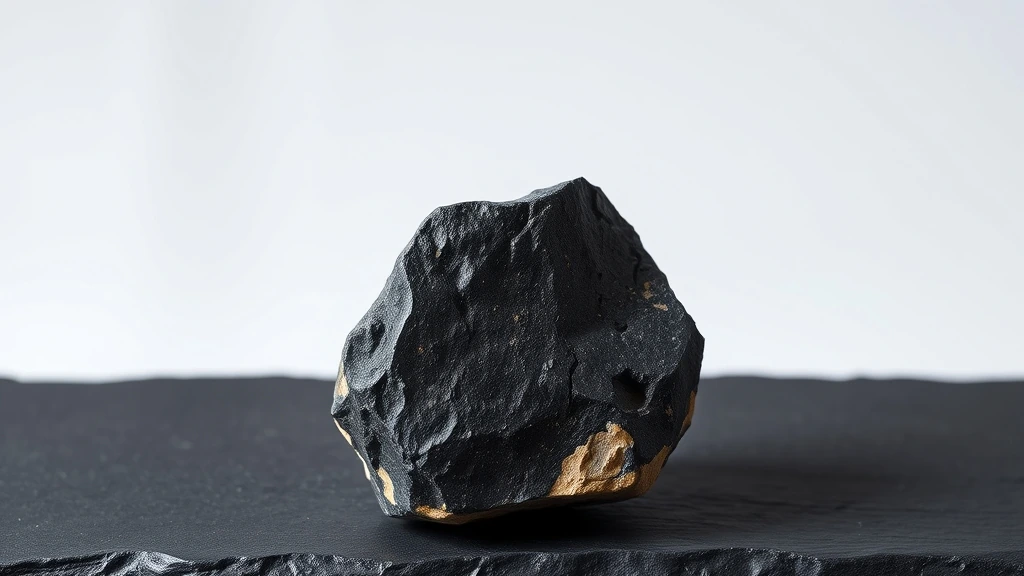
Saponite belongs to the smectite group of clay minerals, a subset of the broader phyllosilicate family. As a natural mineral / crystal, it forms fine‑grained aggregates in sedimentary basins, often as alteration products of volcanic ash or basaltic glass. Its monoclinic symmetry governs the layered lattice that expands with water, giving the mineral its characteristic swelling behavior. Although prized in metaphysical circles, its physical fragility limits conventional gemstone applications. In comparative mineralogical collections, practitioners and geologists frequently study Bentonite alongside this crystal to appreciate their subtle energetic and structural differences.
What is Saponite? Geological Overview & Definition
Saponite is a phyllosilicate clay that crystallizes in the monoclinic system, producing sheet‑like structures built from tetrahedral silica layers linked to octahedral magnesium sheets. These sheets are held together by weak van der Waals forces, allowing the mineral to absorb water and expand. This layered architecture shares a close structural kinship with Vermiculite, another phyllosilicate known for its remarkable ability to swell when hydrated.
In the field, saponite appears as soft, earthy masses ranging from pale green to yellow‑brown, often intergrown with other smectites such as montmorillonite. Its formation is typical of low‑temperature hydrothermal environments, where magnesium‑rich fluids alter volcanic glass or mafic rocks.
Saponite Chemical Composition & Crystallographic Properties
The idealized formula Mg₃Si₂O₅(OH)₄·nH₂O reflects a dominant magnesium occupancy on the octahedral sites, though iron, calcium, and aluminum can substitute, creating subtle compositional variations. This cation substitution influences both the mineral’s density (2.24–2.30 g cm⁻³) and its refractive indices (nα = 1.479–1.490, nβ = 1.510–1.525, nγ = 1.511–1.527).
Saponite’s acid sensitivity is pronounced; exposure to dilute acids dissolves the hydroxyl layers, releasing silica and magnesium ions. The mineral’s color derives from trace transition‑metal chromophores, primarily Fe²⁺/Fe³⁺, which produce the characteristic greenish tint.
Thermally, saponite dehydrates progressively: low‑temperature loss of interlayer water occurs near 100 °C, while structural dehydroxylation begins above 500 °C, converting the mineral to amorphous silica and magnesia residues. This behavior underpins its use in industrial applications such as drilling muds and sorbents, where controlled water release is essential.
| Property | Specification |
|---|---|
| Mineral Group | Natural Mineral / Crystal |
| Chemical Formula | Mg₃Si₂O₅(OH)₄·nH₂O |
| Mohs Hardness | 1.5 |
| Crystal System | Monoclinic |
| Specific Gravity (Density) | 2.24–2.30 |
| Refractive Index | n α = 1.479 – 1.490 n β = 1.510 – 1.525 n γ = 1.511 – 1.527 |
| Color & Optical Properties | Natural Saponite color spectrum and optical dispersion |
| Primary Mining Localities | Global primary localities |
| Water & Chemical Resistance | Sensitive (Avoid prolonged water soaking) |
| Chakra Alignment (Traditional) | Heart Chakra |
| Zodiac Affinity (Traditional) | Taurus, Virgo |
| Symbolic Meaning (Traditional) | Emotional balance, nurturing, and grounding |
Saponite Varieties & Color Spectrum
Green‑Earth Saponite
Formed in low‑grade metamorphic schists, green‑earth saponite displays a muted olive to pistachio hue caused by trace Fe³⁺ substituting for Mg. Fine‑grained mica flakes create a silky luster, while occasional quartz veining adds subtle sparkle. This variety is abundant in the Alpine regions of Austria and Switzerland, making it relatively common in the gem market.
Yellow‑Mica Saponite
Occurring in weathered basaltic flows of the Pacific Northwest, yellow‑mica saponite acquires its bright citron color from elevated manganese content. The mineral often incorporates tiny calcite inclusions that produce a faint opalescent sheen under light. Because the deposits are shallow and subject to seasonal erosion, high‑quality stones are moderately rare and prized by collectors.
Pink‑Blush Saponite
Found in the lateritic soils of Brazil’s Minas Gerais, pink‑blush saponite derives its delicate rose tint from trace chromium and nickel. The crystals grow as thin, flexible plates that display a pearlescent sheen when oriented edge‑on. Limited mining operations and strict export controls render this variety scarce, driving up its value among niche jewelry designers.
Blue‑Grey Saponite (Karakul)
Extracted from the Karakul deposits of Tajikistan, blue‑grey saponite exhibits a cool slate‑blue to steel‑grey coloration due to high titanium substitution. The mineral often contains microscopic hematite specks that create a subtle metallic sparkle. Its remote high‑altitude occurrence and complex extraction logistics make it one of the most exclusive saponite types on the market.
White‑Vein Saponite (Mongolia)
In the sedimentary basins of western Mongolia, white‑vein saponite forms as translucent sheets intersected by bright calcite veins. The contrast between the milky base and stark white veins gives the stone a distinctive marbled appearance. Although the deposits are extensive, the finest veined specimens are limited, positioning them as a mid‑range rarity.
Red‑Rust Saponite (South Africa)
The red‑rust variety emerges from oxidized kimberlite pipes in the Northern Cape, where iron oxidation imparts a deep rust‑red tone. Fine iron oxide inclusions produce a speckled surface that catches light with a warm glow. This regional specialty is highly sought after for its dramatic color, yet mining constraints keep supply low, enhancing its allure.
Where is Saponite Found? Geological Mining & Extraction
Saponite typically occurs in metamorphosed argillaceous sediments and low‑temperature hydrothermal veins within mafic to ultramafic host rocks. In pegmatitic environments, it crystallizes as fine‑grained mica sheets intergrown with chlorite and serpentine, often filling fractures that later become the source of gem‑quality material.
Major extraction zones include the Alpine belts of Europe, the basaltic terrains of the Pacific Northwest, and the lateritic deposits of Brazil and South Africa. Mining practices range from open‑pit quarrying of weathered outcrops to selective hand‑picking of delicate sheets, with processing focused on gentle washing and flotation to preserve the mineral’s fragile lamellar structure.
Historical Significance & Cultural Lore of Saponite
Ancient Mesopotamian tablets reference a “green earth stone” used in amulets for fertility, likely describing early saponite specimens traded along the Euphrates. Archaeological digs in the Indus Valley have uncovered saponite beads in burial caches, indicating its role as a status symbol and protective talisman.
In historical holistic earth traditions, saponite clays were recognized for their gentle soothing properties, symbolically associated with the Heart Chakra to nurture emotional stability and physical grounding. Ancient herbalists and lapidaries regarded the soft silicate as a conduit for nurturing terrestrial energy that harmonizes with Taurus and Virgo zodiac placements.
Modern Uses & Jewelry Applications of Saponite
Saponite’s ultra‑soft Mohs hardness of 1.5 makes it unsuitable for high‑impact settings, yet lapidaries prize its earthy green hue for delicate pieces. Artisans typically carve it into smooth cabochons or shallow facets, allowing the mineral’s subtle translucency to shine. Ornamental carving is popular for pendants, beads, and small decorative inlays, where the stone’s low density reduces strain on mounting components.
- Cabochon pendants with polished domes for pendant or brooch settings
- Shallow‑faceted earrings that showcase the mineral’s gentle sparkle
- Carved beads for beaded necklaces or rosaries
- Inlay work in wooden or metal jewelry boxes
Safety & Mineral Profile of Saponite
Handling saponite requires basic protective measures; wear gloves to avoid skin irritation from fine particles and use a dust mask when cutting or polishing. The mineral is chemically stable, resisting dissolution in water but can release hydroxide ions under extreme acidity, so store it in a dry, neutral‑pH environment. It is primarily a collector’s specimen, valued for scientific study and display rather than for crystal‑healing practices; any historical metaphysical claims should be treated as folklore, not evidence.
Mineralogical Group and Planetary Lore of Saponite
Saponite belongs to the phyllosilicate group, specifically the smectite family, characterized by layered sheets of silica tetrahedra and magnesium‑rich octahedra. Its monoclinic crystal system and variable interlayer water (·nH₂O) give it a flexible, expandable structure, a trait that has inspired symbolic associations with adaptability and emotional grounding.
In traditional planetary lore, saponite has been linked to the Earth element and the Heart Chakra, echoing its reputed qualities of nurturing and emotional balance. While modern gemology does not endorse these esoteric attributes, the stone’s green coloration continues to evoke connections to the zodiac signs Taurus and Virgo, which value stability and practicality.
How to Identify Real vs. Fake Saponite
Artificial imitations of saponite often use dyed glass, polymer resins, or low‑grade serpentine that mimic its green tone. Synthetic glass can be polished to a high shine, while dyed replicas may lack the subtle internal layering typical of natural saponite. Careful observation and testing are essential to differentiate genuine specimens from these look‑alikes.
Practical At-Home Authenticity Tests
- Temperature Test (Thermal Feel): Natural saponite feels cool to the touch and retains that coolness longer than glass or plastic, which quickly equilibrates to ambient temperature.
- Specific Gravity & Weight Test: With a density of 2.24–2.30 g/cm³, genuine saponite feels lighter than most quartz or glass stones of comparable size; a simple water displacement test can confirm the expected specific gravity.
- Scratch & Hardness Test (Mohs Comparison): Using a fingernail (hardness ~2.5) will easily scratch saponite, whereas a quartz point (hardness 7) will leave no mark; this stark difference helps rule out harder imitations.
- Microscopic & Loupe Inspection (Internal Inclusions): Under 10×–30× magnification, natural saponite shows fine, layered lamellae and occasional tiny voids, while glass or resin typically appears homogenous and free of such micro‑structures.
Saponite Valuation Factors, Grading & Pricing
Market value primarily depends on Specimen Aesthetic Quality, specifically the clarity and color saturation of the mineral. Collectors prize specimens with vibrant green or blue hues that indicate high magnesium content. The crystal habit must be well-formed, displaying distinct, sharp edges without significant fracturing. An undamaged matrix enhances the overall visual appeal and structural integrity of the piece.
Rarity & Specimen Dimensions significantly influence pricing, as large, intact crystal clusters are exceptionally difficult to extract. Measurements are recorded in centimeters and grams, reflecting the physical scale of the collector specimen. The absence of handling damage, such as chipped tips or broken faces, is critical for premium grading. Larger, pristine clusters command higher prices due to their scarcity in the global market.
Mineralogical Provenance & Locality Value plays a decisive role in scientific and museum collector markets. Specimens from historically significant localities, such as the classic deposits in Germany or the United States, carry a premium. Documentation of the exact origin adds scientific credibility and desirability among serious collectors. Provenance verifies the geological context, enhancing the specimen’s archival and educational value.
How to Clean and Care for Saponite
Due to its low Mohs hardness and layered silicate structure, saponite requires extremely gentle handling during maintenance. Wipe the specimen briefly with a slightly damp cloth to remove surface dust, then dry it immediately with a soft, lint-free towel. Avoid prolonged water soaking, as moisture can weaken the weak cleavage planes and cause structural degradation. Never use ultrasonic cleaners, as the vibrations can induce structural fractures in the delicate crystal lattice.
Store saponite in a low-humidity environment to prevent the absorption of excess moisture. Keep the specimen away from direct heat sources and harsh chemicals that might alter its surface luster. Regular inspection for signs of delamination or flaking is recommended for long-term preservation. Proper storage ensures the mineral retains its physical integrity and aesthetic appeal over time.
Cleansing and Recharging Saponite (Energetic Care)
For holistic maintenance, practitioners often use herbal smudging to clear perceived energetic stagnation from the stone. Gently pass the mineral through the smoke of sage or palo santo without applying direct heat. This method respects the mineral’s physical fragility while addressing metaphysical cleansing needs. Ensure the smoke does not settle on the surface to avoid residue buildup.
Alternatively, place the saponite on a selenite charging slab overnight under moonlight for passive recharging. This dry method avoids any risk of thermal shock or moisture damage to the crystal structure. Avoid direct intense sunlight, as prolonged exposure can cause fading or thermal stress. Gentle, indirect exposure supports the stone’s energetic properties without compromising its physical stability.
Frequently Asked Questions About Saponite
Is saponite safe to wear in the shower?
No, avoid prolonged water exposure. Saponite is a water-sensitive clay mineral that can absorb moisture, leading to structural weakening. Keep it dry during bathing to preserve its integrity.
How should I clean my saponite jewelry?
Wipe gently with a damp cloth. Use a soft, dry microfiber cloth for routine dusting. Avoid ultrasonic cleaners, as vibrations can cause structural fractures in this soft material.
What is the Mohs hardness of saponite?
It measures 1.5 on the scale. This extreme softness makes it susceptible to scratching from dust or other minerals. Store it separately to prevent damage.
Which zodiac signs align with saponite?
Taurus and Virgo are the primary matches. These earth signs resonate with the stone’s grounding properties. It supports stability and practicality for these individuals.
Which chakra does saponite activate?
It targets the Heart Chakra. This alignment promotes emotional balance and nurturing energy. It helps heal emotional wounds and fosters deep compassion.
Can I use ultrasonic cleaners on saponite?
Absolutely not. The high-frequency vibrations can shatter the delicate crystal structure. Stick to gentle wiping with a damp cloth to maintain its physical stability.
What is the chemical formula of saponite?
It is Mg₃Si₂O₅(OH)₄·nH₂O. This composition identifies it as a hydrous magnesium silicate. The variable water content affects its density and physical properties.
Is saponite suitable for daily wear?
It requires careful handling. Due to its low hardness, it is prone to chipping. Reserve it for occasional wear to extend its lifespan significantly.