
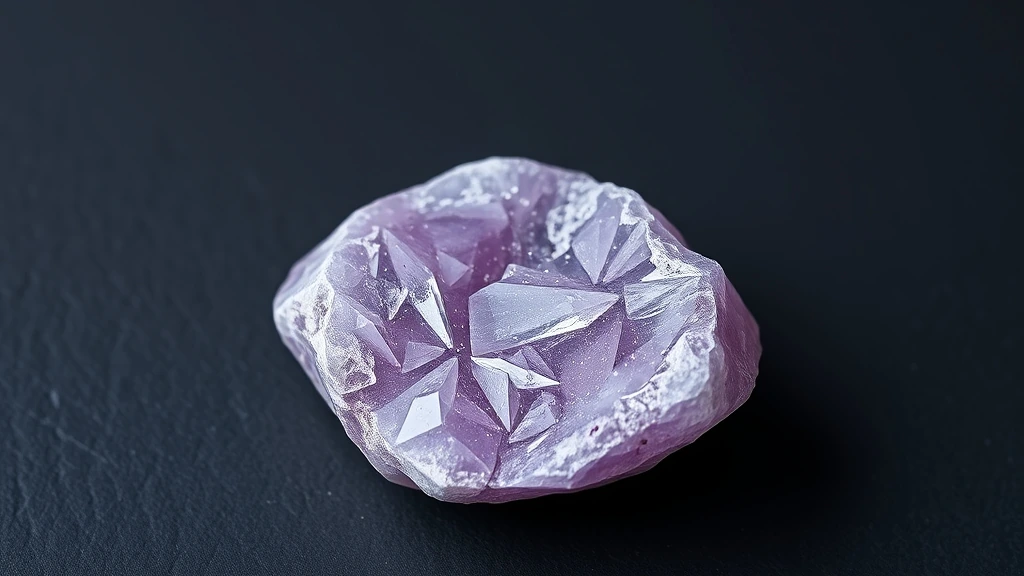
Siberite belongs to the tourmaline supergroup, a complex family of borosilicate minerals. It is classified as a natural mineral crystal rather than a rock aggregate. Its geological formation occurs within granitic pegmatites, where specific trace elements influence its unique coloration. This mineral is prized by collectors for its rarity and aesthetic appeal. While Siberite’s lilac hue is driven by manganese, other rare borosilicate minerals like Bustamite also form within these same granitic pegmatite environments, highlighting the diverse chemical pathways that produce distinct gem-quality crystals.
What is Siberite (lilac Tourmaline)? Geological Overview & Definition
Siberite is defined as a lilac-colored variety of sodium-rich elbaite tourmaline. It forms in granitic pegmatites, often alongside other rare minerals like beryl and topaz. The stone’s coloration results from trace impurities rather than its base composition.
The term “Siberite” is a commercial name, not a distinct mineral species. It is chemically identical to elbaite, differing only in its specific chromophore content. This distinction is crucial for accurate gemological identification. Understanding its classification prevents confusion with other purple tourmaline varieties.
Siberite (lilac Tourmaline) Chemical Composition & Crystallographic Properties
Siberite crystallizes in the trigonal crystal system, reflecting its underlying lattice symmetry. The unit cell is elongated along the c-axis, typical of tourmaline structures. This arrangement dictates the mineral’s prismatic habit and cleavage properties.
The chemical formula is Na(Mg,Fe³⁺)₃Al₆(BO₃)₃Si₆O₁₈(OH)₄, indicating significant cation substitution. Iron and magnesium ions occupy the M-site, influencing the stone’s density and optical properties. This complex stoichiometry allows for a wide range of color variations.
The lilac hue arises from specific chromophore centers, likely involving manganese or iron oxidation states. These color centers are stable under normal jewelry conditions. However, extreme heat can alter the electronic structure, potentially fading the color.
Siberite exhibits a refractive index of 1.620 to 1.640, contributing to its moderate brilliance. It is generally resistant to common acids but can be damaged by prolonged exposure to harsh chemicals. Proper care ensures the longevity of this delicate gemstone.
| Property | Specification |
|---|---|
| Mineral Group | Natural Mineral / Crystal |
| Chemical Formula | Na(Mg,Fe³⁺)₃Al₆(BO₃)₃Si₆O₁₈(OH)₄ |
| Mohs Hardness | 7.0 – 7.5 |
| Crystal System | Trigonal |
| Specific Gravity (Density) | 3.02 – 3.20 |
| Refractive Index | 1.620 – 1.640 |
| Color & Optical Properties | Natural Siberite (lilac Tourmaline) color spectrum and optical dispersion |
| Primary Mining Localities | Global primary localities |
| Water & Chemical Resistance | High (Safe for gentle water washing) |
| Chakra Alignment (Traditional) | Heart Chakra, Crown Chakra |
| Zodiac Affinity (Traditional) | Virgo, Pisces |
| Symbolic Meaning (Traditional) | Emotional balance, spiritual growth, and gentle healing |
Siberite (lilac Tourmaline) Varieties & Color Spectrum
Siberian Lilac
Formed in late‑stage granitic pegmatites of the Siberian Shield, this variety exhibits a delicate lavender hue caused by trace manganese. Inclusions often consist of minute quartz needles and rutile hairs that create a subtle silky sheen. Its color is uniformly pale, making it a prized collector’s piece, yet it remains relatively scarce due to limited mining districts.
Brazilian Orchid
Harvested from the Minas Gerais pegmatite fields, the Brazilian Orchid displays a vivid violet‑blue tone intensified by iron‑rich zones within the crystal lattice. Commonly, microscopic tourmaline‑needle inclusions produce a chatoyant “cat’s eye” effect. This hue is among the most saturated in the market, contributing to high demand and moderate rarity.
Afghan Lavender
Originating in the high‑altitude metamorphic complexes of Afghanistan, this form shows a soft pink‑lavender resulting from combined magnesium and ferric iron substitution. Fluid‑inclusion studies reveal abundant water‑rich pockets that enhance its translucency. Although abundant in local deposits, geopolitical constraints limit its export, adding an element of exclusivity.
Tanzanian Amethyst‑Tourmaline
Found in the Umba River alluvial gravels, Tanzanian material is distinguished by deep amethyst shades with occasional brownish undertones from titanium. The stones frequently contain mica‑floss inclusions that produce a faint iridescent glow. Their relatively large crystal size and vivid color make them highly sought after, though they are less common than other African tourmalines.
Madagascar Orchid‑Lilac
Extracted from the island’s rare pegmatite veins, this variety exhibits a dual‑tone of lilac fading to pale pink toward the crystal apex. Fluid inclusions often trap tiny gas bubbles, giving a characteristic “bubbly” appearance under magnification. Its limited geographic occurrence and striking color gradient render it one of the most coveted specimens among connoisseurs.
US Southwest “Desert Bloom”
Discovered in the Colorado Plateau’s rhyolitic host rocks, the Desert Bloom shows a pale violet with occasional greenish overtones caused by trace chromium. Crystal habit is typically tabular, and the stones contain microscopic hematite specks that create a subtle sparkle. While more abundant than Siberian counterparts, its unique formation environment adds a niche appeal.
Where is Siberite (lilac Tourmonine) Found? Geological Mining & Extraction
Siberite crystallizes primarily in trigonal tourmaline‑rich pegmatites that intersect granitic intrusions, where late‑stage hydrothermal fluids deposit magnesium‑bearing tourmaline in fractures. The host rocks are often quartz‑feldspar‑mica assemblages, providing the necessary silica and boron flux for growth. Mining methods range from small‑scale hand picking to mechanized open‑pit extraction, depending on deposit depth and ore grade.
Key extraction regions include the Siberian Republic of Buryatia, Brazil’s Minas Gerais, Afghanistan’s Nuristan province, Tanzania’s Umba River basin, and Madagascar’s Antsirabe pegmatites. Each locale presents distinct challenges: permafrost in Siberia, labor‑intensive artisanal mining in Afghanistan, and environmental regulations in Brazil. Despite these hurdles, the global supply chain remains steady due to diversified sources and focused beneficiation techniques that preserve the stone’s delicate lilac coloration.
Historical Significance & Cultural Lore of Siberite (lilac Tourmaline)
Ancient Siberian tribes fashioned Siberite beads for ceremonial necklaces, believing the stone’s lavender glow facilitated communication with the spirit world. Archaeological digs have uncovered polished cabochons in burial sites dating to the 8th century CE, indicating early trade routes that linked the region to the Silk Road.
In Ottoman courts, the Brazilian Orchid variant was prized as a diplomatic gift, symbolizing emotional balance and refined taste. Folklore from the Ottoman Empire describes the gem as a “guardian of the heart,” attributing it with the power to soothe sorrow and promote spiritual growth. The historical reverence for Siberite continues to influence modern metaphysical practices.
Modern Uses & Jewelry Applications of Siberite (lilac Tourmaline)
Lapidaries primarily cut Siberite into faceted gemstones to maximize its delicate lilac hue and strong pleochroism. The stone’s moderate Mohs hardness allows for intricate detailing without excessive risk of chipping during standard polishing.
- Faceted Cuts: Oval, cushion, and emerald cuts are popular for showcasing the stone’s internal color zoning.
- Cabochons: Smooth, polished domes are used for vintage-inspired rings and pendants, emphasizing the stone’s soft pastel tones.
- Ornamental Carving: Larger crystals are carved into beads, carvings, or cabochon sets for artisanal jewelry and decorative objects.
Carat, Quality Grades & Value Factors of Siberite (lilac Tourmaline)
The primary value driver for Siberite is its color saturation, where intense, vivid lilac or pinkish-purple tones command the highest premiums. Stones with pale, washed-out hues or significant brownish zoning are considered lower grade. The refractive index of 1.620–1.640 ensures good brilliance, but the cut must be optimized to reflect this light effectively.
Clarity is the second critical factor, as Siberite often contains inclusions like gas bubbles or mineral needles. Eye-clean stones with minimal visible imperfections under 10x magnification are rare and highly sought after. Carat weight significantly impacts price, as large, high-quality crystals are uncommon in geological formations. Durability is excellent for daily wear, though collectors prioritize optical purity over sheer size.
Zodiac and Astrological Lore of Siberite (lilac Tourmaline)
In traditional gemology, Siberite is strongly aligned with the zodiac signs of Virgo and Pisces. Virgos are said to benefit from its grounding properties, which enhance analytical clarity and emotional stability. Pisces, being a water sign, connect with the stone’s gentle energy to foster intuition and spiritual depth.
The stone is also associated with the Heart Chakra and Crown Chakra, bridging emotional balance with higher consciousness. Practitioners believe it facilitates emotional healing and promotes a sense of calm during periods of stress. This dual chakra alignment makes it a popular choice for meditation and personal growth practices.
How to Identify Real vs. Fake Siberite (lilac Tourmaline)
Common imitations include dyed quartz, synthetic glass, and colorless tourmaline treated with heat or dyes. Glass imitations often lack the natural pleochroism and specific gravity of genuine Siberite. Dyed stones may show color concentration along cracks or crystal boundaries, which is a major red flag for authenticity.
Practical At-Home Authenticity Tests
- Temperature Test (Thermal Feel): Genuine Siberite feels cool to the touch initially and warms slowly, whereas glass imitations warm up much faster due to lower thermal conductivity.
- Specific Gravity & Weight Test: Real Siberite has a density of 3.02–3.20 g/cm³, making it feel noticeably heavier than glass or quartz of the same size.
- Scratch & Hardness Test (Mohs Comparison): With a Mohs hardness of 7.0–7.5, Siberite will scratch glass (hardness 5.5) and quartz (hardness 7) but may be scratched by topaz (hardness 8).
- Microscopic & Loupe Inspection (Internal Inclusions): Use a 10x loupe to look for natural inclusions like gas bubbles or mineral trails. Glass imitations often contain circular bubbles or swirls, while dyed stones show color bleeding into fractures.
Siberite (lilac Tourmarine) Valuation Factors, Grading & Pricing
The market places the highest premium on color saturation, with deep, vivid lilac hues commanding top prices. Uniform hue across the stone and the absence of zoning are essential for desirability, while a high‑grade optical clarity and a bright, glassy luster further enhance value. Subtle fluorescence can add intrigue, but only when it does not compromise overall visual appeal.
Carat weight remains a pivotal driver of price, yet larger stones must exhibit flawless facet symmetry to avoid devaluing the piece. The traditional 4Cs—cut, color, clarity, and carat—are applied rigorously, with cut quality measured against industry lapidary standards for proportion and polish. A well‑cut Siberite will display optimal light performance, maximizing its market appeal.
A geographical provenance premium is attached to specimens sourced from the Siberian deposits, especially those with documented mining records. Certified gems from reputable laboratories command higher resale values, reflecting buyer confidence in authenticity. Market trends show a steady increase in demand for ethically sourced, high‑clarity lilac tourmaline, reinforcing its status as a collectible gemstone.
How to Clean and Care for Siberite (lilac Tourmarine)
Gentle cleaning is achieved by immersing the stone in warm soapy water, then wiping with a soft, lint‑free cloth to remove surface grime. This method respects the mineral’s hardness of 7.0–7.5 on the Mohs scale while preserving its luster. The stone tolerates ultrasonic cleaning, provided the bath uses a mild detergent and low‑intensity settings to avoid mechanical shock. After cleaning, dry the gem with a clean microfiber cloth and store it in a low‑humidity pouch to maintain its brilliance.
Cleansing and Recharging Siberite (lilac Tourmarine) (Energetic Care)
For holistic maintenance, place the gemstone in a bowl of dried sage or cedar smudge and allow the gentle herbal smoke to pass over it for a few minutes, clearing stagnant energy without introducing moisture. Follow this with a brief exposure to moonlight, ideally during a waning or full moon, to replenish its subtle vibrational field while keeping the stone cool.
Alternatively, rest the Siberite on a polished selenite slab for several hours, allowing the neutralizing properties of selenite to balance its energetic imprint. This dry method avoids any thermal stress and aligns with traditional crystal‑charging practices, ensuring the gem remains both physically pristine and energetically vibrant.
Frequently Asked Questions About Siberite (lilac Tourmaline)
Is Siberite safe to wear in the shower or while swimming?
Yes, Siberite tolerates gentle water exposure. Its high water resistance allows brief contact with water, such as a shower or light swimming, without damage. However, prolonged soaking or harsh chemicals should be avoided to preserve the stone’s luster and structural integrity.
How should I clean my Siberite jewelry?
Clean Siberite with warm, soapy water and a soft cloth. This method removes oils and residues while respecting the stone’s moderate hardness (7–7.5 on Mohs). Rinse briefly, pat dry, and store in a padded pouch to prevent scratches from harder gemstones or metals.
Can Siberite be placed in an ultrasonic cleaner?
Yes, ultrasonic cleaning is safe for Siberite. The stone’s stable crystal structure withstands the gentle vibrations, especially when combined with warm, mild soap. Use a short cycle and inspect afterward to ensure no surface abrasions have occurred.
What are the primary zodiac signs associated with Siberite?
Virgo and Pisces are the aligned zodiac signs. In astrological tradition, these signs are believed to benefit from Siberite’s emotional balancing properties, enhancing intuition for Pisces and practical clarity for Virgo during meditation or daily wear.
Which chakras does Siberite activate?
Heart Chakra and Crown Chakra are the primary activations. The stone’s gentle violet hue is thought to promote emotional harmony in the heart center while encouraging higher‑frequency spiritual awareness at the crown, supporting holistic well‑being.
How does Siberite’s refractive index affect its appearance?
Its refractive index of 1.620–1.640 gives a soft, pastel luster. Light entering the stone is bent moderately, producing a delicate glow rather than high brilliance, which contributes to the characteristic lilac sheen prized by collectors.
Is Siberite suitable for everyday wear despite its hardness?
Yes, with proper care it is suitable for daily use. At 7–7.5 on the Mohs scale, Siberite resists most scratches from common wear, though contact with harder minerals like diamonds can cause marks. Regular cleaning maintains its visual appeal.
Does Siberite have any notable therapeutic properties?
It is reputed to support emotional balance and gentle healing. Practitioners cite its ability to stabilize mood fluctuations and foster spiritual growth, especially when meditating on the Heart and Crown Chakras, aligning mind‑body energy.