
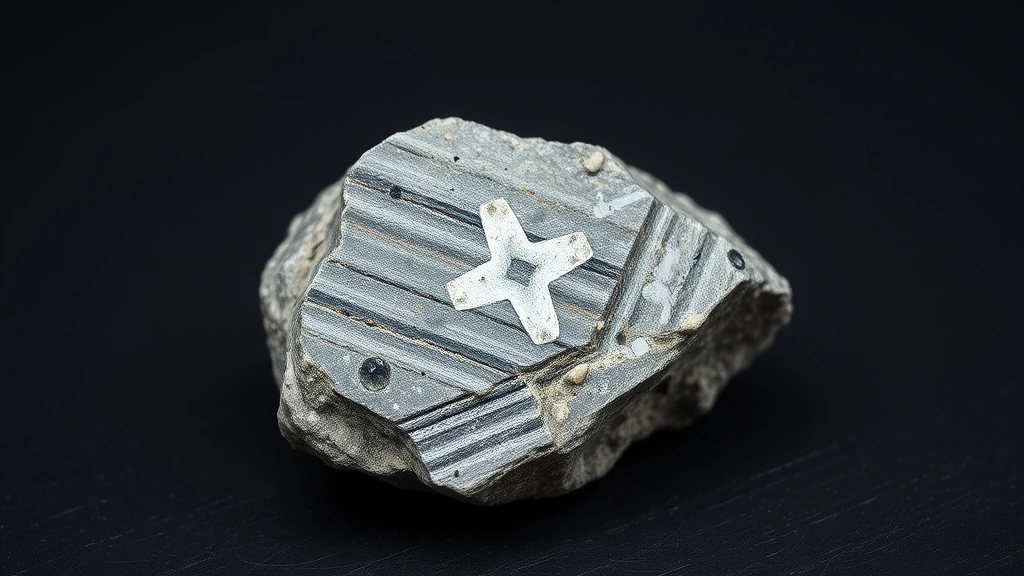
Staurolite belongs to the Natural Mineral / Crystal group, forming exclusively within high-grade metamorphic rocks. It crystallizes from pelitic schists and gneisses during regional metamorphism. This mineral serves as a critical index for determining peak metamorphic temperatures. Its presence indicates specific pressure-temperature conditions in the Earth’s crust. Geologists utilize it to reconstruct the thermal history of tectonic plates. In comparative mineralogical collections, practitioners and geologists frequently study Eclogite alongside this crystal to appreciate their subtle energetic and structural differences.
What is Staurolite (fairy Cross)? Geological Overview & Definition
Staurolite is a metamorphic index mineral that forms under high-grade conditions. It typically appears in pelitic schists and gneisses. The mineral often displays a distinctive cross-shaped twinning habit. This unique morphology has earned it the nickname “fairy cross.”
The formation process requires specific pressure and temperature ranges. It coexists with minerals like garnet and kyanite. This association helps geologists map metamorphic facies accurately. The mineral’s stability field is well-documented in petrology. It provides essential data for understanding crustal evolution.
Staurolite (fairy Cross) Chemical Composition & Crystallographic Properties
Staurolite crystallizes in the Orthorhombic crystal system with a complex lattice structure. The unit cell contains distinct iron and aluminum sites. Cation substitution can occur, though the base composition remains stable. This structural rigidity contributes to its high density of 3.5 to 3.7 g/cm³.
The primary chromophore responsible for its dark color is iron. Specifically, Fe²⁺ ions absorb light in the visible spectrum. The mineral exhibits a refractive index between 1.740 and 1.780. This high value indicates significant optical density and brilliance.
Staurolite demonstrates moderate resistance to common acids. It does not dissolve readily in dilute hydrochloric acid. However, prolonged exposure to strong reagents can cause etching. This chemical stability makes it suitable for various industrial applications.
Thermal behavior shows stability up to high temperatures. The mineral decomposes only under extreme metamorphic conditions. Thermal expansion is anisotropic due to its orthorhombic symmetry. This property influences its mechanical behavior under stress.
| Property | Specification |
|---|---|
| Mineral Group | Natural Mineral / Crystal |
| Chemical Formula | Fe₂Al₄Si₂O₁₀(OH)₂ |
| Mohs Hardness | 6.5 – 7.0 |
| Crystal System | Orthorhombic |
| Specific Gravity (Density) | 3.5 – 3.7 |
| Refractive Index | 1.740 – 1.780 |
| Color & Optical Properties | Natural Staurolite (fairy Cross) color spectrum and optical dispersion |
| Primary Mining Localities | Global primary localities |
| Water & Chemical Resistance | High (Safe for gentle water washing) |
| Chakra Alignment (Traditional) | Third Eye Chakra, Crown Chakra |
| Zodiac Affinity (Traditional) | Virgo, Capricorn |
| Symbolic Meaning (Traditional) | Spiritual protection, clarity of vision, and alignment of the physical and spiritual realms |
Staurolite (fairy Cross) Varieties & Color Spectrum
Staurolite exhibits a diverse range of color morphs driven by trace element substitutions within its crystal lattice. The most common hue is a deep, translucent brown, often referred to as chocolate brown in gemological trade contexts. This coloration results from iron impurities that integrate seamlessly into the orthorhombic crystal structure.
Chocolate Brown Staurolite
This dominant variety forms in high-pressure metamorphic environments where iron-rich schists undergo intense recrystallization. The stone typically displays a uniform, earthy tone with high transparency when cut into cabochons. Its visual signature is defined by a warm, amber-like glow under natural light.
Rarity is moderate, as these deposits are widespread across major global mining regions. Collectors prize specimens with minimal internal fracturing for their clarity. The Mohs hardness of 6.5 to 7.0 makes it durable enough for standard jewelry settings.
Greenish-Brown Staurolite
Occasionally, staurolite crystals exhibit a distinct olive or greenish-brown tint due to specific aluminum-silicate ratios. This morph often appears in regions where the host rock contains significant chlorite or other green minerals. The color shift is subtle but noticeable under magnification.
These specimens are less common than their chocolate counterparts and are frequently found in pegmatite dikes. The greenish hue adds a unique aesthetic dimension for lapidaries seeking distinct gem materials. Such stones are valued for their rarity and distinctive chromatic character.
Reddish-Brown Staurolite
A rarer morph features a deep reddish-brown or maroon coloration, sometimes described as cinnamon brown. This intense hue suggests higher concentrations of specific iron oxidation states within the lattice. The stone often exhibits a velvety appearance when polished.
These crystals are frequently associated with high-grade metamorphic zones in Europe and North America. Their scarcity makes them highly sought after by serious mineral collectors. The rich coloration provides a striking contrast against lighter-colored host rocks.
Transparent Staurolite
High-quality staurolite can achieve remarkable transparency, appearing almost colorless or very pale brown. This variety is prized for its exceptional refractive index, which ranges from 1.740 to 1.780. Such clarity allows light to pass through with minimal scattering.
These stones are typically found in well-formed, large crystals from stable geological formations. They are ideal for precision-cut gemstones that maximize brilliance and fire. The absence of heavy inclusions distinguishes this variety from more common opaque specimens.
Twinned Staurolite
While not a color variety, the famous fairy cross morphology is a critical structural variant. This occurs when two crystals intersect at a precise 60 or 120-degree angle. The resulting X-shaped formation is a hallmark of staurolite identification.
These twinned specimens are highly valued in the mineral collecting community for their geometric perfection. The interlocking structure demonstrates the unique growth habits of the orthorhombic system. Rarity increases significantly with the size and clarity of the twin.
Where is Staurolite (fairy Cross) Found? Geological Mining & Extraction
Staurolite primarily forms in metamorphic rocks such as schists and gneisses, where high pressure and temperature facilitate its crystallization. It is also found in pegmatites, where slow cooling allows for the growth of large, well-formed crystals. These geological settings provide the necessary chemical environment for the iron-aluminum silicate structure to develop.
Primary extraction regions include the United States, particularly in North Carolina and California, where significant deposits are located. Europe, specifically the Czech Republic and Germany, has a long history of staurolite mining. Other notable sources include Brazil, India, and the Scandinavian countries, contributing to the global supply of this mineral.
Historical Significance & Cultural Lore of Staurolite
Ancient civilizations recognized staurolite for its distinctive cross-shaped twins, often interpreting them as symbols of divine protection. In medieval Europe, these crystals were carried as amulets to ward off evil spirits and misfortune. The stone was also associated with clarity of vision and spiritual alignment in various esoteric traditions.
Archaeological evidence suggests that staurolite was used in decorative objects and jewelry during the Renaissance period. Its association with the Third Eye Chakra has persisted through centuries of metaphysical practice. Today, it remains a popular stone for those seeking spiritual insight and protection.
Modern Uses & Jewelry Applications of Staurolite (fairy Cross)
Lapidaries primarily cut staurolite into cabochons to showcase its distinctive cross-shaped inclusions or polished surfaces. Due to its moderate Mohs hardness of 6.5 to 7.0, the stone requires careful handling to prevent chipping during faceting. Most commercial pieces emphasize the natural aesthetic of the mineral rather than high brilliance.
- Cabochon Cutting: The most common form, preserving the stone’s natural luster and internal features.
- Cross-Shaped Carvings: Artisans often carve the mineral into its iconic “fairy cross” shape for pendants.
- Ornamental Carvings: Used in small figurines or decorative items due to its durability and unique coloration.
- Faceted Gems: Rarely faceted, as the stone’s optical properties favor smooth, polished surfaces.
Metaphysical Properties & Traditional Meaning of Staurolite (fairy Cross)
According to historical traditions and metaphysical lore, staurolite is revered for its spiritual protection and ability to bridge the physical and spiritual realms. Practitioners believe the stone fosters clarity of vision, helping individuals discern truth from illusion in complex situations. It is often associated with the journey of the soul, encouraging patience and perseverance during challenging life transitions.
The mineral’s cross-like inclusions symbolize the intersection of earthly duties and higher spiritual aspirations. Many users report an emotional resonance of stability and groundedness when holding the stone. This perceived alignment helps practitioners maintain focus and intention, reinforcing a sense of purpose and inner peace.
Which Chakra and Zodiac Signs Align with Staurolite (fairy Cross)?
In metaphysical practice, staurolite is canonically aligned with the Third Eye Chakra and the Crown Chakra. The Third Eye connection supports intuition and mental clarity, while the Crown Chakra alignment facilitates higher spiritual awareness and cosmic consciousness. This dual association makes the stone particularly valuable for meditation and spiritual development practices.
Astrologically, the mineral is specifically linked to the signs of Virgo and Capricorn. Virgos appreciate the stone’s analytical clarity and attention to detail, while Capricorns resonate with its themes of perseverance and structural integrity. These zodiac alignments emphasize the stone’s grounding nature and its support for disciplined spiritual growth.
How to Identify Real vs. Fake Staurolite (fairy Cross)
Artificial imitations of staurolite often involve synthetic glass or dyed replicas designed to mimic the stone’s dark brown to black appearance. These fakes may lack the natural inclusions and specific optical properties of genuine mineral specimens. Collectors should remain vigilant, as high-quality glass can closely resemble polished staurolite to the untrained eye.
Practical At-Home Authenticity Tests
- Temperature Test (Thermal Feel): Genuine staurolite feels cool to the touch initially and warms slowly, whereas plastic or resin imitations warm up rapidly due to lower thermal conductivity.
- Specific Gravity & Weight Test: Real staurolite has a density of 3.5 to 3.7, making it significantly heavier than glass or plastic substitutes of the same size.
- Scratch & Hardness Test (Mohs Comparison): With a hardness of 6.5 to 7.0, staurolite can scratch glass but may be scratched by quartz; test carefully on a hidden area to avoid damage.
- Microscopic & Loupe Inspection (Internal Inclusions): Use a 10x loupe to look for natural crystal inclusions or the characteristic cross patterns; glass imitations often contain bubbles or swirl marks.
Staurolite (fairy Cross) Valuation Factors, Grading & Pricing
Market value is primarily driven by Color Saturation, where deep, uniform brownish-red hues command higher prices than pale or mottled specimens. Visual vibrancy is further enhanced by a natural, earthy luster that reflects the mineral’s dense, silicate-rich composition. Collectors prize stones that exhibit consistent tone without significant color zoning or surface discoloration.
Pricing is determined by Crystal Size & Weight (Grams), with larger, well-formed specimens fetching premium rates due to their rarity. Raw crystals are valued for their natural geometry, while tumbled stones are graded on polish quality and smoothness. Natural matrix inclusions, such as associated quartz or chlorite, can increase desirability among geological collectors.
Ethical Sourcing & Locality Premium significantly influences pricing in both holistic and collector markets. Stones from renowned localities like the Appalachian Mountains or Brazil often carry a higher premium due to historical significance. Verified provenance ensures transparency, appealing to buyers who prioritize sustainable mining practices and documented origin.
How to Clean and Care for Staurolite (fairy Cross)
Staurolite possesses a Mohs hardness of 6.5 – 7.0, making it durable enough for gentle water washing without risk of dissolution. To clean the stone, use warm soapy water and a soft cloth to remove surface dust and oils effectively. This method preserves the mineral’s natural luster while ensuring no abrasive damage occurs to the crystal structure.
It is critical to avoid ultrasonic cleaners when maintaining staurolite specimens to prevent structural fractures. The high-frequency vibrations can exploit natural cleavage planes or internal stress points, potentially shattering the stone. Always dry the mineral thoroughly with a lint-free towel after washing to prevent water spots.
Cleansing and Recharging Staurolite (fairy Cross) (Energetic Care)
For energetic cleansing, practitioners often employ herbal smudging with sage or palo santo to clear stagnant energy from the stone. This dry method avoids any contact with moisture, ensuring the crystal’s physical integrity remains completely intact. The smoke is believed to purify the stone’s vibrational field without altering its chemical or structural properties.
Recharging can be achieved through gentle moonlight exposure or by resting the stone on a selenite charging slab. These methods allow the mineral to absorb ambient energy safely, avoiding the thermal stress that direct sunlight or heat sources would cause. Such practices align with the mineral’s association with spiritual clarity and protection in holistic traditions.
Frequently Asked Questions About Staurolite (fairy Cross)
Is staurolite safe to wear in the shower?
Yes, staurolite is safe for gentle water exposure during showers. The mineral possesses high water resistance, allowing it to withstand brief contact with water without significant degradation. However, avoid prolonged soaking or exposure to harsh soaps that may leave residue in surface fissures.
How should I clean my staurolite jewelry?
Use warm soapy water and a soft cloth for routine maintenance. This gentle method effectively removes oils and dirt while preserving the stone’s integrity. You must strictly avoid ultrasonic cleaners, as the vibrations can cause structural fractures in the crystal lattice.
What is the chemical formula of staurolite?
Staurolite is an iron aluminum silicate with the formula Fe₂Al₄Si₂O₁₀(OH)₂. This complex composition defines its orthorhombic crystal system and unique physical properties. The presence of iron contributes to its characteristic reddish-brown or black coloration in gem-quality specimens.
Which zodiac signs are compatible with staurolite?
Staurolite is traditionally aligned with Virgo and Capricorn. These earth signs resonate with the stone’s grounding energy and focus on practical wisdom. Wearing this mineral may enhance the natural traits of discipline and clarity associated with these astrological placements.
Which chakras does staurolite activate?
This stone primarily activates the Third Eye and Crown Chakras. It facilitates a connection between physical perception and higher spiritual awareness. By stimulating these energy centers, staurolite promotes clarity of vision and deepens one’s intuitive capabilities during meditation.
What is the Mohs hardness of staurolite?
Staurolite rates between 6.5 and 7.0 on the Mohs scale. This moderate hardness makes it suitable for most jewelry types, though it is less durable than sapphire or diamond. Care should be taken to prevent abrasive contact with harder minerals that could scratch the surface.
Why is it called the fairy cross?
The name derives from its distinctive cross-shaped crystal habit. These intersecting blades form naturally during the mineral’s growth process, creating a symbol often associated with spiritual protection. The cross-shaped morphology is a key identification feature for collectors and gemologists.
What is the refractive index of staurolite?
Staurolite exhibits a refractive index ranging from 1.740 to 1.780. This high value indicates significant optical brilliance and light dispersion within the crystal. Such properties contribute to the stone’s distinctive luster and visual appeal in polished gemstones.