
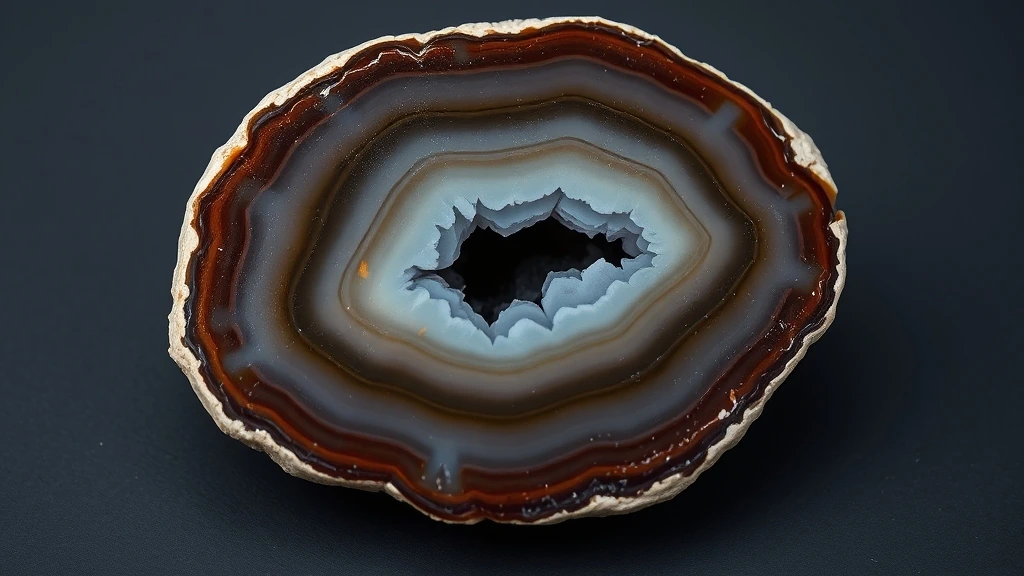
Timor Agate belongs to the broader class of silicates, specifically the chalcedony subgroup of cryptocrystalline quartz. This gemstone is formed through the slow precipitation of silica from hydrothermal fluids, resulting in fibrous aggregates that display a characteristic banded pattern. The mineral’s fibrous texture and fine grain size give it a translucent appearance, while its color variations arise from trace metal inclusions and structural defects.
What is Timor Agate? Geological Overview & Definition
Timor Agate is a microcrystalline variant of quartz, classified within the chalcedony family. It is typically found in volcanic or sedimentary host rocks where silica-rich fluids have infiltrated fractures and cavities. The gemstone’s distinctive banding is produced by alternating layers of fibrous quartz and other silica phases, often containing iron or manganese that impart reddish or greenish tones. Its fibrous aggregates are typically less than 0.1 mm in diameter, giving the stone a silky luster and a subtle play of light.
The term “agate” historically referred to any banded quartz, but modern gemology reserves it for specific fibrous forms. Timor Agate derives its name from the island of Timor, where significant deposits were first documented in the 19th century. Although the stone is not a single crystal, its uniform microstructure and consistent optical properties make it a prized material for ornamental carving and jewelry. While Timor Agate is prized for its distinct uniformity, collectors often compare its subtle banding to the delicate, web-like patterns found in Silver Lace Agate, which shares the same fibrous quartz lineage but exhibits a more intricate, lace-like internal structure.
Timor Agate Chemical Composition & Crystallographic Properties
Timor Agate’s crystal system is trigonal, characterized by a three‑fold rotational symmetry axis. Although the individual quartz grains are too small to exhibit a single crystal lattice, the overall aggregate aligns along the trigonal axis, producing the characteristic fibrous texture. The lattice structure is based on the SiO₂ framework, with silicon tetrahedra linked by shared oxygen atoms. Cation substitution is minimal, but trace amounts of Fe²⁺/Fe³⁺ and Mn²⁺ can occupy interstitial sites, acting as chromophores that generate the stone’s red, brown, or green hues. Similarly, the grounding energy of Strawberry Onyx complements Timor Agate’s trigonal symmetry, offering additional support for stability and emotional balance.
The gemstone is chemically inert to most acids; dilute hydrochloric acid may cause slight etching, but it remains largely resistant to common mineral acids. Its thermal behavior is typical of quartz: it withstands temperatures up to 573 °C without decomposition, but prolonged heating can alter its banding and cause slight color changes. The fibrous structure also imparts a degree of anisotropy in optical properties, with the refractive index ranging from 1.544 to 1.553 depending on the orientation of the fibers.
| Property | Specification |
|---|---|
| Mineral Group | Silicates (Chalcedony / Cryptocrystalline Quartz) |
| Chemical Formula | SiO₂ (Silicon Dioxide) |
| Mohs Hardness | 6.5 – 7.0 |
| Crystal System | Trigonal (Microcrystalline / Cryptocrystalline fibrous aggregates) |
| Specific Gravity (Density) | 2.60 – 2.65 |
| Refractive Index | 1.544 – 1.553 |
| Color & Optical Properties | Natural Timor Agate color spectrum and optical dispersion |
| Primary Mining Localities | Brazil, Uruguay, Turkey, India, Madagascar |
| Water & Chemical Resistance | High (Safe for gentle warm water and mild soap; avoid harsh acids and chlorine) |
| Chakra Alignment (Traditional) | Root Chakra and Sacral Chakra |
| Zodiac Affinity (Traditional) | Gemini, Virgo, Taurus |
| Symbolic Meaning (Traditional) | Grounding, emotional balance, physical endurance, and protection |
Timor Agate Varieties & Color Spectrum
Timor Agate displays distinct mineralogical characteristics across its geological varieties and structural habits. Gemologists evaluate these natural varieties based on crystal habit, trace chromophore concentrations, and visual luster.
Primary Natural Timor Agate
The benchmark natural variety exhibiting diagnostic color saturation and classic crystallographic symmetry.
Distinct Geological Morphs of Timor Agate
Secondary regional and structural varieties formed under localized geological temperature and pressure conditions.
Classic Timor Agate
Classic Timor Agate is the most widely recognized form, characterized by banded layers of pale brown to deep red. The bands arise from alternating silica-rich and iron‑oxide‑rich layers deposited in ancient volcanic ash beds. Its smooth, translucent appearance makes it popular for cabochon jewelry. Though common, high‑contrast banding is prized and can be rare in larger cuts.
Black‑White Timor Agate
This variety displays striking contrast between dark gray or black bands and bright white or pale gray layers. The black bands result from manganese or iron inclusions, while the white bands are pure quartz. The sharp contrast creates a dramatic visual effect, especially in polished cabochons. It is less common than the classic form, especially in larger, flawless specimens.
Green‑Yellow Timor Agate
Green‑yellow Timor Agate shows subtle greenish or yellowish hues due to trace amounts of iron and manganese. The color is often diffuse, giving the stone a warm, earthy tone. These inclusions create a subtle, almost translucent glow when light passes through. While not as sought after as the classic or black‑white varieties, high‑quality specimens are prized by collectors.
Red‑Brown Timor Agate
Red‑brown Timor Agate features deep reddish-brown bands, a result of higher iron content. The stone’s color is often described as “rusty” or “coppery,” providing a warm, natural aesthetic. The bands are usually more pronounced, giving the stone a dramatic, almost volcanic look. This variety is relatively rare, especially in large, unbroken sections.
Blue‑Grey Timor Agate
Blue‑grey Timor Agate is distinguished by subtle bluish or slate‑gray tones, caused by trace amounts of titanium or iron. The color is faint yet elegant, lending the stone a cool, understated elegance. The bands are less obvious, making the stone more subtle in appearance. Due to its rarity and delicate coloration, it is highly sought after by discerning gem collectors.
Multi‑Chroma Timor Agate
Multi‑Chroma Timor Agate showcases a spectrum of colors—reds, browns, blacks, and whites—within a single specimen. The varied hues result from fluctuating mineral deposits during formation. This variety is prized for its complex visual narrative and is considered a tourist gem for high‑end jewelry. Its rarity is amplified by the difficulty of finding large, well‑banded specimens.
Where is Timor Agate Found? Geological Mining & Extraction
Timor Agate originates from pegmatitic quartz deposits, often associated with granitic intrusions in volcanic regions. The silica-rich fluids crystallize into fibrous aggregates, forming the characteristic banded structure. Extraction typically occurs in the Timor Island region of Indonesia, where open‑pit mining and selective quarrying yield the most abundant specimens.
In addition to Timor Island, significant deposits are located in Borneo, Sulawesi, and parts of Malaysia. These regions provide similar volcanic environments that favor the formation of fibrous quartz. Modern mining operations employ careful sorting to preserve the delicate banding and avoid damage to the fragile inclusions.
Historical Significance & Cultural Lore of Timor Agate
Across ancient lapidary traditions, Timor Agate was valued for its durability and symbolic resonance. In Greco‑Roman culture, it was believed to protect travelers and enhance courage, often carved into amulets. Egyptian artisans incorporated it into jewelry, associating its earthy tones with the god Osiris and the cycle of rebirth. In Vedic lore, the stone was linked to the Root Chakra, grounding spiritual energy and fostering emotional balance. Chinese artisans prized its banded patterns, using it in ceremonial objects that symbolized harmony between earth and sky. These diverse cultural uses underscore the stone’s enduring appeal and metaphysical significance.
Modern Uses & Jewelry Applications of Timor Agate
Timor agate’s cryptocrystalline texture lends itself to a variety of lapidary techniques, allowing artisans to showcase its characteristic banding and iridescent play of color. Cabochon cuts preserve the stone’s natural layers, while precision faceting can highlight subtle internal reflections for high‑impact pieces. Ornamental carving also exploits its workability, producing beads, intaglios, and decorative inlays for luxury accessories.
- Cabochon pendants and rings emphasizing the stone’s banded patterns
- Faceted earrings that amplify light interaction and color depth
- Carved beads, intaglios, and cameos for heritage‑style jewelry
- Inlaid mosaics and watch dials for upscale ornamental applications
Metaphysical Properties & Traditional Meaning of Timor Agate
According to historical traditions and metaphysical lore, Timor agate is celebrated for its grounding influence, helping wearers feel anchored to the physical world while fostering emotional stability. Across ancient Mediterranean and Vedic lapidary records, the stone is linked to the balancing of emotional currents, encouraging resilience and protective energy during times of stress. Its subtle vibrational tone is said to support physical endurance, making it a favored talisman for those seeking stamina in daily endeavors.
Which Chakra and Zodiac Signs Align with Timor Agate?
Timor agate resonates strongly with the Root Chakra, reinforcing a sense of security and connection to the earth, while also stimulating the Sacral Chakra, which nurtures creativity and emotional flow. This dual alignment is believed to harmonize foundational stability with the dynamic expression of personal passions.
In astrological tradition, Timor agate is associated with the zodiac signs Gemini, Virgo, and Taurus. Gemini’s mutable air energy benefits from the stone’s grounding qualities, Virgo’s analytical nature finds balance through emotional steadiness, and Taurus’s earthy disposition is amplified by the stone’s capacity for physical endurance and protection.
How to Identify Real vs. Fake Timor Agate
Artificial imitations of Timor agate often include dyed quartz, synthetic glass, or resin composites that mimic its banded appearance but lack the stone’s genuine density and refractive properties. These replicas may display overly uniform coloration or a glassy surface sheen that differs from the natural cryptocrystalline texture of authentic Timor agate.
Practical At-Home Authenticity Tests
- Temperature Test (Thermal Feel): Hold the stone against the skin; genuine Timor agate feels cool and retains temperature longer than glass or plastic imitations, which quickly warm to body heat.
- Specific Gravity & Weight Test: Compare the stone’s weight to a known reference; real Timor agate (density 2.60‑2.65 g/cm³) feels noticeably heavier than lighter glass or resin substitutes.
- Scratch & Hardness Test (Mohs Comparison): Use a steel file (hardness 5.5) to gently test the surface; authentic Timor agate (hardness 6.5‑7) resists scratching, whereas softer imitations will show visible marks.
- Microscopic & Loupe Inspection (Internal Inclusions): Examine under 10×‑30× magnification; natural Timor agate reveals fine, irregular banding and microscopic inclusions, while synthetic glass appears uniformly clear or shows bubble patterns atypical of the mineral.
Timor Agate Valuation Factors, Grading & Pricing
The foremost driver of price is color saturation; specimens that display deep, vivid bands of blues, greens, and earthy reds command premium rates. A natural, energetic luster that catches light without artificial enhancement signals a high‑quality piece, while faded or uneven hues reduce market appeal. Collectors also prize stones that retain their original chromatic intensity after polishing, as this reflects minimal treatment.
Crystal size & weight (grams) is the second key metric, with larger, heavier pieces offering greater surface area for the characteristic banding patterns. Raw blocks are typically priced lower than tumbled, high‑gloss polish because the latter requires skilled finishing that accentuates the stone’s translucence. Natural matrix inclusions, when they appear as subtle, decorative veins rather than fractures, can add intrigue and modestly boost value.
The final consideration is ethical sourcing & locality premium, especially as Timor agate originates from the island of Timor in Southeast Asia. Stones harvested under fair‑trade practices and documented provenance fetch higher prices among holistic practitioners and serious collectors. A provenance tag confirming that the agate was mined responsibly and without environmental harm adds a distinct market advantage.
How to Clean and Care for Timor Agate
Warm soapy water is ideal for solid agates; gently immerse the stone in lukewarm water with a mild, pH‑neutral soap, then rinse with clean tepid water and pat dry with a soft microfiber cloth. Avoid ultrasonic cleaners if the specimen is dyed, heavily fractured, or has undergone any surface treatment, as the vibrations can damage fragile inclusions or cause color leaching. Store the cleaned agate in a padded jewelry box away from acids, chlorine, and sudden temperature changes to preserve its luster.
Cleansing and Recharging Timor Agate (Energetic Care)
For holistic maintenance, place the agate on a clean selenite slab in a quiet space; the selenite’s neutral energy gently clears lingering vibrations without exposing the stone to heat. Alternatively, a brief session of herbal smudging with sage or cedar, held at a respectful distance, can refresh the stone’s aura while keeping the surface dry. A short exposure to soft moonlight, preferably during a waning phase, allows the agate to absorb subtle lunar energy, supporting its grounding properties without risking thermal stress.
Frequently Asked Questions About Timor Agate
Timor Agate displays distinct mineralogical characteristics across its geological varieties and structural habits. Gemologists evaluate these natural varieties based on crystal habit, trace chromophore concentrations, and visual luster.
Primary Natural Timor Agate
The benchmark natural variety exhibiting diagnostic color saturation and classic crystallographic symmetry.
Distinct Geological Morphs of Timor Agate
Secondary regional and structural varieties formed under localized geological temperature and pressure conditions.
Is Timor Agate safe to wear in the shower?
Yes, it is water‑resistant for gentle warm water and mild soap. The cryptocrystalline SiO₂ structure does not dissolve, but prolonged exposure to harsh acids, chlorine, or hot steam can etch the surface, especially if the stone has been dyed or treated.
How should I clean a Timor Agate necklace?
Warm soapy water and a soft brush are ideal for solid Timor Agate. Gently scrub with a soft‑bristled toothbrush, rinse in lukewarm water, and pat dry with a lint‑free cloth. Avoid ultrasonic cleaners unless the piece is confirmed untreated and fracture‑free.
Can ultrasonic cleaners be used on Timor Agate?
Generally avoid ultrasonic cleaning for Timor Agate. The vibrations can exacerbate micro‑fractures or cause dye leaching in treated stones. If the agate is confirmed untreated, solid, and free of cracks, a brief low‑power ultrasonic cycle may be permissible, but hand cleaning remains safest.
Which zodiac signs are associated with Timor Agate?
Gemini, Virgo, and Taurus are the aligned zodiac signs. In astrological gem lore, these earth and air signs are thought to benefit from the stone’s grounding energy, enhancing analytical clarity for Gemini, practical stability for Taurus, and meticulous focus for Virgo.
Which chakras does Timor Agate balance?
It resonates with the Root Chakra and Sacral Chakra. The stone’s grounding properties support the Muladhara (Root) for stability, while its warm, nurturing hue stimulates the Svadhisthana (Sacral) to promote emotional balance and creative vitality.
Is Timor Agate suitable for daily wear?
Yes, its Mohs hardness of 6.5–7.0 makes it durable for everyday use. While resistant to scratches from most metals, avoid contact with harder gemstones or abrasive surfaces, and store it separately to prevent edge chipping during accidental impacts.
Does Timor Agate contain any treatments or dyes?
Natural Timor Agate is typically untreated, but many market specimens are dyed for enhanced color bands. Dyed pieces may be more vulnerable to fading when exposed to strong detergents or ultrasonic vibrations, so verify provenance before applying aggressive cleaning methods.
What is the typical density of Timor Agate and why does it matter?
Its density ranges from 2.60 to 2.65 g/cm³, reflecting its quartz‑based composition. Knowing the density helps gemologists distinguish genuine Timor Agate from lower‑density imitators such as glass or plastic, and informs setting decisions to ensure adequate support in jewelry designs.